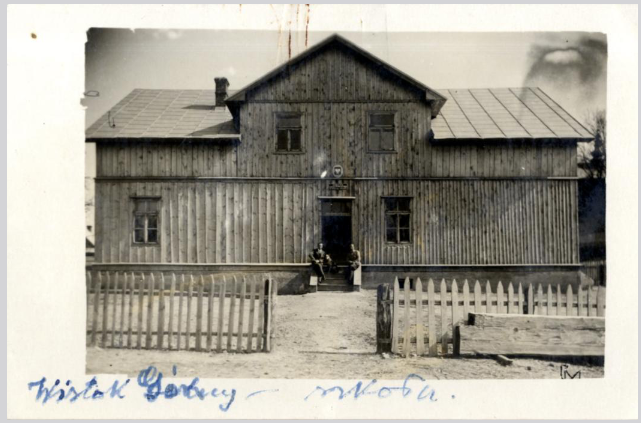
Wisłok Górny is a village in Komańcza Commune, Sanok County.
Wisłok Górny to wieś w gminie Komańcza, w powiecie sanockim.
Transcript: Google-Powered
Warning: this transcription may be terrible. It was done electronically by someone who can speak neither Polish nor Ukrainian/Lemko. Do you wish to see it improve? You can help! Contact us.
Uwaga: ta transkrypcja może być fatalna. Została wykonana automatycznie przez osobę, która nie zna ani języka polskiego, ani ukraińskiego/łemkowskiego. Chcesz, żeby była lepsza? Możesz pomóc! Skontaktuj się z nami.
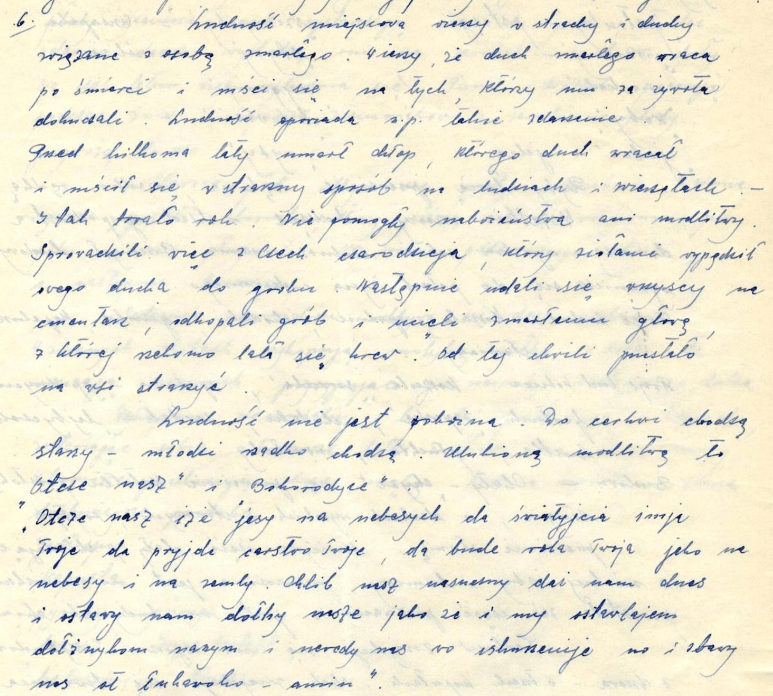
6. Ludność miejscowa wierzy w wróżby i czary związane z osobą zmarłego. Wierzy, że duch zmarłego wraca po śmierci i mści się na tych, którzy mu za żywota dokuczali. Ludność opowiada n.p. takie zdarzenie: Przed kilkoma laty umarł chłop, którego duch wracałi mścił się w straszny sposób na ludziach i zwierzętach –i tak trwało rok. Nie pomogły nabożeństwa ani modlitwy.Sprowadzili więc z Czech czarodzieja, który czarami wypędził owego ducha do stawu. Następnie udali się wszyscy na cmentarz, odkopali grób i ucięli zmarłemu głowę, z której rzekomo lała się krew. Od tej chwili przestało na wsi straszyć.
Ludność nie jest pobożna. Do cerkwi chodzą starzy – młodzi rzadko chodzą. Ulubioną modlitwą to
“Otcze nasz” i “Bohorodyce”.
“Otcze nasz iże jesy na nebesiech da świetysie imja
Twoje da pryjde carstwo Twoje, da budie wola Twoja jako na
nebesy i na zemly. Chlib nasz nasuszny dai nam dnes
i ostawy nam dolhy nasze jako i my ostawlajem
dolżnykom naszym i neredy nas wo iskuszenije no i zbaczy
nos ot luheroho. amin”.
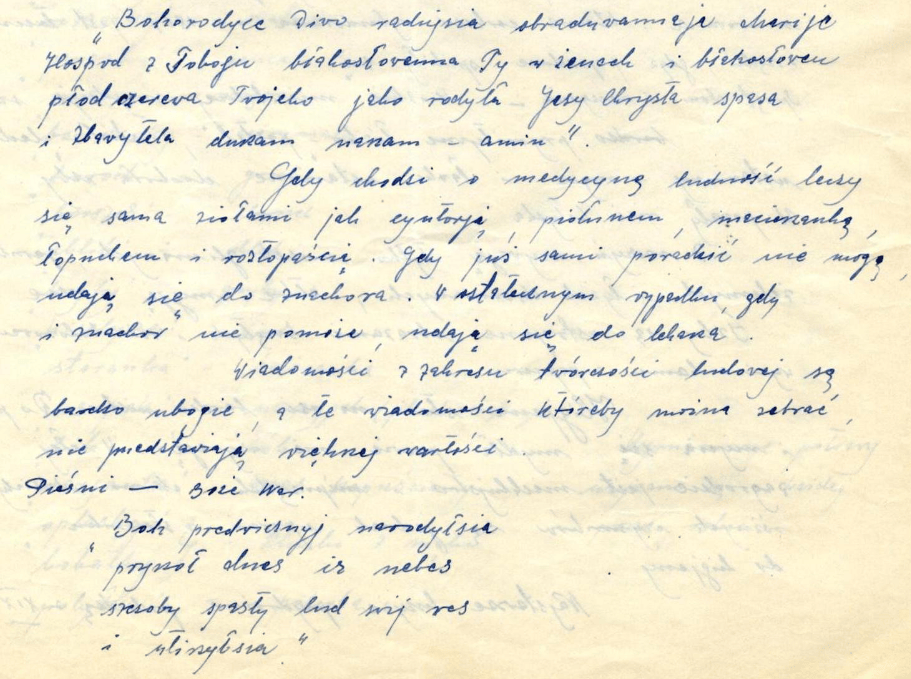
„Bohorodyce Diwo radujsia stradowanaja Maryje Hospod z Toboju błahosłowenna Ty w żenach i błahosłowien płod czerewa Twojeho jako rodyła Jesy Chrysta spesa i Izbawytela duszam nenam– amin”.
Gdy chodzi o medycynę ludność leczy się sama ziołami jak cyntorja, piołunem, macierzanką,łopuchem i rostopascią. Gdy już sami poradzić nie mogą, udają się do znachora. W ostatecznym wypadku, gdy i znachor nie pomoże, udają się do lekarza.
Wiadomości z zakresu twórczości ludowej są bardzo ubogie a te wiadomości któreby można zebrać,nie przedstawiają większej wartości.
Pieśni –
Boże Nar.
„Boh predwicznyj narodłyjsia
prynsł dłones iz nebes
wsełby spasty lud wij wes
i utiszyjsia.”
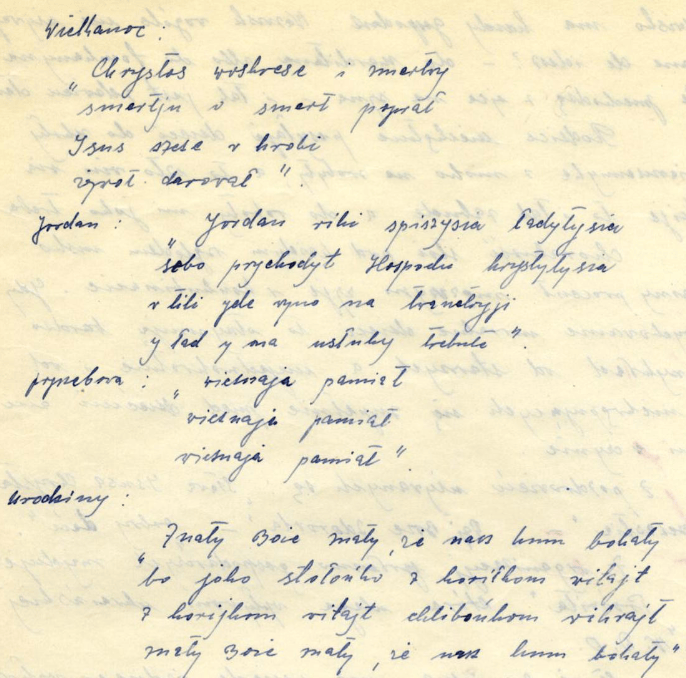
Wielkanoc:
„Chrystos woskrese i mertwy
smertju s smert poprał
Isus stał w hrobi
żywot darował ”
Jordan:
„Jordan riki spiszyła brodytisia
sobo prychodit Hospodu krystytisia
w tili yde yno na brenolyji
y sed y na ustuby trewute”
Pogrzebowa:
„wicknaja pamiet
wicknaja pamiet
wicknaja pamiet”
Urodziny:
„Znały Boże mały, że nasz hun bohaty
bo jako stałońko z kwitkom witayt
z kwitkom witayt chlibonkom wihrayt
mały Boże mały, że nasz hun bohaty”
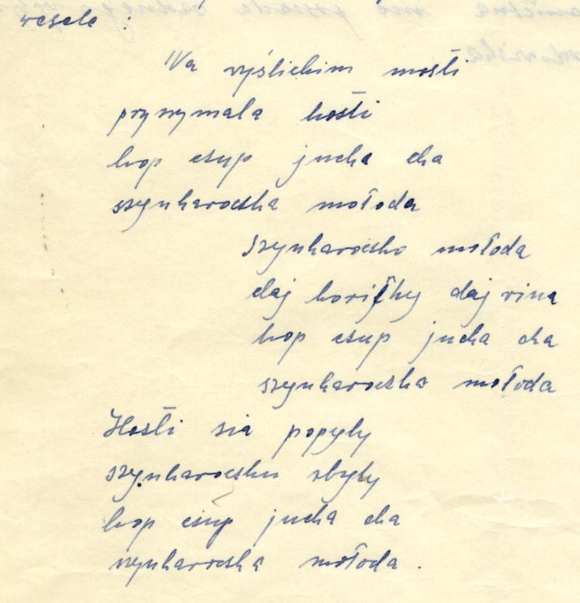
Wesele:
Na wysockim mośli
przyjmowała gości
hop czup jucha cha
szynkareczka mołoda
Szynkareczka mołoda
daj gorzałki, daj wina
hop ciup jucha cha
szynkareczka młoda
Hosti się popyly
szynkareczkę slyby
hop ciup jucha cha
szynkareczka młoda.
English Translation: Google-Powered
Warning: this translation may be terrible. It was done electronically by someone who can speak neither Polish nor Ukrainian/Lemko. Do you wish to see it improve? You can help! Contact us.
Uwaga: to tłumaczenie może być fatalne. Zostało wykonane automatycznie przez osobę, która nie zna ani języka polskiego, ani ukraińskiego/łemkowskiego. Chcesz, żeby było lepsze? Możesz pomóc! Skontaktuj się z nami.
6. The local population believes in omens and sorcery connected with the deceased. They believe that the spirit of a dead person returns after death to take revenge on those who caused them trouble while they were alive. For instance, the locals recount the following event: some years ago, a peasant died, and his spirit returned to wreak terrible vengeance upon both people and animals—this went on for a year. Neither religious services nor prayers were of any help. Consequently, they brought in a sorcerer from Bohemia, who, through his magic, drove the spirit into a pond. Afterward, they all went to the cemetery, dug up the grave, and severed the head of the deceased—from which, it is said, blood began to flow. From that moment on, the haunting in the village ceased.
The local people are not particularly devout. Only the elderly attend the Greek church; the young rarely go. Their preferred prayers are the “Our Father” and the “Theotokos” (Hail Mary).
“Our Father, who art in heaven, hallowed be Thy name. Thy kingdom come, Thy will be done, on earth as it is in heaven. Give us this day our daily bread, and forgive us our debts, as we also have forgiven our debtors; and lead us not into temptation, but deliver us from the evil one. Amen.”
“Rejoice, O Theotokos (Mother of God) and Virgin Mary, full of grace; the Lord is with thee. Blessed art thou among women, and blessed is the fruit of thy womb, for thou hast borne Christ, the Savior and Redeemer of our souls. Amen.” Regarding medicine, the local population treats itself using herbs such as centaury, wormwood, wild thyme, burdock, and greater celandine. When they can no longer manage on their own, they turn to a folk healer. As a last resort—if even the folk healer cannot help—they seek out a physician.
Information concerning folk creative expression is very scarce, and whatever could be gathered holds little significant value.
Songs
Christmas
“God Eternal is born,
He came today from heaven
To save all His people
And to rejoice.”
Easter
“Christ is risen from the dead,
Trampling down death by death,
And upon those in the tombs
Bestowing life.”
Theophany (Jordan)
“The River Jordan hurried to prepare,
For the Lord Himself comes to be baptized;
In the flesh He walks upon the waters,
And [creation] trembles at His coming.”
Funeral
“Eternal memory,
Eternal memory,
Eternal memory.”
Birth
“It is clear, O God, it is clear that our godfather is wealthy,
For his little table is adorned with flowers—
Adorned with flowers, and blessed with bread;
It is clear, O God, it is clear that our godfather is wealthy.”
Wedding
On the high bridge,
She welcomed the guests—
Hop, tsiup, yukha-kha!
The young tavern-maid.
“Young tavern-maid,
Give us vodka, give us wine!”
Hop, tsiup, yukha-kha!
The young tavern-maid.
The guests got tipsy,
And married off the tavern-maid—
Hop, tsiup, yukha-kha!
The young tavern-maid.
Sanok Genes seeks to create a database of transcripts and English translations from the “Kultura Duchowa” sections from the 1936 Sanok School Inspectorate Questionnaires. The original documents are held by the Sanok Museum of History and digitized by the Sanok Digital Library. To learn more, see the project description.
Sanok Genes stawia sobie za cel stworzenie bazy danych zawierającej transkrypcje oraz tłumaczenia na język angielski fragmentów dotyczących „kultury duchowej”, pochodzących z kwestionariuszy Inspektoratu Szkolnego w Sanoku z 1936 roku. Oryginalne dokumenty znajdują się w zbiorach Muzeum Historycznego w Sanoku i zostały zdigitalizowane przez Sanocką Bibliotekę Cyfrową. Więcej informacji można znaleźć w opisie projektu.

