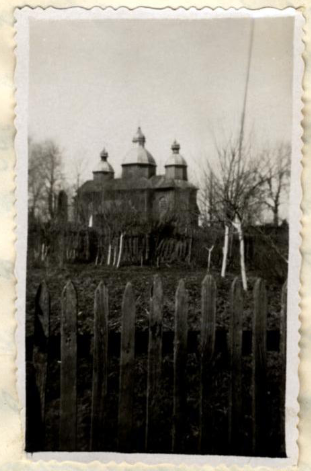
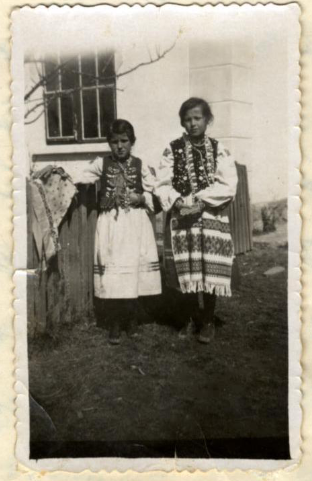
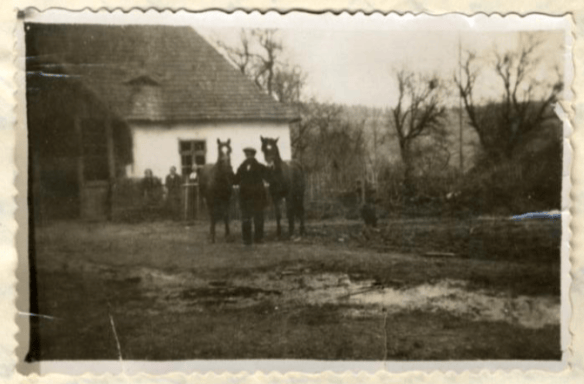
Bandrów Narodowy is a village in Uztrzyki Dolne Commune, Bieszczady County.
Bandrów Narodowy – wieś w gminie Uztrzyki Dolne, w powiecie bieszczadzkim.
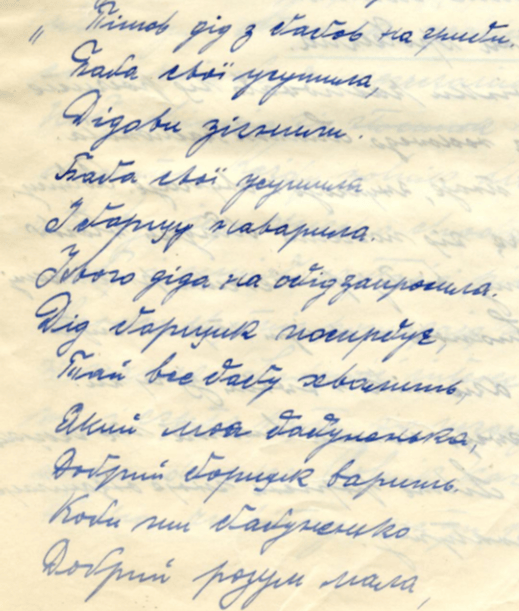
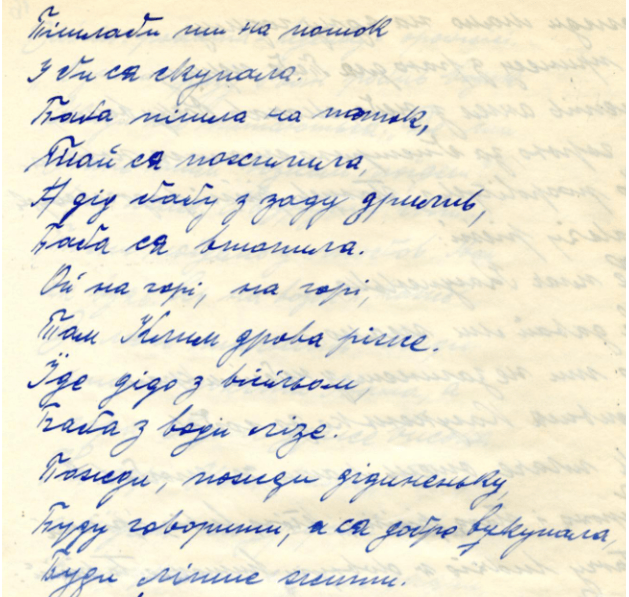
Transcript: Google-Powered
Warning: this transcription may be terrible. It was done electronically by someone who can speak neither Polish nor Ukrainian/Lemko. Do you wish to see it improve? You can help! Contact us.
Uwaga: ta transkrypcja może być fatalna. Została wykonana automatycznie przez osobę, która nie zna ani języka polskiego, ani ukraińskiego/łemkowskiego. Chcesz, żeby była lepsza? Możesz pomóc! Skontaktuj się z nami.
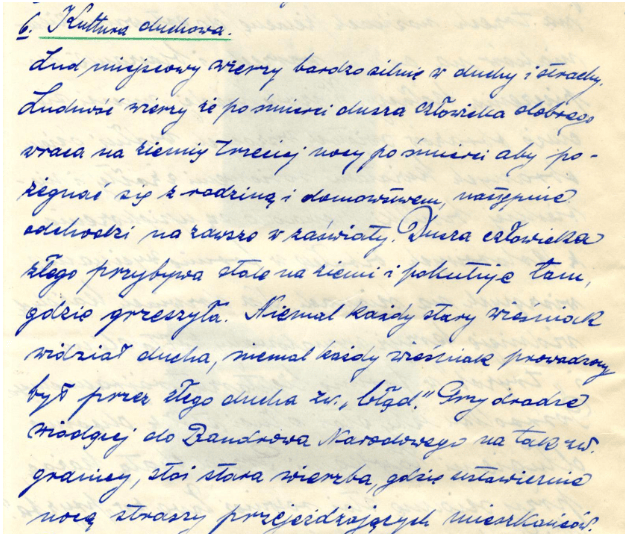
6. Kultura duchowa.
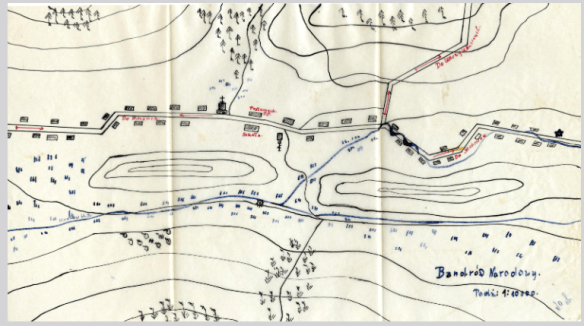
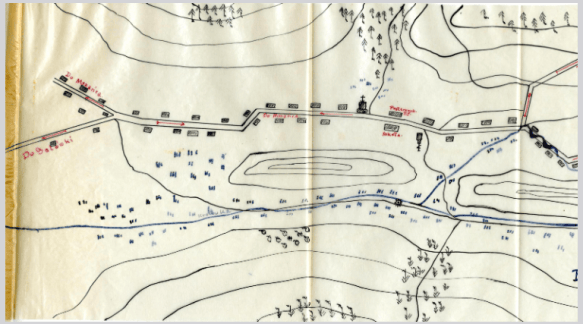
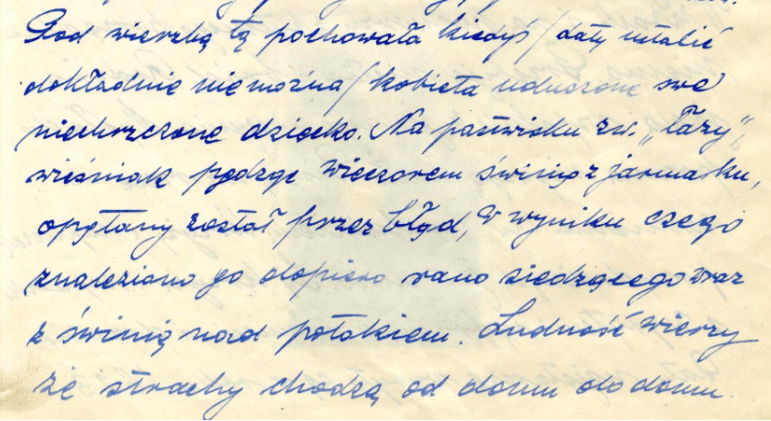
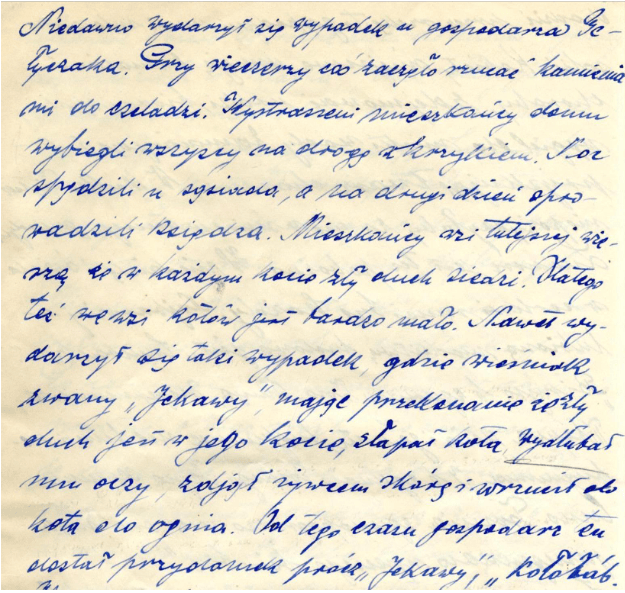
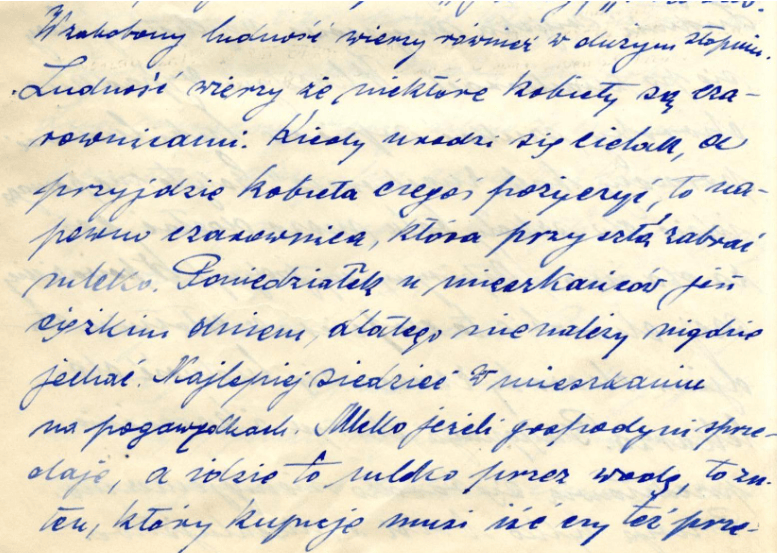
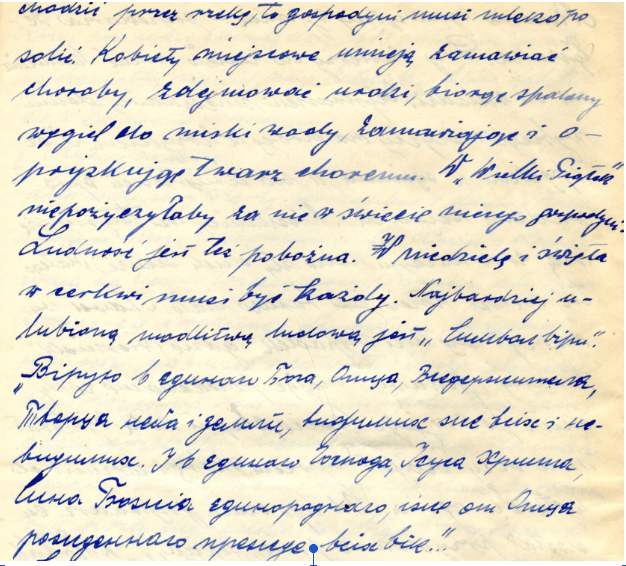
Lud miejscowy wierzy bardzo silnie w duchy i strachy. Ludność wierzy, że po śmierci dusza człowieka dobrego wraca na ziemię w trzecią noc po śmierci, aby pożegnać się z rodziną i domostwem, następnie odchodzi na zawsze w światy. Dusza człowieka złego przybywa stale na ziemi i pokutuje tam, gdzie grzeszyła. Niemal każdy stary wieśniak widział ducha, niemal każdy wieśniak prowadzony był przez tego ducha zw. „błąd”. Przy drodze wiodącej do Bandrowa Narodowego na tew us. granicy, stoi stara wierzba, gdzie ustawicznie boją strachy przechodzących mieszkańców. God wierzba to pochowała kiedyś daty ustalić /dokładnie nie można/ kobieta uduszonego niechrzczone dziecko. Na pastwisku zw. „Łary” wiśniak podąża wieczorem świnie z jarmarku, opętany został przez błąd, w wyniku czego znaleziono go dopiero rano siedzącego wraz z świnią nad potokiem. Ludność wierzy że strachy chodzą od domu do domu. Niedawno wydarzył się wypadek w gospodarstwie Gełyczaka. Przy wieczory co raźniej rzucać kamieniami do czeladzi. Wystraszeni mieszkańcy domu wybiegli wszyscy na drogę z krzykiem. Kór spędzili u sąsiada, a na drugi dzień oprowadzili psiora. Mieszkańcy ani tutaj nie znają w każdym kącie zły duch siedzi. Dlatego też w naszej koło jest bardzo mało. Nawet wydarzył się taki wypadek, gdzie ziomek zwany „Jekawy” mając przekonanie i zły duch jest w jego konie, złapał kota wydubał mu oczy, odjął żywem skór i wrzucił do kota do ognia. Od tego czasu gospodarz ten dostał przydomek „Jekawy”, koło łab. Wierzenia ludowe wiemy również w dużym stopniu. Ludność wierzy, że niektóre kobiety są czarownicami. Kiedy uradzi się cielak, a przyjdzie kobieta czego pożyczyć, to na pewno czarownica, która przyszła zabrać mleko. Poniedziałek u mieszkańców jest ciężkim dniem, dlatego nie należy nigdzie jechać. Najlepiej siedzieć w mieszkaniu na pogawędkach. Mleko jeżeli gospodyni sprzedaje, a roisi to mleko przez wodę, to ten, który kupuje, musi iść czy też przechodzić przez rzekę to gospodyni musi uderzyć posoli. Kobiety miejscowe umieją zamawiać choroby, zdejmować uroki, biorąc spalony węgiel do miski wody, zamawiając i opryskując twarz choremu. W „Wielki Piątek” nie pożyczyłaby za nic w świecie niczego gospodyni. Ludność jest też pobożna. W niedzielę i święta w cerkwi musi być każdy. Najbardziej ulubioną modlitwą ludową jest „Символ віри”.
„Вірую в єдинаго Бога, Отца, Вседержителя,Творца небу і земли, видимим же всім і не-видимим. И в єдинаго Господа Ісуса Христа,Сина Божія єдинороднаго, иже от Отцарожденнаго прежде всіх вік…”
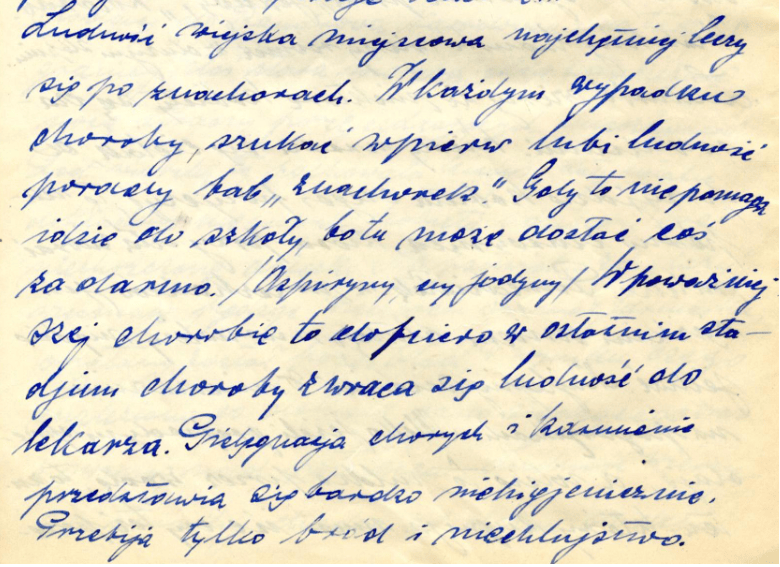
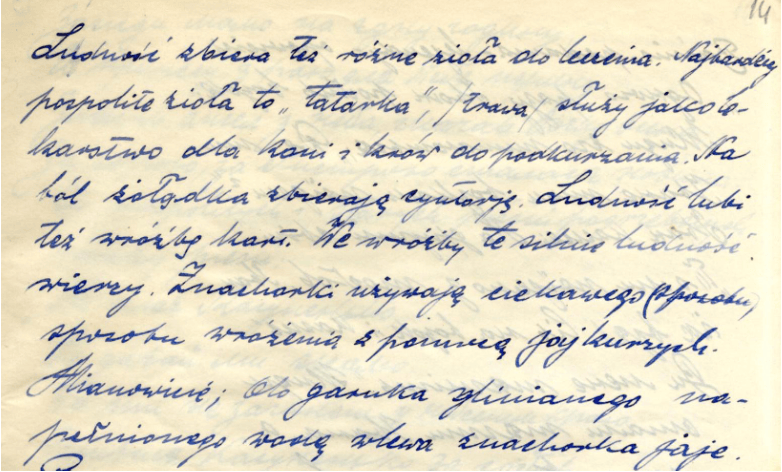
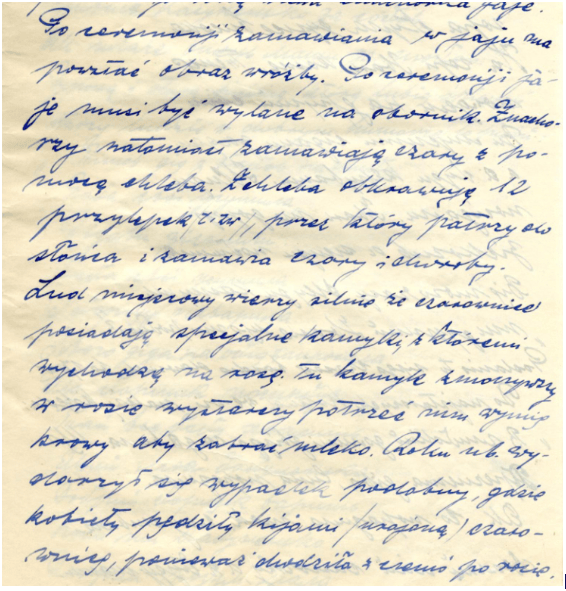
Ludność wiejska migrowa najchętniej leczy się po kwaterach. W każdym wypadku choroby, szukać wpierw lubi ludność porady bab, „kwaterarek.” Gdy to nie pomaga idzie do szkoły, bo tu może dostać coś za darmo. /Aspiryny czy jodyny/ W poważniejszej chorobie to dopiero w ostatnim stadjum choroby zwraca się ludność do lekarza. Pielęgnacja chorych i rannych przedstawia się bardzo niehigienicznie. Przebija tylko ból i niechlujstwo. Ludność zbiera też różne zioła do leczenia. Najbardziej pospolite zioło to „tatarka” / trawa służy jako lekarstwo dla koni i krów do podkurzania. Na ból żołądka zbierają centurję. Ludność lubi też wróżby kart. We wróżby te silnie ludność wierzy. Znachorki używają ciekawego sposobu, sposobu wróżenia za pomocą jaj kurzych. Mianowicie; do garnka glinianego napełnionego wodą wlewa znachorka jaje. Po ceremonij rzucania w jaju ma powstać obraz wróżby. Po ceremoniji jaje musi być wylane na obornik. Znachorzy natomiast rzucają czary z pomocą chleba. Chlebem obramują 12 przylepek t.zw., przez który patrzą do słońca i rzucają czary i chwosty. Lud miejscowy wierzy silnie, że czarownice posiadają specjalne kamyki, z którymi wychodzą na rosę. Ten kamyk zmoczony w rosie wystarczy potrzeć nim wymie krowy aby zabrać mleko. Roku ub. przydarzy się wypadek podobny, gdzie kobiety pędziły kijami/uzojawa czarownicę, ponieważ dowodziła z czarami po rosie.
Baśnie – podania – legendy – opowieści
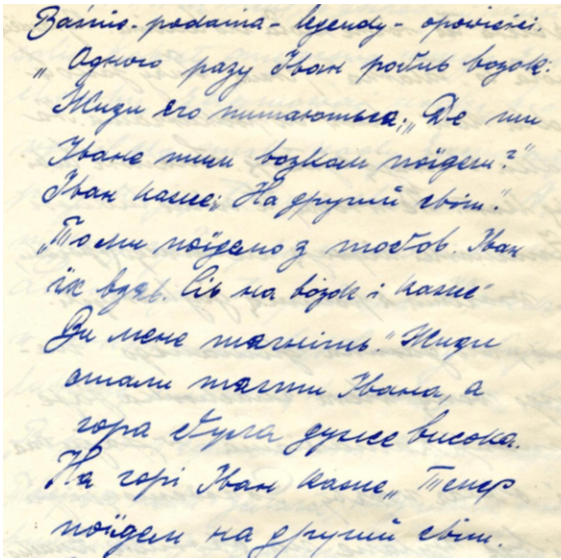
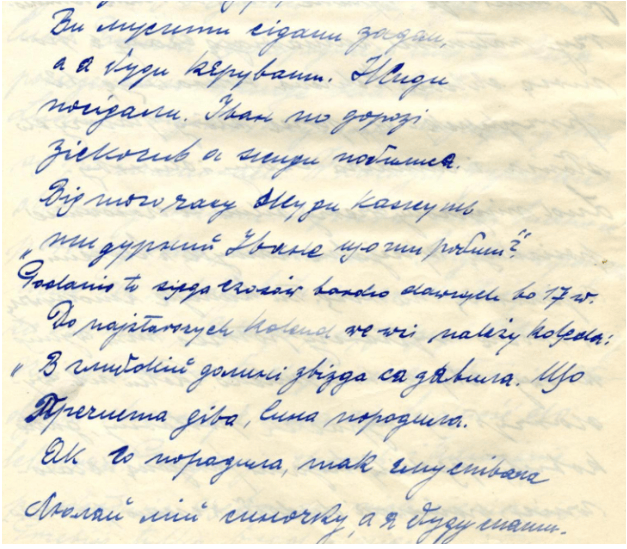
„Одного разу Іван робив возок. Жиди єго питаються: „Де ми Іване тим возком поїдем? “Іван каже: „На другий світ.“ „То ми поїдемо з тобов.“ Іванїм вірив. Сів на возок і каже „Ви мене тягніть.“ Жидистали тягти Івана, агора була дуже висока. На горі Іван каже „Тепер поїдем на другий світ. Ви мислили сідали задки,а я буду керувати. Тлудипоїхали. Тлап по дорозі зіскочив а мисли побилися. Від того часу тлуди кажуть”ти дурний Іване що ти робив?”
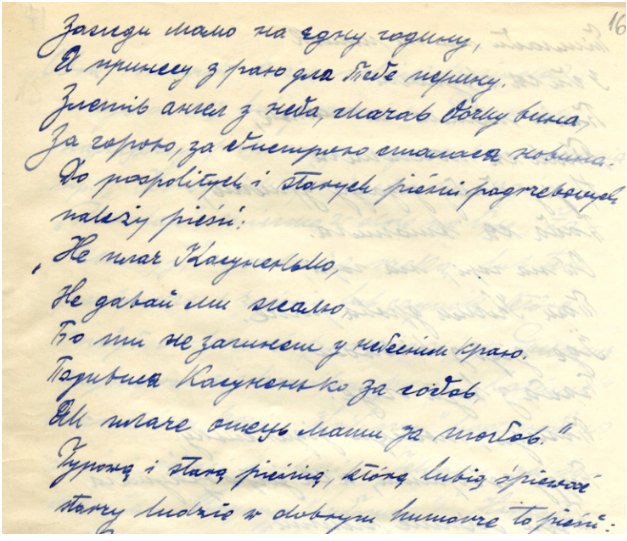
Posłanie to sięga czasów bardzo dawnych bo 17 w. Do najstarszych kolend we wsi należy kolenda:
“В убогій домині звізда ся з’явила. Що
Пречиста діва, Сина породила.
Як го породила, так йму співала
Люляй мій синочку, а я буду спати.
Зайди мамо на одну годину,
Я принесу з раю для тебе перлину.
Летить ангел з неба, скакав дочку винла
За горою, за вітром сталася новина.
Do pospolitych i starych pieśni pogrzebowych należy pieśń
„Не плач Катерино,
Не давай ми жалю
Бо ти не загинеш у небесним краю.
Родила Катерина за тугою
Як плаче отець мати за тобою.“
Typowa i stara pieśń, którą lubią śp
English Translation: Google-Powered
Warning: this translation may be terrible. It was done electronically by someone who can speak neither Polish nor Ukrainian/Lemko. Do you wish to see it improve? You can help! Contact us.
Uwaga: to tłumaczenie może być fatalne. Zostało wykonane automatycznie przez osobę, która nie zna ani języka polskiego, ani ukraińskiego/łemkowskiego. Chcesz, żeby było lepsze? Możesz pomóc! Skontaktuj się z nami.
Spiritual Culture.
The local people hold a very strong belief in spirits and apparitions. They believe that after death, the soul of a good person returns to earth on the third night to bid farewell to their family and household, before departing forever for other realms. The soul of an evil person, however, remains on earth, doing penance in the very places where they committed their sins. Almost every elderly villager claims to have seen a spirit—or to have been led astray by one, a phenomenon known as being “led by a błąd” (a misleading spirit). By the road leading to Bandrów Narodowy, near the border, stands an old willow tree where spirits frequently terrify passersby. It is said—though the exact date cannot be determined—that a woman once buried an unbaptized, strangled infant beneath this willow. In a pasture known as “Łary,” a villager returning home in the evening with pigs from a market was led astray by such a spirit; he was not discovered until the following morning, sitting by a stream alongside one of his pigs. The local people believe that these spirits wander from house to house. Not long ago, an incident occurred at the Gełyczak farm: stones were suddenly hurled at the household members. Terrified, everyone fled the house and ran out onto the road, screaming. They spent the night at a neighbor’s home, and the next day, they brought in a priest to bless the premises. The inhabitants are convinced that an evil spirit lurks in every corner. Consequently, there are very few such spirits in our immediate vicinity. In one extreme instance, a local man nicknamed “Jekawy”—convinced that an evil spirit had possessed his horse—caught a cat, gouged out its eyes, skinned it while it was still alive, and threw the animal into a fire. Ever since then, this farmer has been known by the nickname “Jekawy.” We also have a good understanding of the local folk beliefs. The people believe that certain women are witches. If a calf is born and a woman comes by to borrow something, she is assumed to be a witch who has come to steal the milk. For the local inhabitants, Monday is considered an inauspicious day; one should not travel anywhere, but rather stay at home and engage in conversation. If a housewife sells milk—and happens to dilute it with water—she must sprinkle some salt on it, especially if the buyer has to cross a river. Local women know how to “conjure away” illnesses and remove “evil eyes” (hexes) by placing a piece of burnt charcoal into a bowl of water, reciting incantations, and sprinkling the water onto the face of the afflicted person. On Good Friday, a housewife would not lend anything to anyone for any reason. The population is also devout; everyone is expected to be present at the Orthodox church on Sundays and religious holidays. The most cherished folk prayer is the “Symbol of Faith” (the Creed).
“I believe in one God, the Father Almighty, Maker of heaven and earth, and of all things visible and invisible. And in one Lord Jesus Christ, the only-begotten Son of God, begotten of the Father before all ages…”
When it comes to medical care, the rural population often prefers to seek help from local traditional healers—women known as “kwaterarki.” In the event of an illness, people typically look to these healers for advice first. If that proves ineffective, they turn to the school, where they might be able to obtain something for free. /Aspirin or iodine/ In cases of serious illness, the local population only turns to a doctor in the very final stage of the disease. The care provided to the sick and wounded is highly unhygienic; one encounters only suffering and squalor. People also gather various herbs for medicinal purposes. The most common herb is “tatarka” (sweet flag/calamus)—the plant is used as a remedy for horses and cows, often administered via smoke (fumigation). For stomach aches, they collect centaury. The local people are also fond of card reading—a practice in which they place great faith. Folk healers (women) employ an intriguing method of divination using chicken eggs: the healer cracks an egg into an earthenware pot filled with water. Through a specific ritual, an image—a sign—is said to appear within the egg. Once the ritual is complete, the egg must be discarded onto a manure pile. Male folk healers, meanwhile, cast spells using bread; they arrange twelve crusts (or pieces of bread) to form a frame, through which they look toward the sun while casting spells or incantations. The local population firmly believes that witches possess special small stones, which they take out into the dew. By wetting such a stone in the dew and rubbing it against a cow’s udder, a witch can steal the animal’s milk. Last year, an incident occurred where local women chased a woman with sticks, accusing her of being a witch because she had been seen performing such rituals in the dew.
Fairy tales – folk tales – legends – stories
“Once Ivan was making a cart. The Jews asked him: “Where are we going to go with that cart, Ivan?” Ivan said: “To the next world.” “Then we will go with you.” Ivan believed them. He sat on the cart and said, “You pull me.” The Jews began to pull Ivan, the hill was very high. On the hill Ivan said, “Now we will go to the next world. You thought you were sitting behind me, and I will drive.” The poor people set off. The poor people jumped on the road and the poor people fought. Since then the poor people have been saying, “You fool Ivan, what have you done?”
This message goes back to very ancient times, because it was 17 years ago. The oldest carols in the village include the following carol:
“A star appeared in a poor house. That
The Most Pure Virgin, gave birth to a Son.
As she gave birth, she sang
Swing my son, and I will sleep.
Come in, mother, for one hour,
I will bring you a pearl from heaven.
An angel flies from heaven, galloping his daughter along
News has happened over the mountain, over the wind.
The following song belongs to the common and old funeral songs
“Don’t cry, Katerina,
Don’t let me regret it
Because you will not perish in the heavenly land.
Katerina gave birth to longing
As a father cries for you, a mother.”
A typical and old song that śp loves
Sanok Genes seeks to create a database of transcripts and English translations from the “Kultura Duchowa” sections from the 1936 Sanok School Inspectorate Questionnaires. The original documents are held by the Sanok Museum of History and digitized by the Sanok Digital Library. To learn more, see the project description.
Sanok Genes stawia sobie za cel stworzenie bazy danych zawierającej transkrypcje oraz tłumaczenia na język angielski fragmentów dotyczących „kultury duchowej”, pochodzących z kwestionariuszy Inspektoratu Szkolnego w Sanoku z 1936 roku. Oryginalne dokumenty znajdują się w zbiorach Muzeum Historycznego w Sanoku i zostały zdigitalizowane przez Sanocką Bibliotekę Cyfrową. Więcej informacji można znaleźć w opisie projektu.

