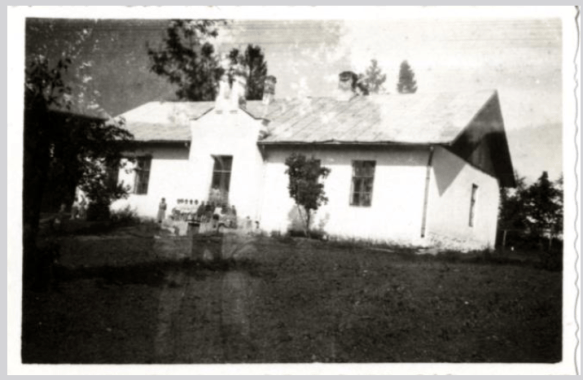
Bereska is a village in Solina Commune, Lesko County.
Bereska– wieś w gminie Solina, w powiecie leskim.
Transcript: Google-Powered
Warning: this transcription may be terrible. It was done electronically by someone who can speak neither Polish nor Ukrainian/Lemko. Do you wish to see it improve? You can help! Contact us.
Uwaga: ta transkrypcja może być fatalna. Została wykonana automatycznie przez osobę, która nie zna ani języka polskiego, ani ukraińskiego/łemkowskiego. Chcesz, żeby była lepsza? Możesz pomóc! Skontaktuj się z nami.
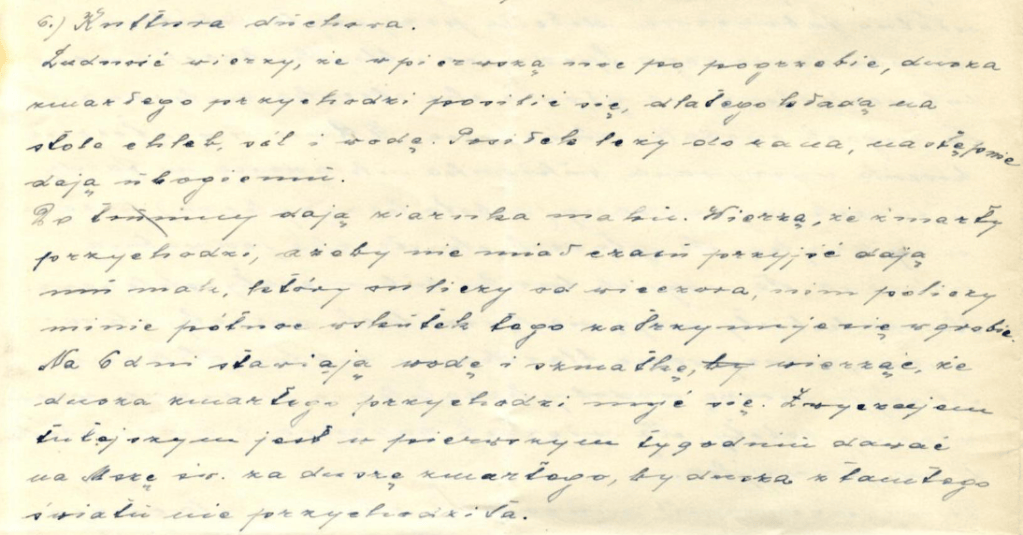
6.) Kultura duchowa.
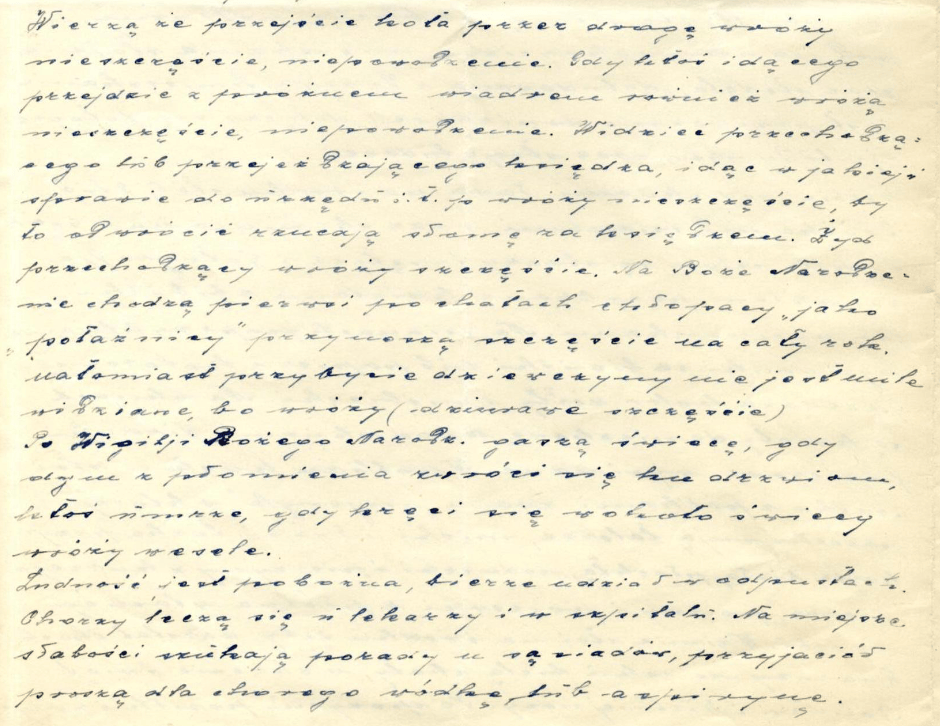
Ludność wierzy, że w pierwszą noc po pogrzebie, dusza zmarłego przychodzi posilić się, dlatego kładą na stole chleb, sól i wodę. Posiłek leży do rana, następnie dają ubogimi.
Po łożnicy dają ziarnka maku. Wierzą, że zmarły przychodzi, ażeby nie miał czasu przyjść dają mu mak, który on liczy od wieczora, nim policzy minie północ wskutek tego zatrzymuje się w grobie.
Na 6 dni stawiają wodę i szmatkę, bo wierzą, że dusza zmarłego przychodzi myć się. Zwyczajem tutajszym jest w pierwszym tygodniu dawać na mszę św. za duszę zmarłego, by dusza z tamtego świata nie przychodziła.
Wierzą że przecięcie koła przez drogę wróży nieszczęście, niepowodzenie. Gdy ktoś idący przejdzie z próżnem wiadrem również wróżą nieszczęście, niepowodzenie. Widzieć przechodzącego lub przejeżdżającego księdza, idąc w jakiejś sprawie do urzędu i t. p. wróży nieszczęście, by to odwrócić rzucają słomę za lewą rękiem. Żyd przechodzący wróży szczęście. Na Boże Narodzenie chodzą pierwsi po chałupach kolędnicy, jako “pobożnicy” przynoszą szczęście na cały rok, natomiast przybycie dziewczyny nie jest mile widziane, bo wróży (dziurawe szczęście)
Po Wigilji Bożego Narodz. palą świecę, gdy dym z płomienia zwróci się ku drzwiom, to ktoś umrze, gdy kręci się wokoło świecy wróży wesele.
Ludność jest pobożna, bierze udział w odpustach. Chorzy leczą się u lekarzy i w szpitalu. Na miejsce słabości szukają porady u sąsiadów, przyjaciół proszą dla chorego wódkę lub aspirynę.
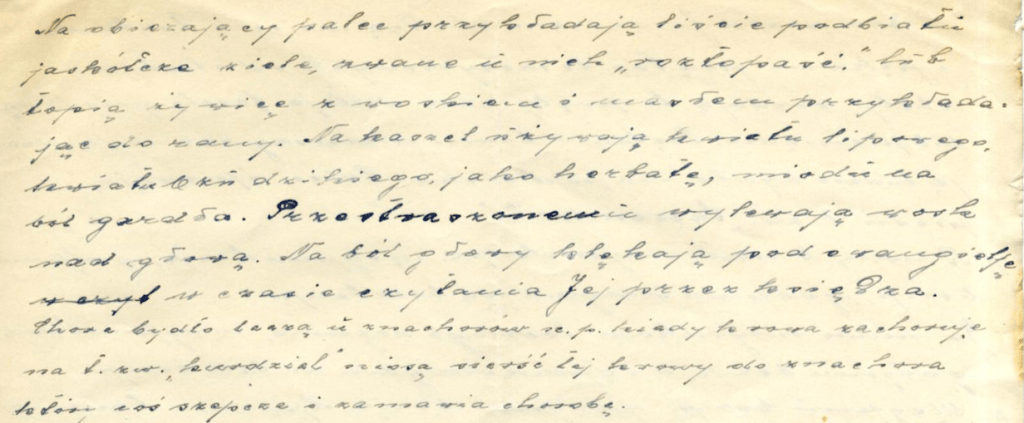
Na obierający palec przykładają liście podbiału, jaskółcze ziele, zwane u nich „rostopaść”, lub topią żywicę z woskiem i masłem przykładając do rany. Na kaszel używają kwiatu lipowego, kwiatuszków dzikiego, jako herbatę, miodu na ból gardła. Przestraszonym wylewają wosk nad głową. Na ból głowy klękają pod ewangielję w czasie czytania jej przez księdza. Chore bydło leczą u znachorów n. p. kiedy krowa zachoruje na t. zw. twardział niosą sierść tej krowy do znachora tenże coś szepcze i zamawia chorobę.
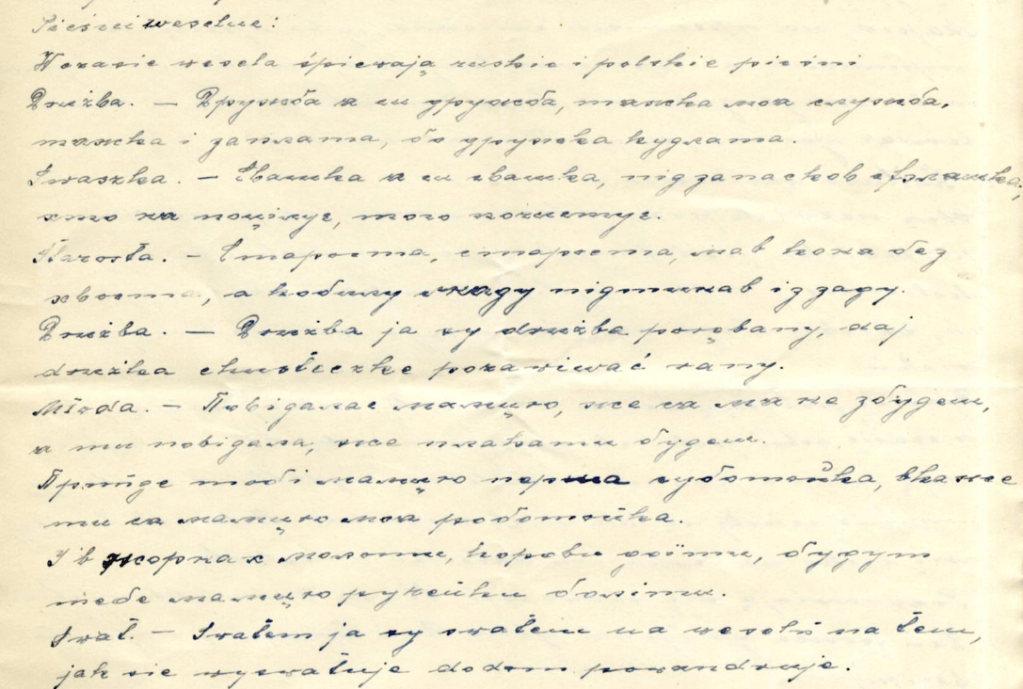
Pieśni weselne:
W czasie wesela śpiewają ruskie i polskie pieśni
Drużba. — Дружба я си дружба, мамочка моя слухала, мамочка і за тата, бо дружба кудлата.
Swaszka. — Свашка я си свашка, підзаначок а підпалка, хто на поцілуй, того поцілує.
Starosta. — Староста, староста, мав цапа без хвоста, а кобилу гнаду підпихав із заду.
Drużba. — Drużba ja sy drużba porąbany, daj drużba chusteczkę pokazować rany.
Młoda. — Повідала мамуню, все я вас не забуду, я ти повідала, все плакати буду.
Прийде тобі мамуню перша суботонька, вспомнеш ти си мамуню моя роботонька. І в дворах є молоко, корови ссіти, будуть тебе мамуню рученьки боліти.
Swał. — Swałem ja sy swałem na weselu na tem, jak sie wyswaluja do dom powandruje.
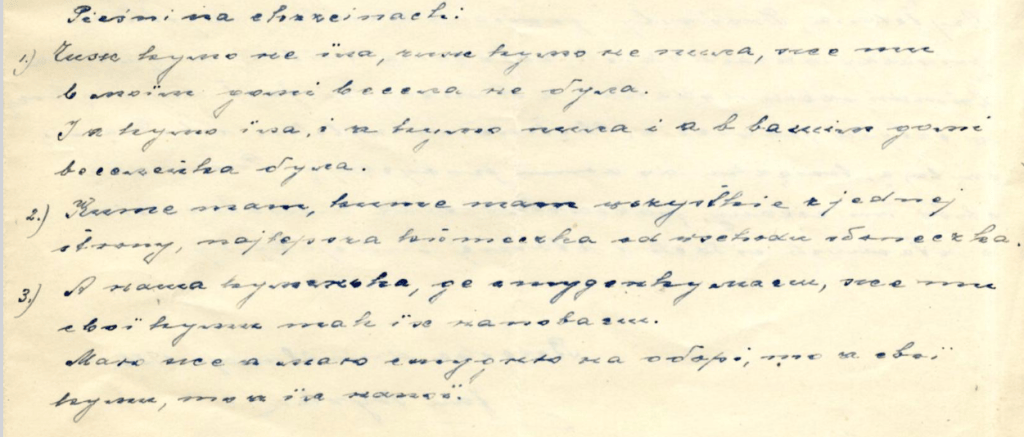
Pieśni na chrzcinach:
- Чом кумо не їла, чом кумо не пила, все тив моїм домі весела не була. Я й кумо їла, і я й кумо пила і я в вашім домівеселенька була.
- Kumie mam, kumie mam wszytkie z jednejstrony, najlepcza kumeczka od wschodu słoneczka.
- А наша кумаська, де анігадки мати, же ти свої купки так її пановати. Так же я маю смуток на оборі; то я свої купки, то я їй панов
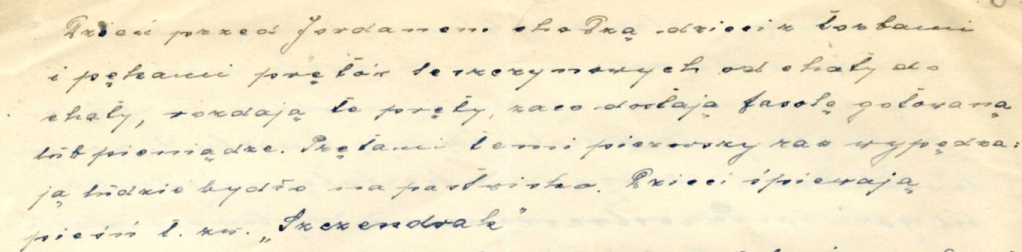
Dzień przed Jordanem chodzą dzieci z torbamii pękami prętów leszczynowych od chaty dochaty, rozdają te pręty, zaco dostają fasolę gotowanąlub pieniądze. Prętami temi pierwszy raz wypędzają ludzie bydło na pastwiska. Dzieci śpiewająpieśń t. zw. „Szczendrak”
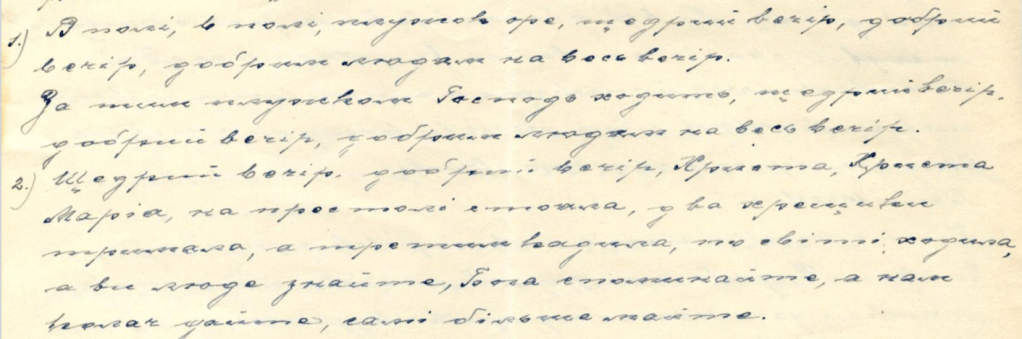
Щедрий вечір, добрий вечір, Христе, Христе Марія, на престолі стояла, два веретенця тримала, а третєє лагодила, по світі ходила, а ви люде знайте, Бога споминайте, а нам колач дайте, коли більше маєте.
В хаті, в хаті, прийшов хр н оре, щедрий вечір, добрий вечір, добрим людям на весь вечір.За ними прийшов Господь ходить, щедрий вечір, добрий вечір, добрим людям на весь вечір
English Translation: Google-Powered
Warning: this translation may be terrible. It was done electronically by someone who can speak neither Polish nor Ukrainian/Lemko. Do you wish to see it improve? You can help! Contact us.
Uwaga: to tłumaczenie może być fatalne. Zostało wykonane automatycznie przez osobę, która nie zna ani języka polskiego, ani ukraińskiego/łemkowskiego. Chcesz, żeby było lepsze? Możesz pomóc! Skontaktuj się z nami.
6.) Spiritual Culture.
The local people believe that on the first night after a funeral, the soul of the deceased returns to partake of a meal; therefore, they place bread, salt, and water on the table. The food remains there until morning, after which it is given to the poor.
Poppy seeds are scattered on the bed where the deceased lay. It is believed that the soul returns, and to prevent it from having the time to do so, they provide poppy seeds for it to count; by the time it finishes counting, midnight has passed, and it is thus compelled to remain in the grave.
On the sixth day, water and a small cloth are set out, as it is believed that the soul of the deceased returns to wash itself. It is also customary here to have a Holy Mass offered for the soul of the departed during the first week, so that the soul does not return from the other world.
It is believed that a wheel crossing one’s path foretells misfortune or failure. Similarly, encountering someone carrying an empty bucket is seen as an omen of misfortune or failure. Seeing a priest—whether on foot or in a vehicle—while one is on the way to an official matter or similar errand is considered a bad omen; to avert this, one throws straw over one’s left shoulder. Conversely, encountering a Jewish person is considered a sign of good luck. At Christmas, the first carolers to visit the cottages—known as “pobożnicy” (the pious ones)—are thought to bring good fortune for the entire year; the arrival of a young woman, however, is not welcomed, as it is believed to signify “flawed” or “leaky” luck.
After Christmas Eve dinner, a candle is lit; if the smoke from the flame drifts toward the door, it signifies that someone will die, whereas if the smoke swirls around the candle, it foretells a wedding. The population is devout and participates in religious festivals (indulgences). When ill, people seek help from doctors or hospitals; however, for minor ailments, they also turn to neighbors and friends, often asking them for vodka or aspirin for the sick person.
For a whitlow (an infected finger), they apply coltsfoot leaves or greater celandine—locally known as rostopaść—or a melted mixture of resin, wax, and butter. For a cough, they brew tea from linden blossoms or wild flowers, and use honey to soothe a sore throat. To treat someone suffering from a fright, they pour molten wax over the person’s head. For a headache, they kneel beneath the Gospel book while the priest reads from it. When livestock fall ill, owners consult folk healers; for instance, if a cow develops a condition known as twardział (a hardening or swelling), the owner brings some of the animal’s hair to the healer, who then whispers incantations to “conjure away” the illness.
Wedding Songs
During the wedding, they sing Ruthenian and Polish songs.
Groomsman (Drużba): A groomsman I am, a groomsman; my dear mother listened, my mother and for my father too, because the groomsman is shaggy-haired.
Matchmaker / Bridesmaid (Swaszka): A matchmaker I am, a matchmaker, [with] an apron and kindling; whoever is up for a kiss, that one she will kiss.
Master of Ceremonies (Starosta): The starosta, the starosta, had a billy goat without a tail, and a bay mare he pushed from behind.
Groomsman (Drużba): A groomsman I am, a groomsman all hacked up; give me a handkerchief, groomsman, to show the wounds.
The Bride (Młoda): I told you, dear mother, I will never forget you; I told you, I will always cry. The first Saturday will come for you, dear mother, and you will remember, dear mother, my little work. Even in the manors there is milk, cows to be milked; your dear little hands will ache, dear mother.
Matchmaker / Wedding Official (Swał): A matchmaker I am, a matchmaker at this wedding; once I finish my matchmaking duties, I will wander back home.
Christening Songs
- Why haven’t you eaten, dear godmother, why haven’t you drunk, dear godmother, that you haven’t been merry in my home? — I did eat, dear godmother, and I did drink, dear godmother, and I was very merry in your home.
- I have godmothers, I have godmothers all from one side; the best little godmother is from the rising of the sun.
- And our dear godmother, where [could she] even have a thought, that you treat your godmothers so grandly? in the barnyard; that is for my godmothers, that is how I treat them grandly.
Epiphany Eve (Jordan) Custom
The day before Jordan [Epiphany], children go from cottage to cottage with bags and bundles of hazel rods. They hand out these rods, in exchange for which they receive boiled beans or money. People use these rods the first time they drive cattle out to pasture. The children sing a song called “Szczendrak” [Shchedrivka]:
Generous evening, good evening, Christ, Christ Mary stood at the altar; she held two spindles, and was preparing a third; she walked about the world. And you, people, know this: remember God, and give us a kolach [ritual braided bread], if you have more to spare.
In the cottage, in the cottage, Christ came to plow generous evening, good evening, to good people for the whole evening. Behind Him came the Lord walking, generous evening, good evening, to good people for the whole evening.
Sanok Genes seeks to create a database of transcripts and English translations from the “Kultura Duchowa” sections from the 1936 Sanok School Inspectorate Questionnaires. The original documents are held by the Sanok Museum of History and digitized by the Sanok Digital Library. To learn more, see the project description.
Sanok Genes stawia sobie za cel stworzenie bazy danych zawierającej transkrypcje oraz tłumaczenia na język angielski fragmentów dotyczących „kultury duchowej”, pochodzących z kwestionariuszy Inspektoratu Szkolnego w Sanoku z 1936 roku. Oryginalne dokumenty znajdują się w zbiorach Muzeum Historycznego w Sanoku i zostały zdigitalizowane przez Sanocką Bibliotekę Cyfrową. Więcej informacji można znaleźć w opisie projektu.

