Rudenka is a village in Olszanica Commune, Lesko County.
Rudenka– wieś w gminie Olszanica, w powiecie leskim.
Transcript: Google-Powered
Warning: this transcription may be terrible. It was done electronically by someone who can speak neither Polish nor Ukrainian/Lemko. Do you wish to see it improve? You can help! Contact us.
Uwaga: ta transkrypcja może być fatalna. Została wykonana automatycznie przez osobę, która nie zna ani języka polskiego, ani ukraińskiego/łemkowskiego. Chcesz, żeby była lepsza? Możesz pomóc! Skontaktuj się z nami.
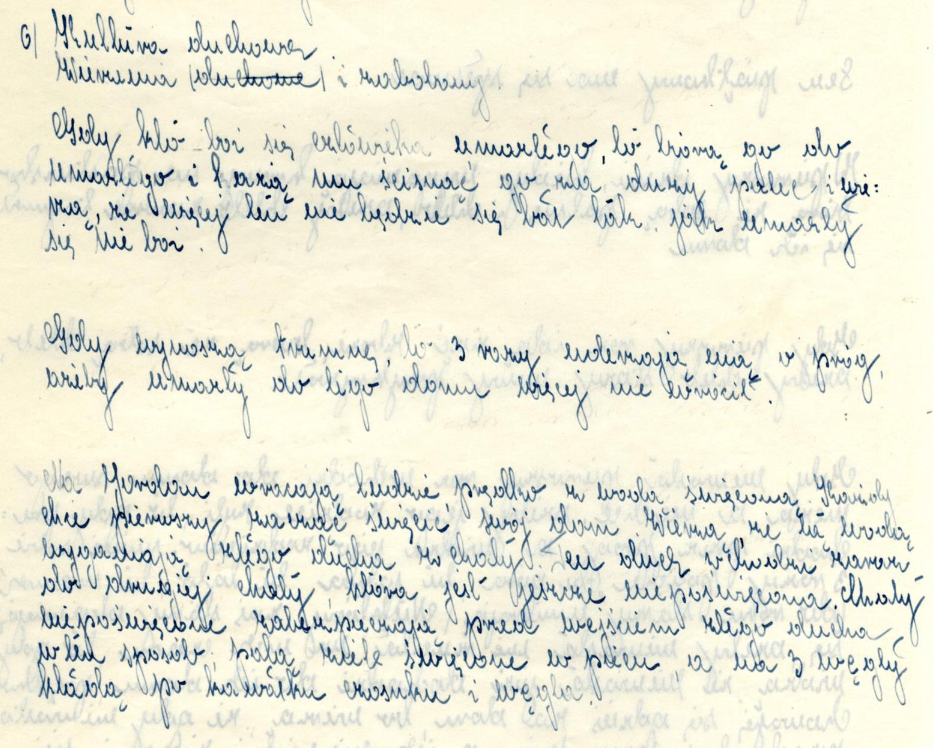
Kultura duchowa
Kultura duchowa i odmawianie od uroków
Gdy kto boi się człowieka umarłego, to bierzemy go do umarłego i każemy mu ścisnąć go za mały palec i rzec: “Mnie, nie ruszaj ten nie będzie się bał tak jak umarły się nie boi.
Gdy wynoszą trumnę, to z domu wymawiać mają w próg aby umarty do tego domu więcej nie wrócił.
Morolum wracają ludzie przelew na urok święconą. Kobiety chcą pierwszą nalać święcić swój dom. Nicem nie tu wody wymawiać jako dymu na chody. Ten duch w chałupie “nami” stoi o starej chudzie która jest jeszcze nieposwiewnu. Chałupę nieposwiewnu okadzić przed wejściem koło ducha w ten sposób, wodą miele święconą w piecu a ma z węgli która i po kawałku chosnku i węgla.
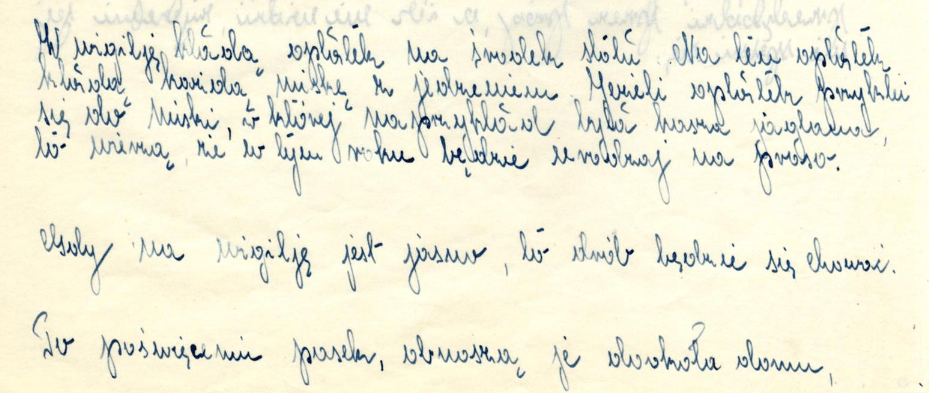
W wigiliję kładą opłatek na środek stołu. Na ten opłatek kładą trochę miodu i miskę z jedzeniem. Mówili opłatek przyklei się do miski, z której ma pomyślność być na sąsiedni rok, nie, w tym roku będzie urodzaj na proso.
Gdy na wigiliję jest jasno, to drób będzie się chować.
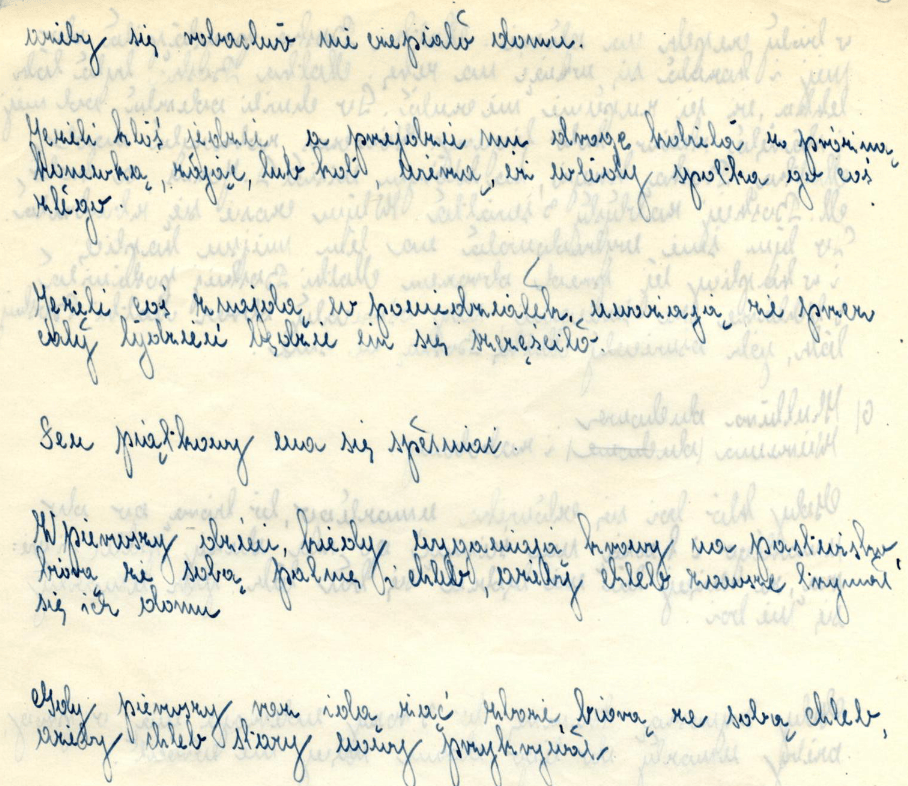
Po poświęceniu pasiek, obnoszą je dookoła domu,śmiały się robactwo nie cierpiało domu.
Mieli kłaść jedzenie, a specjalnie mu odnogę kobilią w prożnie. Kukiełkę, mącię, lub kolić drewna, bo wtedy spotka go coś złego.
Mieli coś wynajmować w poniedziałek, umorzenie, nie spiwem całą ludzkość ludzkie im się szczęściło.
Sen piątkowy ma się spełniać.
W pierwszy dzień, kiedy wyganiają krowy na pastwisko, biorą ze sobą palmę i chleb, ażeby chleb zawsze trzymał się ich domu.
Gdy pierwszy raz idą siać niosą ze sobą chleb, ażeby chleb stary nowy przykrywał.
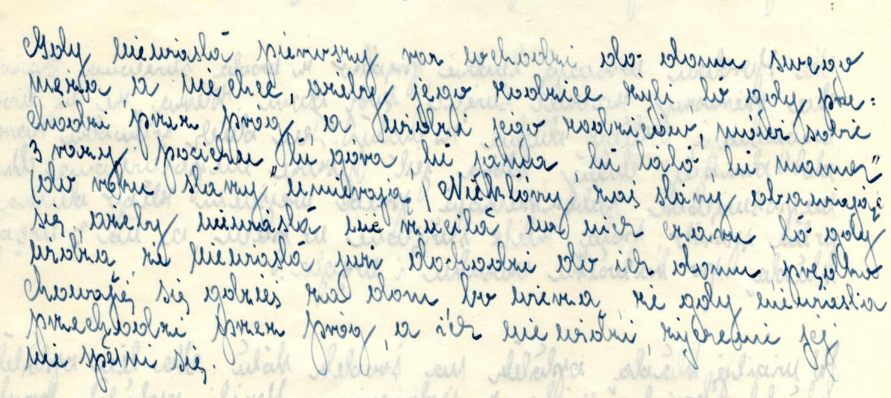
Gdy niewiasta pierwszy raz wchodzi do domu swego męża, a nie chce, ażeby jego rodzice byli jéj rady, przechodzi przez próg, a ludzie z jego rodziców, mówili sobiez nowu pociechę “Tu żona, tu jakby tu było tu mamen” (do roku sławy umierają). Niektórzy zaś sławy obawiając się, ażeby niewiasta nie rzuciła na nich uroku, bo gdy urzeknie, ta niewiasta już dochodzi do ich domu, prędko chowają się gdzieś nad dom, bo wierzą, że gdy niewiasta przechodzi przez próg, a ich nie widzi, życzenie jéjnie spełni się.
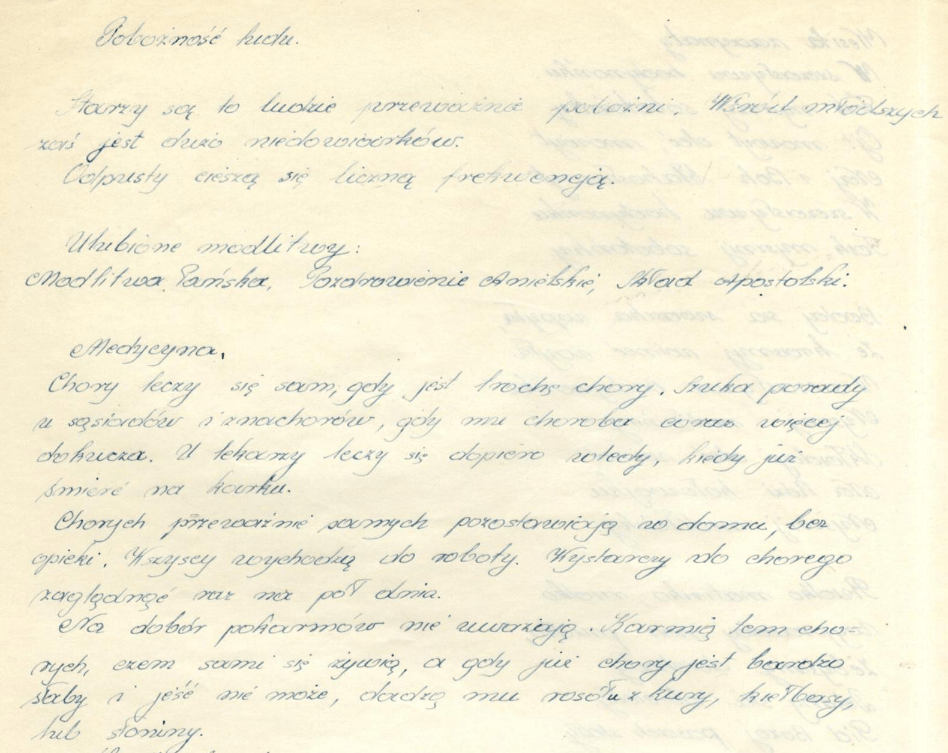
Pobożność ludu.
Starzy są to ludzie przeważnie pobożni. Wśród młodych zaś jest dużo niedowiarków.
Odpusty cieszą się liczną frekwencją.
Ulubione modlitwy:
Modlitwa Pańska, Pozdrowienie Anielskie, Skład apostolski.
Medycyna.
Chory leczy się sam, gdy jest trochę chory, szuka porady u sąsiadów i znachorów, gdy mu choroba coraz więcej dokucza. U lekarza leczy się dopiero wtedy, kiedy już śmierć na karku.
Chorych przeważnie samych pozostawiają w domu, bez opieki. Wszyscy wychodzą do roboty. Wystarczy do chorego zaglądnąć raz na pół dnia.
Na dobór pokarmów nie uważają. Karmią tem chorych, czem sami się żywią, a gdy już chory jest bardzo słaby i jeść nie może, dadzą mu rosołu z kury, herbaty, lub słoniny.
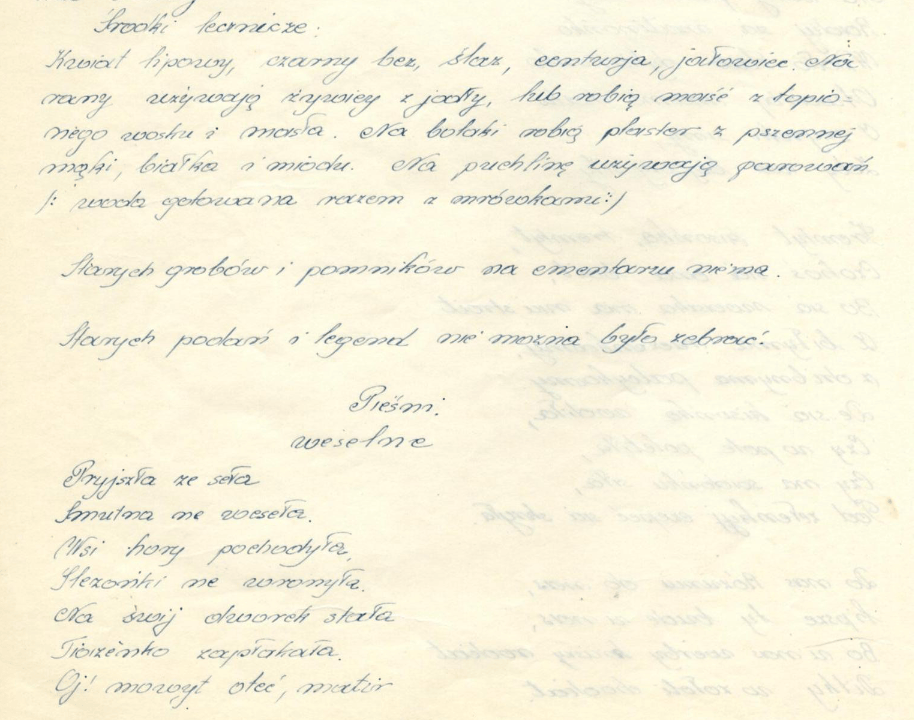
Środki lecznicze:
Kwiat lipowy, czarny bez, ślaz, centurja, jałowice. Na rany używają żywicy z jodły, lub robią maść z topionego wosku i masła. Na bolaki robią plaster z pszennej mąki, białka i miodu. Na puchlinę używają parowań (woda gotowana razem z mrówkami).
Starych grobów i pomników na cmentarzu niema.
Starych podań i legend nie można było zebrać.
Pieśn weselne
Pryjszła ze seła
Smutna ne wesela.
Wsi hory pochodyła,
Szeronki ne woronyła.
Na swój dworek stała
Tiażeńko zapłakata.
Oj! mowyt otec’, matir
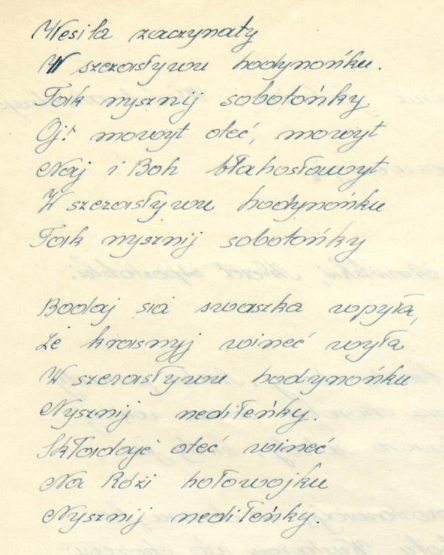
Mesila zaczynaty
W szczerstyu hodynonku.
Tak mysnij sobotonky,
Oj, mowyt otec, mowyt
Staj i Boh blahoslawyt
W szczerstyu hodynonku
Tak mysnij sobotonky.
Bodaj sia swaszka wpyła,
Że krasnyj wineć wzyła.
W szczastływu hodynonku
Mysznyj nedileńky.
Składaie oteć wineć
Na Rozi hołowojku
Mysznyj nedileńky.
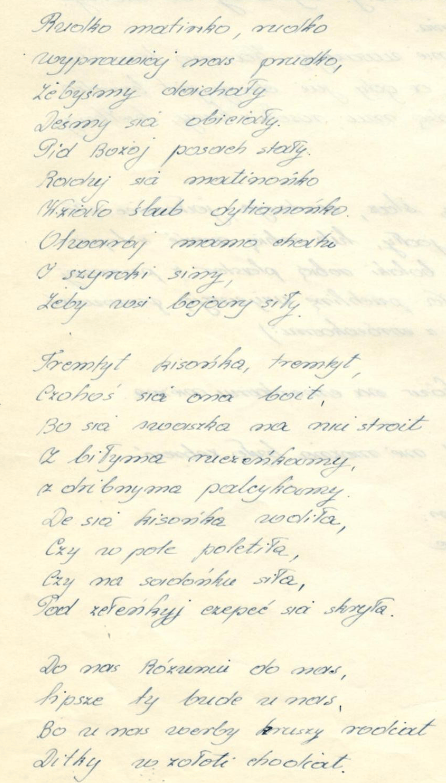
Ruozko matinko, ruozko
wyprowadźty nas prudko,
Żebyśmy doczekaly
żeśmy sia obrećaly.
Pid Boźoj powoch stały.
Rozłuj sia matinońko
Wśiěvo ślub dytianonko
Otwaraj mama dworko
O sytki siny,
Żeby nas bojany siły.
Tremtyt hisońka, tremtyt,
czohoś sia ona bojit,
Bo sia newastka na mni strojit
Z biłyma ruczeńkamy,
z dribnyma palcykamy.
De sia hisońka rodila,
czy no pole poletiła,
czy na sadońku siła,
Pod zelenyj czepeć sia skryła.
do nas Rozumij do nas,
lipsze ty bude u nas,
Bo u nas werby hruśy rodiať
Ditky w zołoti chodiat.
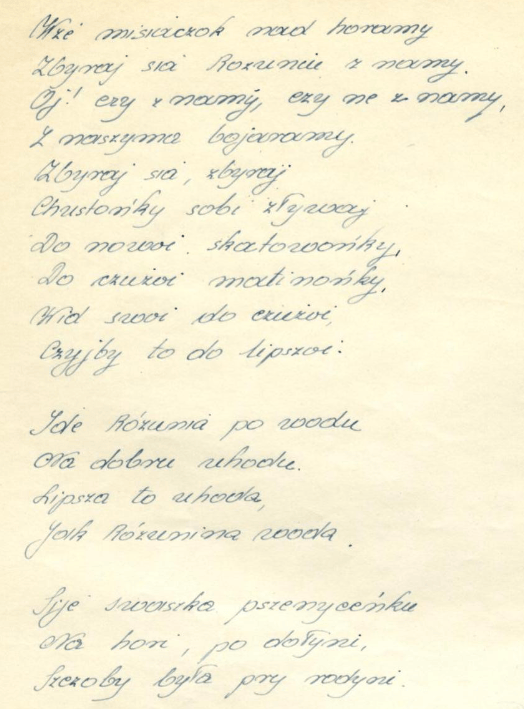
Wże misiaczok nad horamy
Zbyraj sia Rozunie z namy.
Oj! czy z namy, czy ne z namy,
Z naszyma bojaramy.
Zbyraj sia, zbyraj
Chustonky sobi zlywzaj
do nowoi shatoronky,
do czuwoi materonky.
Wid swoi do czuwoi
Czyjby to do lipszoi.
Ide Rozunia po wodu
Ma dobru uhodu.
Lipsza to uhoda,
Jak Rozunina woda.
Sije swaska pszenyczenku
Na hon, po dolyni,
Żeby była pry rodyni.
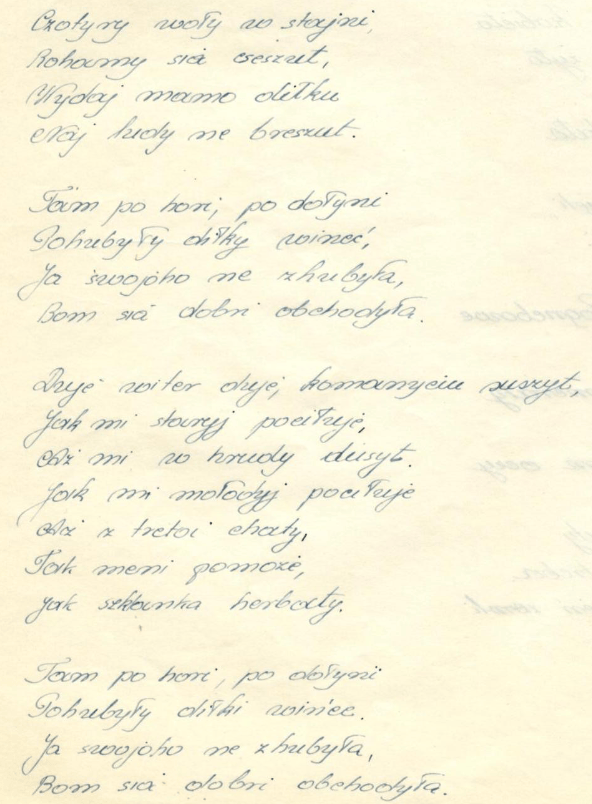
Czołyry woły do stajni,
Robomy sia csezut,
Wydaj mamo dilku,
Ej, kudy ne breszut.
Tam po hori, po dolyni
Pohubyły diwky winiec,
Ja swojoho ne zhubyła,
Bom sia dobri obchodyła.
Duje witer duje, komonyeiu suszyt,
Jak mi staryj pocituje,
Oż mi wo hrudy duszyt.
Jak mi mołodyj pocituje
Oż z tretoi chaty,
Tak meni pomoże,
Jak szklanka herbaty.
Tam po hori, po dolyni
Pohubyły diwky winiec,
Ja swojoho ne zhubyła,
Bom sia dobri obchodyła.
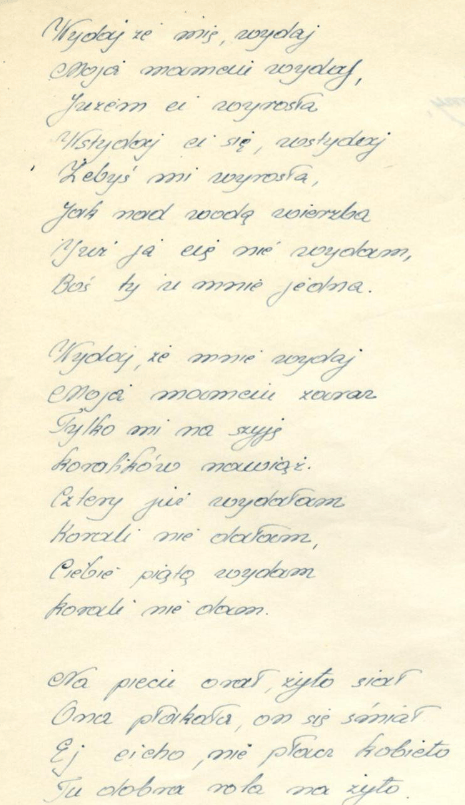
Wydaj że mie, wydaj
Moja mamusi wydaj,
Jużem ci wyrosła.
Ustydaj ci się, ustydaj
Żebyś mi wyrosła,
Jak nad wodą wierzba
Już ja cię nie wydam,
Boś ty u mnie jedna.
Wydaj że mnie wydaj
Moja mamusiu zaraz
Tylko mi na szyi
Koralików nawiąż.
Cztery już wydałam
Korali nie dałam,
Ciebie piątą wydam
Korali nie dam.
Na piecu orał, żyto siał
Ona płakała, on się śmiał
Ej cicho nie płacz kobieto
Tu dobra rola na żyto.
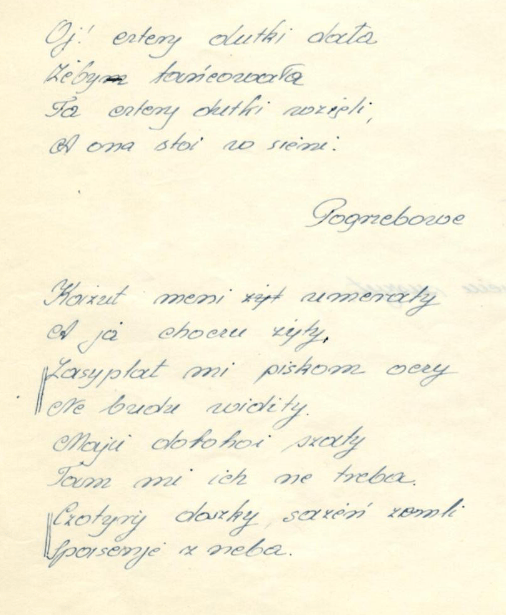
Oj! cztery dutki dała
żebym tańcowała
Ta cztery dutki wzięli;
A ona stoi w sieni.
Pogrzebowe
Każut meni żyt umeraty
A ja choczu żyty,
Zasyplat mi piskom oczy
ale budu widity.
Maju dotohoi szaty
Tam mi ich ne treba.
Cztyry doszky sażeń zemli
Spasenje z neba.
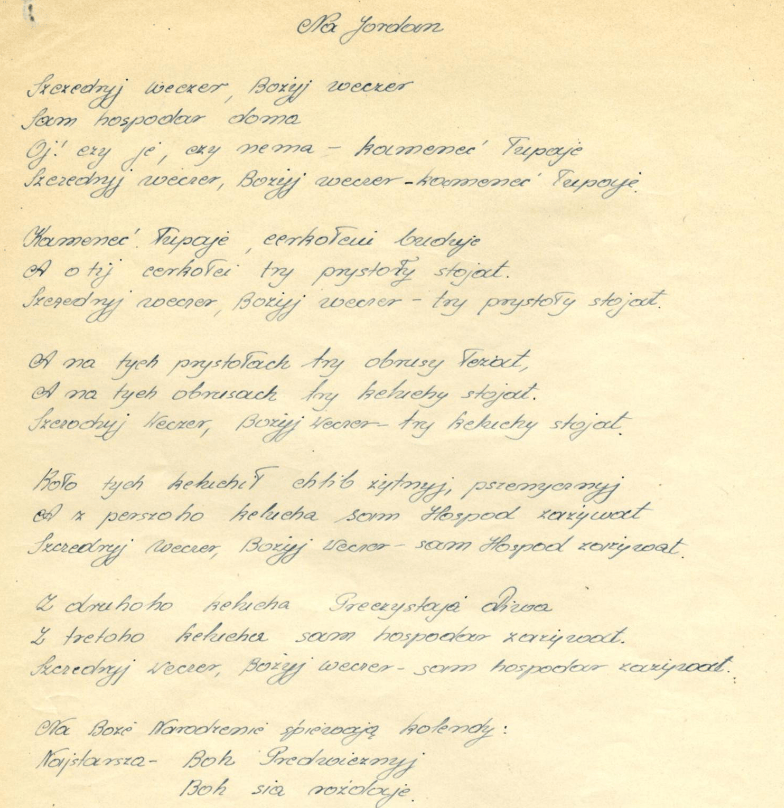
Na Jordan
Szczedryj weczer, Bożyj weczer
Sam hospodar doma
Oj! czy je, czy nema – karmeneć kłypaje
Szczedryj weczer, Bożyj weczer – karmeneć kłypaje
Karmeneć kłypaje, cerkowciu buduje
A o tły cerkowci try prystoły stojat
Szczedryj weczer, Bożyj weczer – try prystoły stojat
A na tych prystołach try obrusy leżat
A na tych obrusach try kelychy stojat
Szczedryj weczer, Bożyj weczer – try kelychy stojat
Koło tych kelychiw chlib żytnyj, pszenycznyj
Oi z perszoho kelycha sam Hospod zazywaet
Szczedryj weczer, Bożyj weczer – sam Hospod zażywał
Z druhoho kelycha Preczystaja Diwa
Z tretoho kelycha sam hospodar zazywaet
Szczedryj weczer, Bożyj weczer – sam hospodar zażywał
Na Boże Narodzenie
Na Boże Narodzenie spiewają kolendy:
Najstarsza – Boh Predwicznyij
Boh sia rożdaje
English Translation: Google-Powered
Warning: this translation may be terrible. It was done electronically by someone who can speak neither Polish nor Ukrainian/Lemko. Do you wish to see it improve? You can help! Contact us.
Uwaga: to tłumaczenie może być fatalne. Zostało wykonane automatycznie przez osobę, która nie zna ani języka polskiego, ani ukraińskiego/łemkowskiego. Chcesz, żeby było lepsze? Możesz pomóc! Skontaktuj się z nami.
Spiritual Culture
Spiritual Culture and Warding Off Spells (The Evil Eye)
If someone is afraid of a deceased person, they are taken to the body and told to grasp the deceased’s little finger and say: “Do not touch me.” Having done this, the person will no longer be afraid, just as the deceased is no longer afraid.
When a coffin is being carried out of a house, words should be spoken over the threshold to ensure the deceased never returns to that home.
People use holy water to ward off the “evil eye” (spells). Women often use it first to bless their own homes. Words are spoken over the water, and smoke is used as a cleansing agent. If a house is considered “unsettled” or “haunted”—perhaps by the spirit of someone who has not yet found peace—it must be ritually fumigated. This is done by placing hot coals from the stove near the threshold, along with a piece of garlic and a piece of charcoal.
On Christmas Eve, a opłatek (Christmas wafer) is placed in the center of the table. A bit of honey is put on the wafer, and a bowl of food is set atop it. It is said that if the wafer sticks to the bowl, it signifies prosperity for the coming year; if it does not, it indicates a good harvest of millet.
If the weather is clear on Christmas Eve, the poultry will thrive.
After beehives are blessed, they are carried around the house to ensure that no pests or vermin plague the home.
Food—specifically a horse’s leg bone—was sometimes placed in the threshold area. One was cautioned against making effigies, stirring flour, or chopping wood, lest some misfortune befall them.
There was a belief regarding the starting of tasks or the hiring of help on a Monday… …so that all of humanity might find happiness.
A dream dreamt on a Friday is said to come true.
On the first day that cows are driven out to pasture, a blessed palm branch and a loaf of bread are taken along, to ensure that bread will always remain in the household.
When sowing begins for the first time in the season, bread is carried into the fields, so that the old bread may cover the new.
When a woman enters her husband’s home for the first time—and if his parents are not pleased with the match—they might say to one another, “Here comes the wife; it is as if a curse has entered the house” (implying that the parents might die within the year). Fearing that the new wife might cast an “evil eye” upon them, the parents—upon seeing her approach the threshold—will quickly hide somewhere in the house; they believe that if she crosses the threshold without seeing them, any ill intent she might harbor will not come to pass.
The piety of the people.
The older generation is, for the most part, devout, whereas among the young, there are many non-believers.
Religious festivals (indulgences/pilgrimages) are well-attended.
Favorite prayers:
The Lord’s Prayer, the Hail Mary, and the Apostles’ Creed.
Medicine.
When someone is only slightly ill, they treat themselves; if the ailment worsens, they seek advice from neighbors or folk healers. A doctor is consulted only when death is already at the doorstep.
Sick individuals are often left at home alone, without anyone to look after them, as everyone else goes off to work. …to check on the sick person once every half-day.
They pay no attention to the choice of food. They feed the sick the same things they eat themselves; when a patient becomes very weak and can no longer eat, they offer them chicken broth, tea, or pork fat.
Medicinal remedies:
Linden blossoms, elderberry, mallow, centaury, and juniper. For wounds, they use fir resin or prepare an ointment made from melted wax and butter. For sores or boils, they apply a poultice made of wheat flour, egg white, and honey. For swelling (dropsy), they use steam treatments (water boiled together with ants).
There are no old graves or monuments in the cemetery.
It was not possible to collect any old tales or legends.
Wedding Songs
She came from the village,
Sad, not merry.
She walked over all the mountains,
She did not scare the larks (skowronki).
She stood at her yard,
Wept bitterly.
Oh! says the father, the mother:
“We must begin
In a happy hour,
On such a nice Saturday.”
Oh, says the father, he says:
“Stand and God will bless
In a happy hour,
On such a nice Saturday.”
May the matchmaker get tipsy,
That she took the red wreath,
In a happy hour,
On a nice Sunday.
The father places the wreath
On Rózia’s little head
On a nice Sunday.
Dear mother, dear,
Lead us out swiftly,
So that we may live to see
Our betrothal,
Standing under God’s canopy.
Part with us, dear mother,
Give your child to the wedding.
Open the yard, mama,
And all the hallways,
So the groomsmen may sit with us.
The little goose (husońka) trembles, trembles,
Why is she afraid?
For the bride is dressing up with me
With white little hands,
With tiny fingers.
Where was the little goose born?
Did she fly to the field,
Or did she sit in the orchard,
Hiding under a green bonnet?
Come to us, Rózia, come to us,
It will be better for you with us,
Because with us willows bear pears,
And children walk in gold.
Already the moon is over the mountains,
Get ready, Rózia, with us.
Oh! whether with us, or not with us,
With our groomsmen.
Get ready, get ready,
Gather your kerchiefs
To a new little hut,
To a strange mother.
From your own to a strange one,
If only to a better one.
Rózia goes for water,
She has a good agreement (dowry/match).
Better is that agreement,
Than Rózia’s water.
The matchmaker sows wheat
On the field, along the valley,
So that she stays with the family.
Four oxen to the stable,
The servants comb themselves,
Marry off your daughter, mama,
Hey, where the dogs don’t bark.
There over the mountain, along the valley,
Girls lost their wreaths,
I did not lose mine,
Because I behaved well.
The wind blows, blows, dries the clover,
When an old man kisses me,
It suffocates me in my chest.
When a young man kisses me
From the third cottage,
It helps me
Like a glass of tea.
There over the mountain, along the valley,
Girls lost their wreaths,
I did not lose mine,
Because I behaved well.
Marry me off, marry me off,
My dear mommy, marry me off,
I have already grown up for you.
— Be ashamed, be ashamed,
Even if you grew up for me
Like a willow over water,
I will not marry you off,
Because you are my only one.
Marry me off, marry me off,
My dear mommy, right now,
Just string some beads
On my neck.
— I have already married off four,
I gave no beads,
I will marry you off as the fifth,
I will give no beads.
He plowed on the stove, sowed rye;
She cried, he laughed.
— Hey, hush, don’t cry, woman,
Here is good soil for rye.
Oh! she gave four coins (dutki)
So I would dance;
They took the four coins,
And she stands in the hallway.
Funeral Song
They tell me one must die,
And I want to live.
They will cover my eyes with sand,
Yet I will see.
I have expensive (dorohoi) robes—
There I will not need them.
Four boards, a fathom of earth,
Salvation from heaven.
For Jordan (Epiphany)
Generous evening, God’s evening,
The master himself is at home.
Oh! whether he is there or not—the stonemason (kameneć) taps,
Generous evening, God’s evening—the stonemason taps.
The stonemason taps, builds a little church,
And in that little church stand three altars,
Generous evening, God’s evening—three altars stand.
And on those altars lie three tablecloths,
And on those tablecloths stand three chalices,
Generous evening, God’s evening—three chalices stand.
Beside those chalices is rye bread, wheat bread.
Oh, from the first chalice the Lord Himself partakes,
Generous evening, God’s evening—the Lord Himself partook.
From the second chalice, the Most Pure Virgin,
From the third chalice, the master himself partakes,
Generous evening, God’s evening—the master himself partook.
On Christmas
At Christmas they sing carols:
The oldest is “God Eternal” (Boh Predwicznyj)
“God is Born” (Boh sia rożdaje)
Sanok Genes seeks to create a database of transcripts and English translations from the “Kultura Duchowa” sections from the 1936 Sanok School Inspectorate Questionnaires. The original documents are held by the Sanok Museum of History and digitized by the Sanok Digital Library. To learn more, see the project description.
Sanok Genes stawia sobie za cel stworzenie bazy danych zawierającej transkrypcje oraz tłumaczenia na język angielski fragmentów dotyczących „kultury duchowej”, pochodzących z kwestionariuszy Inspektoratu Szkolnego w Sanoku z 1936 roku. Oryginalne dokumenty znajdują się w zbiorach Muzeum Historycznego w Sanoku i zostały zdigitalizowane przez Sanocką Bibliotekę Cyfrową. Więcej informacji można znaleźć w opisie projektu.

