Hoszowczyk is a village in Uztrzyki Dolne Commune, Bieszczady County.
Hoszowczyk – wieś w gminie Uztrzyki Dolne, w powiecie bieszczadzkim.
Transcript: Google-Powered
Warning: this transcription may be terrible. It was done electronically by someone who can speak neither Polish nor Ukrainian/Lemko. Do you wish to see it improve? You can help! Contact us.
Uwaga: ta transkrypcja może być fatalna. Została wykonana automatycznie przez osobę, która nie zna ani języka polskiego, ani ukraińskiego/łemkowskiego. Chcesz, żeby była lepsza? Możesz pomóc! Skontaktuj się z nami.
6.) Kultura duchowa:
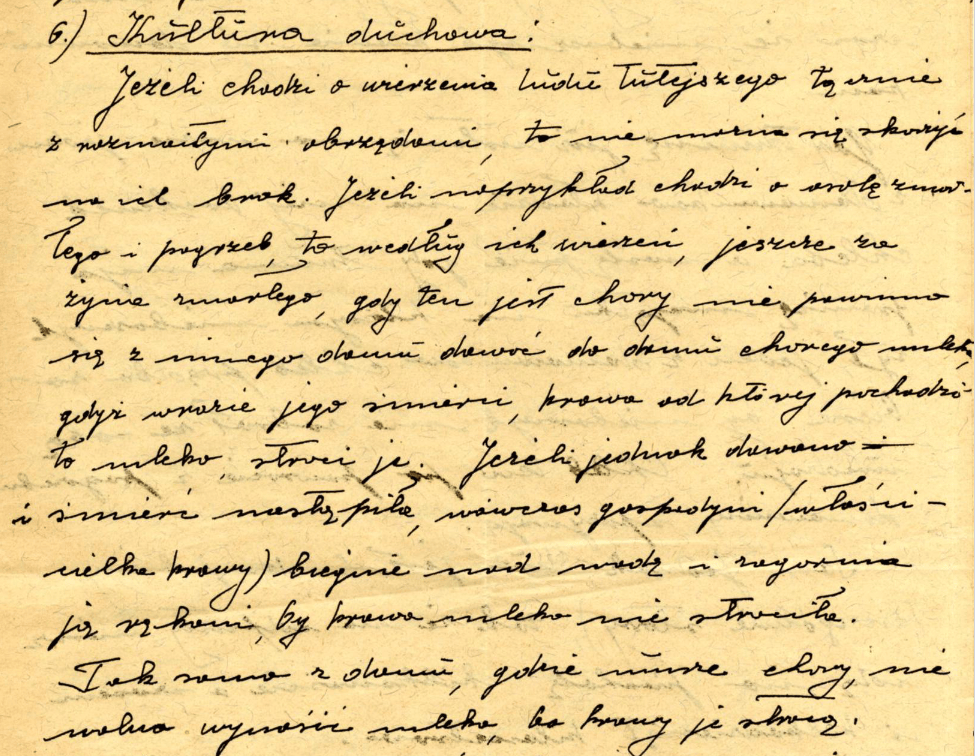
Jeżeli chodzi o wierzenia ludu tutejszego, to nie można się skarżyć na ich brak. Jeżeli naprzykład chodzi o orkę zmarłego i pogrzeb, to według ich wierzeń, jeszcze za życia zmarłego, gdy ten jest chory, nie powinno się z innego domu dawać do domu chorego mleka, gdyż w razie jego śmierci, krowa od której pochodzi to mleko, stroi je. Jeżeli jednak dawano i śmierć nastąpiła, wówczas gospodyni (właścicielka krowy) biegnie nad wodę i zagarnia jor rękami, by krowa mleka nie stroiła.
Tak samo z domem, gdzie umiera chory, nie wolno wynosić mleka bo krowy je stroją.
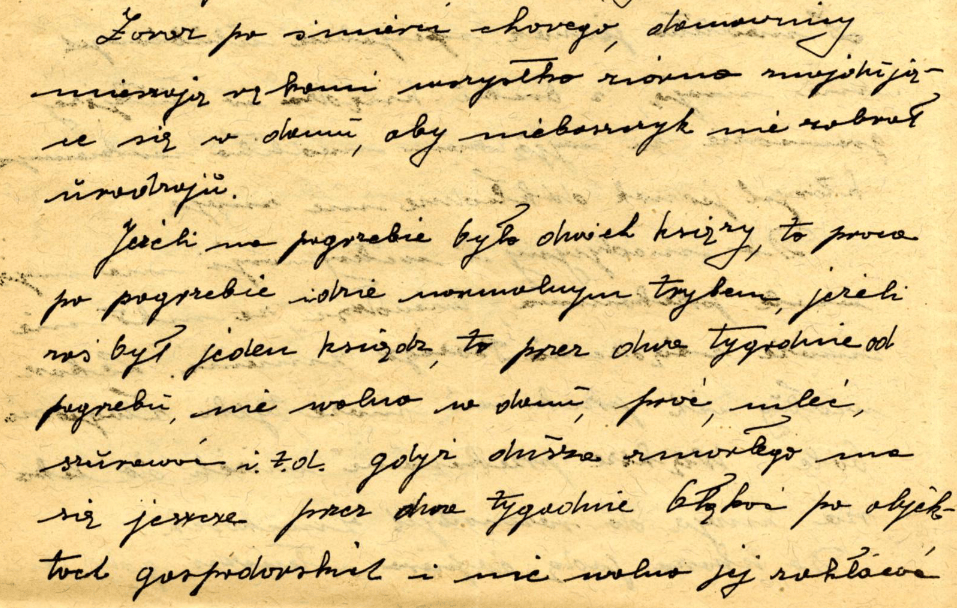
Żona po śmierci chorego, domownicy wierszuja w domu wszystko równe, mujski jaie się w domu, aby nieboszczyk nie zabrał urodzaju.
Jeżeli na pogrzebie było dwóch krzyży, to praca po pogrzebie idzie normalnym trybem, jeżeli zaś był jeden ksiądz, to przez dwa tygodnie od pogrzebu nie wolno w domu prać, mleć, siurawać i t.d., gdyż dusza zmarłego ma się jeszcze przez dwa tygodnie błąkać po obiektach gospodarskich i nie wolno jej zakłócać spokoju/jeden ksiądz wyprowadza ciało, a drugi duszą/.
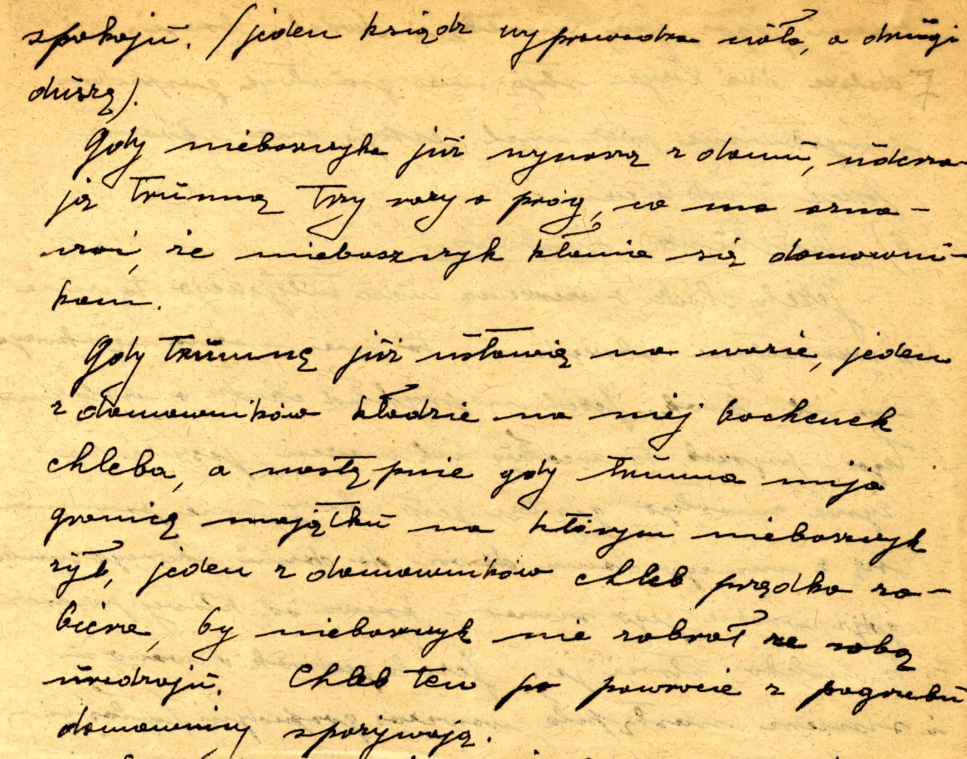
Gdy nieboszczyka już wynoszą z domu, stawiają już trumnę trzy razy o próg, co ma oznaczać, że nieboszczyk kłania się domownikom.
Gdy trumnę już ustawiają na wozie, jeden z domowników kładzie na niej bochenek chleba, a następnie, gdy trumna mija granicę majątku, na którym nieboszczyk żył, jeden z domowników chleb prędko rozbiera, by nieboszczyk nie robił na sobą niedropii. Chleb ten po powrocie z pogrzebu domownicy spożywają.
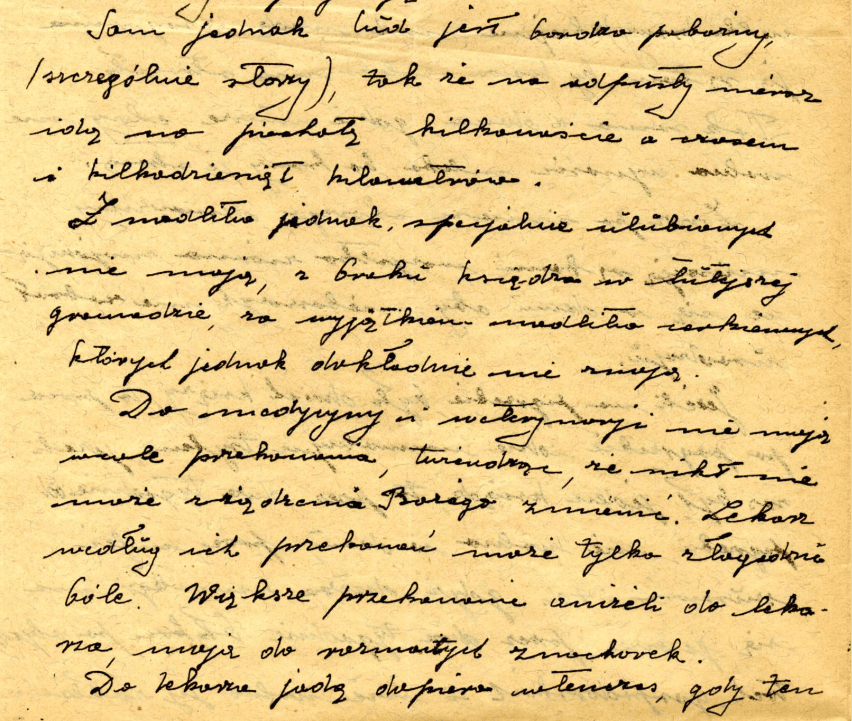
Sam jednak lud jest bardzo pobożny (szczególnie starsi), tak że na odpusty nieraz idą na piechotę kilkanaście a czasem i kilkadziesiąt kilometrów.
Z modlitwą jednak, specjalnie ulubionych nie mają, z braku księdza w tutejszej gromadzie, z wyjątkiem modlitw cerkiewnych, których jednak dokładnie nie znają.
Do medycyny i weterynarii nie mają wcale przekonania, twierdząc, że nikt nie może zrządzenia Bożego zmienić. Lekarz według ich przekonań może tylko złagodzić bóle. Większe przekonanie aniżeli do lekarza mają do rozmaitych znachorek.
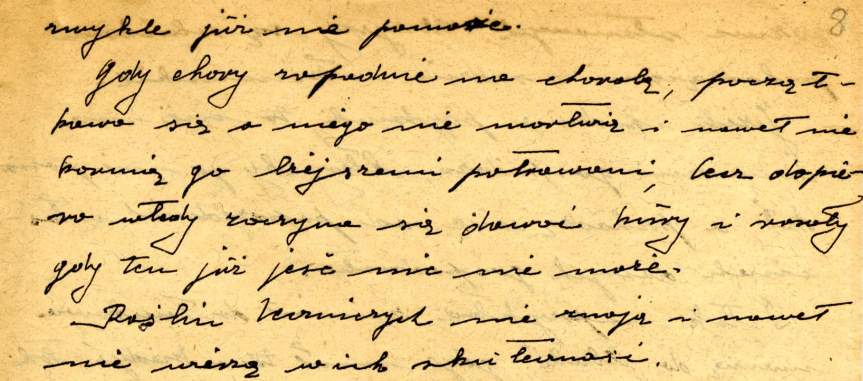
Do lekarza jeżdżą dopiero w ostateczności, gdy ten zwykle już nie pomoże.
Gdy chory zapadnie na chorobę, początkowo się o niego nie martwią i nawet nie karmią go lżejszemi potrawami, lecz dopiero wtedy zaczyna się dawać kiwy i rosoły gdy ten już jeść nic nie może. Roślin leczniczych nie znają i nawet nie wierzą w ich skuteczność.
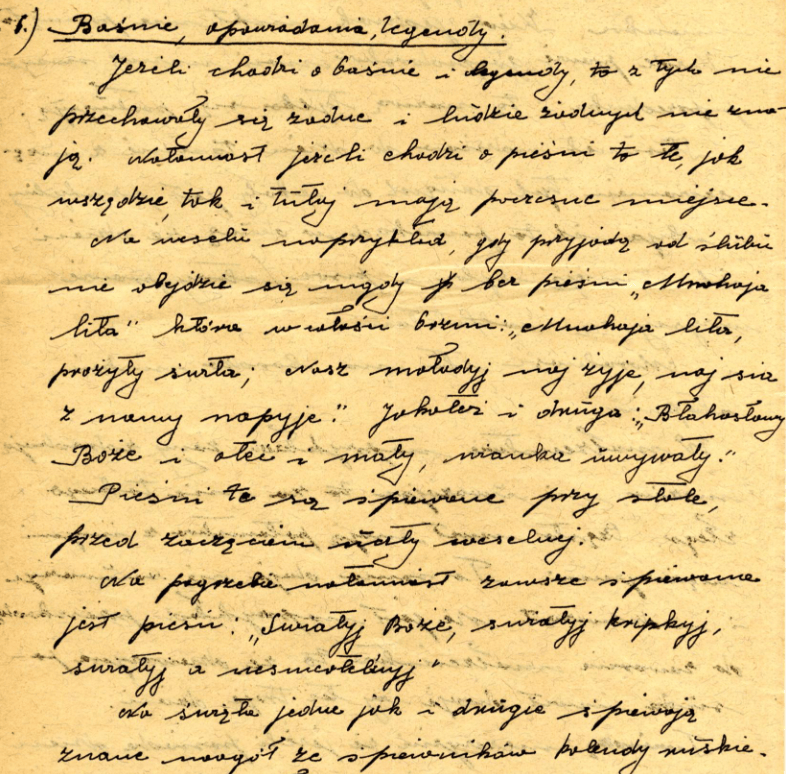
6.) Baśnie, opowiadania, legendy.
Jeżeli chodzi o baśnie i legendy, to a) tyle nie przechowały się żadne i ludzkie siedzenia nie znają. Natomiast jeżeli chodzi o pieśni, to te, jak wszędzie, tak i tutaj mają pierwsze miejsce.
Na weselu, przykład, gdy przyjdą od ślubu, nie obędzie się nigdy bez pieśni: “Chwalbaha lila”, która w treści brzmi: „Chwalbaha lila, przeżyły świeta, nasz młody mi żyje, nał siła z mamy napyje.” Jakoteż i druga: „Błahosław Bože i ojci i maty, miankie umywały.”
Pieśń to jest śpiewana przy stole, przed zacząciem stoły weseliny.
Na pogrzebie natomiast zawsze śpiewana jest pieśń: „Święty Boże, święty krepkyj, święty a niesmertelnyj”
Na święta jedne jak i drugie śpiewają znane naogół ze śpiewników kolendy ruskie.
English Translation: Google-Powered
Warning: this translation may be terrible. It was done electronically by someone who can speak neither Polish nor Ukrainian/Lemko. Do you wish to see it improve? You can help! Contact us.
Uwaga: to tłumaczenie może być fatalne. Zostało wykonane automatycznie przez osobę, która nie zna ani języka polskiego, ani ukraińskiego/łemkowskiego. Chcesz, żeby było lepsze? Możesz pomóc! Skontaktuj się z nami.
6.) Spiritual Culture:
As for the beliefs of the local people, there is certainly no shortage of them. Regarding the passing and funeral of an individual, for instance, it is believed that while a person is still alive and ill, one should not bring milk from another household into the sick person’s home; should the patient die, the cow that produced the milk might “spoil” (cease to yield milk or produce tainted milk). If such a transfer did occur and death followed, the mistress of the house (the cow’s owner) must hasten to a body of water and scoop up some water with her hands to prevent the cow from “spoiling.”
Similarly, milk must not be taken out of a house where someone is dying, for fear that the cows might “spoil.”
Following the death, the surviving spouse and other household members must level everything in the home—smoothing out surfaces or piles—to ensure the deceased does not take the household’s bounty or fertility with them into the afterlife.
If two crosses (or two priests) are present at the funeral, work may resume as usual afterward. However, if only one priest officiates, then for two weeks following the funeral, no laundry, grain grinding, or similar chores may be performed in the household; it is believed that the soul of the deceased continues to wander about the farmstead for two weeks, and its peace must not be disturbed (the idea being that one priest escorts the body, while the other attends to the soul).
When the deceased is being carried out of the house, the coffin is set down against the threshold three times—a gesture signifying that the departed is bowing to those who remain in the home. As the coffin is being placed onto the wagon, one of the household members sets a loaf of bread upon it. Later, once the coffin crosses the boundary of the estate where the deceased had lived, a family member quickly breaks the bread apart—a precaution taken to ensure the deceased does not “bring misfortune upon himself” (or “cast a shadow over his own path”). Upon returning from the funeral, the household members consume this bread.
The people themselves are, however, very devout—especially the elderly—often traveling on foot for ten, twenty, or even more kilometers to attend religious festivals (indulgences).
They have no particular favorite prayers; due to the absence of a priest in the local community, they rely on traditional church prayers, though they do not know these in any great detail.
They have no faith in medicine or veterinary science, maintaining that no one can alter God’s will. In their view, a doctor can, at best, only alleviate pain. They place far more trust in various folk healers (wise women) than in medical doctors.
They only turn to a doctor as a last resort—by which point, usually, nothing can be done to help.
When someone falls ill, the family initially shows little concern and does not even adjust the patient’s diet to include lighter, more digestible foods; it is only when the sick person can no longer eat anything at all that they begin offering broths or soups. They are unfamiliar with medicinal plants and do not believe in their efficacy.
6.) Folktales, stories, and legends.
As for folktales and legends, none have been preserved, and the local inhabitants are unaware of any. Songs, however—as is the case everywhere else—hold a prominent place here. At a wedding—for instance, upon the arrival of the wedding party following the ceremony—it is customary to sing the song “Chwalbaha lila,” which goes: “Chwalbaha lila, the holidays have passed; our young man lives, and he draws his strength from his mother.” Another song is also performed: “Bless, O God, as do the father and mother—who washed [the couple] with gentle hands.”
This song is sung at the table, before the wedding feast begins.
At a funeral, by contrast, the hymn “Holy God, Holy Mighty, Holy and Immortal” is always sung.
During various religious holidays, people sing Ruthenian (Rusyn) Christmas carols—pieces generally well-known from songbooks.
Sanok Genes seeks to create a database of transcripts and English translations from the “Kultura Duchowa” sections from the 1936 Sanok School Inspectorate Questionnaires. The original documents are held by the Sanok Museum of History and digitized by the Sanok Digital Library. To learn more, see the project description.
Sanok Genes stawia sobie za cel stworzenie bazy danych zawierającej transkrypcje oraz tłumaczenia na język angielski fragmentów dotyczących „kultury duchowej”, pochodzących z kwestionariuszy Inspektoratu Szkolnego w Sanoku z 1936 roku. Oryginalne dokumenty znajdują się w zbiorach Muzeum Historycznego w Sanoku i zostały zdigitalizowane przez Sanocką Bibliotekę Cyfrową. Więcej informacji można znaleźć w opisie projektu.

