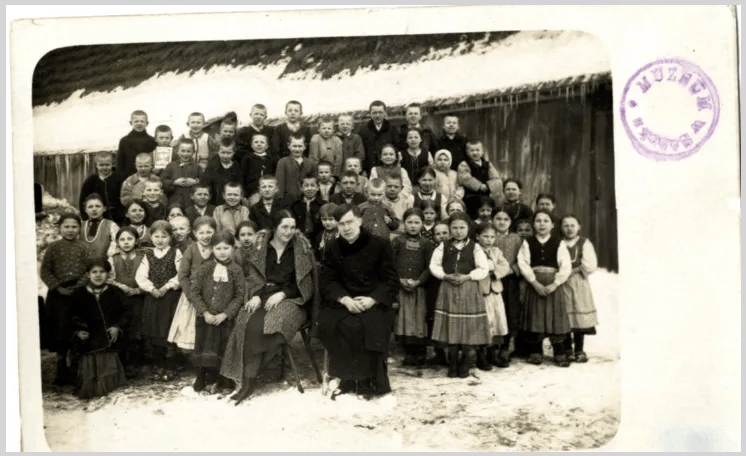
Dołżyca is a village in Cisna Commune, Lesko County.
Dołżyca– wieś w gminie Cisna, w powiecie leskim.
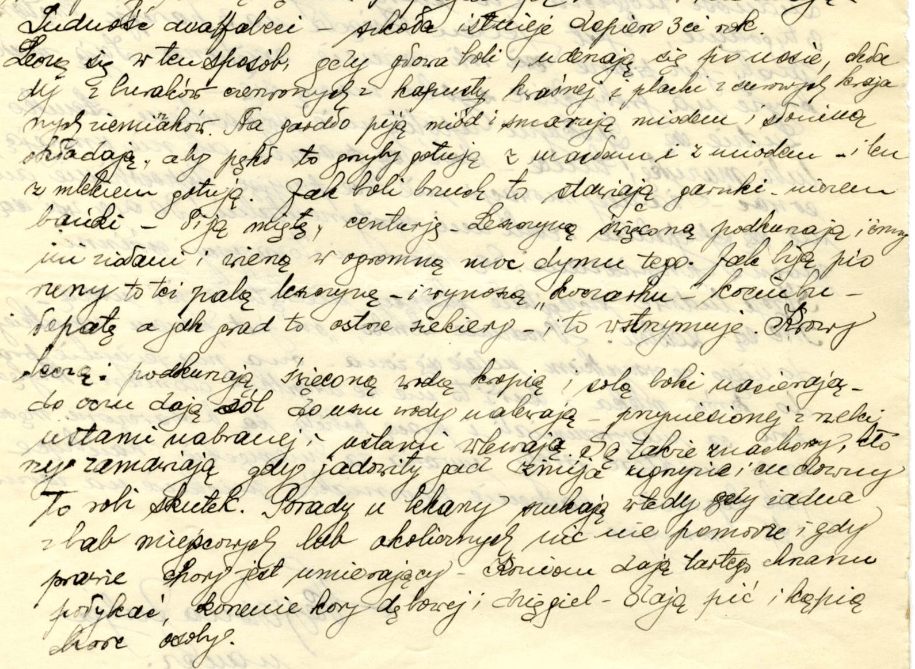
Transcript: Google-Powered
Warning: this transcription may be terrible. It was done electronically by someone who can speak neither Polish nor Ukrainian/Lemko. Do you wish to see it improve? You can help! Contact us.
Uwaga: ta transkrypcja może być fatalna. Została wykonana automatycznie przez osobę, która nie zna ani języka polskiego, ani ukraińskiego/łemkowskiego. Chcesz, żeby była lepsza? Możesz pomóc! Skontaktuj się z nami.
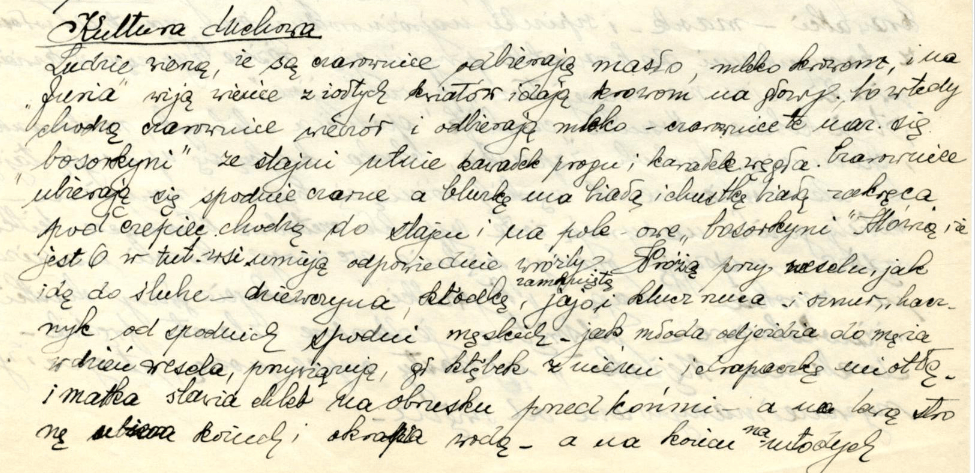
Kultura duchowa
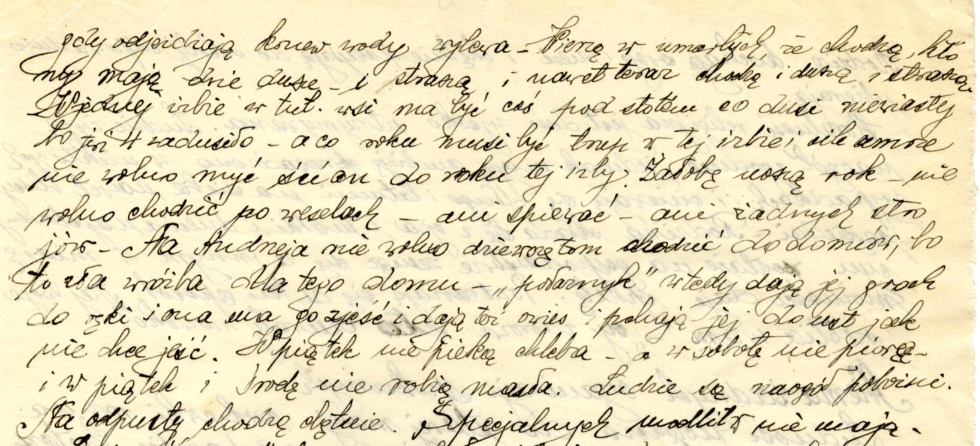
Ludzie wierzą, że są czarownice odbierają masło, mleko krowom, i na „Jana” wiją wieńce z żółtych kwiatów i dają krowom na głowę. To wtedy wchodzą czarownice w śród i odbierają mleko – czarownice te naz. się „bosonkyni” ze stajni utnie kawałek progu i kawałek węgla. Czarownice ubierają się spodnie czarne a bluzkę ma białą i chustkę białą zakręca podczepię chodzą do stajni i na pole – one „bosorkyni” Mówią że jest 6 w tut. wsi umieją odpowiednie wróżby. Próżg przy weselu, jak idę do ślubu – dziewczyna kłódkę, jajoi klucz rzuca i sznur, kamyk od spodnich spodni męskich – jak młoda zamkniętą odjeżdża do męża z dzieć wesela, przywiązują jéj kłębek z nićmi i drapsorką miotłę. i matka stawia chleb na obrusku przed końmi – a na lewą stronę ubiera kożuch; skrapla wodą – a na końcu na młodych gdy odjeżdżają konie wody wylewa — Wierzę w umarłych, że chodzą, którzy mają dwie dusze — i straszą, i nawet teraz chodzą i duszą, i straszą. W pustej izbie w tut. wsi ma być coś pod stołem co dwie niewiasty to już udusiło — a co roku musi być trup w tej izbie, ile umrze nie wolno myć ścian do roku tej izby. Żałobę noszą rok — nie wolno chodzić po weselach — ani śpiewać — ani żadnych strojów — Na Andrzeja nie wolno dziewczętom chodzić do domów, bo to zła wróżba dla tego domu — „podanych” wtedy dają jej groch do ręki i ona ma go zjeść i dają też owies i policzą jej do ust jak nie chce jeść. W piątek nie pieką chleba — a w sobotę nie piorą —i w piątek i środę nie robią masła. Ludzie są na ogół pobożni.
Na odpusty chodzą chętnie. Specjalnych modlitw nie mają.
Ludność analfabeci – szkoła istnieje dopiero 3ci rok. Leczą się w ten sposób, gdy głowa boli, uderzają się po ussie, okładają z buraków czerwonych z kapusty kwasnej i placki z surowych krajanych ziemniaków. Na gardło piją miód i smarują miodem i świnia składają, aby pękło to grzyby gotują z masłem i z miodem – i ten z mlekiem gotują. Jak boli brzuch to stawiają garnki, niczembądźi – piją miętę, centurję. Leszczynę święconą podkurzają i ona już zjedzą i wierzą w ogromną moc dymu tego. Jak biją pioruny to też palą leszczynę – i wynoszą bochenki – kociełki –łopaty a jak grad to ostrze siekiery – i to wstrzymuje. Krowy Leczą: podkurzają święconą wodą kąpią i ole boki usmarują –do oczu dają sól do uszu wody nabrają – przyniesioną z rzeki ustami nabraną – i tąże wlewają. Są także znachorzy, którzy zamawiają gdy jadowity gad żmija uszczypie i od donie To robi skutek. Porady u lekarzy szukają wtedy, gdy żadna z bab miejscowych lub okolicznych nic nie pomoże i gdy prawie chory jest umierający. Choremu dają tartej chrzanu popykać, korenie kory dębowej i dzięgiel – dają pić i kąpią chore osoby.
English Translation: Google-Powered
Warning: this translation may be terrible. It was done electronically by someone who can speak neither Polish nor Ukrainian/Lemko. Do you wish to see it improve? You can help! Contact us.
Uwaga: to tłumaczenie może być fatalne. Zostało wykonane automatycznie przez osobę, która nie zna ani języka polskiego, ani ukraińskiego/łemkowskiego. Chcesz, żeby było lepsze? Możesz pomóc! Skontaktuj się z nami.
Spiritual culture
People believe that there are witches who steal butter and milk from cows. On St. John’s Day, they weave wreaths of yellow flowers and place them on the cows’ heads; it is then that the witches intervene and take the milk. These witches are called bosorkyni. They might cut a piece from the threshold of a stable or take a piece of charcoal. They dress in black trousers, a white blouse, and a white headscarf tied under the chin; they frequent both the stables and the fields. It is said that there are six such bosorkyni in this village, and they possess the knowledge for various spells. During a wedding—specifically when the bride is heading to the ceremony—she might cast aside a padlock, a key, a piece of rope, a small stone, or even a fragment from a man’s trousers. As the bride departs for her husband’s home after the wedding festivities, a ball of thread and a broom are tied to her. Her mother places a loaf of bread on a small cloth in front of the horses and puts on a sheepskin coat inside out; she sprinkles water, and finally, as the horses pull away, she pours water over the newlyweds. There is also a belief in the dead—specifically those who possess two souls—who return to haunt, terrify, and even physically strangle the living; people claim this still happens today. In this village, there is an empty room where something—said to have already strangled two women—is believed to lurk beneath the table. It is said that a death must occur in this room every year, and for a full year following a death, the walls of that room must not be washed. Mourning is observed for a year—during this time, one must not attend weddings, sing, or wear fancy attire. On St. Andrew’s Day, girls are forbidden from visiting other households, as it is considered a bad omen for the host family; if a girl does visit, she is handed peas to eat, and if she refuses, oats are counted out and placed into her mouth. Bread is never baked on Fridays, laundry is not done on Saturdays, and butter is not churned on Wednesdays or Fridays. The people are generally devout.
They readily attend religious festivals (indulgences), though they have no specific prayers of their own.
The population is illiterate; a school has existed here for only three years. For headaches, they strike themselves about the ears and apply poultices made of red beets, sauerkraut, or sliced raw potatoes. For a sore throat, they consume honey and apply it externally; they also boil mushrooms with butter and honey—sometimes adding milk—to help the ailment “burst” or break. If someone suffers from a stomachache, they use various folk remedies, such as drinking infusions of mint or centaury. They also burn blessed hazel branches and inhale the smoke, believing it to possess great power. During thunderstorms, they burn these hazel branches and set out loaves of bread, small pots, and shovels; in the event of a hailstorm, they place the blade of an axe outside—a practice they believe halts the weather. To treat cows, they use the smoke of blessed hazel, bathe the animals in holy water, and smear their flanks with oil. They also place salt in the cows’ eyes and pour water—carried from a river and held in one’s own mouth—into their ears. There are also folk healers who perform incantations when someone has been bitten by a venomous reptile—a viper—and this proves effective. People only seek medical advice from doctors when none of the local or neighboring wise women can provide any help, and when the patient is nearly at the point of death. They have the patient inhale the scent of grated horseradish, and administer decoctions of oak bark and angelica—both for drinking and for bathing the afflicted person.
Sanok Genes seeks to create a database of transcripts and English translations from the “Kultura Duchowa” sections from the 1936 Sanok School Inspectorate Questionnaires. The original documents are held by the Sanok Museum of History and digitized by the Sanok Digital Library. To learn more, see the project description.
Sanok Genes stawia sobie za cel stworzenie bazy danych zawierającej transkrypcje oraz tłumaczenia na język angielski fragmentów dotyczących „kultury duchowej”, pochodzących z kwestionariuszy Inspektoratu Szkolnego w Sanoku z 1936 roku. Oryginalne dokumenty znajdują się w zbiorach Muzeum Historycznego w Sanoku i zostały zdigitalizowane przez Sanocką Bibliotekę Cyfrową. Więcej informacji można znaleźć w opisie projektu.

