Rabe is a village in Baligród Commune, Lesko County.
Rabe– wieś w gminie Baligród, w powiecie leskim.
Transcript: Google-Powered
Warning: this transcription may be terrible. It was done electronically by someone who can speak neither Polish nor Ukrainian/Lemko. Do you wish to see it improve? You can help! Contact us.
Uwaga: ta transkrypcja może być fatalna. Została wykonana automatycznie przez osobę, która nie zna ani języka polskiego, ani ukraińskiego/łemkowskiego. Chcesz, żeby była lepsza? Możesz pomóc! Skontaktuj się z nami.
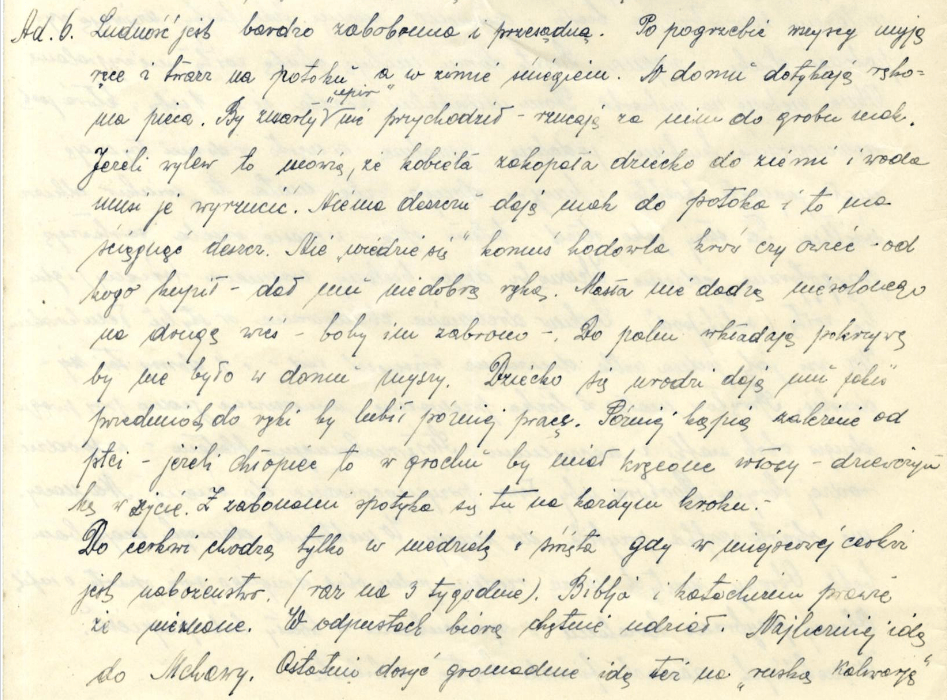
Ad. 6. Ludność jest bardzo robocza i przesądna. Po pogrzebie myją ręce i twarz na potoku a w zimie śniegiem. W domu dotykają rękoma pieca. By umarły–”upir”–nie przychodził – rzucają za nim do grobu mak. Jeżeli wylew to mówią, że kobieta zakopała dziecko do ziemi i woda musi je wyrzucić. Nie ma deszczu daje mak do potoka i to ma przyciągać deszcz. Nie wiedzie się komuś hodowla koni czy owiec – od kogo kupił – dał mu nie górą ręką. Masła niedobrze, mianowicie na drugą wieś – coby im zabrało. Do palu wkładają pokrzywę by nie było w domu myszy. Dziecko się urodzi daje mu jakiś przedmiot do ręki by lubił później pracę. Później kąpią zależnie od płci – jeżeli chłopiec to w grochu by miał kręcone włosy – dziewczynkę w życie. Z zabobonem spotyka się tu na każdym kroku.
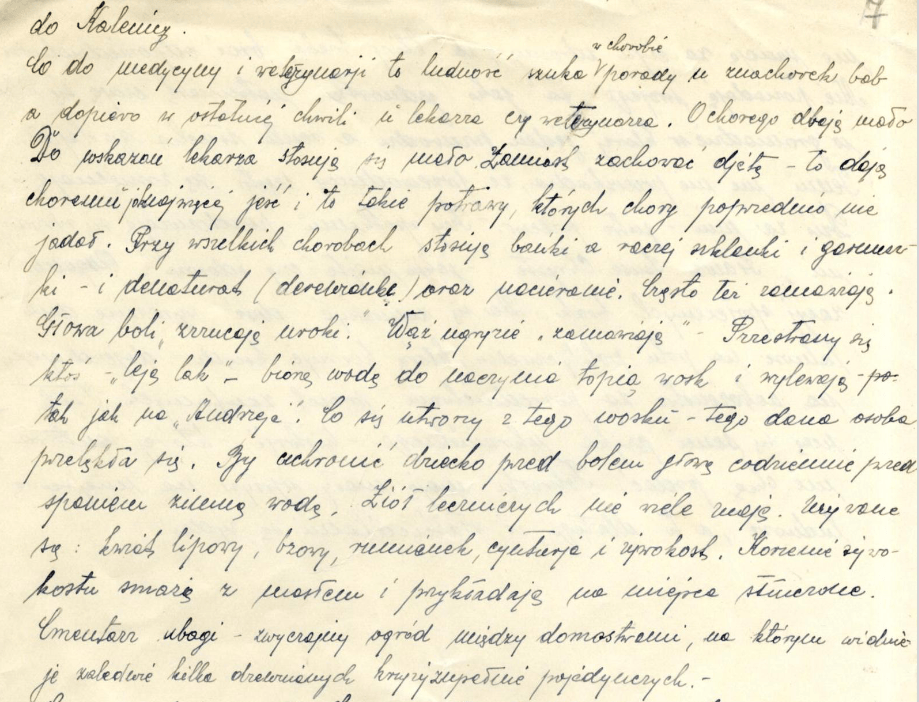
Do cerkwi chodzą tylko w niedzielę i święta gdy w miejscowej cerkwi jest nabożeństwo. (raz na 3 tygodnie). Biblię i katechizm prawie że nieznane. W odpustach biorą chętnie udział. Najliczniej idą do Mehowy. Ostatnio dosyć gromadnie idą też na “ruską Kalwaryę” do Kolewicz.
Co do medycyny i weterynarii to ludność szuka w chorobie porady u znachorek, bab, a dopiero w ostatniej chwili u lekarza czy weterynarza. O chorego dbają mało. Do wskazania lekarza stosują się mało. Zamiast zachować djetę – to dają choremu smaczniej jeść i to takie potrawy, których chory poprzednio nie jadał. Przy wszelkich chorobach stosują bańki a raczej wkłuwki i gorączki – i denaturat (denaturatek) oraz mocieranie, często też zamawiają. Głowa boli, zrzucają uroki. „Wąż ugryzie, zamawiają”. Przestraszy się, ktoś leje lak – biorą wodę do naczynia topią wosk i wylewają, tak jak na „Andrzeja”. Co się utworzy z tego wosku – tego dana osoba przelękła się. By uchronić dziecko przed bolem głowy codziennie przed spaniem wylewają wodę. Ziół leczniczych nie wiele znają. Używane są: kwiat lipowy, brozy, rumianek, cychorja i uprokost. Korzenie uprokostu smażą z masłem i przykładają na miejsce stłuczone. Cmentarz ubogi – zwyczajnie ogród między domostwami, na którym widnieje zaledwie kilka drewnianych krzyżów zupełnie pojedyńczycych. —
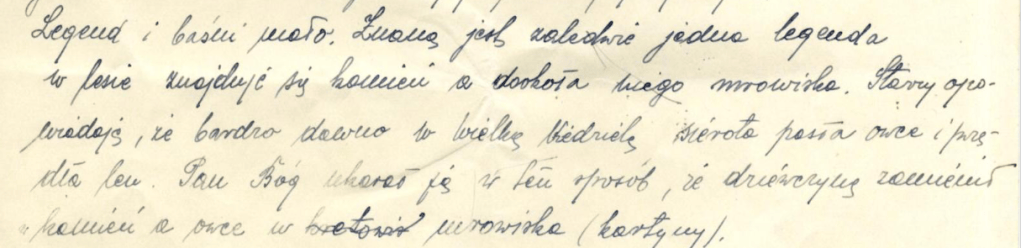
Legend i baśni mało. Znana jest zaledwie jedna legenda w lesie znajduje się kamień a dookoła niego mrowiska. Starzy opowiadają, że bardzo dawno w wielką niedzielę sierota pasła owce i przędła len. Pan Bóg ukarał ją w ten sposób, że dziewczynę zamienił w kamień a owce w mrowiska (kartyny).
English Translation: Google-Powered
Warning: this translation may be terrible. It was done electronically by someone who can speak neither Polish nor Ukrainian/Lemko. Do you wish to see it improve? You can help! Contact us.
Uwaga: to tłumaczenie może być fatalne. Zostało wykonane automatycznie przez osobę, która nie zna ani języka polskiego, ani ukraińskiego/łemkowskiego. Chcesz, żeby było lepsze? Możesz pomóc! Skontaktuj się z nami.
Ad. 6. The people are very working and superstitious. After the funeral, they wash their hands and faces in the stream and in the winter with snow. At home, they touch the stove with their hands. So that the dead – “upir” – does not come – they throw a poppy after him into the grave. If there is a stroke, they say that the woman buried the baby in the ground and the water must throw it out. There is no rain, poppy seeds are poured into the stream and this is supposed to attract rain. Someone is not successful in breeding horses or sheep – whoever he bought it from – they gave him a hand full of help. It’s not good to take the butter to the other village – it would take them away. They put nettles in the stake so that there are no mice in the house. When a child is born, he or she is given an object to make him or her enjoy work. Then they bathe them depending on their gender – if it’s a boy, he would have curly hair, or if it’s a girl. Superstition can be found here at every step.
They only go to church on Sundays and holidays when there is a service in the local church. (once every 3 weeks). The Bible and the catechism are almost unknown. They willingly take part in indulgences. Most of them go to Mehowa. Recently, they have been going to the “Rusyn Calvary” in Kolewicze in large numbers.
When it comes to medicine and veterinary medicine, people seek advice when they are ill from medicine men, women, and only at the last minute – from a doctor or veterinarian. They care little about the patient. They hardly follow the doctor’s instructions. Instead of maintaining a diet, they give the patient tastier food, including foods that the patient has not eaten before. For all diseases, they use cupping, or rather injections, and fever – and denatured alcohol (denatured alcohol) and rubbing, and they often order it. The head hurts, the spells come off. “The snake bites, they order.” He gets scared when someone pours wax – they take water into a container, melt the wax and pour it out, just like at “Andrzej”. What will be created from this wax – this is what the person was afraid of. To protect the child from headaches, they pour water out every day before going to bed. They don’t know much about medicinal herbs. The following are used: linden blossom, brozy, chamomile, cychoria and uprokost. They fry the roots of uprokost with butter and apply them to the bruised area. The cemetery is poor – just a garden between houses, with only a few wooden crosses, all alone. —
There are few legends and fairy tales. Only one legend is known: in the forest there is a stone with anthills around it. The old people say that a long time ago, on Holy Sunday, an orphan was grazing sheep and spinning flax. God punished her by turning the girl into a stone and the sheep into anthills (cartins).
Sanok Genes seeks to create a database of transcripts and English translations from the “Kultura Duchowa” sections from the 1936 Sanok School Inspectorate Questionnaires. The original documents are held by the Sanok Museum of History and digitized by the Sanok Digital Library. To learn more, see the project description.
Sanok Genes stawia sobie za cel stworzenie bazy danych zawierającej transkrypcje oraz tłumaczenia na język angielski fragmentów dotyczących „kultury duchowej”, pochodzących z kwestionariuszy Inspektoratu Szkolnego w Sanoku z 1936 roku. Oryginalne dokumenty znajdują się w zbiorach Muzeum Historycznego w Sanoku i zostały zdigitalizowane przez Sanocką Bibliotekę Cyfrową. Więcej informacji można znaleźć w opisie projektu.

