Bezmiechowa is a village in Lesko Commune, Lesko County.
Bezmiechowa – wieś w gminie Lesko, w powiecie leskim.
Transcript: Google-Powered
Warning: this transcription may be terrible. It was done electronically by someone who can speak neither Polish nor Ukrainian/Lemko. Do you wish to see it improve? You can help! Contact us.
Uwaga: ta transkrypcja może być fatalna. Została wykonana automatycznie przez osobę, która nie zna ani języka polskiego, ani ukraińskiego/łemkowskiego. Chcesz, żeby była lepsza? Możesz pomóc! Skontaktuj się z nami.
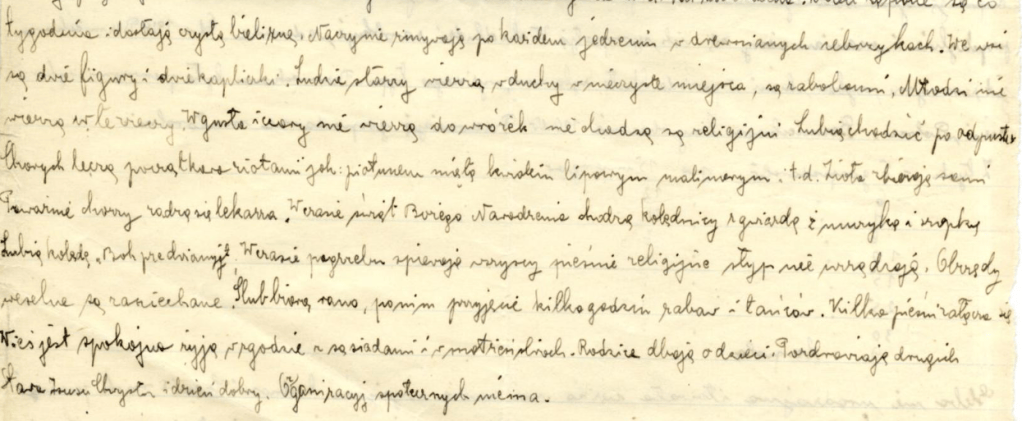
We wsi są dwie figury: dwie kapliczki. Ludzie starzy wierzą w duchy i nieczyste miejsca, są zabobonni. Młodsi nie wierzą w te rzeczy. W ogóle wszyscy we wsi wierzą do wróżek nie chodzą są religijni lubią chodzić po odpustach Chorych leczą początkowo ziołami jak: piołunem miętą rumiankiem lipowym malinowym t.d. Listki biorą ze swemi Towar nie dzwony radzą się lekarza. W czasie świąt Bożego Narodzenia chodzą kolędnicy z gwiazdą z muzyką i szopką Lubią kolędę „Bóg się rodzi”. W czasie pogrzebu śpiewają wszyscy pieśni religijne styp nie urządzają. Obrzędy Weselne są zaniechane Ślub biorą rano, po nim przyjęcie kilka godzin zabaw i tańców. Kilka pieśni a toporów i…Wieś jest spokojna żyją w zgodzie z sąsiadami i w małżeństwach. Rodzice dbają o dzieci. Pozdrawiają drugich:Niech Jezus Chrystus i dzień dobry.
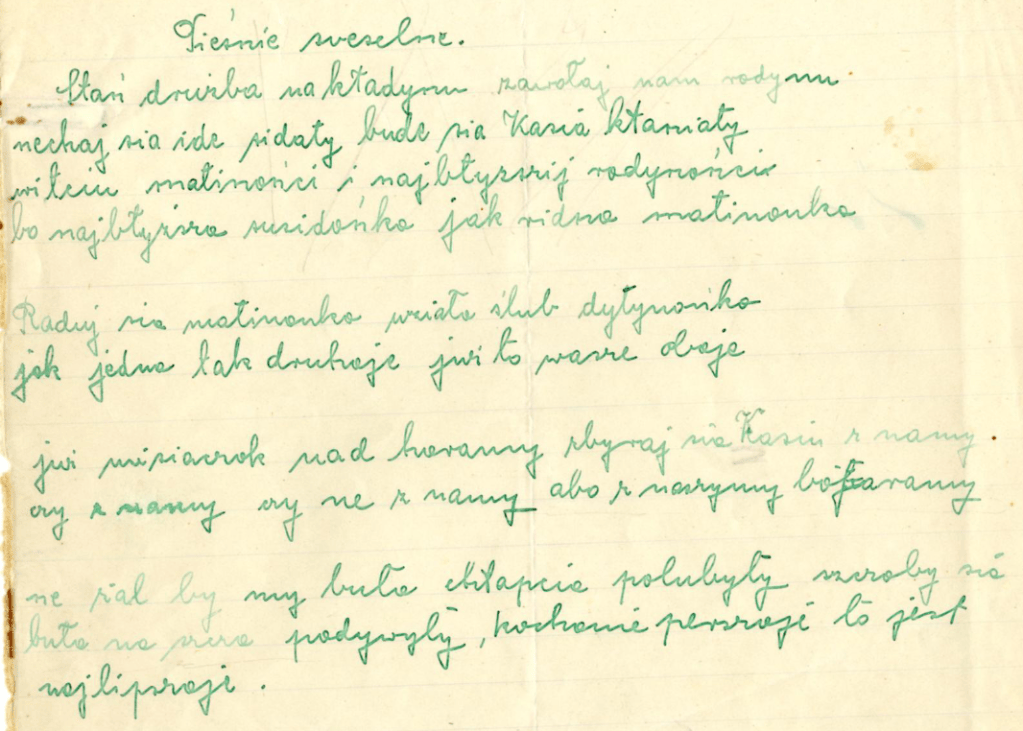
Pieśnie weselne.
Stań drużba na kładymu zawołaj nam rodymu.
nechaj sia ide sidaty bude sia Kasiá kłamiaty
witeiu matinonci i najbłyzsij radynonci
bo najbłyzsia susidońka jak ridna matinonka
Raduj sia matinonka weiała ślub dytynonka
jak jedna tak drukoje już to wasze obaje
już misiaczok nad hweranny zbyraj sia Kasiu z mamy.
czy z mamy czy ne z mamy abo z maszyny boftowany
ne żal by my buło chłopcia polubyły zaroby siá
bute na parie podywyły, kochané pierwijé to jest
najlipsiej.
English Translation: Google-Powered
Warning: this translation may be terrible. It was done electronically by someone who can speak neither Polish nor Ukrainian/Lemko. Do you wish to see it improve? You can help! Contact us.
Uwaga: to tłumaczenie może być fatalne. Zostało wykonane automatycznie przez osobę, która nie zna ani języka polskiego, ani ukraińskiego/łemkowskiego. Chcesz, żeby było lepsze? Możesz pomóc! Skontaktuj się z nami.
In the village, there are two religious figures—specifically, two small wayside shrines. The older generation believes in spirits and “unclean” (haunted or cursed) places; they are superstitious. The younger generation does not hold such beliefs. In general, the villagers are religious—they do not consult fortune-tellers, and they enjoy attending odpusty (religious feast-day celebrations). When someone falls ill, they initially treat the ailment with herbs, such as wormwood, mint, chamomile, linden, or raspberry leaves. If these remedies fail, they seek the advice of a doctor. During the Christmas season, carolers go from house to house, carrying a star and a szopka (nativity scene), accompanied by music; they are particularly fond of the carol “God Is Born” (Bóg się rodzi). At funerals, everyone sings religious hymns, though no stypa (funeral feast) is held. Traditional wedding rituals have largely fallen out of practice; the wedding ceremony takes place in the morning, followed by a reception with several hours of celebration and dancing. The village is peaceful; neighbors live in harmony, and marriages are stable. Parents take great care of their children. When greeting others, they say: “May Jesus Christ be praised—good day.”
Wedding songs:
Stand, groomsman, upon the footbridge, and call out to our kin,
Let them come and take their seats, for Kasia is to be wed.
Welcome, dear mother, and all our closest kin,
For a close neighbor is as dear as one’s own mother.
Rejoice, dear mother—your child is being wed;
One, and then another—now both of yours are joined.
The moon has risen above the ridge; prepare to leave, Kasia, and bid your mother farewell. Whether it’s handmade or machine-made—
don’t worry, girls, you’ll earn enough to buy one;
just take a look—having something you love, that’s the best thing of all.
Sanok Genes seeks to create a database of transcripts and English translations from the “Kultura Duchowa” sections from the 1936 Sanok School Inspectorate Questionnaires. The original documents are held by the Sanok Museum of History and digitized by the Sanok Digital Library. To learn more, see the project description.
Sanok Genes stawia sobie za cel stworzenie bazy danych zawierającej transkrypcje oraz tłumaczenia na język angielski fragmentów dotyczących „kultury duchowej”, pochodzących z kwestionariuszy Inspektoratu Szkolnego w Sanoku z 1936 roku. Oryginalne dokumenty znajdują się w zbiorach Muzeum Historycznego w Sanoku i zostały zdigitalizowane przez Sanocką Bibliotekę Cyfrową. Więcej informacji można znaleźć w opisie projektu.

