Prełuki is a village in Komańcza Commune, Sanok County.
Prełuki to wieś w gminie Komańcza, w powiecie sanockim.
Transcript: Google-Powered
Warning: this transcription may be terrible. It was done electronically by someone who can speak neither Polish nor Ukrainian/Lemko. Do you wish to see it improve? You can help! Contact us.
Uwaga: ta transkrypcja może być fatalna. Została wykonana automatycznie przez osobę, która nie zna ani języka polskiego, ani ukraińskiego/łemkowskiego. Chcesz, żeby była lepsza? Możesz pomóc! Skontaktuj się z nami.
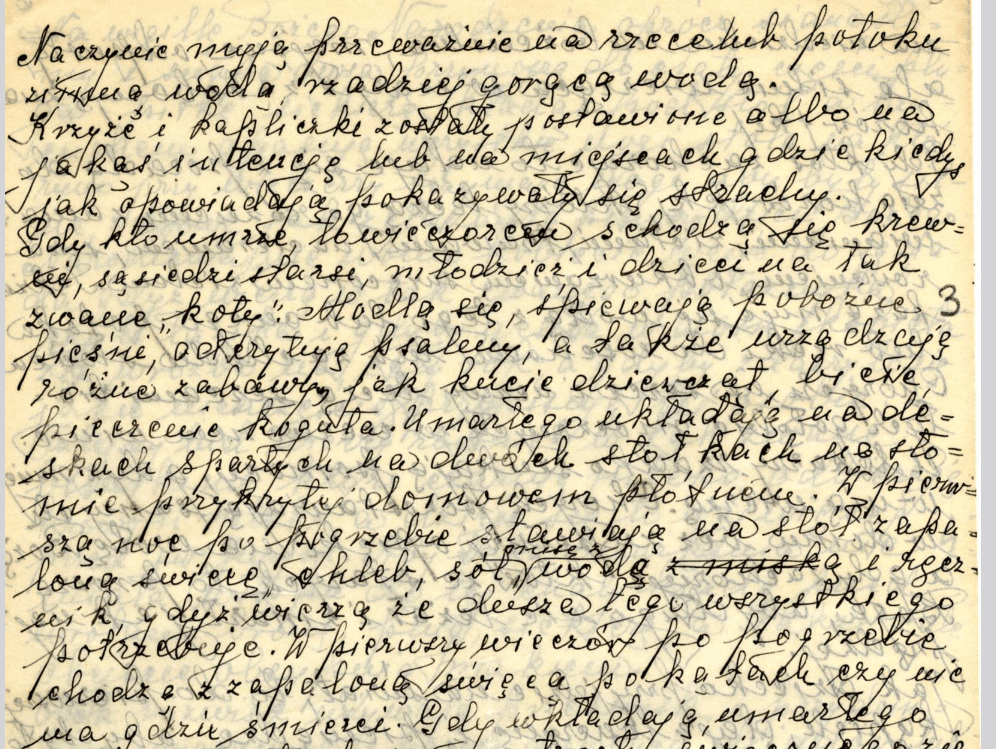
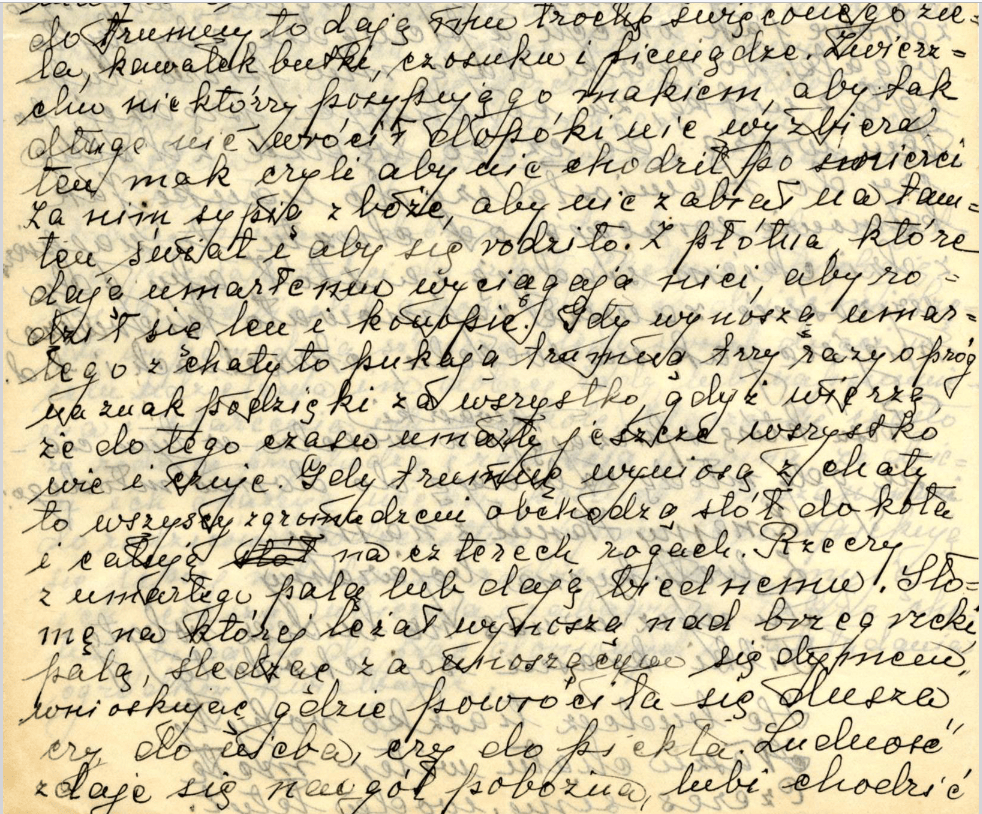
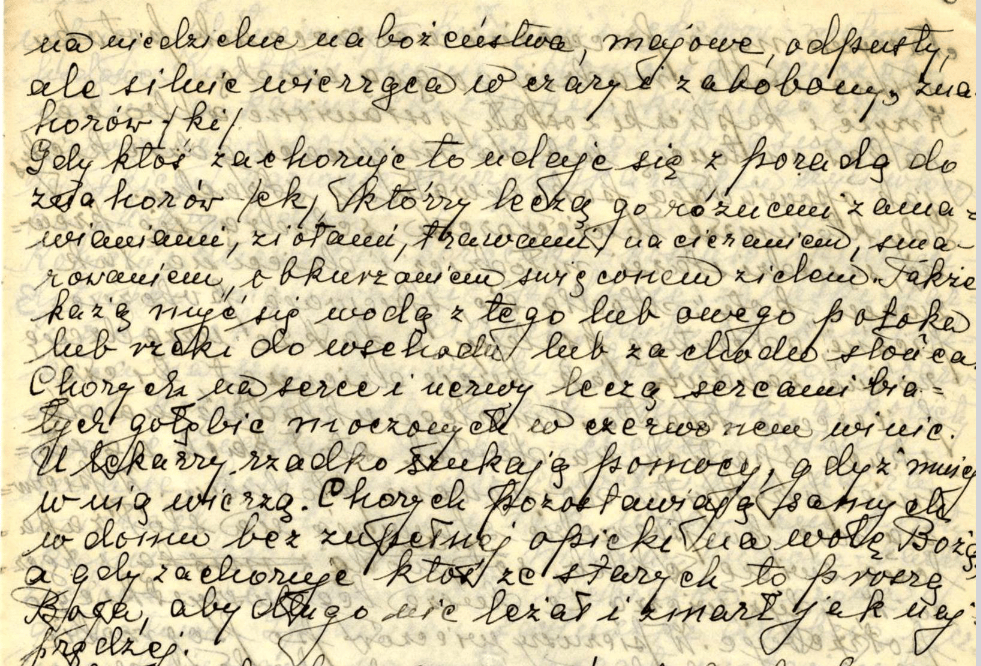
Naczynie myją przeważnie na rzece lub potoku zimną wodą rzadziej gorącą wodą.Krzyże i kapliczki zostały postawione albo na jakąś intencję lub w miejscach gdzie kiedyś jak opowiadają pokazywały się strachy. Gdy kto umrze, to wieczorem schodzą się krewni, sąsiedzi starsi, młodzież i dzieci na tak zwane „koły”: Modlą się, śpiewają pobożne 3 pieśni, odczytują psalmy, a także urządzają różne zabawy jak kucie dziewcząt bicie pieczenie koguta. Umarłego układają na deskach opartych na dwóch stołkach na słomie przykrytej domowem płótnem. W pierwszą noc po pogrzebie stawiają na stół zapaloną świecę, chleb, sól, wodę z miską i ręcznik, gdyż wierzą że dusza tego wszystkiego potrzebuje. W pierwszy wieczór po pogrzebie chodzą z zapaloną świecą po kątach czy nie ma gdzie śmierci. Gdy wkładają umarłego do trumny to dają trochę trocin świńskiego rzela, kawałek bułki, czosnku i pieniądze. Zwierzchni niektórzy posypują go makiem, aby tak długo nie wrócił do póki nie wyzbieraten mak czyli aby nie chodził po śmierci za nim sypią zboże, aby nie zabrał na tamten świat i aby się rodziło. Z płótna, które dają umarłemu wyciągają nici, aby rodził się len i konopie. Gdy wynoszą umarłego z chaty to pukają trumną trzy razy o próg na znak pożegnania ze wszystko, gdyż wierzą że do tego czasu umarły jeszcze wszystko wie i czuje. Gdy trumnę wyniosą z chaty to wszyscy zgromadzeni obchodzą stół do koła i całują stół na czterech rogach. Rzeczy z umarłego palą lub dają biednemu! Słomę na której leżał wynoszą nad brzeg rzeki palą, śledząc za unoszącym się dymem,wnioskując gdzie powróciła się duszaczy do nieba, czy do piekła. Ludność zdaje się na ogół pobożną, lubi chodzić na niedzielę, nabożeństwa, majowe, odpusty, ale silnie wierzą ca w czary i zabobony, znachorów itp.Gdy ktoś zachoruje to udaje się z poradą do znachorów /tp/, którzy leczą go różnymi czarowaniami, ziołami, trawami, /na cierpieniach/, smarowaniem, okurzeniem, suszonymi zielami. Także każą myć się wodą z tego lub owego potoku lub rzeki do wschodu lub zachodu słońca.Chorych na serce i nerwy leczą sercami białych gołębi moczonych w czerwonym winie.U lekarzy rzadko szukają pomocy, gdyż mniej w nią wierzą. Chorych pozostawia się w domu bez zupełnej opieki, na wolę Bożą, a gdy zachoruje ktoś ze starych, to proszą Boga, aby długo nie leżał i umarł jak najprędzej.
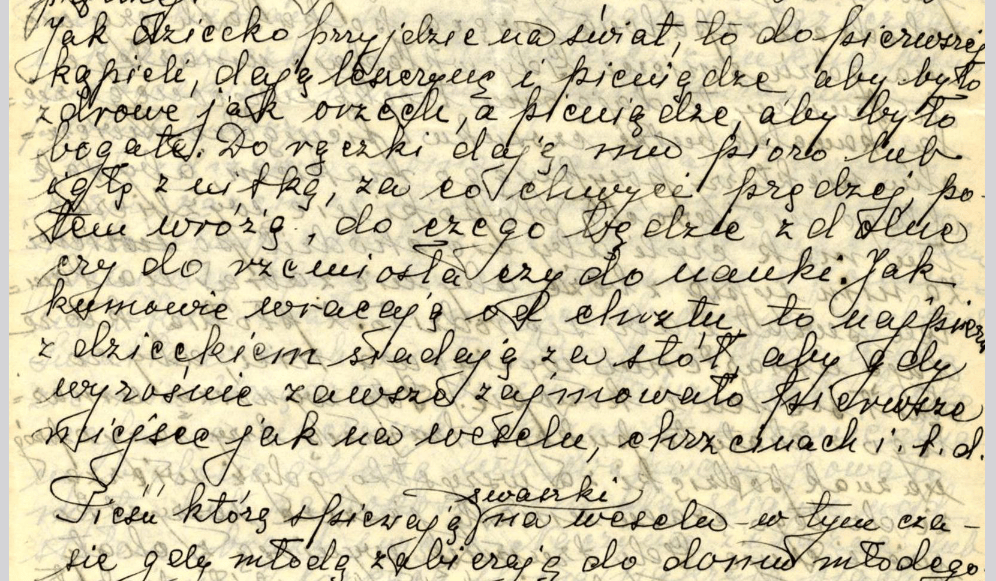
Jak dziecko przyjdzie na świat, to do pierwszej kąpieli dają leszczynę i pieniądze aby było zdrowe jak orzech, a pieniądze, aby było bogate. Do rączki dają mu pióro lub igłę z nitką, za co chwyci prędzej po tym wróżą, do czego będzie zdolne czy do rzemiosła czy do nauki. Jak kumowie wracają od chrztu to najpierw z dzieckiem siadają za stół, aby gdy wyrośnie zawsze zajmowało pierwsze miejsce jak na weselu, chrzcinach i t.d.
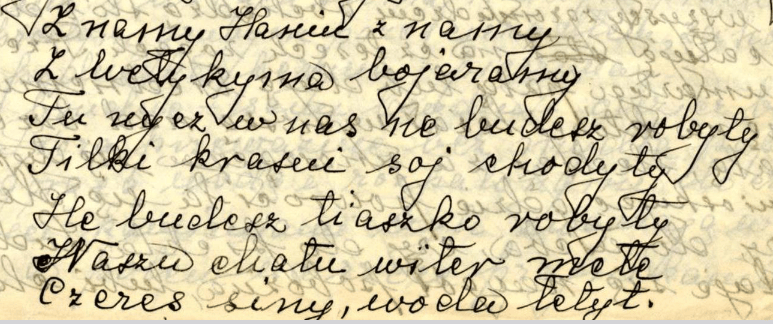
Pieśń którą śpiewają swaczki na weselu w tym czasie gdy młodą zabierają do domu młodego.
Z naszu Haniu z naszu
Z weły kyma bojaramy
Tu teper u nas ne budesz robyty
Tilki krasni soj chodyty
Ne budesz tjażko robyty
Naszu chatu witer mete
Czerez siny woda tetyt.
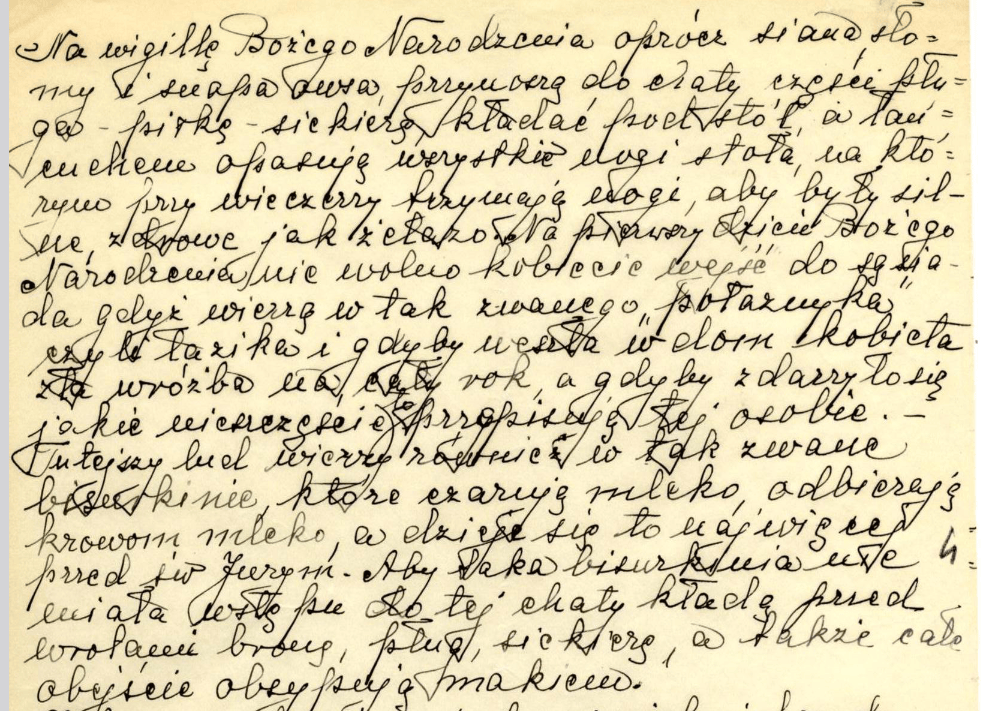
Na wigilię Bożego Narodzenia oprócz siana słomy i snopa owsa, przynoszą do chaty części pługa – pioskę – siekierę, kładać przed stół, a tańcuchem opasują wszystkie nogi stoła, na którym przy wieczerzy trzymają nogi, aby były silne, zdrowe jak żelazo. Na pierwszy dzień Bożego Narodzenia nie wolno kobiecie wejść do sąsiada gdyż wierzą w tak zwanego „połaznyka” czy też łazika i gdyby weszła w dom kobieta ta wróżba ma na cały rok, a gdyby zdarzyło się jakieś nieszczęście przypisują tej osobie. –
Tutejszy lud wierzy również w tak zwane biseskinie, które czaryją mleko, odbierają krowom mleko, a dzieje się to najwięcej przed św Jerzym. Aby taka bisurkinie nie miała wstępu do tej chaty kładą przed wrotami brony, pług, siekierę, a także całe obejście obsypują makiem.
English Translation: Google-Powered
Warning: this translation may be terrible. It was done electronically by someone who can speak neither Polish nor Ukrainian/Lemko. Do you wish to see it improve? You can help! Contact us.
Uwaga: to tłumaczenie może być fatalne. Zostało wykonane automatycznie przez osobę, która nie zna ani języka polskiego, ani ukraińskiego/łemkowskiego. Chcesz, żeby było lepsze? Możesz pomóc! Skontaktuj się z nami.
Dishes are usually washed in a river or stream using cold water; hot water is used less frequently. Crosses and small shrines have been erected either for a specific intention or in places where, according to local accounts, apparitions or “spooks” once appeared. When someone dies, relatives, older neighbors, young people, and children gather in the evening for what are known as “gatherings” (koły): they pray, sing devotional hymns, recite psalms, and engage in various pastimes—such as “forging” (tapping) the girls, or the ritual of “beating” or “roasting” a rooster. The deceased is laid out on planks resting on two stools, placed upon straw and covered with homespun linen. On the first night following the funeral, a lit candle, bread, salt, a bowl of water, and a towel are placed on the table, as it is believed that the soul has need of these things. On the first evening after the funeral, people walk around the corners of the room with a lit candle to check if “Death” is still lurking anywhere. When the deceased is placed into the coffin, items such as sawdust from a pig trough, a piece of bread roll, garlic, and money are included. Some people sprinkle poppy seeds over the body, believing that the soul will not return until every single seed has been gathered—effectively preventing the deceased from “haunting” the living. Grain is also scattered behind the departed to ensure that they do not take the harvest with them to the other world, and to ensure continued fertility and growth. Threads are pulled from the linen cloth provided to the deceased, with the intent that flax and hemp will continue to grow. When the deceased is carried out of the house, the coffin is tapped three times against the threshold as a final farewell to everything; it is believed that, up until this moment, the deceased is still fully aware and capable of feeling. Once the coffin is carried out of the cottage, all those gathered walk around the table and kiss it at each of its four corners. The deceased’s belongings are either burned or given to the poor. The straw upon which the body lay is taken to a riverbank and set on fire; by observing the rising smoke, people try to discern where the soul has gone—to heaven or to hell. While the local population appears generally devout—frequently attending Sunday services, religious observances, May devotions, and feast-day pilgrimages—they also hold a strong belief in witchcraft, superstitions, and folk healers. When someone falls ill, they often seek advice from these folk healers, who treat them using various incantations, herbs, grasses, topical applications, ritual fumigation, and dried plants. They may also instruct the patient to bathe in the water of a specific stream or river, either before sunrise or after sunset. Those suffering from heart or nervous ailments are treated with the hearts of white doves soaked in red wine. People rarely turn to medical doctors, as they have little faith in them. The sick are often left at home with minimal care, consigned to “God’s will”; if an elderly person falls ill, the family may even pray that the individual does not linger in suffering but passes away as quickly as possible.
When a child is born, hazel branches and money are placed in its first bath—the hazel to ensure the child grows as healthy and strong as a nut, and the money to ensure future wealth. A quill or a needle and thread are placed in the infant’s hand; whichever object the child reaches for first is used to divine their future aptitude—whether they are destined for a craft or for scholarly pursuits. When godparents return from a baptism, they first sit at the table with the child; the belief is that this ensures the child will always occupy a place of honor—just as at a wedding or a christening—when they grow up.
A song sung by the bridesmaids (or female wedding guests) when the bride is being taken to the groom’s home:
Come with us, Hania, come with us,
Among the wedding party and the guests.
You shall no longer toil here with us,
But walk about in beauty and grace.
You shall no longer labor under heavy burdens;
The wind sweeps through our cottage,
And water flows in through the entryway.
On Christmas Eve, in addition to hay, straw, and a sheaf of oats, people bring parts of a plow—such as the share—and an axe into the house, placing them before the table. They also wrap a chain around the legs of the table; during the Christmas Eve supper, those present rest their feet against these legs, believing it will make their own legs as strong and healthy as iron. On the first day of Christmas, a woman is forbidden from entering a neighbor’s home due to the belief in the połaznyk (or łazyk—a “first visitor”). It is feared that if a woman enters, it will bring bad luck for the entire year; should any misfortune occur, it is blamed on her.
The local people also believe in bisurkinie—malevolent beings or witches who cast spells on milk or cause cows to go dry—a phenomenon said to occur most frequently before St. George’s Day. To prevent such a bisurkinie from entering the home, people place a harrow, a plow, and an axe in front of the gate, and scatter poppy seeds all around the homestead.
Sanok Genes seeks to create a database of transcripts and English translations from the “Kultura Duchowa” sections from the 1936 Sanok School Inspectorate Questionnaires. The original documents are held by the Sanok Museum of History and digitized by the Sanok Digital Library. To learn more, see the project description.
Sanok Genes stawia sobie za cel stworzenie bazy danych zawierającej transkrypcje oraz tłumaczenia na język angielski fragmentów dotyczących „kultury duchowej”, pochodzących z kwestionariuszy Inspektoratu Szkolnego w Sanoku z 1936 roku. Oryginalne dokumenty znajdują się w zbiorach Muzeum Historycznego w Sanoku i zostały zdigitalizowane przez Sanocką Bibliotekę Cyfrową. Więcej informacji można znaleźć w opisie projektu.

