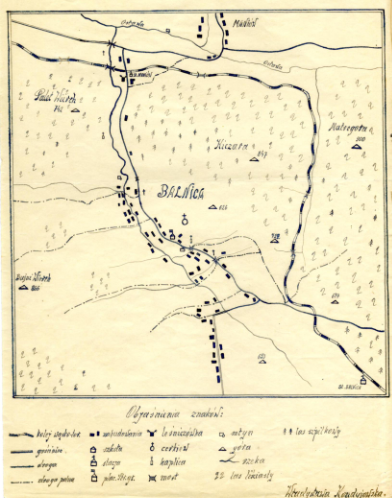
Balnica is a village in Komańcza Commune, Sanok County.
Balnica to wieś w gminie Komańcza, w powiecie sanockim.
Transcript: Google-Powered
Warning: this transcription may be terrible. It was done electronically by someone who can speak neither Polish nor Ukrainian/Lemko. Do you wish to see it improve? You can help! Contact us.
Uwaga: ta transkrypcja może być fatalna. Została wykonana automatycznie przez osobę, która nie zna ani języka polskiego, ani ukraińskiego/łemkowskiego. Chcesz, żeby była lepsza? Możesz pomóc! Skontaktuj się z nami.
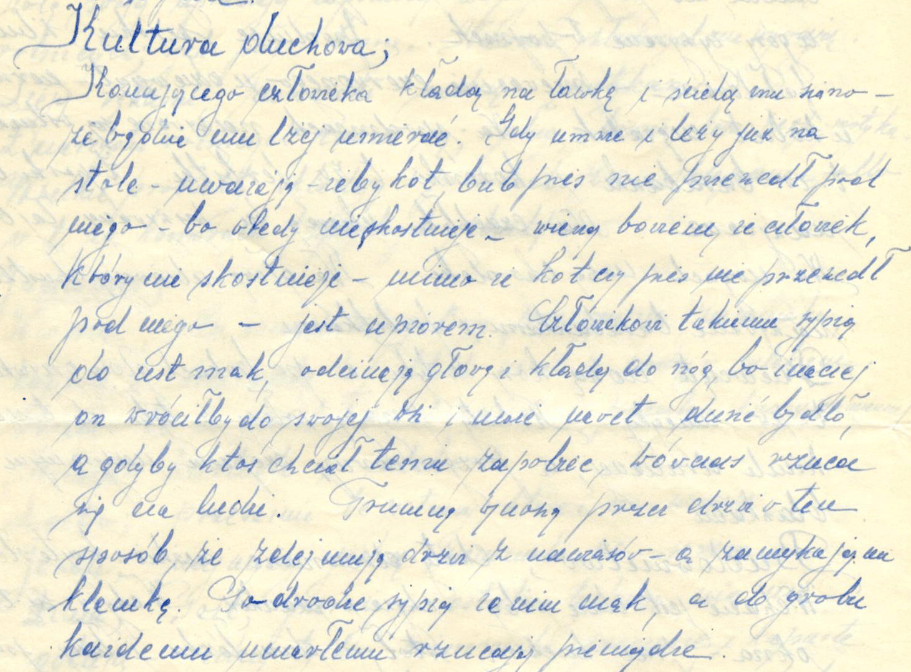
Kultura duchowa;
Konającego człowieka kładą na ławkę i ścielą mu ninoże będzie mu lżej umierać. Gdy umrze i leży już na stole – uważają – żeby kot lub pies nie przeszedł podniego – bo wtedy nie kostnieje. Wiemy bowiem iż człowiek, który nie skostnieje – mimo iż kot cy pies nie przeszedł pod niego – jest umorem. Człowiekowi takiemu sypią do ust mak, odcinają głowę i kładą do nóg bo inaczej on wróciłby do swojej wsi i umiał nawet dusić bydło,a gdyby ktoś chciał temu napotrzeć, wówczas rzuca się na ludzi. Trumnę wynoszą przez drzwi w ten sposób, że zdejmują drzwi z zawiasów – a wamykają na klamkę. Po drodze sypią za nim mak, a do grobu każdemu umarłemu rzucają pieniądze.
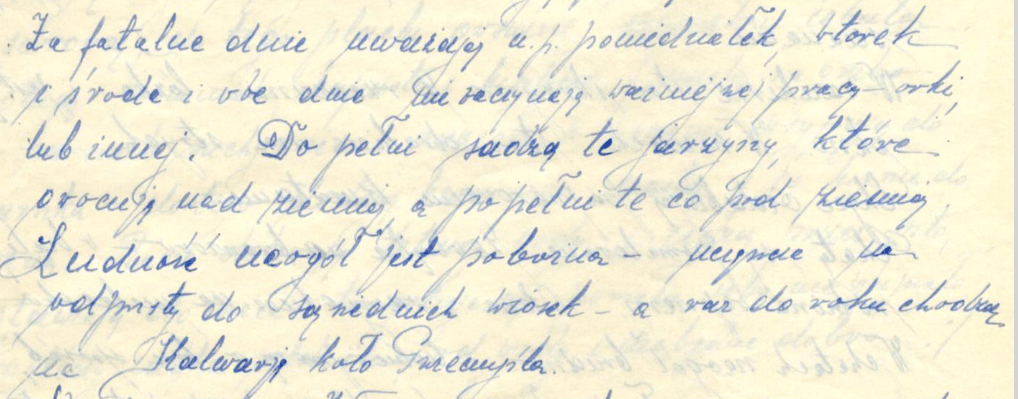
Za fatalne dnie uważają n. p. poniedziałek wtorek i środę i w te dnie nie zaczynają ważniejszej pracy, orki, lub innej]. Do pełni sadzą te jarzyny, które owocują nad ziemią, a po pełni te co pod ziemią.Ludność w ogół jest pobożna – pielgrzymują odpusty do sąsiednich wiosek – a raz do roku chodzą na Kalwarię koło Przemyśla.
Medycyna;
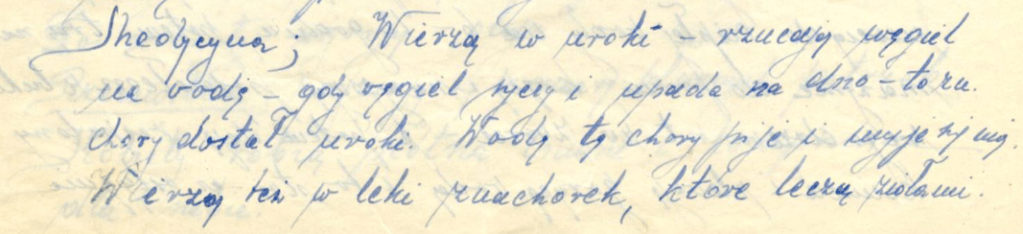
Wierzą w uroki – rzucają węgiel na wodę – gdy węgiel syczy i upada na dno – to zn. chory dostał uroki. Wodę tę chory pije i myje się nią. Wierzą też w leki znachorek, które leczą ziołami.
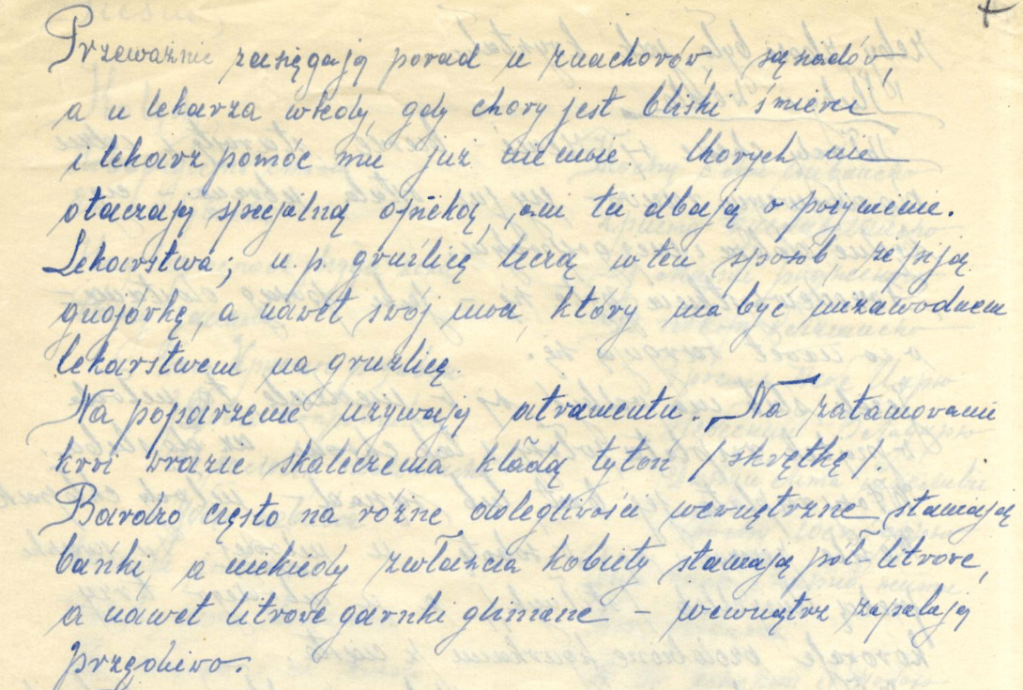
Przeważnie zaciągają porad u znachorów, są nadera u lekarza wtedy, gdy chory jest bliski śmiercii lekarz pomóc mu już nie może. Chorych nie otaczają specjalną opieką, ani tu dbają o pożywienie. Lekarstwa; n.p. gruźlicę leczą w ten sposób, że piją gnojówkę, a nawet swój mocz, który ma być niezawodne lekarstwem na gruźlicę. Na oparzenie używają atramentu. Na ratowanie krwi w razie skaleczenia kładą tytoń (skrętkę). Bardzo często na różne dolegliwości wewnętrzne stawiają bańki, a niekiedy zwłaszcza kobiety stawiają półlitrowe,a nawet litrowe garnki gliniane – wewnątrz zapalają przgobiwo.
Wierzenia i zabobony.
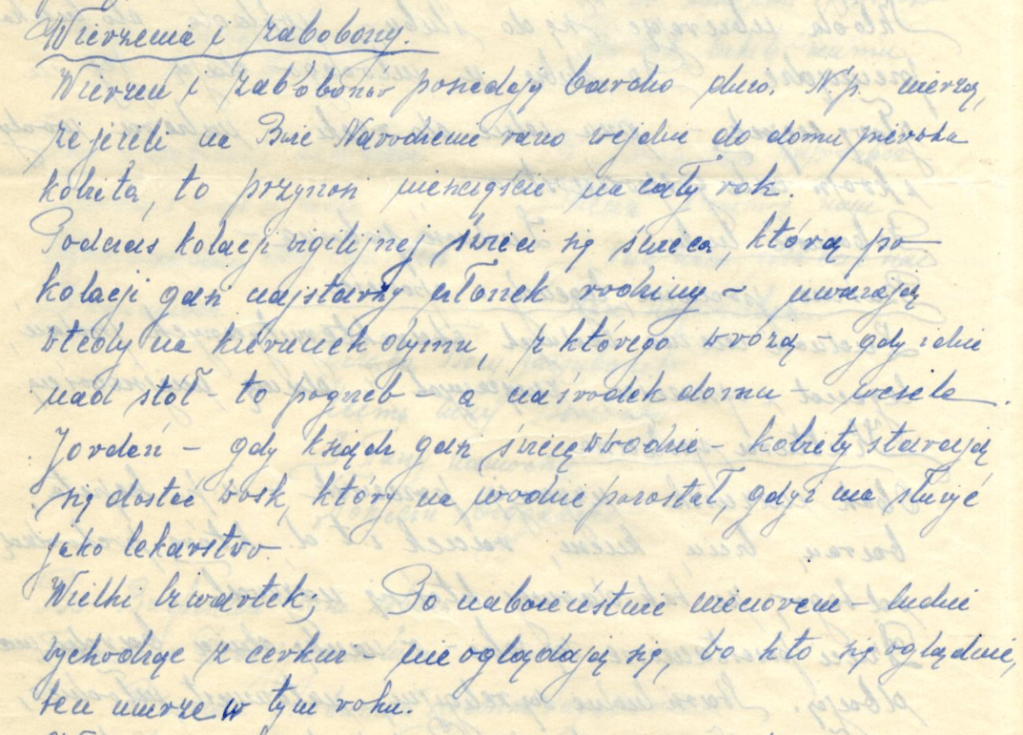
Wierzeń i zabobonów pomiędzy bardzo dużo. Np. wierzą, że jeśli na Boże Narodzenie rano wejdzie do domu pierwsza kobieta, to przynosi nieszczęście na cały rok.
Podczas kolacji wigilijnej świeci się świeca, którą po kolacji gasi najstarszy członek rodziny – uważają wtedy na kierunek dymu, z którego wróżą – gdy idzie nad stół – to pogrzeb – a na środek domu – wesele.
Jordan – gdy ksiądz gasi święconą wodę – kobiety starają się dostać wosk, który na wodzie pozostał, gdyż ma służyć jako lekarstwo.
Wielki Czwartek; Po nabożeństwie wieczornem – ludzie wychodząc z cerkwi – nie oglądają się, bo kto się oglądnie, ten umrze w tym roku.
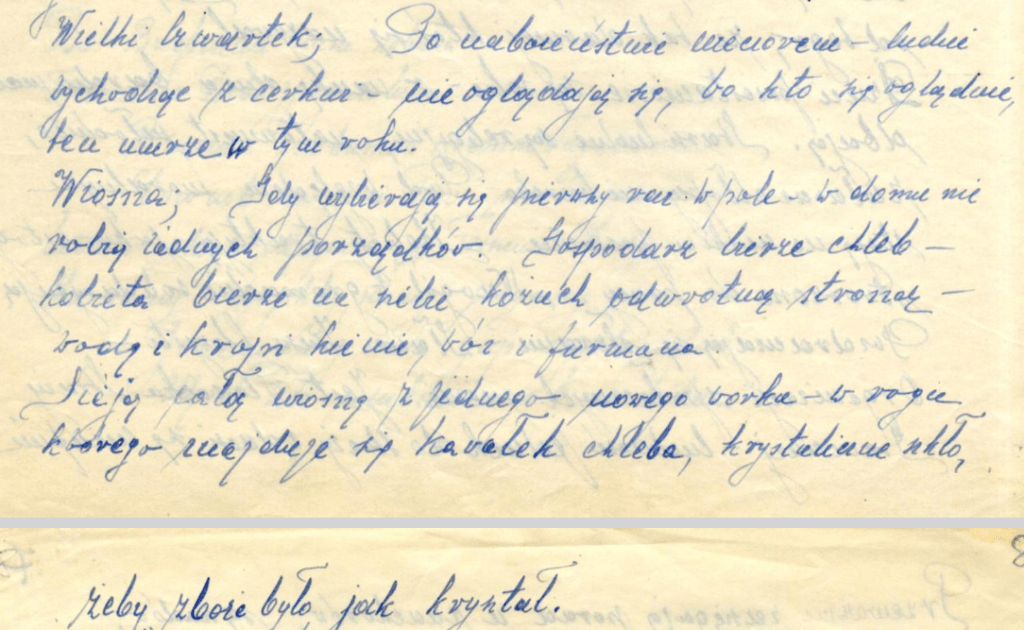
Wielki Czwartek; Po nabożeństwie wieczorem – ludzie wychodzą z cerkwi – nie oglądają się, bo kto się oglądnie, ten umrze w tym roku.
Wiosna; Gdy wybierają się pierwszy raz w pole – w domu nie robią żadnych porządków. Gospodarz bierze chleb – kobieta bierze na siebie kożuch odwrotną stroną – wodzą i kroją konia, wóz i furmana.
Sieją całą wiosnę z jednego nowego worka – w rogu którego znajduje się kawałek chleba, krystaliczne szkło, żeby zboże było jak kryształ.
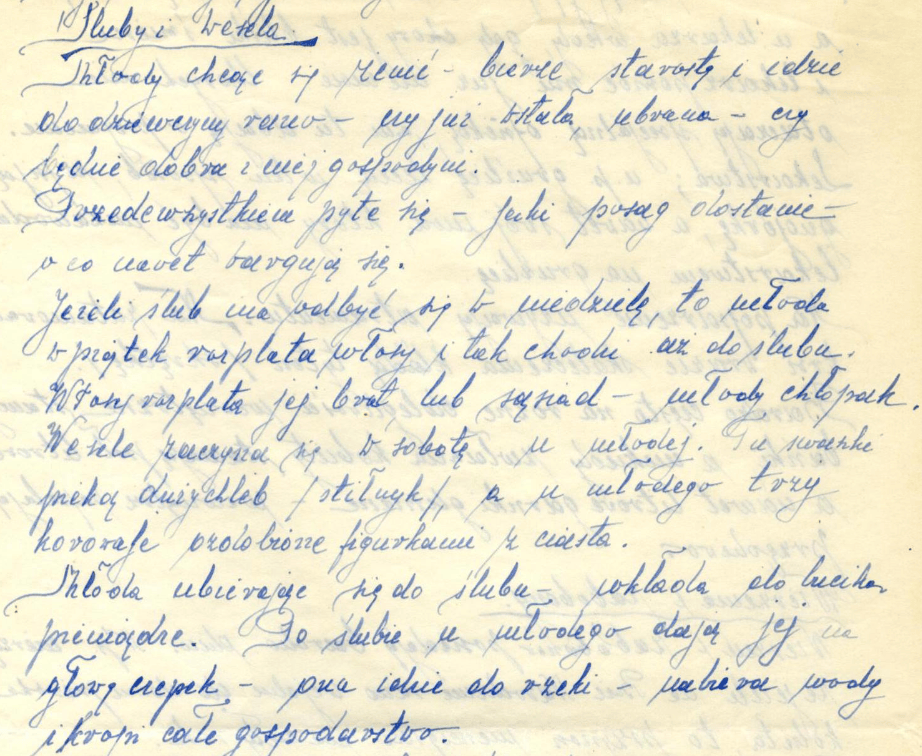
Śluby i Wesela
Młody chcąc się żenić – bierze starostę i idzie do dziewczyny rano – czy już wstała, ubrana – czy będzie dobra z niej gospodyni.
Przede wszystkiem pyta się – jaki posag dostanie – o co nawet targują się.
Jeżeli ślub ma odbyć się w niedzielę, to młoda w piątek rozplata włosy i tak chodzi aż do ślubu. Włosy rozplata jej brat lub sąsiad – młody chłopak.
Wesele zaczyna się w sobotę u młodej. Tu swatki pieką duży chleb i struclę, a u młodego trzy korowaje ozdobione figurkami z ciasta.
Młoda ubierając się do ślubu – pokłada do bucika pieniądze. Po ślubie u młodego dają jej na głowę czepek – ona idzie do rzeki – nabiera wody i kropi całe gospodarstwo.
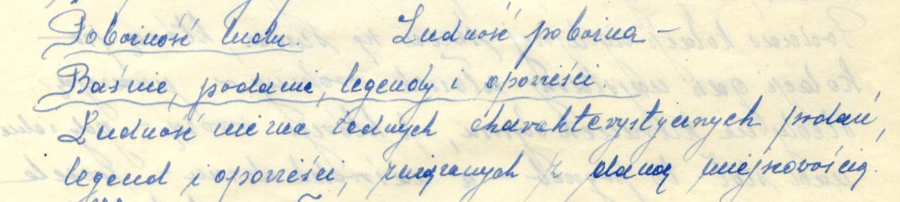
Pobożność ludu — Ludność podbita
Baśnie, podania, legendy i opowieści Ludność nie zna żadnych charakterystycznych podań,
legend i opowieści, związanych z daną miejscowością.
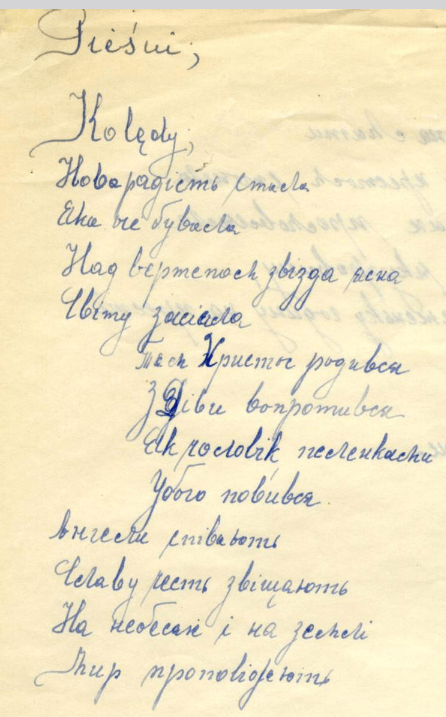
Piesni
Koledy
Нова радість стала,
яка не бувала,
Над вертепом звізда ясна
Світу засіяла.
Десь Христос родився,
З Діви воплотився,
Як чоловік пеленами
Убого повився.
Ангели співають,
Славу честь звіщають,
На небесах і на землі
Мир проповідають.
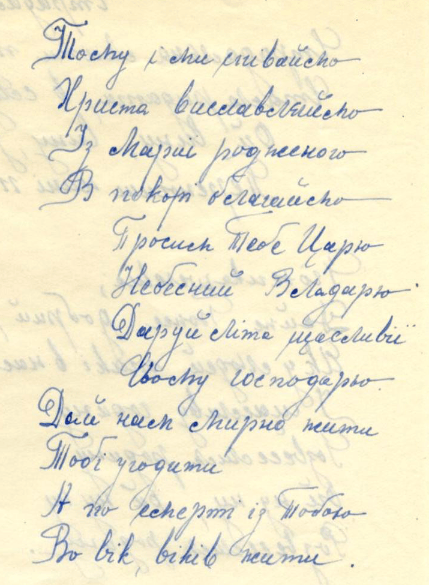
Тому і ми співаймо,
Христа виславляймо,
Із Марії родженого
В покорі благаймо:
Просим Тебе, Царю,
Небесний Владарю,
Даруй літа щасливії
Цьому господарю.
Дай нам мирно жити,
Тобі угодити,
А по смерти із Тобою
Во вік віків жити.
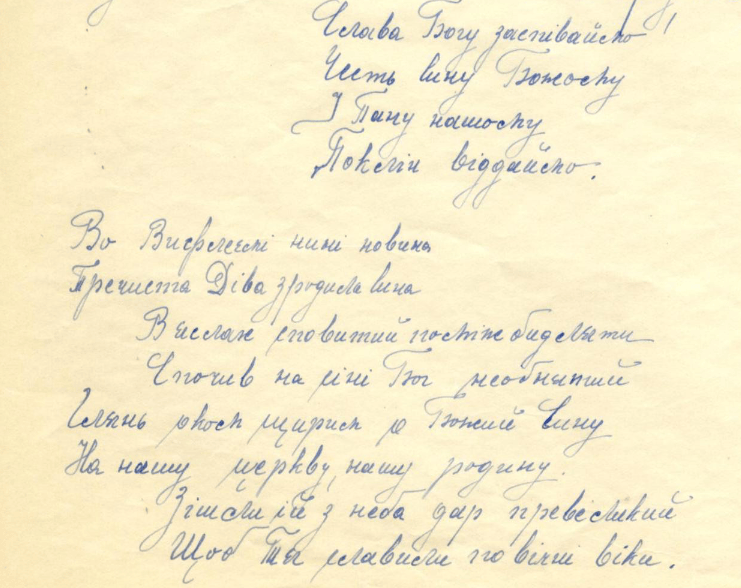
Слава Богу заспіваймо,
Честь Сину Божому
І Пану нашому
Поклін віддаймо.
Во Вифлеємі нині новина,
Пречиста Діва зродила Сина.
В яслах сповитий поміж бидляти,
Спочив на сіні Бог необнятий.
Глянь оком щирим, о Божий Сину,
На нашу церкву, нашу родину.
Зішли їй з неба дар превеликий,
Щоб Тя славили по вічні віки.
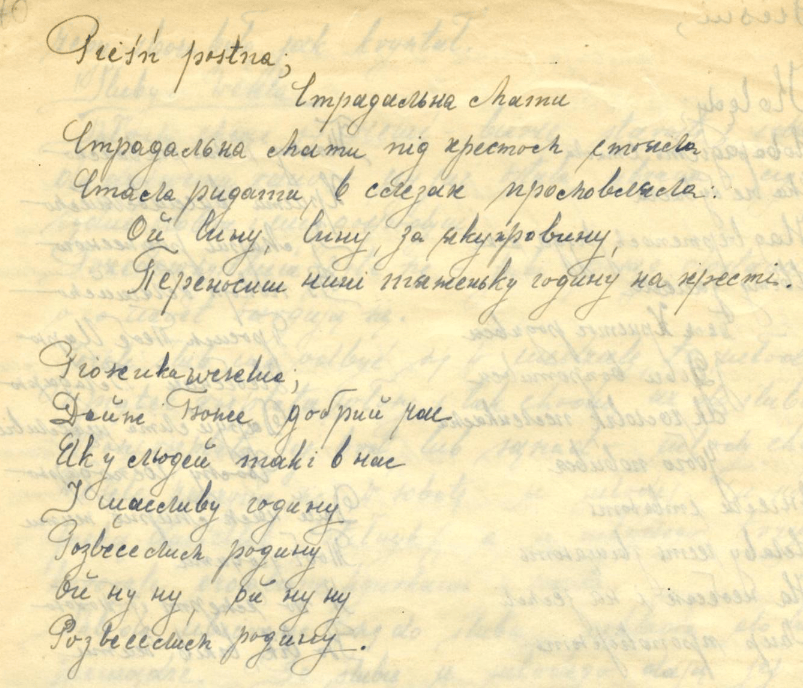
Pieśń postna
Страдальна Мати
Страдальна мати під хрестом, стояла
Стала ридати, в сльозах промовляла:
Ой Сину, Сину, за яку провину,
Переносиш нині тяженьку годину на хресті.
Piosenka weselna
Дайже Боже добрий час
Як у людей такі в нас
І щасливу годину
Розвеселим родину
Ой ну ну ну, ой ну ну ну
Розвеселим родину.
English Translation: Google-Powered
Warning: this translation may be terrible. It was done electronically by someone who can speak neither Polish nor Ukrainian/Lemko. Do you wish to see it improve? You can help! Contact us.
Uwaga: to tłumaczenie może być fatalne. Zostało wykonane automatycznie przez osobę, która nie zna ani języka polskiego, ani ukraińskiego/łemkowskiego. Chcesz, żeby było lepsze? Możesz pomóc! Skontaktuj się z nami.
Spiritual Culture;
A dying person is placed on a bench and provided with bedding to make their passing easier. Once they have died and are laid out on a table, care is taken to ensure that no cat or dog passes underneath—for if one does, the body will not stiffen. It is understood that a person who fails to stiffen—even if no cat or dog has passed beneath them—is an umor (a type of revenant). In such cases, poppy seeds are poured into the deceased’s mouth, and their head is severed and placed at their feet; otherwise, they might return to their village—even going so far as to strangle livestock—and if anyone attempts to intervene, they may attack the living. When the coffin is carried out, the door is removed from its hinges rather than opened by the handle. Poppy seeds are scattered along the path behind the coffin, and coins are tossed into the grave for the deceased.
Certain days—such as Monday, Tuesday, and Wednesday—are considered inauspicious; no major tasks, such as plowing or other significant labor, are begun on these days. Crops that bear fruit above ground are planted during the waxing phase of the moon (leading up to the full moon), while those that grow underground are planted during the waning phase. The local population is generally devout—they make pilgrimages to religious festivals (odpusty) in neighboring villages, and once a year, they travel to the Kalwaria (Calvary) site near Przemyśl.
Medicine;
There is a belief in the “evil eye” (uroki). To test for this, a piece of charcoal is dropped into water; if it hisses and sinks to the bottom, it signifies that the sick person has been afflicted by the evil eye. The patient then drinks this water and washes with it. There is also faith in the remedies provided by folk healers (znachorki), who treat ailments using herbs. They generally seek advice from folk healers, turning to a doctor only when the patient is near death and beyond medical help. The sick are not given any special care, nor is any particular attention paid to their diet. As for remedies—for instance, in the case of tuberculosis—they drink liquid manure or even their own urine, which is believed to be a surefire cure for the disease. For burns, they use ink. To stop bleeding from a cut, they apply tobacco (a twist of leaf). Very often, for various internal ailments, they use cupping glasses; sometimes—especially among women—they even use half-liter or liter-sized clay pots, inside which they ignite a small piece of fabric or tinder.
Beliefs and Superstitions.
There is a great abundance of beliefs and superstitions among them. For example, they believe that if a woman is the first person to enter the house on Christmas morning, it will bring misfortune for the entire year.
During the Christmas Eve supper, a candle is lit; after the meal, the oldest member of the family extinguishes it. They observe the direction of the smoke to divine the future: if it drifts toward the table, it signifies a funeral, while if it drifts toward the center of the room, it foretells a wedding.
On the Feast of the Epiphany (Jordan)—when the priest extinguishes a candle in the holy water—women try to obtain the wax left behind on the surface, as it is believed to serve as a medicinal remedy.
Maundy Thursday: After the evening service, people leaving the church are careful not to look back, for anyone who does so is destined to die within that year.
Maundy Thursday; After the evening church service, as people leave the cerkiew, they do not look back; for anyone who turns to look will die within that year.
In the spring, when heading out to the fields for the first time, no housework is done at home. The master of the house takes a loaf of bread, while the woman puts on a sheepskin coat inside out; they then perform a ritual of “guiding” and “cutting” around the horse, the wagon, and the driver.
Throughout the spring, sowing is done from a single new sack, in the corner of which a piece of bread and a piece of clear, crystalline glass are placed—to ensure the grain will be as pure and clear as crystal.
Weddings and Nuptials
When a young man wishes to marry, he takes a starosta (a marriage broker or witness) and visits the young woman in the morning to see if she is already up and dressed, and to gauge whether she will make a capable homemaker.
Above all, he asks about the dowry she will bring—a matter that is often the subject of negotiation.
If the wedding is to take place on a Sunday, the bride unbraids her hair on Friday and leaves it that way until the ceremony. Her hair is unbraided by her brother or a young male neighbor.
The wedding celebrations begin on Saturday at the bride’s home. There, the matchmakers bake a large loaf of bread and a strucla (a type of braided loaf or strudel), while at the groom’s home, three korowaje (ceremonial wedding breads) are prepared, decorated with figures made of dough.
As the bride dresses for the wedding, she places money inside her shoe. After the ceremony, at the groom’s house, a czepek (a traditional married woman’s cap) is placed on her head; she then goes to the river, draws water, and sprinkles it over the entire homestead.
Folk Piety — Conquered Population
Fairy tales, lore, legends, and stories: The local population does not possess any specific lore, legends, or tales associated with this particular locality.
Songs
Christmas Carols
A new joy has come,
such as has never been before;
Above the manger, a bright star
has shone upon the world.
Christ has been born,
incarnate of the Virgin;
As a man, He was wrapped in swaddling clothes
in humble poverty.
Angels are singing,
proclaiming glory and honor,
And in the heavens and on earth
they herald peace.
Therefore, let us also sing,
let us glorify Christ,
born of Mary,
and in humility, let us implore:
We beseech You, O King,
O Heavenly Ruler,
grant happy years
to the master of this house.
Grant that we may live in peace,
that we may please You,
and after death, live with You
forever and ever.
Let us sing glory to God;
let us offer honor to the Son of God
and bow down before
our Lord.
In Bethlehem today, there is news:
the Most Pure Virgin has given birth to a Son.
Swaddled in a manger among the cattle,
the Infinite God rests upon the hay.
Look with a loving gaze, O Son of God,
upon our church and our family.
Send down from heaven a great gift,
so that they may praise You forever and ever.
Lenten Hymn
The Sorrowful Mother
The Sorrowful Mother stood beneath the Cross;
she began to weep, and through her tears, she spoke:
“Oh Son, my Son, for what transgression
do You now endure this heavy hour upon the Cross?”
Wedding Song
May God grant a good time—
Just as others have, so too shall we—
And a happy hour;
We shall bring joy to the family.
Oh, nu-nu-nu, oh, nu-nu-nu,
We shall bring joy to the family.
Sanok Genes seeks to create a database of transcripts and English translations from the “Kultura Duchowa” sections from the 1936 Sanok School Inspectorate Questionnaires. The original documents are held by the Sanok Museum of History and digitized by the Sanok Digital Library. To learn more, see the project description.
Sanok Genes stawia sobie za cel stworzenie bazy danych zawierającej transkrypcje oraz tłumaczenia na język angielski fragmentów dotyczących „kultury duchowej”, pochodzących z kwestionariuszy Inspektoratu Szkolnego w Sanoku z 1936 roku. Oryginalne dokumenty znajdują się w zbiorach Muzeum Historycznego w Sanoku i zostały zdigitalizowane przez Sanocką Bibliotekę Cyfrową. Więcej informacji można znaleźć w opisie projektu.

