Jawornik is a village in Komańcza Commune, Sanok County.
Jawornik to wieś w gminie Komańcza, w powiecie sanockim.
Transcript: Google-Powered
Warning: this transcription may be terrible. It was done electronically by someone who can speak neither Polish nor Ukrainian/Lemko. Do you wish to see it improve? You can help! Contact us.
Uwaga: ta transkrypcja może być fatalna. Została wykonana automatycznie przez osobę, która nie zna ani języka polskiego, ani ukraińskiego/łemkowskiego. Chcesz, żeby była lepsza? Możesz pomóc! Skontaktuj się z nami.
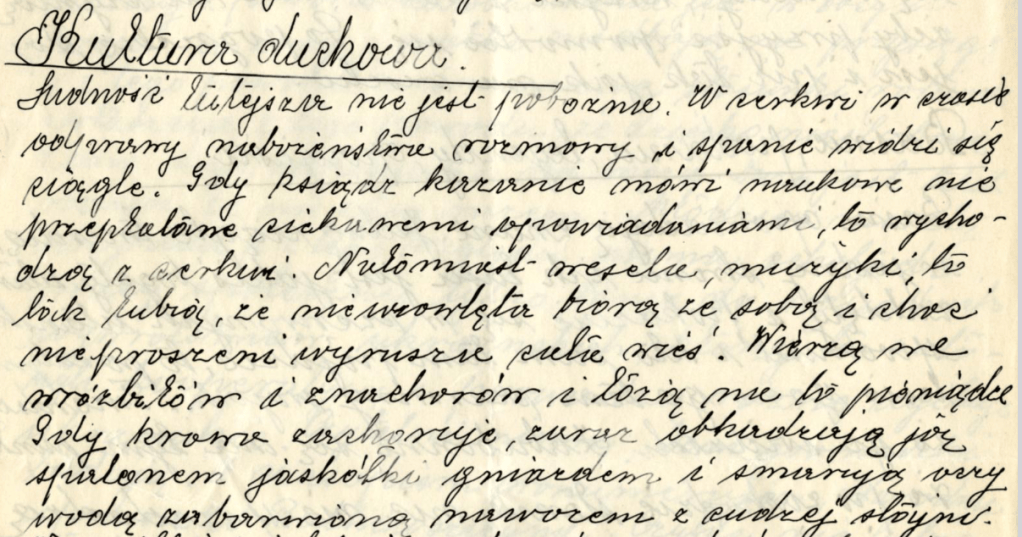
Kultura duchowa.
Ludność tutejsza nie jest pobożna. W cerkwi w czasie odprawy nabożeństwa rozmowy i spanie widzi się ciągle. Gdy ksiądz kazanie mówi naukowe nie przeplatane ciekawemi opowiadaniami, to wychodzą z cerkwi. Natomiast wesela, muzyki, to tak lubią, że niemowlęta biorą ze sobą i choć nieproszeni wyruszy cała wieś. Wierzą we wróżbitów i znachorów i łożą na to pieniądze. Gdy krowa zachoruje, zaraz okadzają ją spalonem jaskółki gniazdem i smarują oczy wodą zabarwioną nawozem z cudzej stajni.
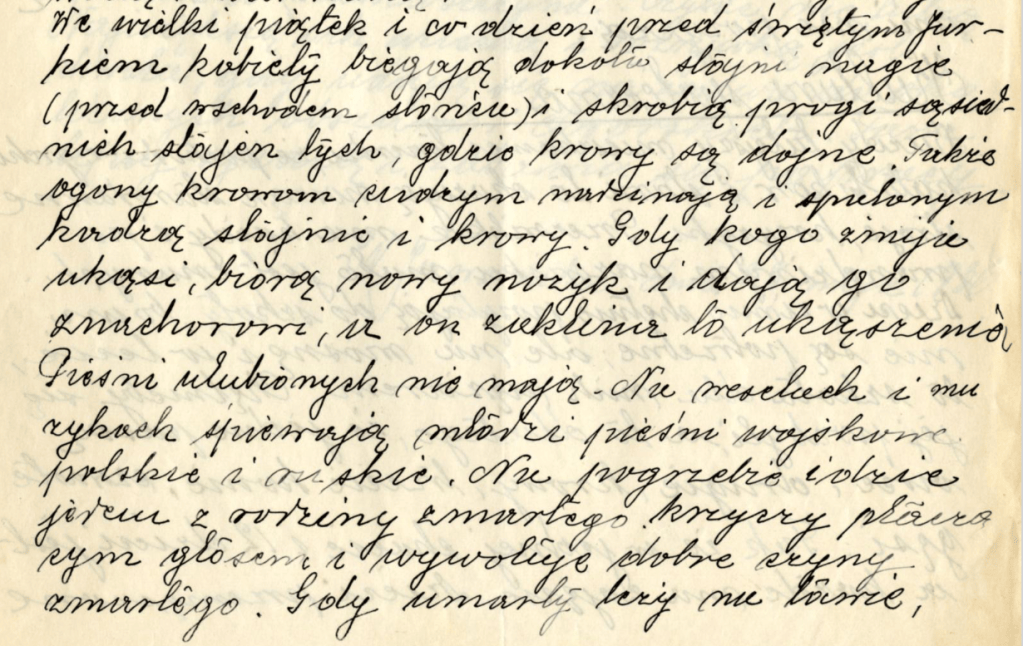
We wielki piątek i co dzień przed świętym Jurkiem kobiety biegają dookoła stajni nagie (przed wschodem słońca) i skrobią progi sąsiednich stajen tych, gdzie krowy są dojne. Takie ogony krowom uciętym nadcinają i upalonym kudłem okadzą stajnie i krowy. Gdy kogo żmija ukąsi, biorą nowy nożyk i dają go znachorowi, iż on zaklnie to ukąszenie.
Pieśni ulubionych nie mają. Na weselach i muzykach śpiewają młodzi pieśni wojskowe polskie i ruskie. Na pogrzebie idzie jeden z rodziny zmarłego krzyczy płaczącym głosem i wywołuje dobre czyny zmarłego. Gdy umarły leży na ławie,
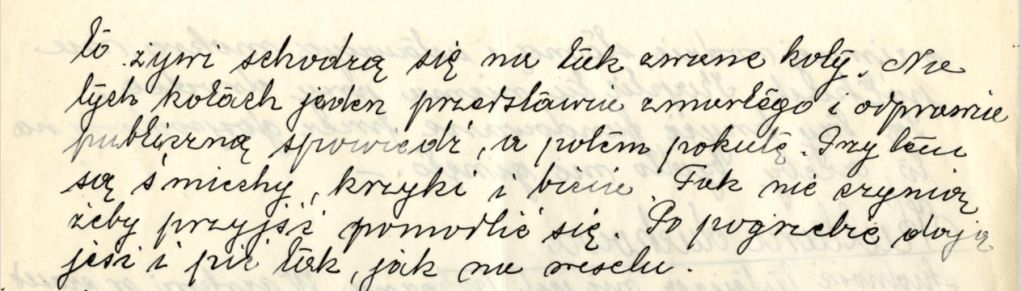
To żywi schodzą się na tak zwane koły. Na tych kołach jeden przedstawia zmarłego i odprawia publiczną spowiedź, a potem pokutę. Inny tem są śmiechy, krzyki i biuro. Tak nie czynić żeby przyjść pomodlić się. Do pogrzebu dojdzie, jesi i pił tak, jak na weselu.
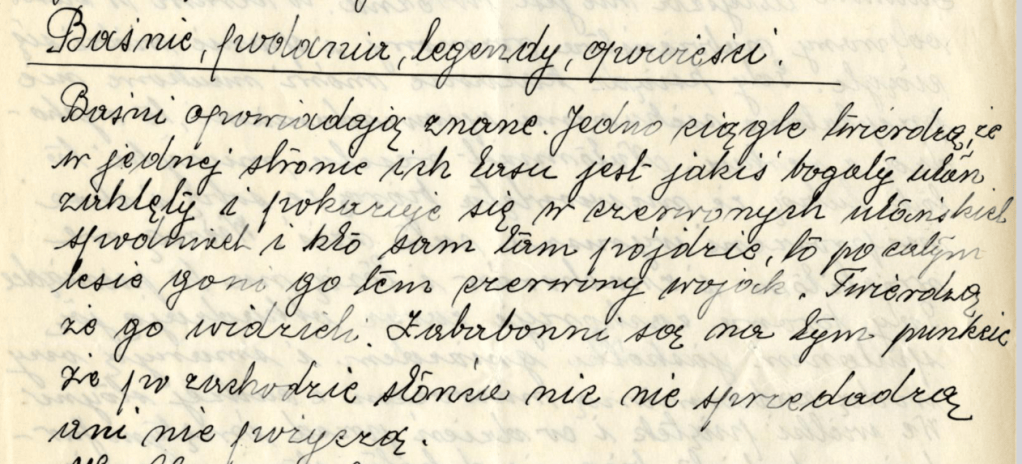
Baśnie, podania, legendy, opowieści.
Baśni opowiadają znane. Jedno ciągle twierdzą, że w jednej stronie ich lasu jest jakiś bogaty ułan zaklęty i pokazuje się w czerwonych ułańskich spodniach i kto sam tam pójdzie, to po całym lesie goni go ten czerwony wojak. Twierdzą, że go widzieli. Zabobonni są na tym punkcie, że po zachodzie słońca nic nie sprzedadzą ani nie pożyczą.
English Translation: Google-Powered
Warning: this translation may be terrible. It was done electronically by someone who can speak neither Polish nor Ukrainian/Lemko. Do you wish to see it improve? You can help! Contact us.
Uwaga: to tłumaczenie może być fatalne. Zostało wykonane automatycznie przez osobę, która nie zna ani języka polskiego, ani ukraińskiego/łemkowskiego. Chcesz, żeby było lepsze? Możesz pomóc! Skontaktuj się z nami.
Spiritual culture.
The local population is not particularly devout. During church services, it is common to see people talking or sleeping. If a priest delivers a sermon that is purely doctrinal—lacking engaging stories—the congregation simply walks out. On the other hand, they are so fond of weddings and music that they bring even their infants along; often, the entire village will turn up, uninvited. They place their faith—and their money—in fortune-tellers and folk healers. If a cow falls ill, they immediately fumigate it with the smoke of a burnt swallow’s nest and smear its eyes with water mixed with manure taken from someone else’s stable.
On Good Friday, and again on the eve of St. George’s Day, women run naked around the stables (before sunrise) and scrape the thresholds of their neighbors’ stables—specifically those where the cows are known to be good milkers. They also make small nicks in the cows’ tails and use the singed hair to fumigate both the stables and the animals. If someone is bitten by a snake, they bring a new knife to a folk healer, who then performs an incantation over it to neutralize the bite.
They have no particular favorite songs. At weddings and social gatherings, the young people sing Polish and Ruthenian military songs. During a funeral, a relative of the deceased walks along, calling out in a tearful voice and recounting the good deeds the departed performed in life. While the body lies on a bench,
the living gather for what are known as koły (gatherings). During these sessions, one person role-plays the deceased, offering a public confession followed by a penance—all amidst much laughter, shouting, and commotion. One shouldn’t act like that—better to come and offer a prayer. If he keeps drinking the way he did at the wedding, it’ll end in a funeral.
Fairy tales, folk tales, legends, and stories.
People here tell well-known fairy tales. They insist that in one part of their forest, there dwells an enchanted, wealthy uhlan—he appears wearing red uhlan trousers—and anyone who ventures there alone finds himself pursued by this red-clad soldier all through the woods. They claim to have seen him. They are so superstitious in this regard that, once the sun has set, they will neither sell nor lend anything to anyone.
Sanok Genes seeks to create a database of transcripts and English translations from the “Kultura Duchowa” sections from the 1936 Sanok School Inspectorate Questionnaires. The original documents are held by the Sanok Museum of History and digitized by the Sanok Digital Library. To learn more, see the project description.
Sanok Genes stawia sobie za cel stworzenie bazy danych zawierającej transkrypcje oraz tłumaczenia na język angielski fragmentów dotyczących „kultury duchowej”, pochodzących z kwestionariuszy Inspektoratu Szkolnego w Sanoku z 1936 roku. Oryginalne dokumenty znajdują się w zbiorach Muzeum Historycznego w Sanoku i zostały zdigitalizowane przez Sanocką Bibliotekę Cyfrową. Więcej informacji można znaleźć w opisie projektu.

