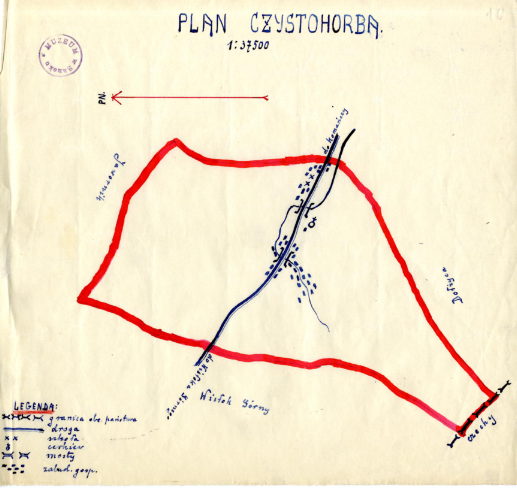
Czystohorb is a village in Komańcza Commune, Sanok County.
Czystohorb to wieś w gminie Komańcza, w powiecie sanockim.
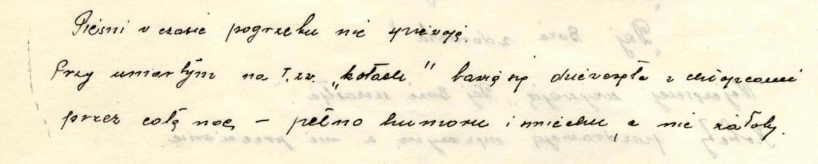
Transcript: Google-Powered
Warning: this transcription may be terrible. It was done electronically by someone who can speak neither Polish nor Ukrainian/Lemko. Do you wish to see it improve? You can help! Contact us.
Uwaga: ta transkrypcja może być fatalna. Została wykonana automatycznie przez osobę, która nie zna ani języka polskiego, ani ukraińskiego/łemkowskiego. Chcesz, żeby była lepsza? Możesz pomóc! Skontaktuj się z nami.
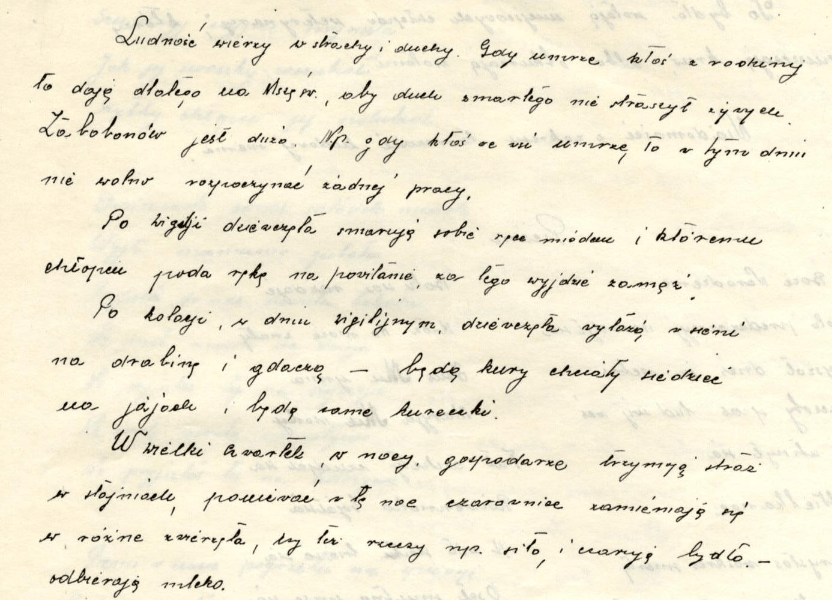
Ludność wierzy w strachy i duchy. Gdy umrze ktoś z rodziny to dają dlatego na Mszę, aby duch zmarłego nie straszył żyjących. Zabobonów jest dużo np. gdy ktoś we wsi umrze to w tym domu nie wolno rozpoczynać żadnej pracy.
Po Wigilji dziewczęta smarują sobie ręce miodem i któremu chłopcu poda rękę na powitanie, za tego wyjdzie zamąż.
Po kolacji w dniu wigilijnym dziewczęta wyłażą w sieni na drabinę i gdaczą – będą kury chciały siedzieć na jajkach, będą same kureczki.
W Wielki Czwartek w nocy, gospodarze trzymają straż w stajniach, ponieważ w tę noc czarownice zamieniają się w różne zwierzęta, by te rzeczy np. sło, i czary, bydło – odbierają mleko.
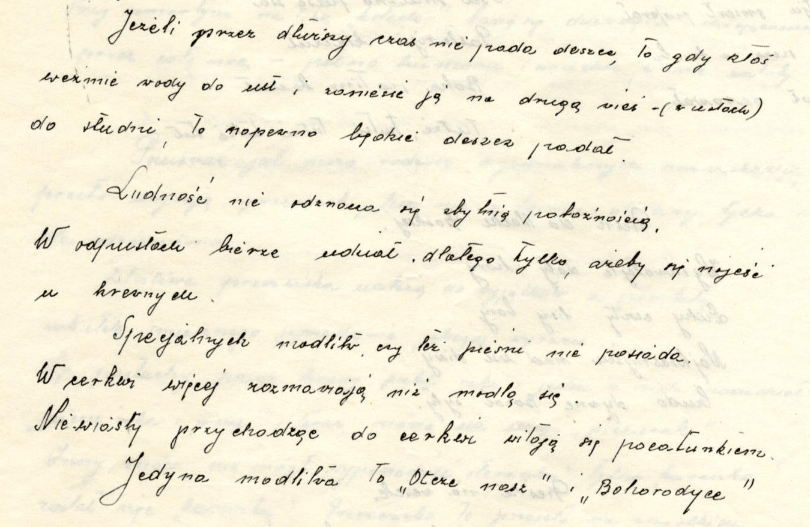
Jeżeli przez dłuższy czas nie pada deszcz, to gdy ktoś weźmie wody do ust i zaniesie ją na drugą wieś – (w ustach) do studni, to na pewno będzie deszcz padał.
Ludność nie odznacza się zbytnią pobożnością. W odpustach bierze udział dlatego tylko, ażeby się najeść u krewnych.
Specjalnych modlitw czy też pieśni nie posiada. W cerkwi więcej rozmawiają niż modlą się. Niewiasty przychodząc do cerkwi witają się pocałunkiem.
Jedyna modlitwa to „Otcze nasz”, „Bohorodyce”.
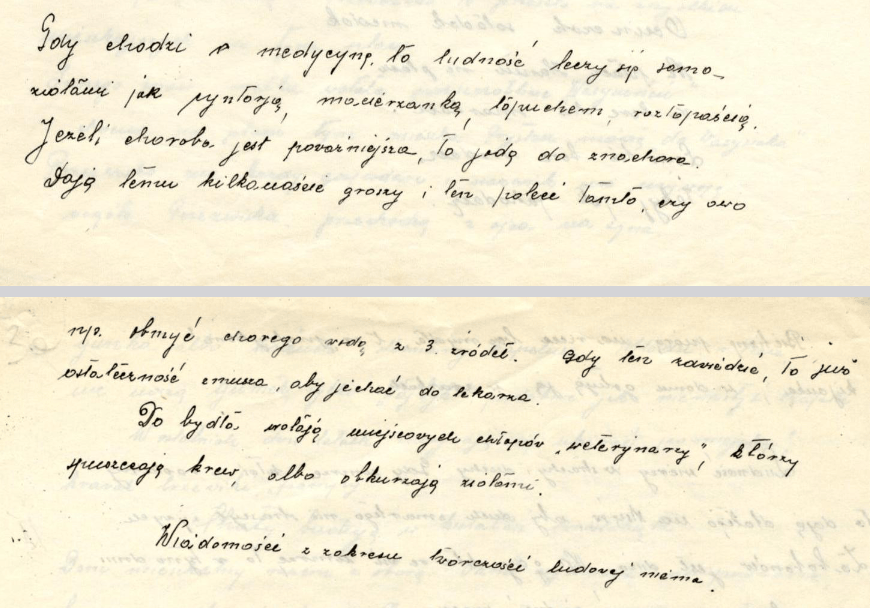
Gdy chodzi o medycynę, to ludność leczy się samorzutnie jak pyntorją, macierzanką, łopuchem, roztopaścią. Jeżeli choroba jest poważniejsza, to jadą do znachora. Dają temu kilkanaście groszy i ten poleci tamto, czy owo np. obmyć chorego wodą z 3 źródeł. Gdy ten zawiedzie, to już ostateczność zmusza, aby jechać do lekarza.
Do bydła wołają miejscowych chłopów „weterynarzy”, którzy puszczają krew albo okurzają ziołami.
Wiadomości z zakresu twórczości ludowej można.
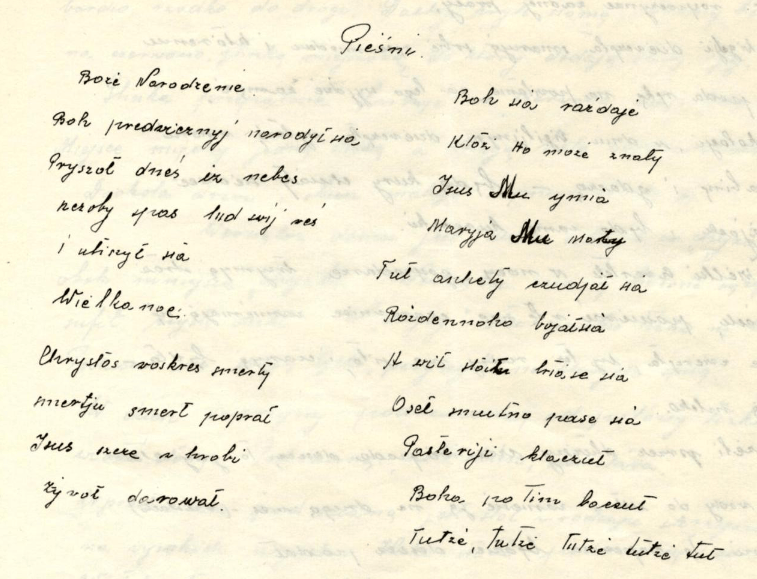
Pieśni
Boże Narodzenie
Boh predwiecznyj narodływ sia,
Pryszoł dnieś iz nebes
aby spas lud wejseś
i utiszyć sia
Wielkanoc.
Chrystos woskres merty
smertju smert poprai
Ines nese z hrobi
żywot darował.
Boh sia razdaje
Ktoż Ho może znaty
Jesus Mu ymia
Maryja Mu maty
Tut anheły czudjať sia
Rożdennoho bojať sia
A wil stoiť trja se sia
Oseł smutno pase sia
Pasteriji klaczuť
Boha pro Tim baczut
Tutże, tutże, tutże, tutże, tut
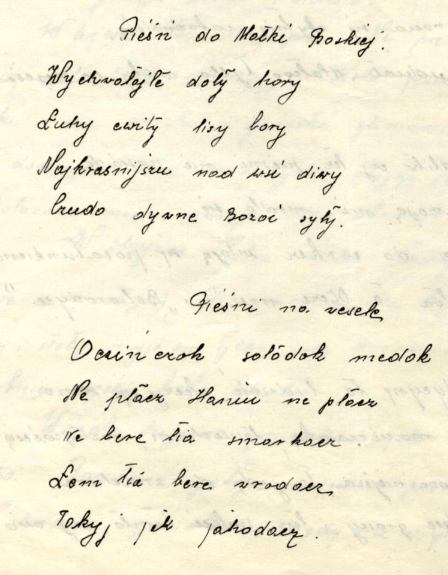
Pieśń do Matki Boskiej.
Wychwalajcie doły góry
Lasy cwity lasy bory
Najkrasniejsza nad wsi diwy
Cudo dywne Bozoi syły.
Pieśni na wesele.
Ociń erok sołódok medok
Ne płacz Haniu ne płacz
Ke bere fia smarkacz
Lem fia bere urodacz
Takyj jek jahodacz.
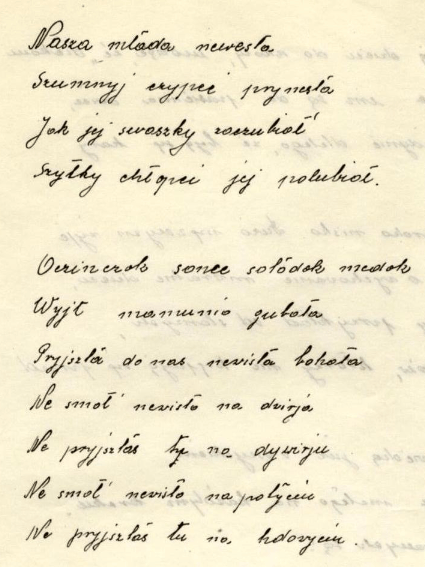
Nasza młoda newesta,
sumnyj wyper przynesta.
Jak jej swaszky rozruhať,
wytky chlopci jej polubiať.
Obrincelo sonce solodok medok
Wyjť manunio gubota
Pryjszla do nas newista bohoťa
Ne smot newisto na dwirja
Ne pryjszlas ty na dywirju
Ne smot newisto na polyciu
Ne pryjszlas ty na kdowyciu.
Pieśni w czasie pogrzebu nie śpiewają:
Przy umarłym na t. zw. „kołasce” bawią się dziewczęta z chłopcami przez całą noc, – pełno humoru i śmiechu a nie żałoby.
English Translation: Google-Powered
Warning: this translation may be terrible. It was done electronically by someone who can speak neither Polish nor Ukrainian/Lemko. Do you wish to see it improve? You can help! Contact us.
Uwaga: to tłumaczenie może być fatalne. Zostało wykonane automatycznie przez osobę, która nie zna ani języka polskiego, ani ukraińskiego/łemkowskiego. Chcesz, żeby było lepsze? Możesz pomóc! Skontaktuj się z nami.
The local people believe in ghosts and spirits. When a family member dies, they pay for a Mass to be said so that the spirit of the deceased will not haunt the living. There are many superstitions; for instance, if someone in the village dies, no work may be started in that person’s household.
On Christmas Eve, young women smear their hands with honey; the first boy whose hand they shake in greeting is the one they will eventually marry.
After the Christmas Eve supper, young women climb a ladder in the entryway and cluck like hens—this is believed to encourage the hens to sit on their eggs and ensure that only female chicks are hatched.
On the night of Maundy Thursday, farmers keep watch in their stables, as it is believed that on this night, witches transform into various animals to cast spells—for example, by stealing the milk from the livestock.
If there has been no rain for a long time, it is said that if someone takes water into their mouth and carries it—still in their mouth—to another village and deposits it into a well, rain will surely follow.
The local population is not particularly devout. They attend religious festivals (indulgences) primarily for the sake of enjoying a meal at the homes of their relatives.
They have no specific prayers or hymns of their own. In the Greek church, they spend more time talking than praying. Upon arriving at the church, the women greet one another with a kiss.
The only prayers they know are the “Our Father” and the “Theotokos” (prayer to the Mother of God).
As for medicine, the people rely on folk remedies, using plants such as pyntorja (a local term for a medicinal herb), wild thyme, burdock, and greater celandine. If an illness is more serious, they seek out a traditional healer. They give him a few small coins, and he suggests this or that—for instance, washing a sick person with water from three different springs. If that fails, then—as a last resort—they are compelled to go see a doctor.
For their livestock, they call upon local peasants who act as “veterinarians,” performing bloodletting or using herbal smoke.
Information regarding folk traditions can be found…
Songs
Christmas
God Eternal is born,
He came today from heaven
To save all His people
And to rejoice.
Easter (Paschal Troparion followed by a traditional Christmas carol)
Christ is risen from the dead,
Trampling down death by death,
And upon those in the tombs
Bestowing life.
God is born!
Who can know Him?
Jesus is His name,
Mary is His mother.
Here angels marvel,
They stand in awe of the Newborn,
And the ox stands trembling,
The donkey grazes sadly,
The shepherds kneel,
Seeing God in Him—
Right here, right here, right here, right here, here!
Song to the Mother of God
Praise Him, valleys and mountains,
Woods, flowers, forests, and pine groves—
The fairest above all maidens,
A wondrous miracle of God’s power.
Wedding Songs
Ociń erok [Refrain], sweet honey—
Do not cry, Hania, do not cry,
For no snot-nosed boy is taking you,
Only a handsome lad is taking you,
Like a ripe berry.
Our young bride
Has brought a fine trousseau.
When the bridesmaids spread it out,
All the lads will take a liking to her.
The sun has turned [circled], sweet honey—
Come out, dear mother, out of the house,
A rich bride has come to us!
Do not look, bride, at the yard,
You did not come here to gawk around;
Do not look, bride, at the shelf,
You did not come here to be a widow [or idle].
Funeral Customs
They do not sing songs during a funeral:
Beside the deceased at the so-called “kołaska” [wake], the girls and boys play games all night long—full of humor and laughter rather than mourning.
Sanok Genes seeks to create a database of transcripts and English translations from the “Kultura Duchowa” sections from the 1936 Sanok School Inspectorate Questionnaires. The original documents are held by the Sanok Museum of History and digitized by the Sanok Digital Library. To learn more, see the project description.
Sanok Genes stawia sobie za cel stworzenie bazy danych zawierającej transkrypcje oraz tłumaczenia na język angielski fragmentów dotyczących „kultury duchowej”, pochodzących z kwestionariuszy Inspektoratu Szkolnego w Sanoku z 1936 roku. Oryginalne dokumenty znajdują się w zbiorach Muzeum Historycznego w Sanoku i zostały zdigitalizowane przez Sanocką Bibliotekę Cyfrową. Więcej informacji można znaleźć w opisie projektu.

