Turzańsk is a village in Komańcza Commune, Sanok County.
Turzańsk to wieś w gminie Komańcza, w powiecie sanockim.
Transcript: Google-Powered
Warning: this transcription may be terrible. It was done electronically by someone who can speak neither Polish nor Ukrainian/Lemko. Do you wish to see it improve? You can help! Contact us.
Uwaga: ta transkrypcja może być fatalna. Została wykonana automatycznie przez osobę, która nie zna ani języka polskiego, ani ukraińskiego/łemkowskiego. Chcesz, żeby była lepsza? Możesz pomóc! Skontaktuj się z nami.
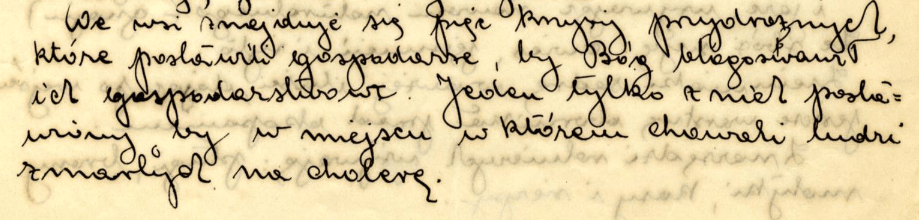
We wsi znajdują się figury przydrożne, które postawiło gospodarstwo, by Bóg błogosławił ich gospodarstwu. Jeden tylko z nich postawiono, by w miejscu w którem chowali ludzi zmarłych na cholerę.
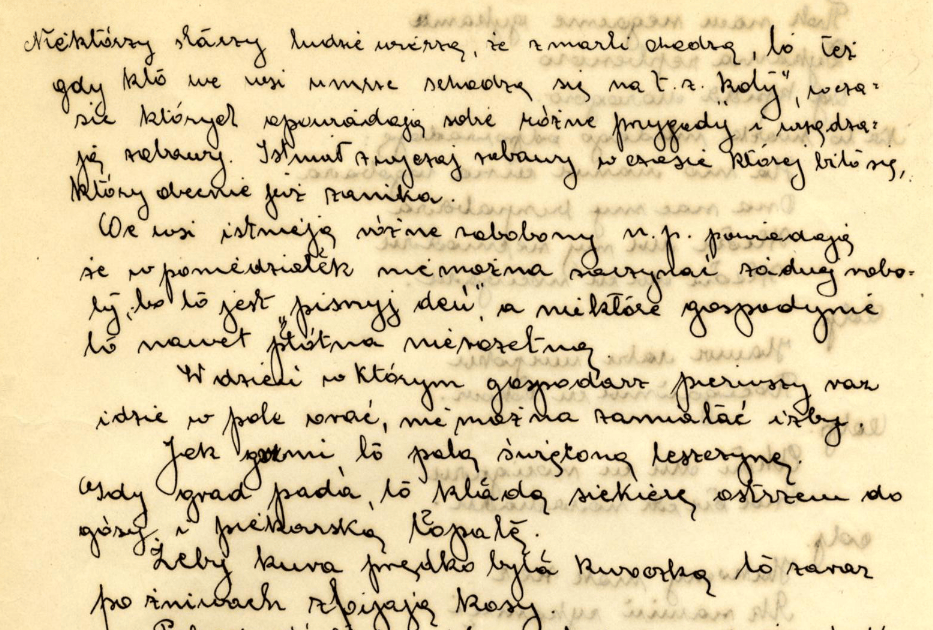
Niektórzy starzy ludzie wierzą, że zmarli chodzą, to też gdy kto we wsi umrze schodzą się na t.zw. „koły”, rozsadzą się, których opowiadają sobie różne przygody i urządzają zabawy. Istniał zwyczaj zabawy w czasie której bito np. który obecnie już zanika.
We wsi istnieją różne zabobony n.p. powiadają się w poniedziałek nie można zaczynać żadnej roboty, bo to jest „pisnyj dzień”, a niektóre gospodynie to nawet płótna nie rozetną. W dzień w którym gospodarz pierwszy raz idzie w pole orać, nie można zamiatać izby.
Jak grzmi to palą święconą leszczynę, gdy grad pada, to kładą siekierę ostrzem do góry i piekarską łopatę.
Żeby kura prędko była kwoczką, to zaraz po żniwach wbijają kosy.
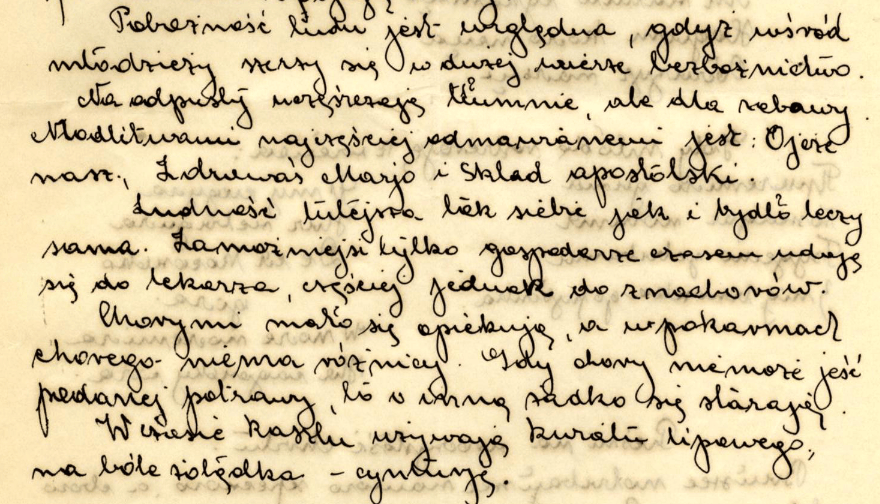
Pobożność ludu jest względna, gdyż wśród młodzieży szerzy się w dużej mierze bezbożnictwo. Na odpusty uczęszczają tłumnie, ale dla zabawy. Modlitwami najczęściej odmawia nemi jest: Ojcze nasz, Zdrowaś Marjo i Skład apostolski.
Ludność tutejsza tak siebie jak i bydło leczy sama. Zamożniejsi tylko gospodarze czasem udają się do lekarza, częściej jednak do znachorów.
Chorymi mało się opiekują, a w pokarmach chorego nie ma różnicy. Gdy chory nie może jeść podanej potrawy, to o inną rzadko się starają.
W czasie kaszlu używają kwiatu lipowego, na bóle żołądka – cynturyi.
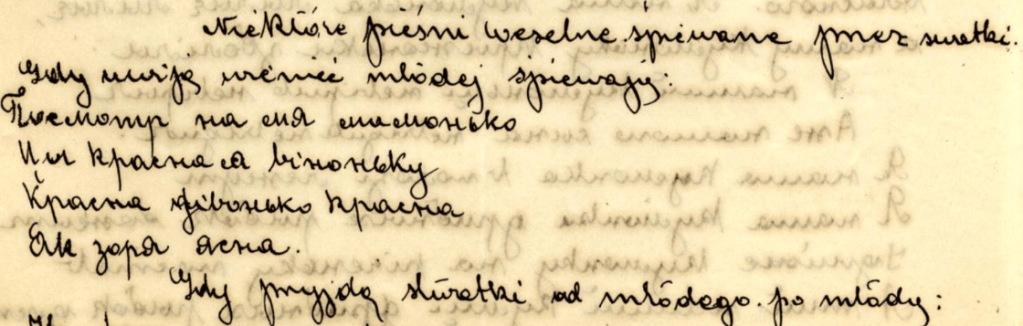
Niektóre pieśni weselne śpiewane przez swatki.
Gdy wiją wieniec młodej śpiewają:
Посмотр на мя мамонько
Ии красна я віноньку
Красна дівонько красна
Як зоря ясна.
Gdy przyjdą swatki od młodego po młodą:
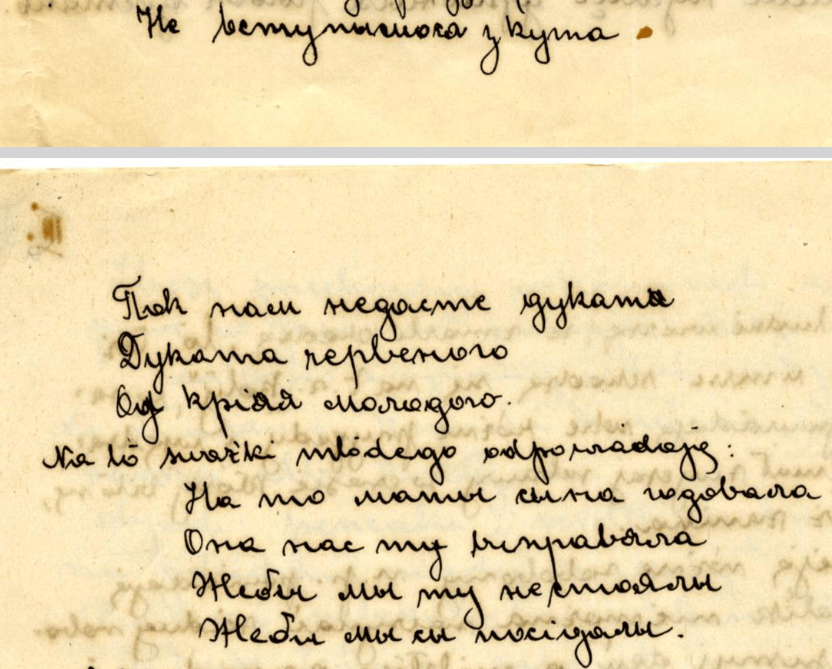
Не вступиланого з кута
Пак нам недасте дуката
Дуката червеного
Од кріля молодого.
Na to swatki młodego odprowadzają:
На то маты сына годовала
Она нас ту выправила
Жебы мы ту не стояли
Жебы мы сы посідали.
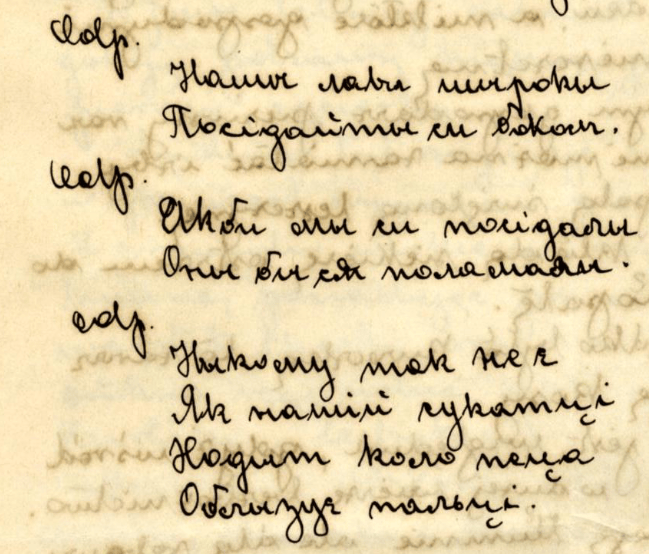
заг.
Наши лавы широки
Посідайте ся боком.
заг.
Аби мы ли посідали
Оны бы ся поламали.
Заг.
Никому так не є
Як нашій рукавиці
Ходит коло пеца
Оберизує пальці.
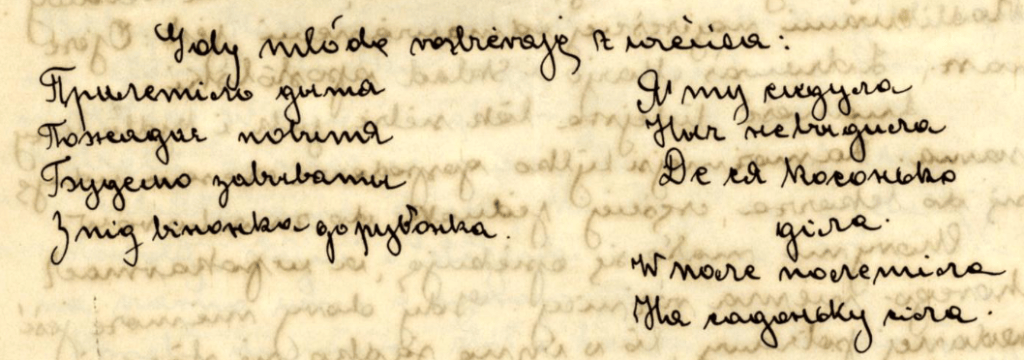
Gdy młóde rozbéraye 12 wreiśa :
Прилетіло дитя,
Поглядив, повитя.
Будемо завивати,
З під віночка до рубчика.
Я ту кугуля Нич не виджука
Де ся Косонько діла.
W поле полетіла
На садоньку сіла.
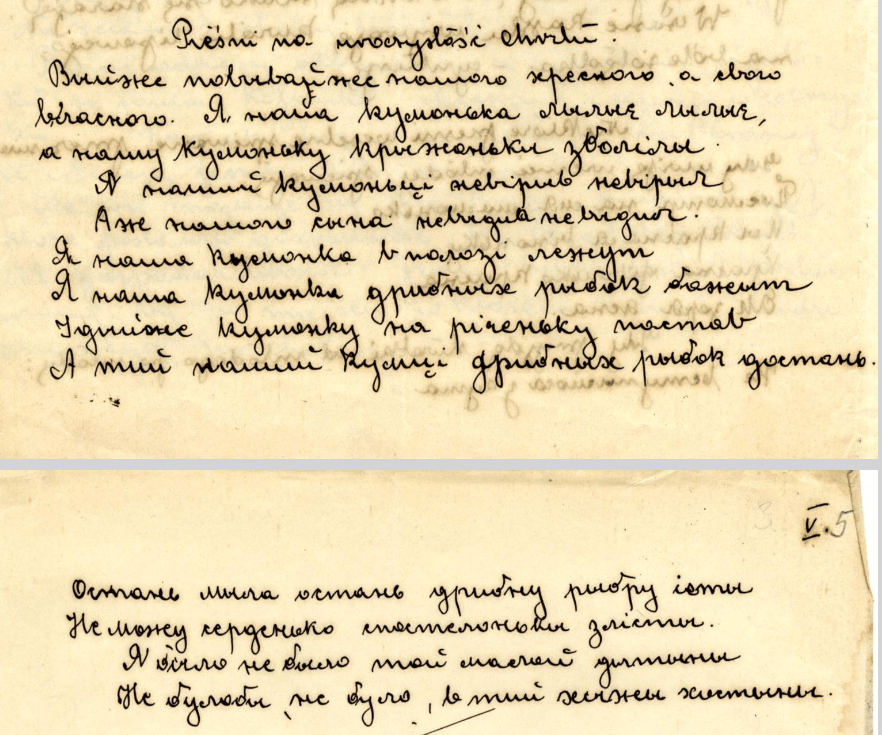
Pieśni na uroczystość chrztu
Вийжеж повивайже нашого хресного, а свого
власного. Я наша кумонька лылыя лылыя,
а нашу кумоньku прысжаньки зболіли.
Я наший кумоньці невірив невірив
Аж нашого сына невыдив невыдыв.
Я наша кумонька в полозі лежыт
Я наша кумонька дрібных рыбок бажыт
Уднійже кумоньку на річеньку постав
А тий наший кумці дрібных рыбок достань.
Остань мыла остань дрібну рыбку істи
Не можу серденько спостеленькы злісти.
Я было не было той маленї дитыны
Не булобы не було, в тый жижни хрестыны.
English Translation: Google-Powered
Warning: this translation may be terrible. It was done electronically by someone who can speak neither Polish nor Ukrainian/Lemko. Do you wish to see it improve? You can help! Contact us.
Uwaga: to tłumaczenie może być fatalne. Zostało wykonane automatycznie przez osobę, która nie zna ani języka polskiego, ani ukraińskiego/łemkowskiego. Chcesz, żeby było lepsze? Możesz pomóc! Skontaktuj się z nami.
In the village, there are roadside religious figures, erected by farm households to seek God’s blessing upon their land. One such figure was placed specifically to mark the site where victims of a cholera epidemic were buried.
Some elderly villagers believe that the dead walk among the living; consequently, when someone in the village dies, people gather for what are known as “koły” (gatherings)—sitting together to share stories of various adventures and engage in amusements. There was once a custom involving games—such as those where participants would strike one another—though this practice is now fading away.
Various superstitions persist in the village; for instance, it is said that no work should be started on a Monday, as it is considered a “pisnyj dzień” (a day of abstinence or a “lean” day)—some housewives will not even cut a piece of linen on this day. Furthermore, on the day a farmer first heads out to the fields to plow, the house must not be swept.
When it thunders, people burn blessed hazel branches; when hail falls, they place an axe—blade facing upward—alongside a baker’s peel.
To encourage a hen to become broody sooner, scythes are driven into the ground immediately after the harvest.
The piety of the local people is relative, as irreligion is spreading significantly among the youth. While they attend religious festivals (indulgences) in large numbers, they do so primarily for the sake of entertainment. The prayers most commonly recited are the “Our Father,” the “Hail Mary,” and the Apostles’ Creed.
The local population treats both themselves and their livestock on their own. Only the wealthier farmers occasionally consult a doctor, though they are more likely to turn to folk healers.
Little care is provided to the sick, and there is no distinction made regarding the food served to those who are ill. If a sick person cannot eat the food they are served, others rarely go to the trouble of finding them something else.
For a cough, they use linden blossoms; for stomach aches, they use centaury.
Some wedding songs sung by the matchmakers.
As they weave a wreath for the bride, they sing:
Look at me, dear mother,
In my beautiful bridal wreath—
A beautiful maiden,
Bright as a clear star.
When the matchmakers arrive from the groom’s side to fetch the bride:
We won’t budge from this corner
Until you give us a ducat—
A red gold ducat
From the young groom.
To this, the matchmakers reply:
A mother raised her son for this very purpose;
She sent us here—
Not so that we should stand,
But so that we might sit down.
Chorus:
Our benches are wide;
Sit down sideways.
Chorus:
If we were to sit down,
They would surely break.
Chorus:
No one fares quite like
Our mitten:
It wanders around the stove,
Warming its fingers.
When the bride is being undressed (removing the bridal wreath):
A child has flown in,
Taken a look, and vanished.
Now we shall wrap her—
From the bridal wreath to the kerchief.
I look around, but I see nothing—
Where has the little braid gone?
It flew out into the fields,
And landed in the orchard.
Songs for a Baptism Celebration
Come out and swaddle our godson—your very own child!
Oh, our dear godmother—lylyia, lylyia—
Our dear godmother’s legs are aching.
I didn’t believe our godmother—no, I didn’t—
Until I saw our son—yes, I saw him! Our dear kumonka lies in childbed,
Our dear kumonka craves some little fish.
Take our kumonka down to the little river,
And catch some little fish for her.
“Oh, my dear, I would love to eat some little fish,
But, my heart, I cannot get out of my bed.”
If there were no little child,
There would be no christening in this life.
Sanok Genes seeks to create a database of transcripts and English translations from the “Kultura Duchowa” sections from the 1936 Sanok School Inspectorate Questionnaires. The original documents are held by the Sanok Museum of History and digitized by the Sanok Digital Library. To learn more, see the project description.
Sanok Genes stawia sobie za cel stworzenie bazy danych zawierającej transkrypcje oraz tłumaczenia na język angielski fragmentów dotyczących „kultury duchowej”, pochodzących z kwestionariuszy Inspektoratu Szkolnego w Sanoku z 1936 roku. Oryginalne dokumenty znajdują się w zbiorach Muzeum Historycznego w Sanoku i zostały zdigitalizowane przez Sanocką Bibliotekę Cyfrową. Więcej informacji można znaleźć w opisie projektu.

