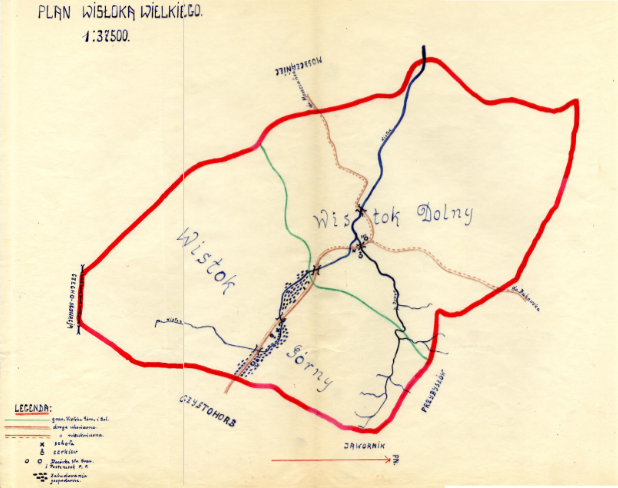
Wisłok Dolny is a village in Komańcza Commune, Sanok County.
Wisłok Dolny to wieś w gminie Komańcza, w powiecie sanockim.
Transcript: Google-Powered
Warning: this transcription may be terrible. It was done electronically by someone who can speak neither Polish nor Ukrainian/Lemko. Do you wish to see it improve? You can help! Contact us.
Uwaga: ta transkrypcja może być fatalna. Została wykonana automatycznie przez osobę, która nie zna ani języka polskiego, ani ukraińskiego/łemkowskiego. Chcesz, żeby była lepsza? Możesz pomóc! Skontaktuj się z nami.
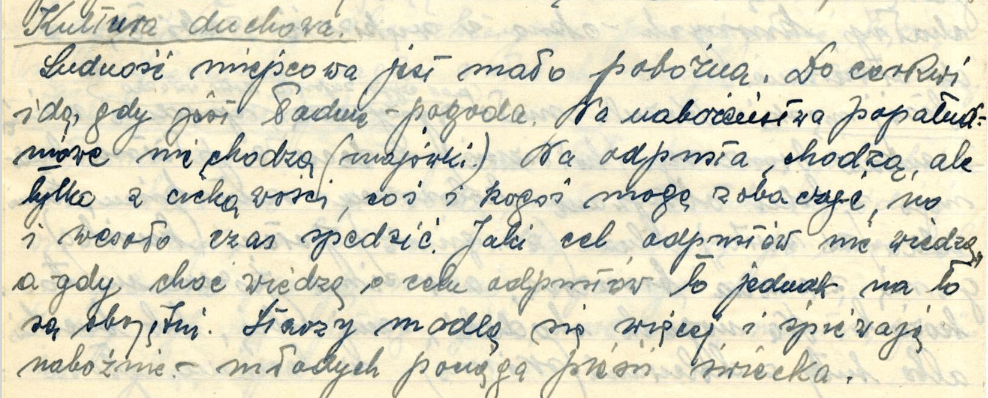
Kultura duchowa.
Ludność miejscowa jest mało pobożna. Do cerkwi idą, gdy jest ładna pogoda. Na nabożeństwa popołudniowe mniej chodzą (majówki). Na odpusty chodzą, ale tylko z ciekawości, coś u kogoś mogą zobaczyć, no i wesoło czas spędzić. Jaki cel odpustów nie wiedzą, a gdy chcą wiedzieć o celu odpustów to jednak na to są zbytni. Starzy modlą się więcej i śpiewają nabożnie, młodych pociąga pieśń świecka.
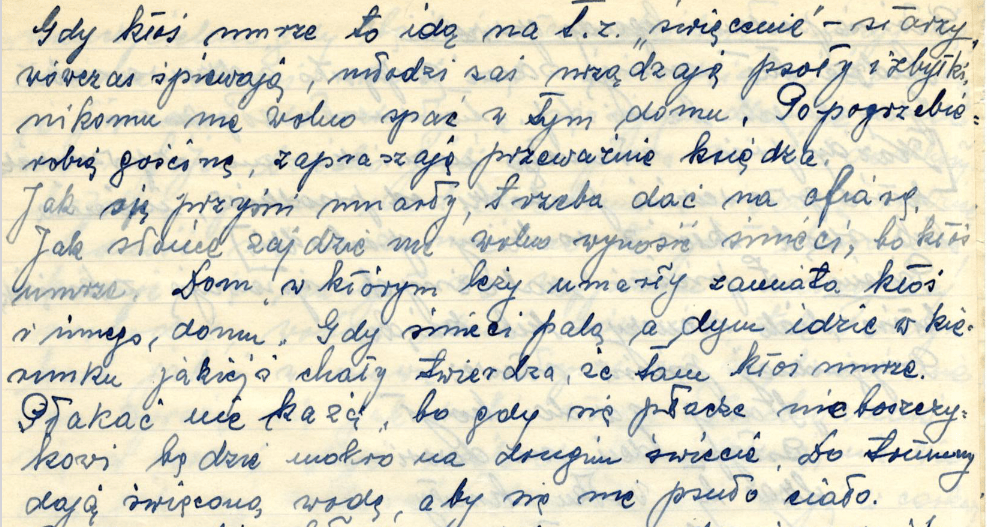
Gdy ktoś umrze to idą na t.z. „święcenie” – starzy, wówczas śpiewają, młodzi zaś urządzają psoty i zbytki, nikomu nie wolno spać w tym domu. Po pogrzebie robią gościnę, zapraszają przeważnie księdza. Jak się przyjmi umarły, trzeba dać na ofiarę. Jak słońce zajdzie nie wolno wynosić śmieci, bo ktoś umrze. Dom, w którym leży umarły zamiata ktoś z innego domu. Gdy śmieci palą a dym idzie w kierunku jakiejś chaty twierdzą, że tam ktoś umrze. Płakać nie każą, bo gdy się płacze nieboszczykowi będzie mokro na drugim świecie. Do trumny dają święconą wodę, aby się nie psuło ciało.
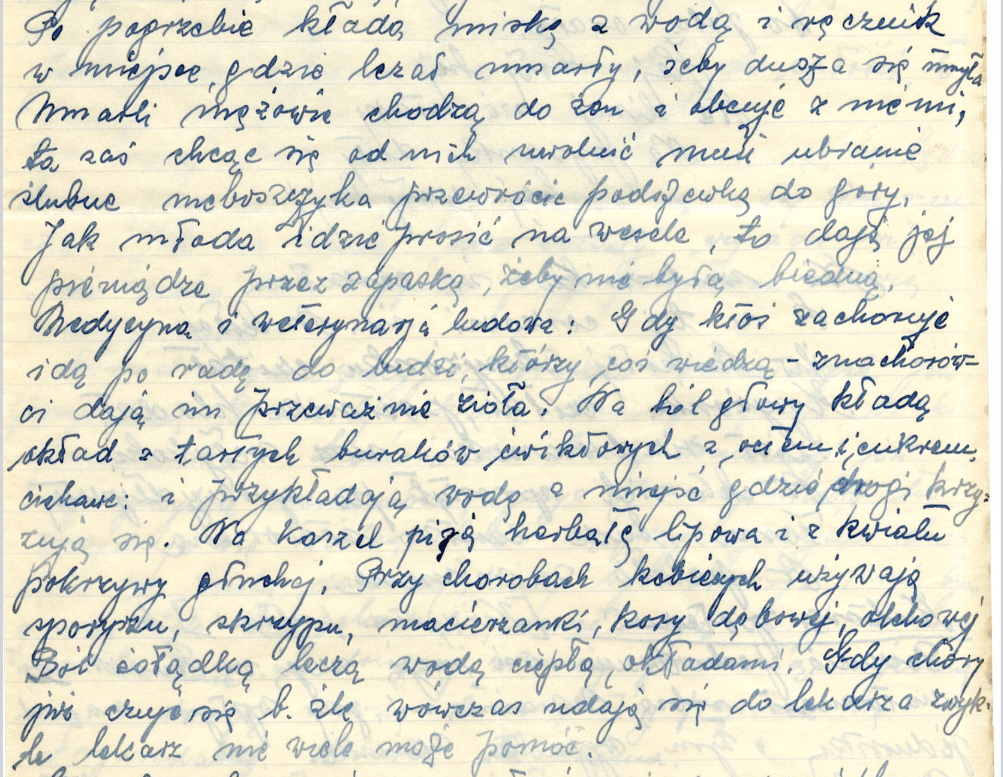
Po pogrzebie kładą miskę z wodą i ręcznik w miejsce, gdzie leżał umarły, żeby dusza się umyła. Zmarli mężowie chodzą do żon i obcują z niemi, ta zaś chcąc się od nich uwolnić musi ubranie ślubne nieboszczyka przewrócić podszewką do góry.
Jak młoda idzie prosić na wesele, to dają jej pieniądze przez zapaskę, żeby nie była biedną.
Medycyna i weterynarja ludowa:
Gdy ktoś zachoruje idą po radę do ludzi, którzy coś wiedzą – znachorzy dają im przeważnie zioła. Na ból głowy kładą okład z tartych buraków ćwikłowych z octem i cukrem, ciekawe: i przykładają wodę z miejsc gdzie drogi krzyżują się. Na kaszel piją herbatę lipową i z kwiatu pokrzywy głuchej. Przy chorobach kobiecych używają skrzypu, macierzanki, kory dębowej. Ból żołądka leczą wodą ciepłą, okładami. Gdy chory już czuje się b. źle wówczas udają się do lekarza zwykle, ale lekarz nie wiele może pomóc.
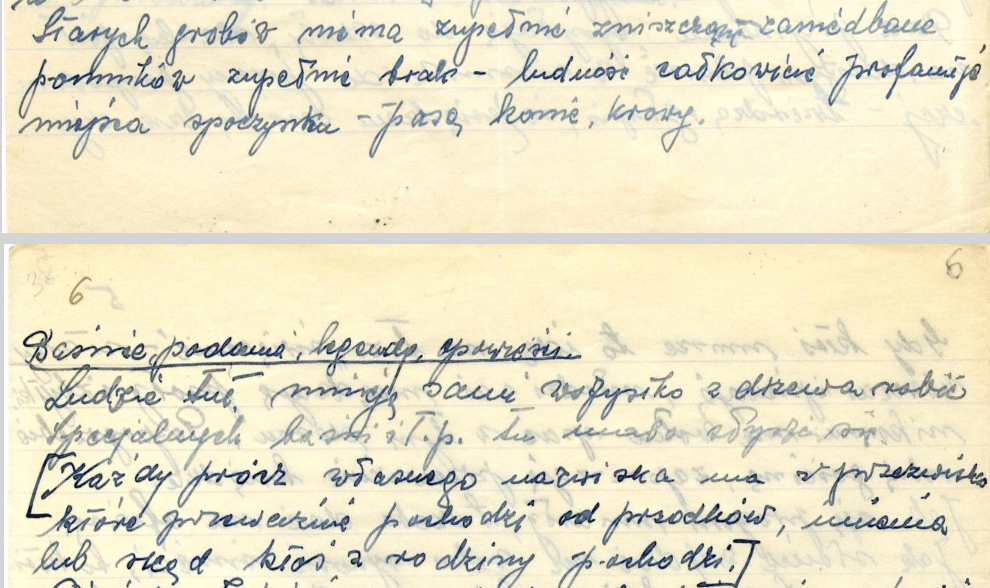
Starych grobów niema zupełnie zniszczone zaniedbane pomników zupełnie brak – ludność całkowicie profanuje miejsca spoczynku – pasą konie, krowy.
Baśnie, podania, legendy, opowieści
Ludzie tutejsi umieją sami wszystko z drzewa robić specjalnych tkaczy i t.p. tu niema obyczaje
[Każdy prócz własnego nazwiska ma i przezwisko które przeważnie pochodzi od przodków, mienia lub skąd ktoś z rodziny pochodzi.]
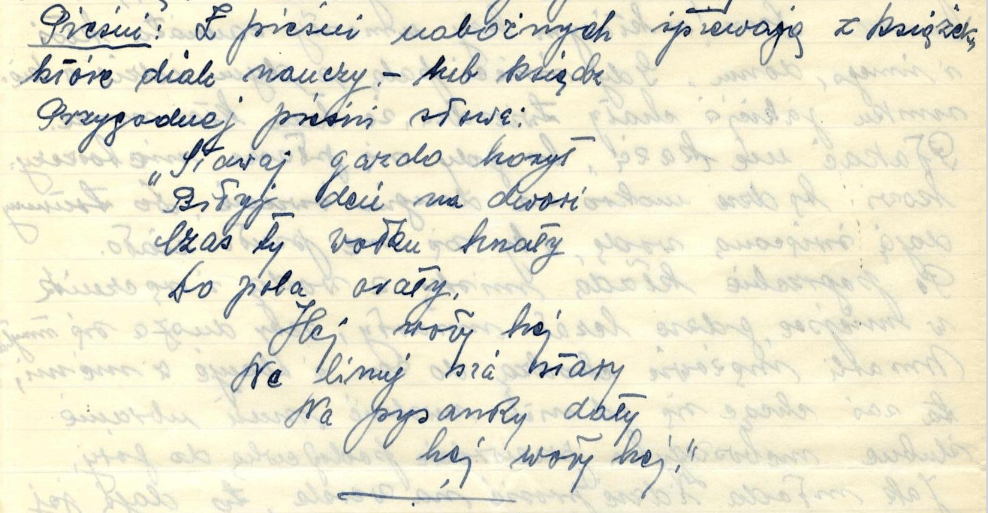
Pieśni:
Z pieśni nabożnych śpiewają z książek,
które działo nauczy – lub ksiądz.
Przygodnej pieśni słowa:
„Stawaj gardło koryto
Gdybyś bicz na dworze
I czas ty wołki gnały
bo pola orały.
Hej woły hej!
Na linij bierz miary
Na pisanki dały
hej woły hej!”
—
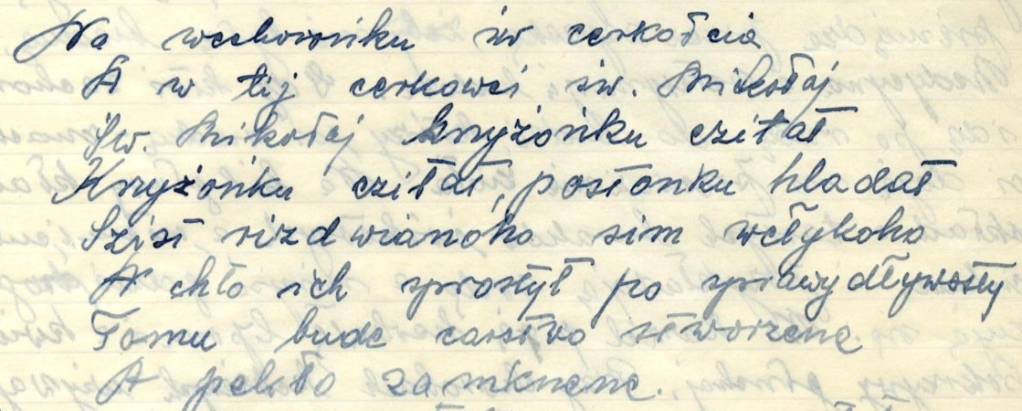
Na woskowisku sw cerkowi
A w tij cerkowi sw. Mikołaj
Sw. Mikołaj knyžonku čitał
Knyžonku čitał, posonku hladał
Sčisti rizd wianoho sim wełykoho
A chto ich sprostył po sprawy dłynosty
Tomu bude carstvo stworone
A pekło zamknene.
English Translation: Google-Powered
Warning: this translation may be terrible. It was done electronically by someone who can speak neither Polish nor Ukrainian/Lemko. Do you wish to see it improve? You can help! Contact us.
Uwaga: to tłumaczenie może być fatalne. Zostało wykonane automatycznie przez osobę, która nie zna ani języka polskiego, ani ukraińskiego/łemkowskiego. Chcesz, żeby było lepsze? Możesz pomóc! Skontaktuj się z nami.
Spiritual culture.
The local population is not particularly devout. They attend church only when the weather is fine. They rarely go to afternoon services (such as May devotions). They do attend religious festivals (indulgences/patronal feasts), but only out of curiosity—to see what others are doing and to have a good time. They do not understand the true purpose of these festivals, and they show little interest in learning about it. The older generation prays more and sings with devotion, while the young are drawn to secular songs.
When someone dies, the older folk gather for what is known as a “blessing” (or “consecration”)—they sing hymns, while the young engage in mischief and horseplay; no one in the house is permitted to sleep. After the funeral, a feast is held, to which the priest is usually invited. It is customary to make an offering for the sake of the deceased. It is forbidden to take out the trash after sunset, lest someone else die. The house where the deceased lies is swept by someone from a different household. If, while trash is being burned, the smoke drifts toward another hut, it is believed that someone in that dwelling will soon die. Mourning or weeping is discouraged, as it is said that such tears will leave the deceased wet in the afterlife. Holy water is placed in the coffin to prevent the body from decomposing.
Following the funeral, a bowl of water and a towel are left where the deceased had been laid out, so that the soul may wash itself. It is believed that deceased husbands may return to visit their wives; to free herself from such visitations, a widow must turn her late husband’s wedding attire inside out. When a bride-to-be goes to invite guests to her wedding, they hand her money through an apron, so that she may not live in poverty.
Folk medicine and veterinary practices:
When someone falls ill, they seek advice from people who are considered knowledgeable—healers, who typically provide herbs. For a headache, they apply a compress made of grated beetroot mixed with vinegar and sugar; interestingly, they also use water taken from a crossroads. For a cough, they drink tea made from linden blossoms or the flowers of the white dead-nettle. For women’s ailments, they use horsetail, wild thyme, and oak bark. Stomach aches are treated with warm water and compresses. If a patient’s condition becomes very grave, they usually turn to a doctor, though the doctor is rarely able to offer much help.
There are no old graves left; they have been completely destroyed and neglected, and there are no monuments whatsoever. The local population shows total disregard for these resting places, using them as pasture for their horses and cows.
Folk tales, myths, legends, and stories:
The local people are skilled at crafting everything they need from wood; there are no specialized weavers or similar tradespeople here.
[In addition to their legal surnames, everyone has a nickname—usually derived from their ancestors, their property, or their family’s place of origin.]
Songs:
Devotional songs are sung from books,
as taught by a learned person—or a priest.
Words of an occasional song:
“Ready your throat, you trough,
As if a whip were in the yard,
And drive the oxen along,
For they have plowed the fields.
Hey, oxen, hey!
Measure out the lines,
Prepare the painted eggs—
Hey, oxen, hey!”
—
In a sacred place, a church,
And in that church, Saint Nicholas.
Saint Nicholas was reading a little book,
Reading the book, seeking the truth—
To cleanse the world of all its great burdens.
And whoever sets these things right,
For him, the Kingdom shall be created,
And Hell shall be locked away.
Sanok Genes seeks to create a database of transcripts and English translations from the “Kultura Duchowa” sections from the 1936 Sanok School Inspectorate Questionnaires. The original documents are held by the Sanok Museum of History and digitized by the Sanok Digital Library. To learn more, see the project description.
Sanok Genes stawia sobie za cel stworzenie bazy danych zawierającej transkrypcje oraz tłumaczenia na język angielski fragmentów dotyczących „kultury duchowej”, pochodzących z kwestionariuszy Inspektoratu Szkolnego w Sanoku z 1936 roku. Oryginalne dokumenty znajdują się w zbiorach Muzeum Historycznego w Sanoku i zostały zdigitalizowane przez Sanocką Bibliotekę Cyfrową. Więcej informacji można znaleźć w opisie projektu.

