(Part 5) Bieszczady County: Vampires, Witches, and other Terrifying Creatures in the School Inspectorate Questionnaires 

This is the fifth and final part of our project translating information on pre-WWII beliefs in vampires, witches, monsters, demons, death rituals and superstitions in specific villages. This post focuses on modern-day Bieszczady County. The information was provided by local school officials to the Sanok School Inspectorate in the late 1930s. The original documents and metadata are available online from the Sanok Historical Museum through the Sanok Digital Library.

To learn more about the scope and purpose of this project, see Introduction: Vampires, Witches, and other Terrifying Creatures in the Sanok School Inspectorate Questionnaires 

Part 1: Krosno County

Part 2: Sanok County (minus Komańcza)

Part 3: Komańcza Gmina

Part 4: Lesko County

Part: 5 Bieszczady County


Lutowiska

Procisne

Belief in ghosts and spirits

a) They believe a dog emerges from a deceased person, which crosses people’s paths at night and always disappears over a bridge in the water. The soul of the deceased wanders the world for as long as the dog cannot find the bridge.

b) When a person whose soul is sinful dies, storms arise after their death.

c) A person who talked a lot about ghosts, or summoned them during their lifetime, will wander late through the night after death and haunt until a harrow tooth is driven into their head.

d) When a child dies, two dogs—one white and one black—always fight at the cemetery, battling for the child’s soul. The white dog is a good spirit, and the black one is an evil one. 

e) When a child dies without baptism, it wanders from house to house and asks for baptism until someone sprinkles it with holy water.

f) They put money in the coffin for the deceased, so the soul can quickly pay its way and get to heaven.

Superstitions: If someone refuses alms to a traveler or a beggar, they take milk from the cows and sow mice in the field to destroy the crops. When someone lends or gifts some of their harvest to another, they cast a spell to protect those things so that the receiver does not take away their happiness and prosperity on the farm. When a housewife wants to find out who has stolen her milk, she buys a new pot, a sieve, and pins. She sticks the pins into the sieve, submerges the sieve in the new pot, and boils it. The boiling pins prick the witch, causing her to come to the cottage to undo the spell. 

Questionnaires without monsters

Dwernik, Krywe, Krywka, Skorodne, Stuposiany, Żurawin

Czarna Gora

Serednie Małe 

They believe in the afterlife; some dead people haunt. At a child’s baptism, if the godparents do not recite prayers out loud, after the priest, various faults will cling to this child; among other things, it may become a sleepwalker. They go to a fortune teller in secret, in the event of some accident: fire, theft. Every woman believes in a witch who takes milk from cows, and men do too, only they say it does not happen in their own village…

…Witches are most active on the eve of St. George, and on the feasts of the Mother of God. Cautious people then place an axe under the stable doors, lock the doors with padlocks, and hang linen above the doors. The present generation does not know any legends or fairy tales, but they used to exist.

Rosochate

The following beliefs are connected to a deceased person:

1) When they carry the dead person out of the house, they place bread under the cart so that the wheel rolls over the bread, ensuring that the deceased does not mourn or regret leaving their household.

2) On the first night after the funeral, they place a plate with clean water and a small piece of purchased white linen on the table—believing that the deceased will come back to wash their hands. In the morning, they look for traces of water droplets on the linen—if there are any, the deceased has visited; if not, they will still come. On Monday, they will not lend or give anything to anyone, because then they would be forced to give things away for the entire week…

…If one walks around the house three times on Christmas Eve and looks through the window, they will see the coffin of whoever is going to die that year…

They believe in the evil eye and cast these charms with a word. They believe in witchcraft, (e.g., a woman can bewitch milk), so another woman boils 300 pins in the bewitched milk, and this witch will feel a pricking sensation–later they find out who did it. There are incidents of beatings of women suspected of witchcraft. When a cow calves, and someone comes at that time to borrow something, they will not give it, because the milk would keep spoiling after that. Before an annual feast, they will not give anything from the house, so as not to permit witchcraft. When there is a drought, and they want rain, then at the boundary of the fields, one must bury a crayfish and a frog. They say that a crayfish and a frog do not like each other, so they will therefore pray for so long until rain falls and washes them away. They must therefore be buried lightly, because otherwise the foul weather would last a long time. They believe in various local sorcerers who have the power to disperse lightning and hail clouds.
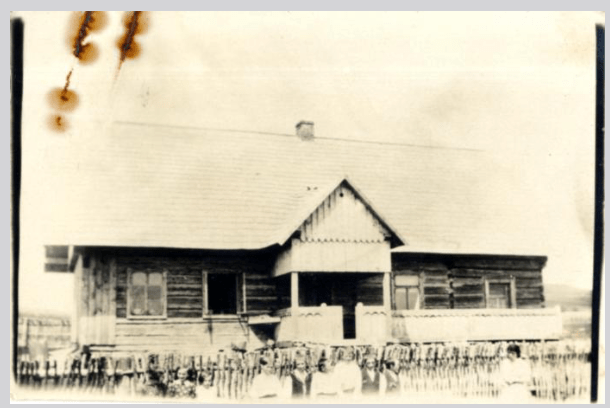
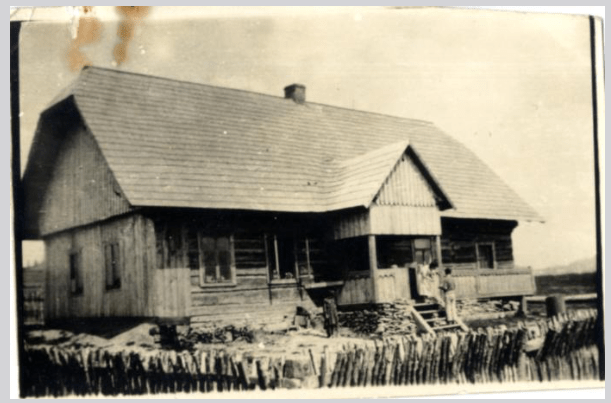
School in Rosochate; 24 May 1936

Żołobek

Regarding fears and ghosts, many beliefs and superstitions exist among the population, such as upiory, witches, and evil spirits; others believe in snake charming. The population—mostly women—is pious, while the men, especially returnee emigrants from foreign countries and World War participants, do not recognize religion.

Questionnaires without monsters

Chrewt, Czarna, Paniszczów, Polana, Sokołów Wola

Uztrzyki Dolne 

Bandrów Narodowy

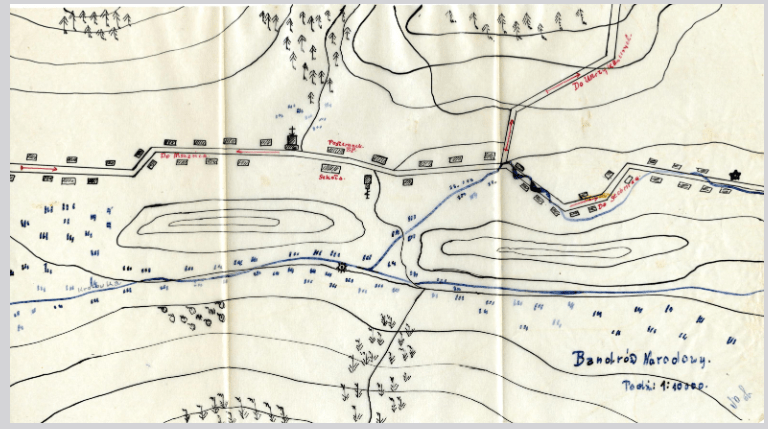
The local people believe very strongly in ghosts and terrors. The population believes that after death, the soul of a good person returns to Earth. On the third night after death, it comes to say goodbye to the family and household, and then leaves forever into the afterlife. The soul of an evil person stays constantly on Earth and does penance where it sinned. Almost every old villager has seen a ghost, and almost every villager has been led astray by an evil spirit called “błąd”. By the road leading to Bandrow Narodowy, on the so-called border, stands an old willow tree, where passing residents are continuously frightened at night. Under this willow tree, a woman once buried (the exact date cannot be established) her strangled illegitimate child. On the pasture called “Łazy”, a villager driving pigs home from the fair in the evening was possessed by the “błąd”, and as a result, he was only found in the morning sitting by the stream in a daze. The population believes that scares walk from house to house.  A frightening incident recently occurred at the farm of a man named Gełyczak. During the evening, something started throwing stones at the servants. The frightened residents of the house all ran out onto the road screaming. They spent the night at a neighbor’s house, and the next day they brought a priest. The residents of this local village believe that an evil spirit resides in every cat. Therefore, there are very few domestic cats. There was even such an incident where a peasant called “Jekawy”, being convinced that an evil spirit was in his cat, caught the cat, gouged out its eyes, skinned it alive, and threw the cat into the fire. Since then, this farmer received the nickname “Kołołab” in addition to “Jekawy”. The population believes that some women are witches. When a calf is born and a woman comes to borrow something, she is definitely a witch who came to steal the milk. Monday is considered a difficult day by the inhabitants, therefore one should not travel anywhere; it is best to stay at home and chat. If a housewife sells milk and that milk has to cross water—meaning that the buyer must walk or cross over a river—then the housewife must [perform a protective ritual over] the milk after herself. Local women know how to charm away illnesses and remove the evil eye by taking burnt coal into a bowl of water, reciting incantations, and sprinkling the sick person’s face. On ‘Good Friday’, no housewife would lend anything for all the world…

…The local people strongly believe that witches possess special small stones, with which they go out into the dew. There, a stone moistened in the dew only needs to be rubbed against a cow’s udder to steal its milk. Last year, a similar incident occurred, where women chased an imagined witch with sticks, because she was walking with something through the dew.
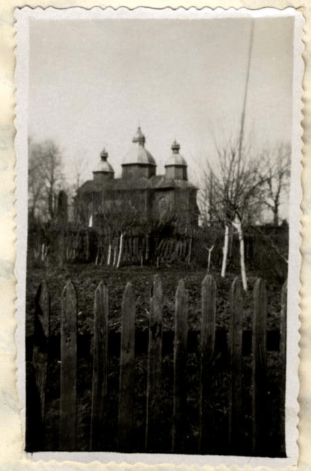
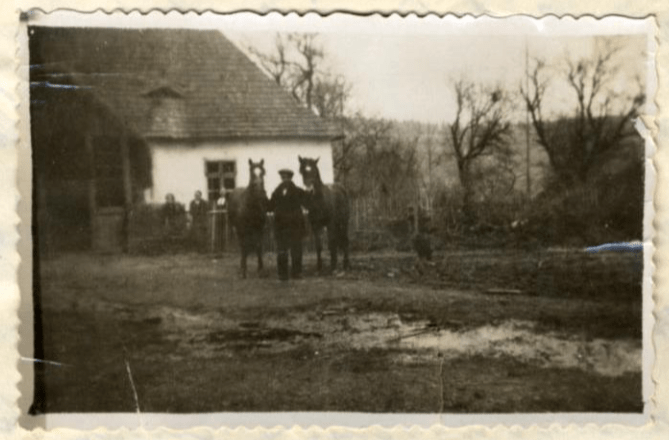
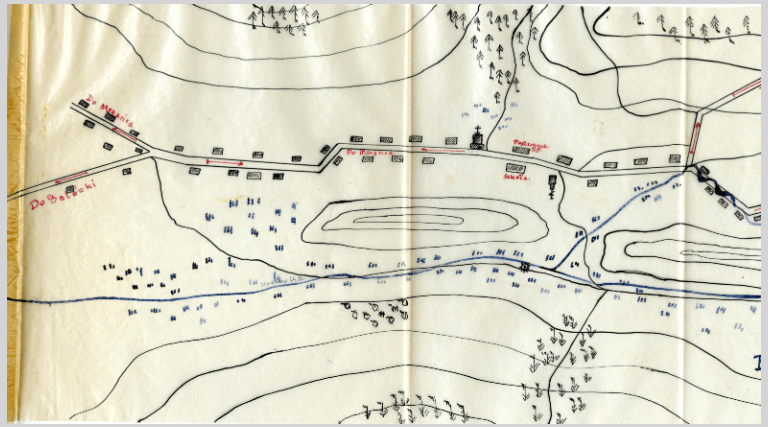
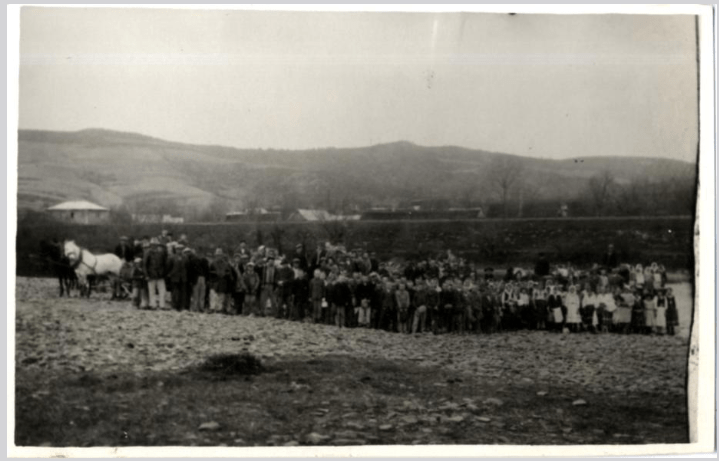
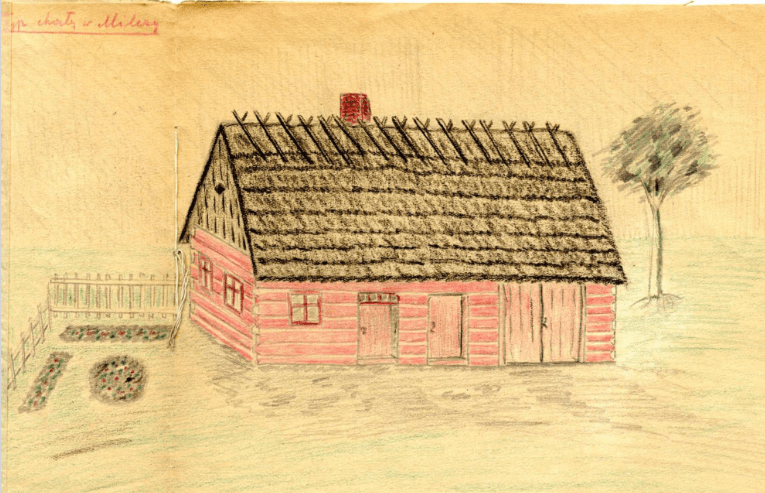
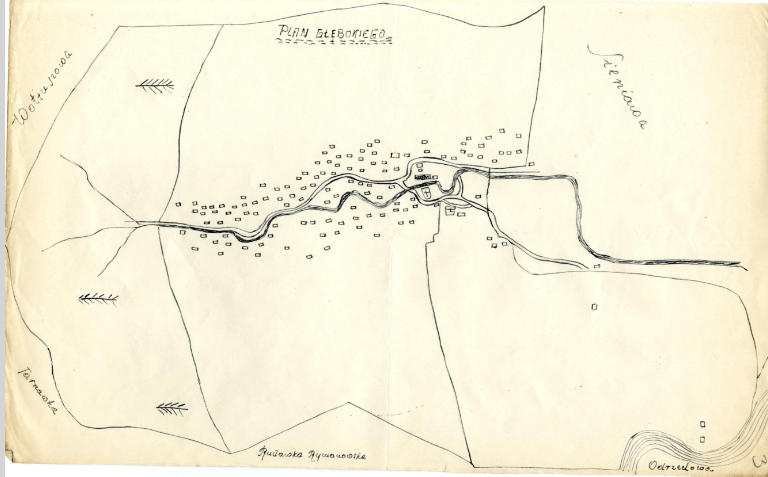
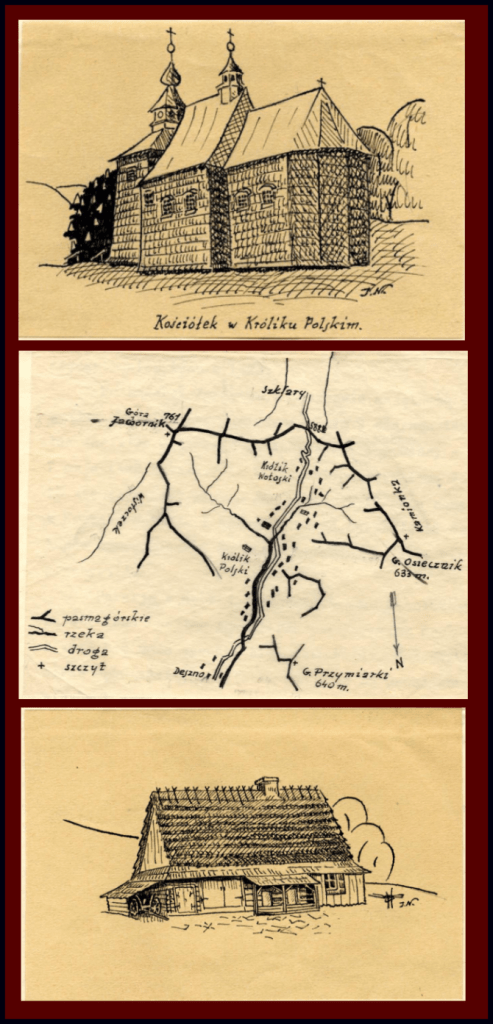
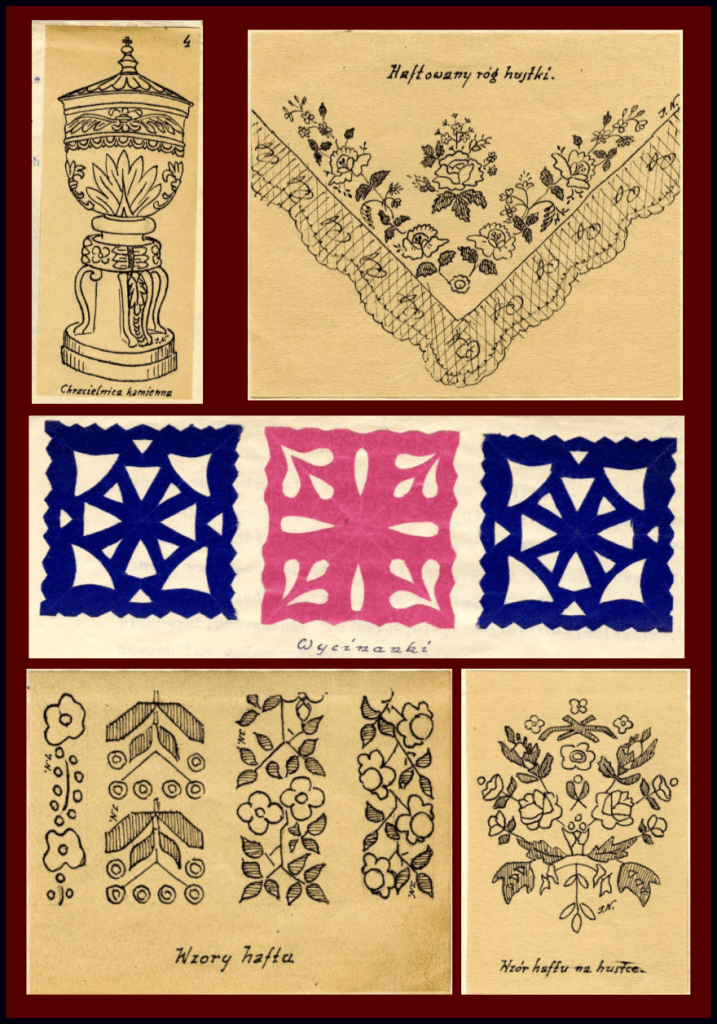
Imagery from Bandrów Narodowy questionnaire

Hoszowczyk

When it comes to the beliefs of the local people, along with various rituals, one cannot complain about a lack of them. For example, regarding a deceased person and a funeral, according to their beliefs, while the person is still alive but sick, milk should not be given from another house to the sick person’s house. This is because in the event of their death, the cow from which the milk came will lose its milk. If, however, milk was given and death occurred, then the housewife (the owner of the cow) runs to the water and blesses/crosses it with her hands, so that the cow does not lose its milk. The same applies to a house where a sick person dies: no milk must be taken out, otherwise the cows will lose it. Immediately after the death of the sick person, the members of the household stir/mix everything equally found in the house, so that the deceased does not take away the harvest. 

If there were two priests at the funeral, work after the funeral proceeds as normal; however, if there was only one priest, then for two weeks following the funeral, it is forbidden to wash clothes, grind grain, thresh, etc. on the ground, because the soul of the deceased is bound to wander around the farmstead buildings for another two weeks and its peace must not be disturbed (because one priest leads out the body, and the second, the soul).

When the deceased is being carried out of the house, they strike the coffin three times against the threshold, which is meant to signify that the deceased is bowing to the household members.

Once the coffin is placed on the cart, one of the household members places a loaf of bread on it. Then, as the coffin passes the border of the estate where the deceased lived, one of the household members quickly removes the bread so that the deceased does not take the harvest’s fertility with them. Upon returning from the funeral, the household members consume this bread…

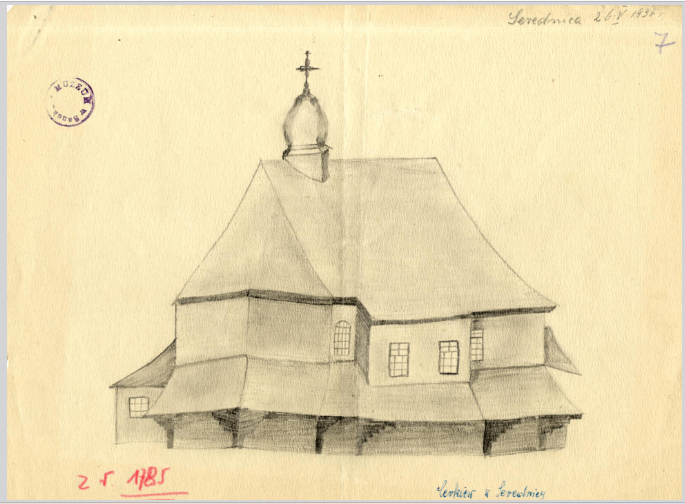
Serednica

The interesting, mysterious world of spirits, upiórs, superstitions, witches, and devils has many followers and believers in the countryside. There is such an immense power–a vast number of superstitions–that I will not manage to write them all down in today’s questionnaire; I will choose only the most interesting ones. When the head of the family dies, the sons walk for three days with their heads uncovered, and the girls with their braids unbraided, because otherwise the spirit of the deceased would haunt them for not paying him proper respect. From the house at that time, it is forbidden to lend or give anything away. When they carry the coffin out of the house, they strike it three times against the threshold of the cottage as a sign of the deceased’s farewell to the home, and so that he would never return under any guise after death and would not haunt after death. They also believe in upiórs, i.e., people who have two hearts, and after death, they transform into upiórs that roam around the cemetery and terrify residents.

In addition to spirits, they believe in various superstitions. On Mondays, no business should be started, because it will not succeed. On Fridays, one must not start doing laundry, because the linen will tear. In the evening, it is forbidden to sell dairy products, because a witch will take away the cow’s milk…
Questionnaires without monsters

Berehy Dolne and Górne, Brelików, Dźwiniacz Dolny, Jałowe, Jasień, Leszowate, Łobozew, Łodyna, Moczary, Równia, Stankowa, Teleśnica Sanna, Ustianowa
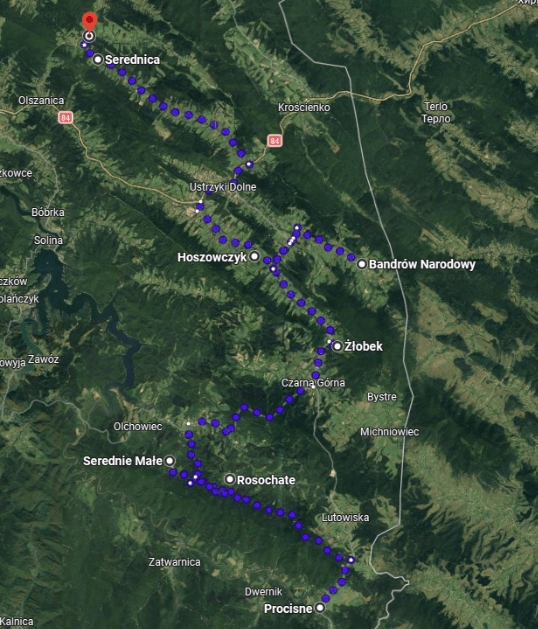

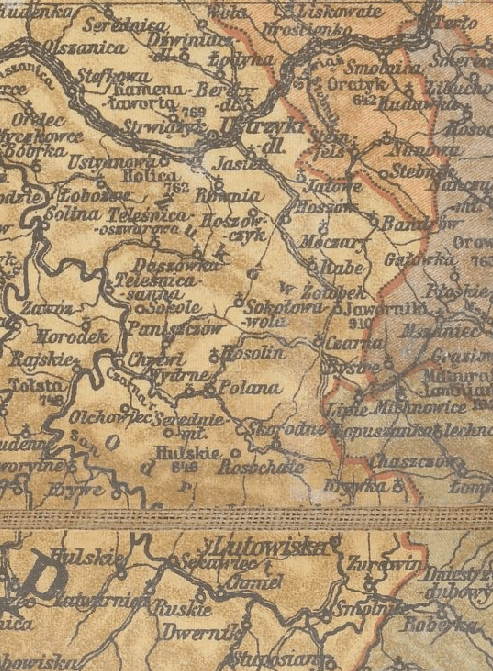
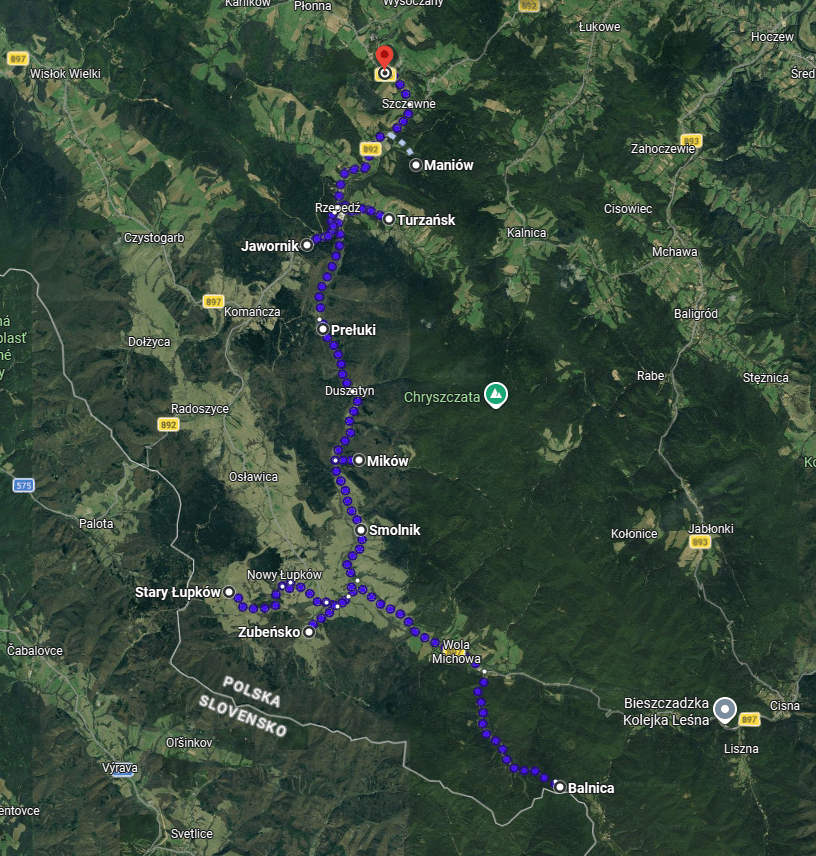
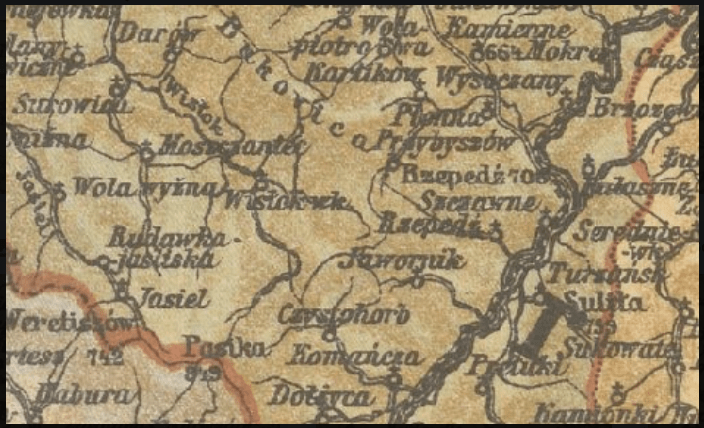
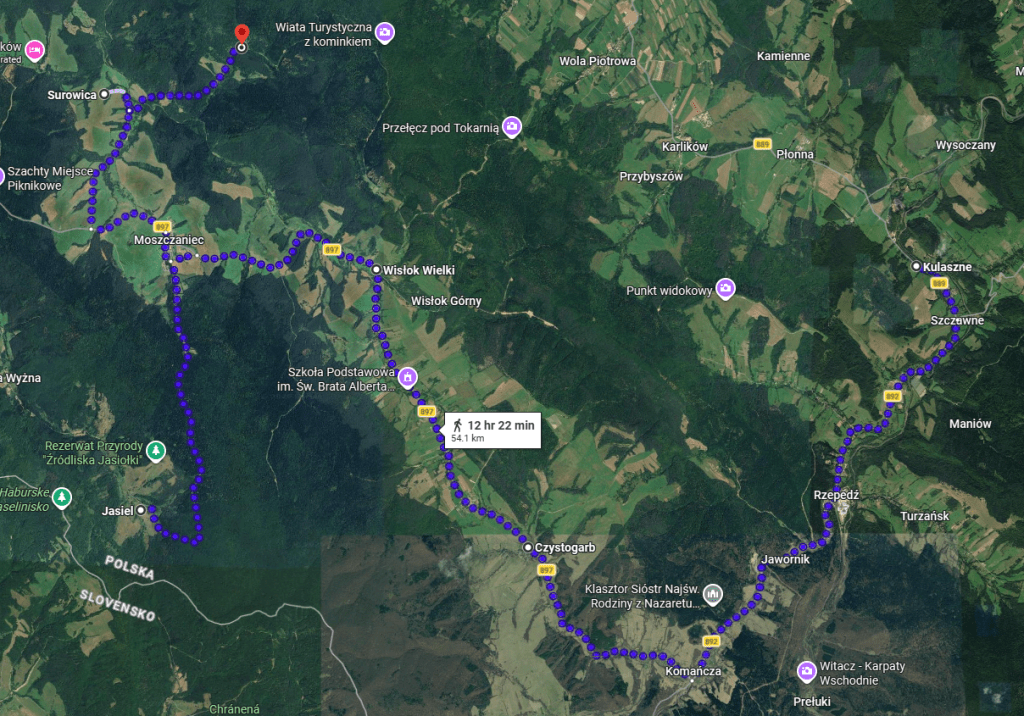
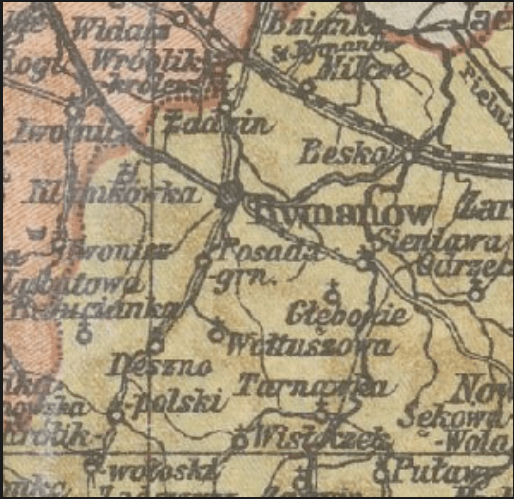
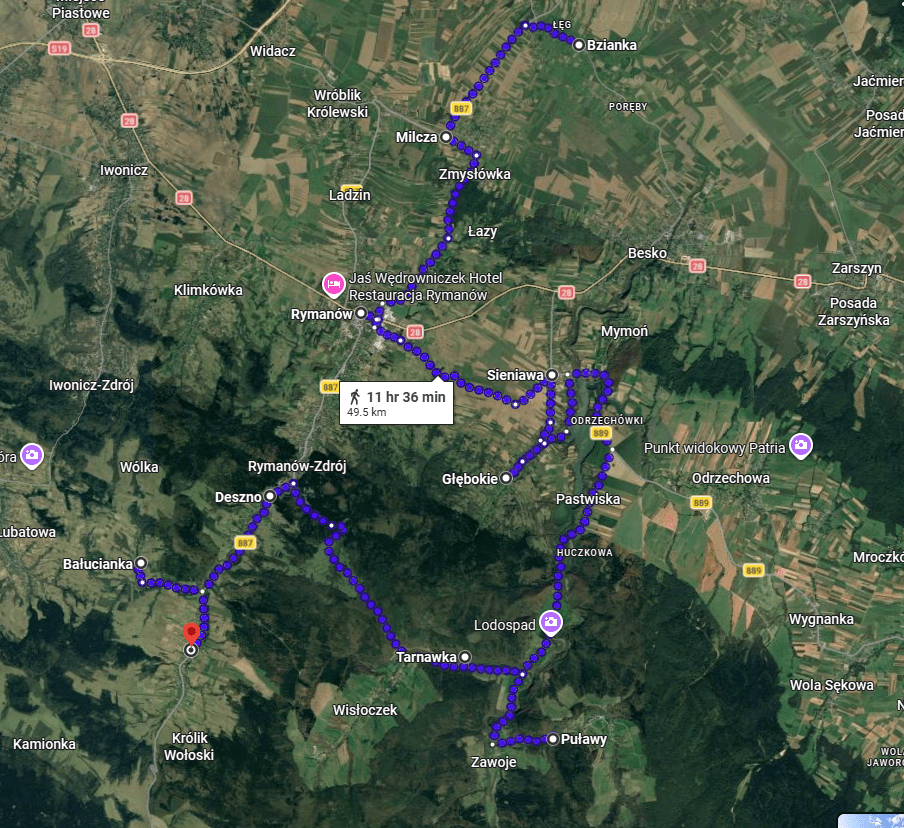
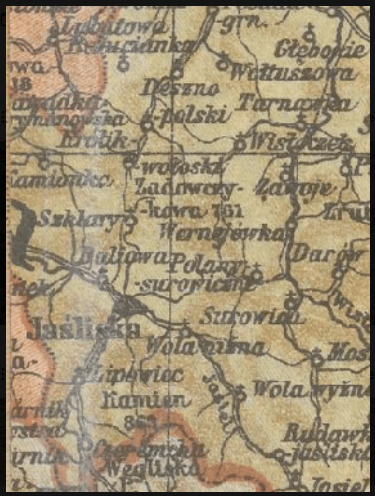
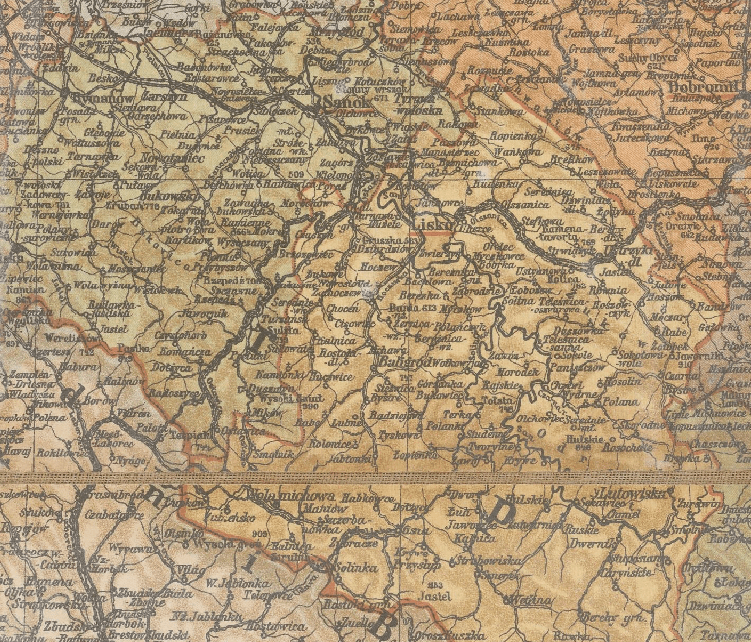
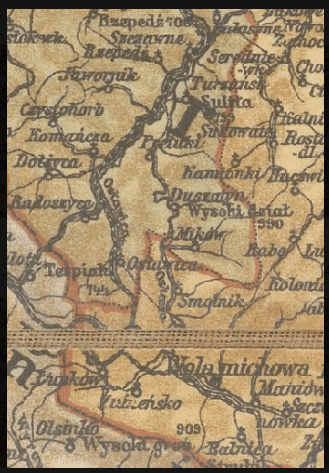
Images are found within the questionnaires, themselves, and are in the public domain. Please credit the Sanok Digital Library, not this site. Route maps from Google, vintage Galicia map from polona.pl, translations by Google.
<– Previous: Lesko County

(Part 3) Komańcza Gmina: Vampires, Witches, and other Terrifying Creatures in the School Inspectorate Questionnaires 

This is the third of five parts in our project translating information on pre-WWII beliefs in vampires, witches, monsters, demons, death rituals and superstitions in specific villages. This post focuses on modern-day Komańcza Gmina. This information was provided by local school officials to the Sanok School Inspectorate in the late 1930s. The original documents and metadata are available online from the Sanok Historical Museum through the Sanok Digital Library.

To learn more about the scope and purpose of this project, see Introduction: Vampires, Witches, and other Terrifying Creatures in the Sanok School Inspectorate Questionnaires 

Part 1: Krosno County

Part 2: Sanok County (minus Komańcza)

Part 3: Komańcza Gmina

Part 4: Lesko County

Part: 5 Bieszczady County


Komańcza

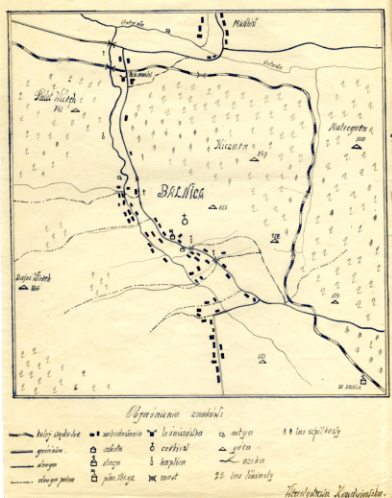
Balnica

They place a dying man on a bench and spread straw for him, so that it will be easier for him to die. When he dies and is already lying on the table, they take care that a cat or a dog does not pass under him –because then he will not become stiff. For they believe that a person who does not become stiff, if a cat or a dog passed under him, is an upiór. They perform protective rituals such as pouring poppy seeds into the mouth of such a person to prevent them from returning to their village or harming the household and cattle. They carry the coffin through the door in such a way that they strike the doorway three times, and its handle against the door latch. Along the way, they scatter poppy seeds behind him, and into the grave they throw money for every deceased person.

They believe in the evil eye. They throw a knot into the water. If the knot sinks and falls to the bottom, it means the sick person was afflicted by the evil eye…

…On Maundy Thursday, after the evening service, people leaving the church do not look back, because whoever looks back will die this year.

Zubeńsko

They believe that human souls, whose bodies do not rot after death, turn into upiory that torment the household members. To avoid this, immediately after the funeral, they scatter poppy seeds all around the grave, which the deceased must gather; this takes so much time that they will not manage to finish before dawn. On the other hand, so that a child does not walk after death, a piece of skin must be cut from the ear, or a nail must be driven into the forehead. They also believe in places haunted by the devil, who deceives man by taking the form of some animal, most often a goat or as will-o’-the-wisps. In connection with these places, the most diverse stories circulate, more or less sinister depending on the degree of fantasy or imagination of the storyteller. The day of terrors is Thursday.

They believe in witches who take milk away from cows and can cause an illness in a person, through the evil eye, manifested by severe shivering and nausea “nud pade ne szołowiska”. To get rid of it, one needs to throw a burning ember into water, preferably holy water, then drink it, and for good measure, wash the face and wipe oneself with the shirt one is wearing. To make the whole procedure more effective, fumigate oneself with burned herbs blessed on the Feast of Our Lady of the Herbs…

Łupków

Belief in upiórs – the still warm body of the deceased is considered the dwelling place of the upiór. They would drive a nail into a child’s head; for an adult they would bury and sprinkle the grave with poppy seeds, believing that before the spirit can gather all the poppy seeds, the rooster will crow.

Smolnik ad Baligród

Belief in upiory. We know that an upiór can reside in an unbaptized body. They drive a nail into a child’s head, bury others, and sprinkle poppy seeds over the grave, so that before the spirit can gather the poppy seeds, the rooster will crow. Belief in casting spells, taking milk away from cows.

Mików

There are kinds of fears and ghosts that the local people connect with a deceased person; what other beliefs and superstitions exist are in connection with the days of the week, month, and year…

…There is a custom known as “koły”—youth gatherings featuring drumming, kissing, and various forms of mischief and revelry. Despite the clergy’s efforts, this pagan custom cannot be eradicated. The people are very fond of attending religious festivals (odpusty), though often more to visit family than for religious reasons. During these festivals, people’s behavior in the churches is often inappropriate; they chat and walk out during the service. They are particularly fond of the blessing of water at these events. The population is superstitious, frequently seeking the advice of fortune-tellers—whether regarding the construction of a new home, a trip to America, marriage, or a theft. Such a fortune-teller can be found in almost every village. There are also “healers” whose consciences bear the burden of ruined health and lost lives. Poverty and low levels of culture foster this situation. Pagan customs such as Kupala (bonfire festivities) for St. John’s Day and Rusala (the Friday evening before Pentecost) have also survived.

Prełuki

Crosses and shrines were erected either for a specific intention or in places where, as people say, ghosts used to appear.When someone dies, in the evening relatives, older neighbors, youth, and children gather for a so-called “kola” [circle]. They pray, sing pious hymns, read psalms, and also arrange various games, such as “shoeing the girls”, hitting, or “roasting the rooster”. The deceased is laid on boards supported by two stools on straw covered with homemade linen. On the first night after the funeral, they place a lit candle, bread, salt, water with a bowl, and a towel on the table, because they believe that the soul needs all of this. On the first evening after the funeral, they walk with a veiled candle around the corners to see if death is anywhere. When they place the deceased into the coffin, they give him some blessed herbs, a piece of a bread roll, garlic, and money. On top, some people sprinkle him with poppy seeds, so that he twists and troubles himself for as long as it takes to gather that poppy seeds, so that he does not walk after death. Grain is scattered behind him, so that he does not take the harvest to the other world and so that crops will grow. From the linen fabric given to the deceased, they pull out threads, so that flax and hemp will grow. When they carry the deceased out of the cottage, they knock the coffin three times against the threshold as a sign of gratitude for everything, because they believe that until this time, the deceased still knows and feels everything. Things of the deceased are burned or given to the poor. The straw on which he lay is carried to the river bank and burned, watching the rising smoke, inferring where this soul will return whether to heaven or to hell. The population seems generally pious, likes to go to Sunday services, devotions, and indulgences, but they strongly believe in witchcraft, superstitions, quack doctors, etc…

…On Christmas Eve, besides hay, straw, and a large loaf of bread, they bring a piece of a plow—a coulter—and an axe into the cottage to place under the table, and they encircle all the table legs with a chain, upon which they keep their feet during dinner so that they might be strong and healthy like iron. On the first day of Christmas, a woman is not allowed to enter the cottage first because they believe in the so-called “połazyk” or “łazik,” and if a woman enters the house, it is a bad omen for the whole year, and if any misfortune occurs, it would be blamed on that person. The local people also believe in so-called “bisiurkinie,” who bewitch milk and take milk away from cows, and this happens mostly before St. George’s Day. To prevent such a witch from entering the cottage, they often place a harrow, a plow, and an axe before the door, and they also encircle the entire homestead with poppy seeds.

Jawornik

The local population is not pious. Inside the church, during the service, talking and sleeping are constantly seen. When the priest delivers a learned sermon that is not interspersed with interesting stories, they leave the church. On the other hand, they love weddings and music so much that they bring infants with them, and even if uninvited, the whole village turns out. They believe in fortune-tellers and folk healers and spend money on them. When a cow falls ill, they immediately fumigate it with a burnt swallow’s nest and smear its eyes with water colored with scrapings from someone else’s stable. On Good Friday and every day before St. George’s Day, women run around the stables naked (before sunrise) and scrape the thresholds of neighboring stables where the cows are. They also cut the tails of other people’s cows and fumigate their own stables and cows with the burnt hair. When someone is bitten by a viper, they take a brand-new small knife and give it to a folk healer, so that he may cast a spell over the bite

They do not have favorite songs. At weddings and music gatherings, the youth sing Polish and Ruthenian military songs. At a funeral, one of the deceased’s family members walks, crying out with a weeping voice, recalling the good deeds of the deceased. When the deceased lies on the bench, the living gather for the so-called ‘koły’ (circles/rounds). In these circles, one person portrays the deceased and performs a public confession, and then penance. Instead, there is laughter, shouting, and fighting. They do not act as if they came to pray. After the funeral, they stand around, eating and drinking just like at a wedding. 

Turzańsk

Some older people believe that the dead walk, so when someone in the village dies, they gather for the so-called “koły,” during which they tell each other various adventures and organize games. There used to be a customary game during which people hit each other, which is now disappearing.

Maniów

A dying person is placed on a bench, and straw is spread beneath them so that they may die more easily. After death, when they are laid out on the benches, they make sure that no dog or cat passes under him, because then the deceased will not stiffen. If, despite this, he does not stiffen, they consider such a person to be an upiór, who after death returns to strangle cattle. Unless someone prevents this using secret practices, the upiór causes death to people.

An Upiór-Man is buried differently. They cut off his head and place it between his legs, and they nail the coffin shut with three nails, driving them into the head, heart, and legs. Then he will never leave the coffin. They carry the coffin out in such a way that they lock the door with the handle, but take it off its hinges and leave through there. They scatter poppy seeds along the entire path, and they also put poppy seeds into the deceased’s mouth. They also scatter poppy seeds into the grave so that if he does get out, he will spend all his time gathering those seeds…

…When a child is born generally calm, but suddenly at some point starts screaming and crying, people do not understand what happened and say it caught “from church” (the name of an illness). Then, a woman goes to the cemetery with an old pot (at whatever time the child started screaming). She takes soil from the most recent grave into the pot and water from a stream. She mixes this mud and rubs it on the child moving away from herself, using the back of her hand. Afterward, she returns the soil and the pot to the cemetery.

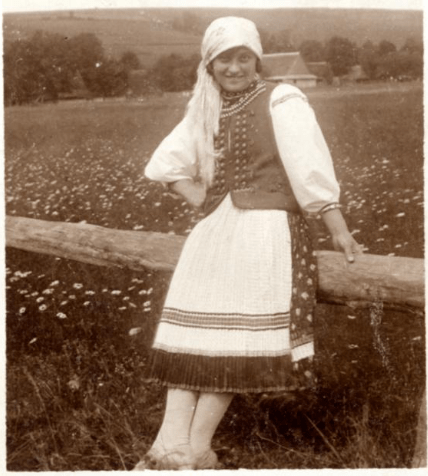
Maniów–Lemko woman

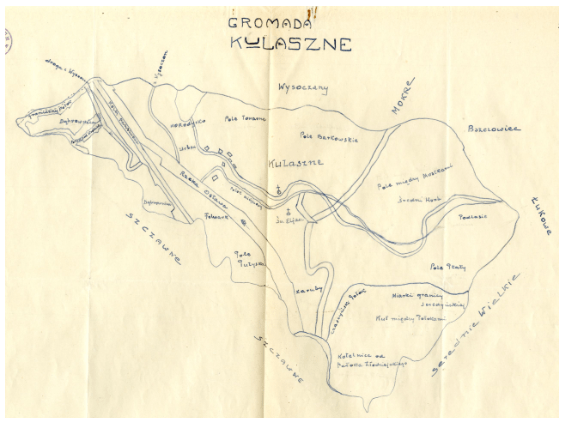
Kulaszne

The population devoutly believes in all kinds of ghosts, and is superstitious. A dead child is placed with a wax ring on its finger, and two coins in its hands, so that it might ‘buy its way in’ at the gates of heaven. The old deceased often walk the earth, shrieking, and there are incidents where they cause great harm to their siblings or children. Here is what a farmer told me about his deceased father:

“We buried our father properly, and he had a nice funeral, and we dressed him well; it was apparent, however, that he was not entirely satisfied, for every third night after the funeral, he would come to the barn and bring bundles of grain and scatter it around, disturbing the cattle. There was no helping it, and this went on for quite a long time. During this time we suffered a lot. We went with our affliction to a peasant in [Usijaw], who, having arrived at our estate, confirmed the presence of an upiór. He ordered us to dig the “gates” from under the house. Finally, when all that did not help, we went to the cemetery, dug father up from the grave, and drove a nail into his head so he would not come back anymore. This measure proved to be truly effective, because since then we have been living in our former peace.”

Another farmer has a similar story.

Kulaszne–Forest Festival


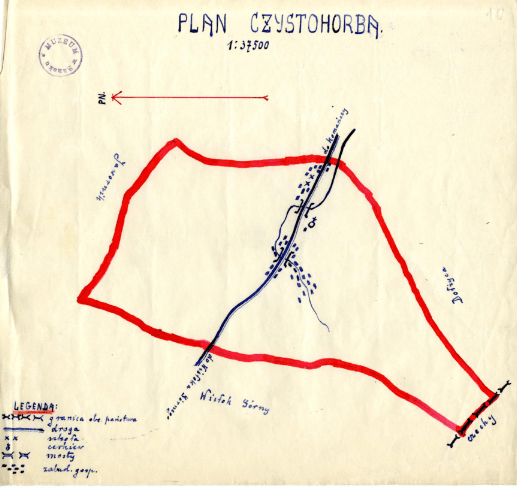
Czystohorb

The local people believe in specters and spirits. When a family member dies, a Holy Mass is offered so that the deceased’s spirit does not haunt the living. There are many such superstitions; for instance, if someone in the village dies, no work may be started on that day.

On St. Andrew’s Eve, girls smear their hands with honey and flour, then offer their hand to a dog; the direction in which the dog licks it indicates the direction from which a future husband will come.

On the night of Maundy Thursday, farmers keep watch in the stable, fearing that witches might transform into various creatures or cast spells to steal the livestock’s milk.

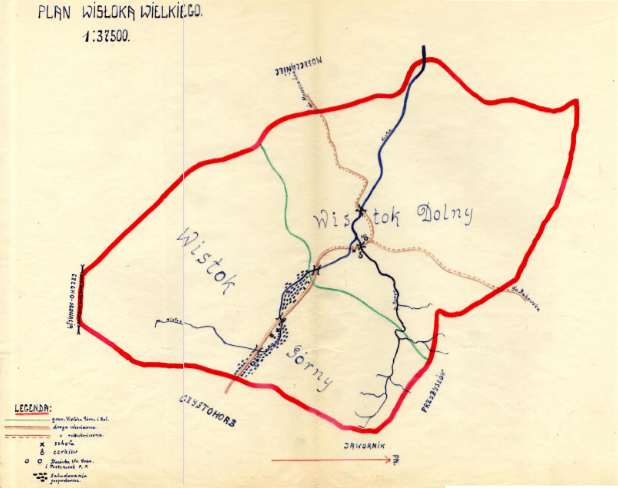
Wisłok Dolny

When someone dies, people go to the so-called “świecenie.” The elders sing then, while the youth play pranks and mischief; no one is allowed to sleep in that house. After the funeral, they host a feast, mostly inviting the priest. When the deceased is remembered, one must give an offering. Once the sun sets, it is forbidden to take out the trash, otherwise someone will die. The house where the deceased lies is swept by someone from a different house. When trash is burned and the smoke blows toward a certain cottage, they claim someone will die there. They forbid crying, because if one cries, the deceased will be wet in the afterlife. They put holy water in the coffin so that the body does not decay. After the funeral, they place a bowl of water and a towel in the spot where the deceased lay, so that the soul can wash itself. Deceased husbands visit their wives and consort with them; if a wife wants to free herself from him, she must turn the deceased’s wedding clothes inside out.

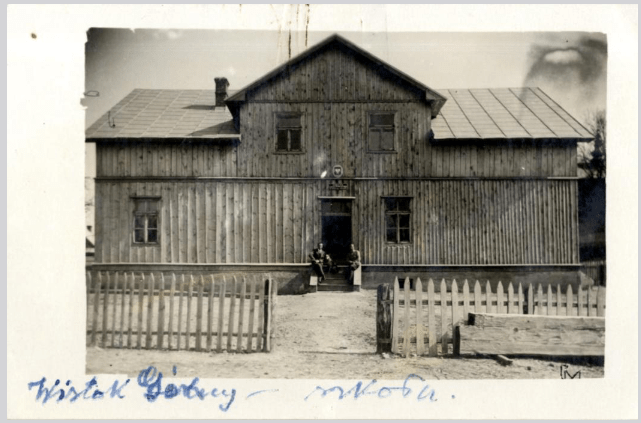
Wisłok Górny

The local population believes in ghosts and spirits associated with the deceased person. They believe that the spirit of the deceased returns after death and takes revenge on those who troubled him during his lifetime. For example, the locals tell of such an event. A few years ago, a peasant died whose spirit returned and took revenge in a terrible way on people and animals—and this lasted for a year. Divine services and prayers did not help. So they brought in a Czech sorcerer, who allegedly drove that spirit back into the grave—then everyone went to the cemetery, dug up the grave, and cut off the deceased’s head, from which blood allegedly poured. From that moment on, the haunting in the village stopped.

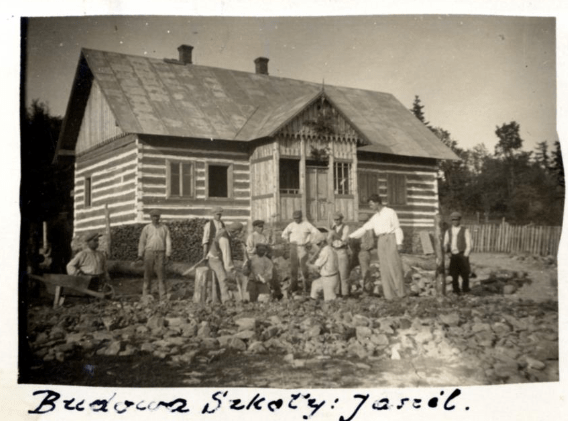
Jasiel

When a corpse is lying in the house, they do not sweep the cottage; only after the corpse is carried out do they sweep the room and burn the sweepings so that the spirit does not return for anything. While carrying the corpse out of the cottage, they move the seed and manure—so that they do not “die” (spoil/lose their vitality). On the Feast of the Annunciation of the Blessed Virgin Mary (March 25th), they lean harrows against the stable doors, and in the morning they check if the doors and harrow are undisturbed; if they were moved, it means a “prasorka” (i.e. a witch) visited, bewitched the cows, and there will be no milk. 

School Construction:  Jasiel

Jasiel–Lemko type

Surowica, Darów, Moszczaniec

The local population treats the deceased person very naturally. Candles burn near the deceased, and in the evenings people gather, mostly youth of both sexes, for the so-called “swityło.” After singing a few songs, the attention of everyone gathered turns to various games and pranks, in which the deceased is often used; when moved subtly, it causes general panic and escapes from the house, only for everyone to return moments later and continue doing the same. The deceased is usually buried the day after death. After a burial, a wake is never held without alcohol (denatured), which must not be forgotten. Generally, the deceased person does not cause any fear among the population. The people believe that the soul of the deceased sometimes walks after death, so rumors often circulate that it has appeared to this or that person. For instance, a father who left behind a widow and eight children is said to have walked after his death. He visited those farmers who had wronged his family after he passed away. Whichever doors were locked against him, he would break them open, and after entering the home, he would smash pots and bowls. Anyone he touched died. He only stopped his visits after a Holy Mass was offered for his soul.  More various stories circulate about death, which appears in different forms.

People here believe in ghosts that are said to appear around midnight near roadside chapels and unblessed crosses, or those erected with improper intentions. Near a chapel next to which an old woman allegedly hanged herself on a tree, people passing by at night often see ghosts in the form of goats, cats, horses, humans, and others, and these disappear after the beholder crosses themselves.

The local population holds a great many superstitions; a crow cawing overhead, an owl hooting, a cuckoo calling, a cat or a hare running across the road, or an old woman crossing one’s path—especially in front of them with empty buckets—is believed according to their superstitions to bring bad luck. Therefore, various curse words are hurled after them (“may it burst”), and sometimes rocks or whatever else is at hand are thrown…There exists among the people a belief in the so-called “incantation” curing of diseases, e.g., after a bite of a human or an animal by a viper, the bitten one should be saved only through an incantation. The words spoken during this are a secret of the charmer. Only some possess the power of incantation…

…They treat their cattle entirely by themselves, among which they only practice “incantations,” always believing that the animal’s disease is caused by some witchcraft cast by malicious people to cause grief to the owner…

Not many tales, legends, or stories circulate here, and even those sometimes lack any deeper meaning. Among others, there is a story about death: To a lonely housewife, one autumn evening, comes a tall female figure, dressed in white. She asks the housewife to let her warm herself a bit by the fire, as she is old and, moreover, tired. Then she asked for warm water to wash herself after a full day’s work. When the housewife granted her request, the newcomer arrived and undressed, and furthermore asked the helpful hostess to wash her back. Wishing to fulfill her wish, the hostess approaches and, seeing only a skeleton, realizes whom she is dealing with. Somewhat frightened, she asks why the lady has such dry, bony shoulders? She quickly receives an answer that it is from very hard work and from human tears shed everywhere after each of her appearances. She complains that Lord God assigned her such an unfortunate profession. After the ceremony is finished, the newcomer goes out into the field and returns after a moment with a long, sharp scythe, which she left against the wall. She turns to the housewife and, ready to strike, says that out of gratitude for the kindness the housewife showed her, she will shorten her torments and valley of tears, and take her to the other world, where it is very good. The latter, not wanting to die, does not trust the flattering words of Death, and, terrified, begins to beg her to allow her to eat a few more apples. They go out together into the orchard and begin eating apples. Suddenly, the clever housewife, seeing a hole in an apple that a caterpillar had already left, tells Death to get the caterpillar out of the apple. Death puts in first one finger, then her whole hand, and, finding nothing, turns to the housewife saying that there is nothing left inside. The housewife, however, firmly maintains that she sees a caterpillar there, and again commands Death to crawl inside the tiny hole. Meanwhile, she prepares a small peg and, when Death has completely hidden inside the apple, she tightly plugs the hole with the peg. Then she takes the apple and buries it in the ground in the cellar. A year passed, the housewife forgot about the apple, and Death remained trapped inside it. While preparing the cellar for potatoes before winter, she digs up the half-rotten apple with the peg inside it. The small peg driven into the side makes her wonder, so she gives it a tug and pulls it out. Before the hostess could realize what was happening, the very same figure of the woman she had washed a year before jumped out of the hole. Death, however, did not tarry with her, but ran as fast as possible to the dwelling, where she came upon her scythe, which the hostess had hung on the wall. Angered that she would face a harsh scolding for her extreme laziness, and wanting to make up for lost time, she mowed down half the village at once, and finally returned to the familiar housewife and, without asking anything, cut off her head. Since that time, she rarely submits to anyone, but works according to her divine instructions.

In Darów, a tale circulates that a few hundred years ago, a wealthy lord named Syrniak lived here. Once, the cellars of the manor, filled with barrels of wine, collapsed. To this day, the cellars are said to be located under the meadow, which received the name “Syrniżanka” from this event. Not far from the manor was a large pond, which was drained after the lord’s death. Its grass-overgrown bottom is a pasture today and bears the name “Staw” [Pond]. Beyond it, further away, is a marshy meadow known as “Luczysko.” There is one spot on this meadow where no one dares to stand, because whoever stands there is overcome by sleep; if they do not resist it, they fall asleep and die. If they are immediately woken up by someone, they fall gravely ill and die within a week.

Among the population of Moszczanica, a legend is preserved that a long time ago, the village, along with its small cerkiew, sank into the ground due to a curse, right on Easter. Supposedly, to this day, the sounds of bells rise from beneath the earth, but only once a year at midnight, just before Easter Sunday.

Surowica

Moszczaniec

Moszczaniec School

Questionnaires without monsters

Komańcza, Osławica, Polany Surowiczne, Rzepedź, Sczczawne, Wola Michowa, Wysoczany

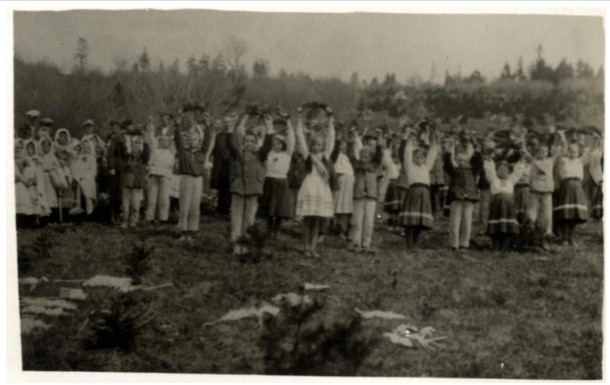
Rzepedź Forest Festival


Images are found within the questionnaires, themselves, and are in the public domain. Please credit the Sanok Digital Library, not this site. Route maps from Google, vintage Galicia map from polona.pl, translations by Google.
<– Previous: Sanok County

Lesko County: Next –>

(Part 1) Krosno County: Vampires, Witches, and other Terrifying Creatures in the School Inspectorate Questionnaires

This is the first of five parts in our project translating information on pre-WWII beliefs in vampires, witches, monsters, demons, death rituals and superstitions in specific villages. This post focuses on modern-day Krosno County. The information was provided by local school officials to the Sanok School Inspectorate in the late 1930s. The original documents and metadata are available online from the Sanok Historical Museum through the Sanok Digital Library.

To learn more about the scope and purpose of this project, see Introduction: Vampires, Witches, and other Terrifying Creatures in the Sanok School Inspectorate Questionnaires 

Part 1: Krosno County

Part 2: Sanok County (minus Komańcza)

Part 3: Komańcza Gmina

Part 4: Lesko County

Part: 5 Bieszczady County


Rymanów

Bzianka

People believe that a dead person returns to earth after death and haunts.Everyone believes that they come to haunt. Around 12 o’clock at night they come to their home and appear to the person closest to them.For a long time, there has been a belief here in sorcery and superstitions, especially in witches, who “cast spells on” milk, bewitch with “charms”, and bring about crop failures.Witches go about on certain days of the year. –And so in spring on St. Adalbert’s Day, and before winter for St. Lucy’s Day. They tear out thatch from the roof of a chosen house (from above the stable), or they take straw from the dung heap, and by doing so, they carry away the abundance from the cowshed, stealing the milk from the dairy cows. During these days, one must be careful not to lend anything from agricultural or household equipment to any suspicious woman, as she might bewitch you using that object and “tie up” the milk. People are also afraid to pick up any rags or “tatters” (as they call them) from the ground, because a disease might be “tied up” within them. They are also afraid of the kołtun. This is a tangled wad of someone’s hair—”planted” maliciously—because picking these hairs up from the ground brings imminent death. — There are still plenty of minor sorceries and superstitions that are blindly believed in and always observed…

…There are few legends and fairy tales among the local people in the village. There is a legend about the local “pinewoods” that once there were great forests here, and then a large city that long ago sank underground. The elders say that sometimes at night, when they graze horses in the forest, you can even hear the tolling of bells from underground. When the forests were still there – the Mother of God was passing through and cast it down – therefore, the forest had to wither away, because the Mother of God did not give it her blessing.

Others tell stories about a house haunted by a devil. It is some kind of mischievous spirit, who causes a “penitence”  (meaning deliberate mischief) in that house. Once, for example, when all the household members were already asleep, it tossed a threshing machine around the barnyard, which several people heard; another time, it “shredded” their garments inside a chest, as if with scissors. And so this “something” keeps doing things to spite them—like a stubborn devil.

Milcza

The local people believe in ghosts and spirits connected to the deceased person. They believe that the spirits of the dead come to Earth at night between 12 and 1 o’clock. They embody themselves in animals and scare people in the field and at home. On All Saints’ Day, all spirits of deceased people gather in the church and in the cemetery. There are also omens and superstitions: A misfortune will happen if a cat or a hare runs across the road. One should not turn back from the path to church, because one will die a sudden death. There are people who are able to cast evil eyes and charm away illnesses. Some women, however, are witches and can steal milk from cows. After sunset, one should not lend or sell anything,because good fortune passes to the borrower or the buyer. Girls should not be beaten with a broom because they will behave immorally…

Rymanów

They believe in ghosts. Some maintain that a soul does penance in the house and appears in various forms, e.g., a cat or a dog. Allegedly, one boy turned into a cat after death and constantly came to his books and notebooks. When asked why he did this, he replied that he was doing penance. They believe in charms and bewitching a cow in order to steal its milk.

Various superstitions have also survived to this day, e.g., when a cat crosses a person’s path, they will have no luck and will not achieve their intended goal. The same applies to a person who turns back home while on a journey.

When the left palm itches, they foretell receiving money; when the right, that one will greet someone. A magpie chattering near the house foretells guests, and similarly a cat when it cleans itself. When someone is the first to enter a newly built house, death awaits them shortly, which is why they let a cat in first…

…A tale about cholera persists among the population. According to the stories of older people, during the outbreak of this disease here several decades ago, cholera walked between houses in wooden shoes at night. Knocking on windows was heard at the houses, along with the question: “Are you sleeping?” If they replied: “We are sleeping,” they fell asleep forever. Those who replied, “We are not sleeping, but we praise God” remained alive. 

Sienawa

People believe that on the first day after death, the soul of the deceased comes to the cottage and makes knocking sounds or opens doors. They believe that a witch can spoil or steal milk, and they will even name a specific woman who takes milk away from cows, i.e., reduces the milk output. They even boil pins against the witch, because she is supposed to feel sharp pains for as many pins as there are…

…The sick apply various traditional remedies and local practices when medical help is unavailable. Non-standard medical interventions are noted to be occurring within the village, involving local practitioners who are sought out by individuals from various localities; these practices often result in severe health complications or legal consequences. Recently, one such instance involving a young woman from Odrzechowa resulted in a fatality, leading to the practitioner being taken into custody. 

Głębokie

Local people are pious (women are more pious). The favorite prayers of the local people are prayers to the Mother of God, to Lord Jesus, the Hail Mary, the Apostles’ Creed, and the rosary. The sick seek advice from a doctor. They care little for the cemetery; the graves are neglected, and they visit them only at the time of burying the dead and on All Saints’ Day. On the graves they place small-sized wooden crosses. There are two newly-built tombs here, because in earlier times the dead were buried in the cemetery in Rymanów. 

Puławy

There is a belief that the deceased may appear shortly after death and cause harm. They hide their daydreams and superstitions so that one cannot obtain information about them.

Tarnawka

In general, the Lemkos are not superstitious, and it is impossible to determine what exactly they believe in (besides God), because some believe in spirits, others in unknown fears in the form of phantoms, and there are even those among them who do not believe in God at all.

The population is pious, but not so much in actions, only inside the church, because they make no effort at all to apply the principles of faith to daily life. Sometimes, one can boldly apply to them the ironic proverb: “He prays before the shrine… [but has the devil under his skin].”

Deszno

The local population—and the Ruthenian people in particular—live in fear of the spirits of the dead and can name the specific villages where these spirits manifest. They most frequently assume the form of a goose or a cat, wreaking havoc both inside the house and in the farm buildings; they torment sleepers, overturn household vessels, knock pictures off the walls, and mix together different types of grain…

There was a widespread belief in witches—women who, out of spite, could “take” the milk from a farmer’s cows. When milk was lost in this way, folk healers would “restore” it, for which they were paid handsomely… 

For a woman to possess magical powers, she must refrain from washing herself or reciting prayers for 12 days, then before every holiday, she must do something bad to her neighbor.

It is customary to throw a rooster through the window of newlyweds…

…In case of illness people seek treatment from folk healers and witches, using doctors only as a last resort.

Bałucianka

People believe that a dead person walks around the village for a few days and frightens them. No one walks near the cemetery or through the fields for some time. Rumors circulate that the deceased appears at the cemetery. – The elders of the deceased’s kin leave for the field. The living get drunk in the presence of the deceased. Diverse people, commoners, onlookers, and children gather there. They sit by the covered, wooden, fasting coffin and entertain themselves in various ways. A man eats and drinks all night long, while the commoners fight or amuse themselves freely and even behave indecently. After the funeral, the family of the deceased arranges a wake – a feast for the funeral participants. When the last person dies of an infectious disease, they do not ring the bells in the cerkiew, because the sound of the bell spreads the plague throughout the entire village. – On Holy Saturday, after the blessing of the paska, every housewife returns home as quickly as possible, walks around the cottage three times with the blessed food, goes up to the attic, and only then brings the blessed food into the cabin. They believe that in this way they expel the evil spirit from the homestead…

…They hire witches, who out of malice or jealousy can spoil, reduce, or completely stop the cows’ milk. A cow will not give milk for as long as it takes until that same woman enters the cottage and brings something with her for the household members, even if she is forced to.  After that, the cow gives normally.

Królik Polski i Królik Wołoski

They do not have many superstitions; they believe, for example, that when someone is about to die in the village, Death appears as an old woman; it is bad to start field work on a Friday, preferably on a Tuesday or Wednesday. But even on those days, one should not plow and sow on the same day. Broad beans and peas planted during a new moon are tough when cooked. When driving cattle out of the barn for the first time in spring, an Easter palm branch is placed under the threshold, and the cattle are herded with the palm so they do not go wild (fret). When starting plowing in the spring, the plow, horse, and field are sprinkled with holy water, after which bread and an egg are placed under the first furrow.

The cause of many diseases are “evil eyes” (called ‘zuroki’). They subside under the influence of warding them off, during which special prayers are said, and the head is squeezed. It is difficult to learn this ‘undoing’ of charms, because the person who teaches it loses this miraculous ability. Peasants who undo charms are highly popular and simply torn apart with demand, all the more so because for such an undoing, one is not allowed to give or pay anything, and it is not even allowed to say ‘God bless you,’ because then it will not help.

Wisłoczek

The population of the local village is generally very pious and very frequently attends services in Tarnawka. The favorite prayers among the local people are the “Our Father”, the Apostles’ Creed (“I believe in God, the Father”), and Psalm 150. The population believes in ghosts and spirits associated with deceased persons…

…The Łemko is very stingy, and when his wife falls ill, at the beginning of the illness he treats her himself, e.g., with centaury, linden tea, honey, and blueberries. He rubs her body with rubbing alcohol, applies cupping glasses, uses leeches to let blood from her arms, legs, and neck. When all this does not help, he then turns to quacks and folk healers. However, he very rarely goes to a doctor due to a lack of trust. If the sick woman does not get better, he goes to fortune-tellers. If a fortune-teller prophesies to him that the illness is fatal, he stops treating her altogether, and the neighbors will suggest a second, wealthy wife to him, even though the current one is still alive. It even happens that when the sick wife finds out from others about her husband’s intentions, she gets up perfectly healthy for a few days, and upon the first meeting with that other woman, they immediately argue and even fight in the street.

Questionnaires without monsters

Kamionka, Klimkówka, Ladzin, Posada Górna, Zawoje


Iwonicz-Zdrój 

Questionnaires without monsters

Lubatowa

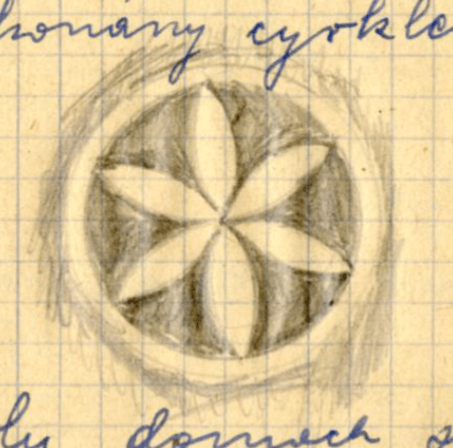
“Carpathian Rosette” from a house in Lubatowa.  This document does not appear to be a questionnaire but rather field notes of Aleksander Rybicki, founder of the Sanok Skansen.


Dukla

Questionnaires without monsters

Zawadka Rymanowska i Kamionka


Jasliska

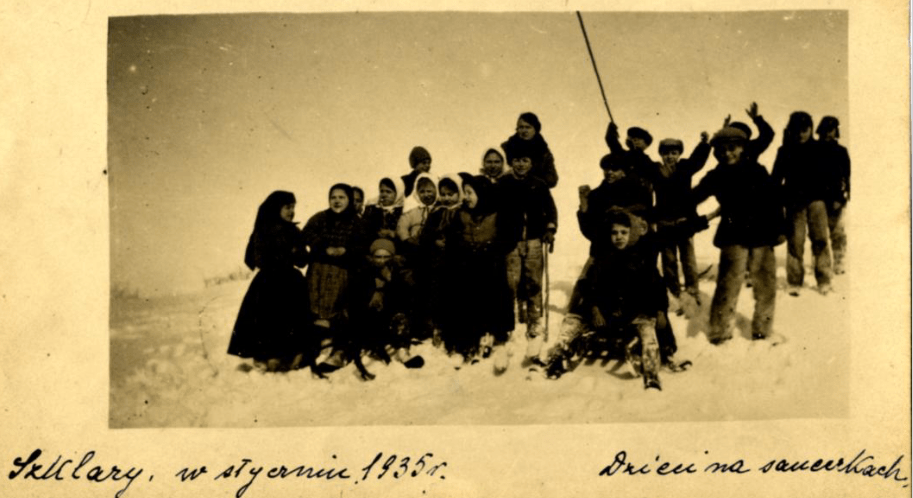
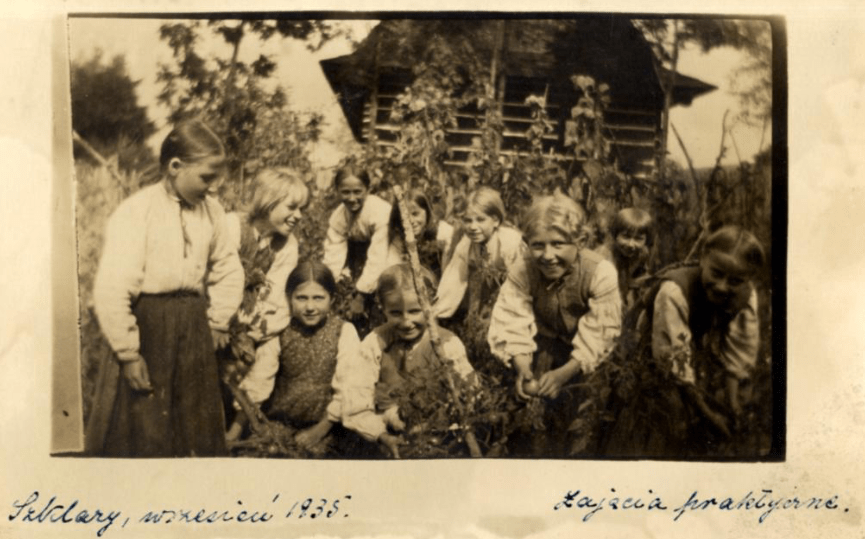
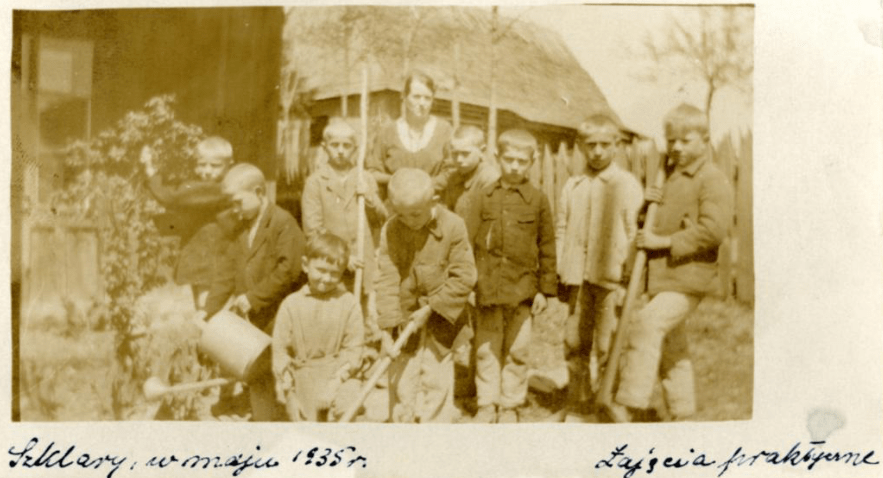
Szklary

Death walks under the windows where someone is about to die. A phantom can be seen in the form of a sheep, a dog, or a cat. None of these animals can be caught, and when chased, they flee into the forest or into a field. A hanged man haunts the forest—a cracking sound can be heard, and he can also be seen in the form of some animal.

An arsonist can be seen amidst the flames on a rafter cut from a sweet apple tree. The flames of the burning house turn toward the direction in which the arsonist fled.

On St. Andrew’s Day, if a man is the first to enter the cottage, it is a good omen for the whole year. One should not wear a sheepskin coat on this day, because „czeraki” (boils) will break out on the wearer.

On Christmas Eve, they gather the chickens into a hoop, where they scatter grain, so that they lay eggs well and do not lose them.

Extracted teeth are brought to the cerkiew and placed into the cracks of the walls, so that after death one does not have to walk around looking for them and gathering them.

On Candlemas, long icicles foretell tall flax. One should not break off the icicles, because in the summer one will bruise and injure their fingers in the same way. Whatever the first two days of Great Lent are like, so will be the seasons. If a sailor comes to the village early in the spring, the geese will not thrive and will die, and the women curse him. Before spring sowing, they will not give grain to beggars, because otherwise the crops will not grow. 

Czeremcha

Folk beliefs regarding the deceased hold that the death of a family member halts any ongoing fieldwork; for instance, it is said that a certain farmer’s child died while he was sowing crops, and nothing sprouted—a belief that persists to this day.

When a household member dies, on the first evening a plate of water and a towel are placed on the table so the deceased’s soul may wash itself. For three consecutive evenings, young women and men gather at the home for the so-called świecenia involving various antics—so rowdy, in fact, that the deceased might even be knocked off the table onto the floor several times.

Questionnaires without monsters

Daliowa, Darów, Lipowiec, Wola Niżna, Wola Wyżna

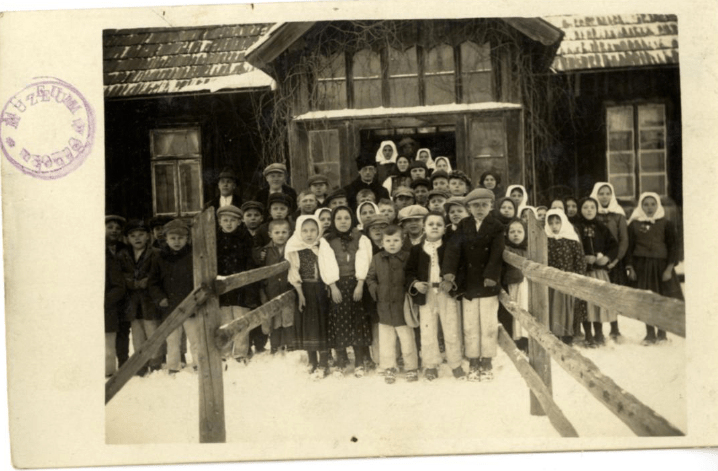
Darów–Lemko children

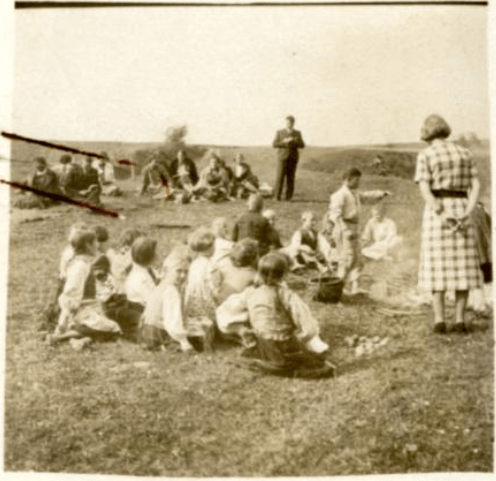
Lipowiec–children in front of the school


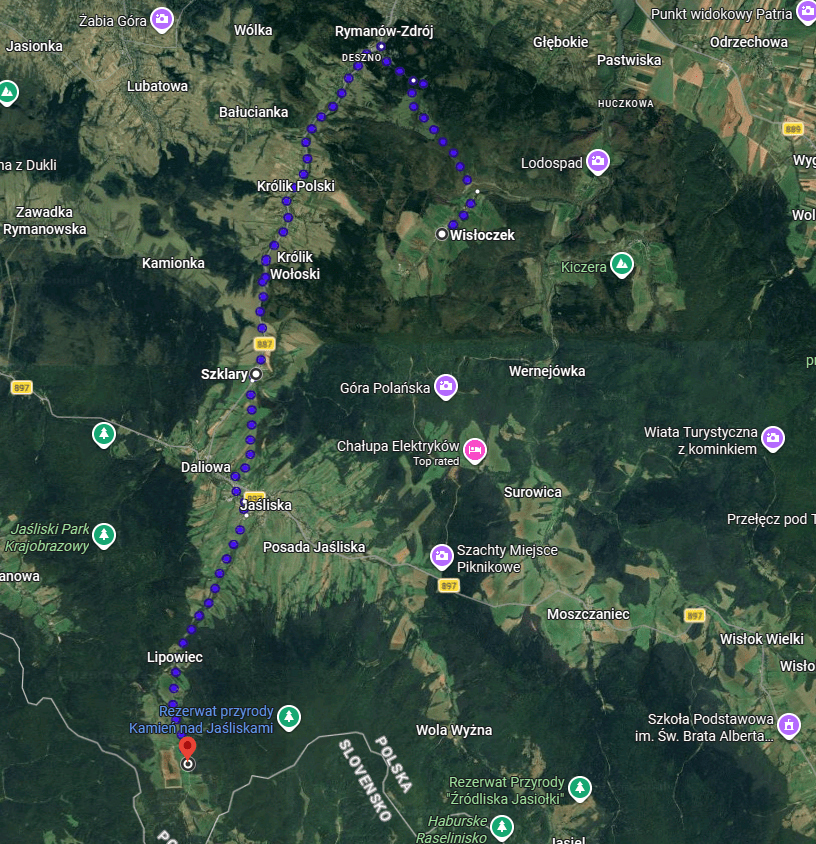
Images are found within the questionnaires, themselves, and are in the public domain. Please credit the Sanok Digital Library, not this site. Route maps from Google, vintage Galicia map from polona.pl, translations by Google.
<– Previous: Introduction

Sanok County: Next –>

Introduction: Vampires, Witches, and other Terrifying Creatures in the School Inspectorate Questionnaires

By Leo Filipczak with help from Piotr Zelny

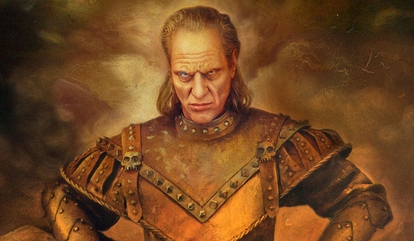
One of the the most common responses I get, when I tell people I have Carpathian ancestors, is, “You mean like Vigo the Carpathian?”

Vigo the Carpathian, the Scourge of Carpathia and the Sorrow of Moldavia, is, of course, a fictional vampire and the main villain in Ghostbusters II.

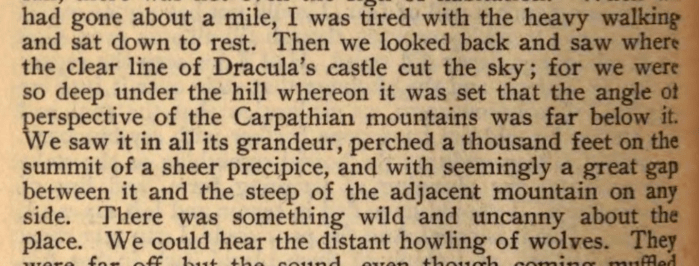
From Nosferatu to The Count from Sesame Street, this association between the Carpathians and vampires is strong in popular culture. Most of it stems, of course, from the title character in Bram Stoker’s 1897 novel Dracula, whose home was in the Transylvanian Carpathians.

Stoker, Dracula: a Mystery Story (1897). pg 372

There is some controversy over where Stoker drew his inspiration. Some say Dracula is modeled on real-life bloodthirsty royal figures in European history like Countess Bathory and Vlad III “The Impaler” Drakula of Wallachia.

Others scholars emphasize that a stereotype already existed of the vampire as a member of the Eastern European noble class, an exile community often stereotyped in Western countries. The vampire as glamourous, but aloof and having a silly accent, was already common in Stoker’s time. Dracula, however, forever solidified the idea that vampires live in castles, are impeccably well-mannered, come from the Hungarian and German elite of present-day Romania, and have lots of money.

Stoker was correct to associate vampires with the Carpathians. Sanok is home to one of the many noted vampire (or anti-vampire) burial sites, and the word vampire itself comes to English from the Slavic languages. However, if the Dublin-born author wanted a truer picture of the vampire myth, he might have done better to set down his sensational novels about medieval counts and visit a rural village in his mother’s native County Sligo. There, he could have attended a raucous Irish wake and found a people with a very vivid, arguably beautiful, sense of death and the thin in-between zone that separates the world of the living from the world of the dead.

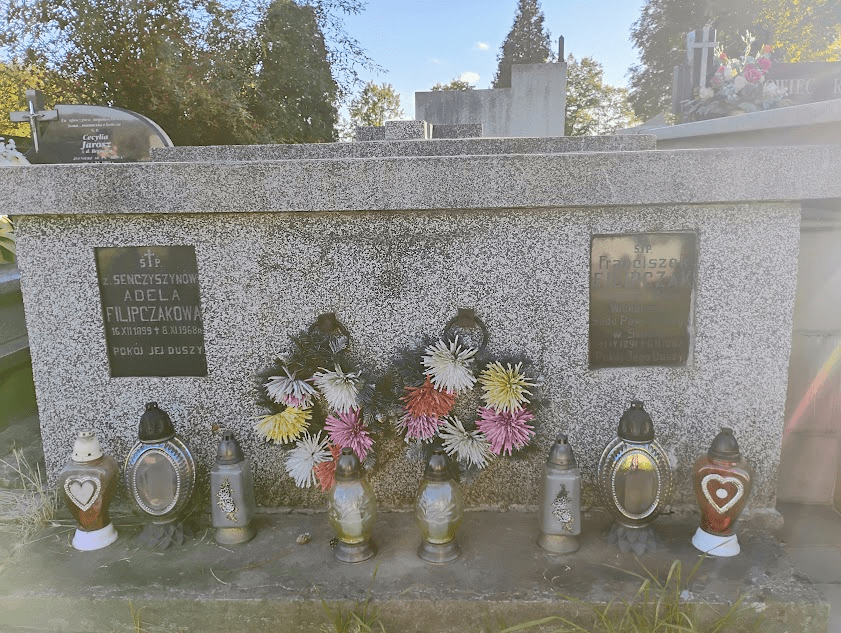
If he had traveled to the Carpathians, to Sanok, he would have seen rural Galicia also had this strong sense of the dead and the supernatural as being part of the everyday living world. Anyone who visits a cemetery in the region today, will see remnants of these beliefs in the sheer number of lanterns that adorn the graves. Some souls need all the help they can get, and sometimes, despite our best efforts, things can go wrong.

Sanok Cemetery, 2025 (photo by author)

The Sanok School Inspectorate Questionnaires

Thanks to a remarkable set of documents, we know that in Carpathian Poland, belief in the vampire (upiór) was still fairly common up to the eve of World War II. Between 1936 and 1939, the Sanok School Inspector’s Office sent out questionnaires to hundreds of villages and towns throughout the region. School staff were expected to provide information on their communities regarding a variety of subjects.

Today, the Sanok Museum of History holds files on 185 communities, and they are available online through the Sanok Digital Library. Eighty-four files contain long-form questionnaires with demographic and ethnographic information. The remainder contain correspondence or shorter questionnaires with a different set of questions

I wasn’t able to find an example of the original long questionnaire form, but we can infer from the responses that it contained seven sections: 1) Basic Demographic Information, 2) Anthropological Characteristics, 3) Topographical Characteristics, 4) Linguistic Issues, 5) Material Culture, 6) Spiritual Culture, 7) Social Culture

A fascinating study could be done on any of the seven, but for our purposes here, we will concentrate on 6) Spiritual Culture. This section contains several questions, which after looking at eighty-four of these, I can reconstruct as something like: What are beliefs relating to death? What superstitions do the people believe in? Are the people pious? Do they attend pilgrimages and religious festivals? What funeral rituals are observed? How is the cemetery maintained? What are some legends, fables and fairy tales, particularly related to landmarks or features of the landscape? What songs are sung at weddings?

For the purposes of this project, as painful as it is, we are limiting ourselves only to information relating to supernatural beings and beliefs about death, so even within the “Spiritual Culture” sections, lots of great stuff is being left out. We may revisit these topics later, but for now, we recommend finding your ancestral villages and having a look yourselves.

The questionnaires seem to be very much a part of the intense national competition that consumed Sanok’s intellectual culture in the 1930s. The School Inspectorate, as an arm of the Polish Government, was locked in a losing battle to keep Ukrainian national identity east of the San and away from the Lemkos west of the river. In the long-form questionnaire this goal is expressed subtly, but it is noticeable if you know what you are looking for. In the short form, it is much more obvious. That questionnaire, instead of asking about vampires and wedding songs, asks about what political organizations people belong to, what newspapers they read, and what their attitudes toward the Polish government are. Notably, the questionnaires overwhelmingly went to communities with Lemko/Ukrainian/Rusyn majorities, and only a handful of Polish-majority communities are represented.

We are going to stick mostly to vampires here–the focus of this blog is peasant culture in earlier centuries–but if you are interested in this national competition, check out our post on The Dolinians. If you are really interested, consider getting a copy of Beyond the San, which details the activities of my distant relative Ivan Fylypchak (Iwan Filipczak), a Ukrainian teacher and cultural leader who exactly the kind of person the School Inspectorate was trying to stop.

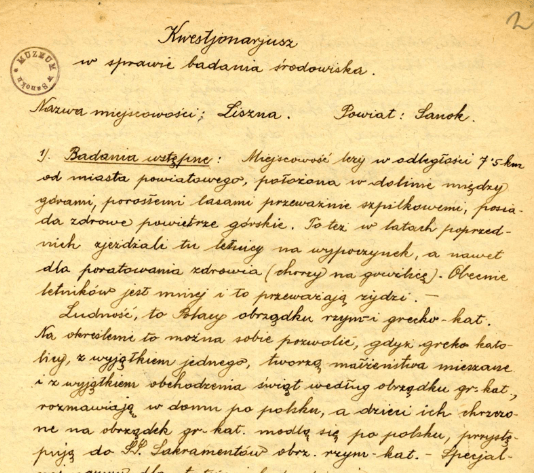
In 1936, the principal at the school in Fylypchak’s native Liszna reported on the monsters surrounding the village. Fylypchak himself was also interested in the “Spiritual Culture” of the mountain people. He had provided much the same information ten years earlier in his Ukrainian-language manuscript Monograph of the Polonized Village of Lishna, Sanok County. This document reads very similarly to the questionnaires, so we will include it here to give a taste of what is to come:

Since pagan mythological times, people in Liszna have believed in the “bohynka.”

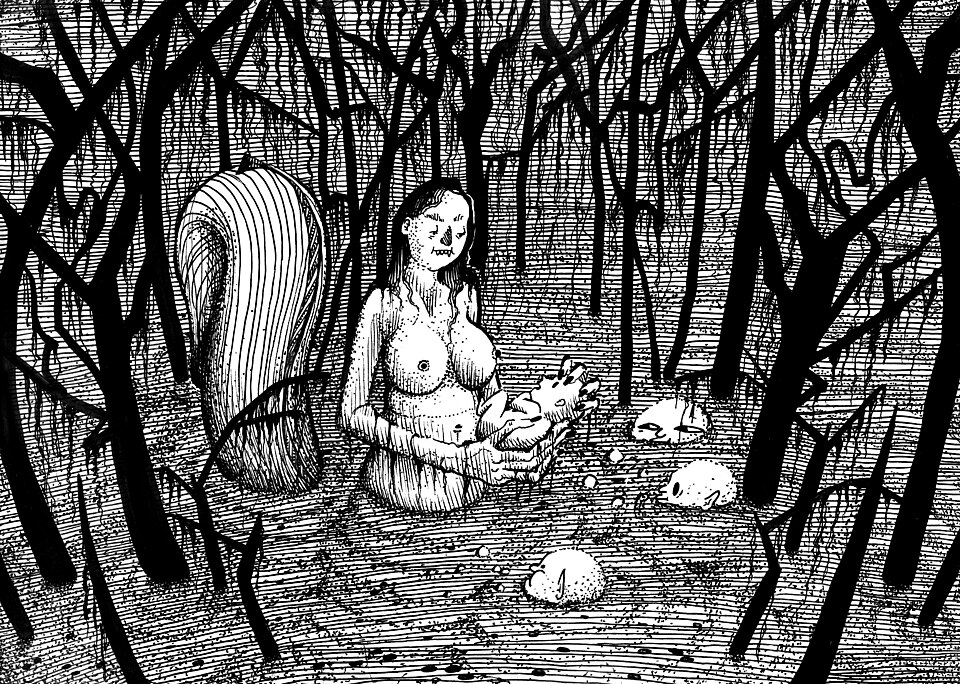
A bohynka is a kind of supernatural maiden-goddess who lives in forests, by streams, brooks, and generally in empty, deserted places. The bohynka likes to play tricks, mostly on girls when they go to wash linens by the streams. It happens, girls say, “a bohynka stole my handkerchief or some other trinket,” when it actually floated away with the water due to carelessness. Small children are frightened by bohynki so that they do not wander into the forest, because there a bohynka will take them.

“Boginka” Graphic by Maria Apoleika (2018) and released through Creative Commons (Wikimedia)

A certain villager, in order to give himself greater respect, tells that he saw a “bohynka” in the forest, how she screamed, cried, and wailed. She wants to lead a man into some inaccessible thickets, mostly during evenings, nights, or early mornings, and wants so badly to choke him. Sometimes she mimics the crying of a little child, sometimes she pretends to be a shepherdess crying for lost cattle, or pretends to be a woman weeping over some loss. She appears to people mostly during bad weather, in a storm, a blizzard, while various split trees and broken limbs of storm-felled trees creak throughout the forests, making all kinds of sounds during the storm.

A man who moves sluggishly, is poorly accustomed to work, lacks agility, and whose work does not go well, is called by townspeople lelum-polelum: “Look how he works, like a lelum-polelum. Why did you freeze like a lelum-polelum?.” They believe in witches who steal milk from cows. After sunset, no one will be able to buy milk. An old, aged, unloved woman who lives apart, somewhere on the outskirts, and rarely shows herself to people, is called a witch, and they firmly believe that she steals milk from cows. An unloved old man who has amassed a fortune is called a devil. They considered one such old man, Sabat, to be like this; according to rumor, he carried a demon on his shoulders to the “Smorzhensky stream” and threw him into the dense thickets there.
They believe in a walking death at night, which some people have seen. She appears at night, white, clumsy, wrapped in a sheet, thin like a flax-braking board, taking people away. — They sit by the deceased all night, sing pious songs, tell stories about his soul, where it is now, whether already in heaven or in purgatory. The deceased is placed on a table on boards, or in a coffin, and a candle is lit. There is no cemetery in the village. Poles are buried in Mryholod [Mrzyglod]; they cross the San River by boat or transport the body by wagon through the water. There are cases where, due to carelessness, the coffin fell into the water, and then it is a real trouble to pull the coffin out. Rusyns are buried in Vilkhivtsi [Olchowce]. The deceased are angry, they walk after death and terrify wicked people.
[Original Ukrainian manuscript in Rylsky Ethnographic Archives, Kyiv]


Meet the Monsters

Fylypchak’s account shows that the upiór was not the only monster haunting the fields and forests, so before we get into the questionnaires, let’s meet some of the recurring characters. When present, we will link to longer descriptions in the Dictionary of Polish Folk Tales, edited by Violetta Wróblewska of Nicholas Copernicus University in Toruń.

upiór: a vampire creature with two hearts and two souls. One soul moves on to the next world while the other returns at night to terrorize people and livestock. Various measures are employed to stop it escalating from scattering poppy seeds around the grave to driving a stake through the skull. Note that most departed souls will make a brief return to the house before crossing to the other world. That does not necessarily mean they are upióry.

czarownica: a witch, not necessarily someone coming from another world, but more likely a neighbor woman consorting with evil. She will steal the milk out of your cows or inflict the “uroki” [evil eye] which causes your nausea and headaches. There are procedures to get her to reveal herself, but be careful, she may turn herself into an animal. In some villages, they may be called zamawiacy, prasorka, bisiurkinie, bosorkyni, or bisurmanka. They are everywhere. Do not trust your neighbor.

djabeł: not necessarily Big Satan himself, but a little house devil you can hatch from an egg. At the cost of your soul, this little horned guy will bring prosperity to your lands and children, but only if you treat him right, and he is notoriously hard to control.

śmierć: a gaunt, skeletal woman clad in all white, she is the grim reaper, the personification of death itself, cutting down her victims with a scythe.

boginka: though generally meaning “goddess” or “nymph” in modern Polish, the boginka around Sanok is a particular kind of evil female spirit. Her screams are heard from the forests, where she can be found washing her garments in the streams. She also may come in your house and switch your beautiful baby for her ugly one.

mułuchid: a stillborn child will return to its home seven years later. However, if you give it a name and some white cloth for a baptismal gown, it will leave you alone. This is different

topielec: one of various “wodniki” [water spirits] the spirit of a drowned person hangs over the place where he or she drowned. Now, it will drown you if you are not careful.

gniećka: also called miedznich, the “presser” demon will visit in the night and sit on your chest until you suffocate.

mara: the nightmare will visit in your sleep, tangle the manes of your horses, and drive them into the forest.

błedne ogniki: an eerie light or fire rising from the swamp is a sign of something bad. Do not go there.

błąd: the “misleader” will enchant you and lead you in all directions as you try to make your way home.

białe baby: these old white crones may cackle on the road until they notice you. Then, they are gone as quickly as they appeared.

czeperheir: this supernatural bat will get in your hair and make it hopelessly tangled. It is best to keep your head covered.

płatenik: your neighbor up the road might look like a normal old man, but he is actually a “cloud catcher” and has the power to control the weather and call forth a storm.

morowiec and morowica: the black plague as a man and woman, few will escape them.

królu wężów: would you dare steal the diamond of the “king of snakes?”

wątkopak: some kind of human-eating monster. Your guess is as good as mine.


The Project

So, without further ado, here are accounts from the questionnaires, in five parts. Any communities shown will have a full questionnaire in the archive, so find your village and stary your investigation! As always, these are Google Translations, so take them with a grain of salt (or spit three times, cross yourself, and do a spell to ensure Google isn’t bewitched).

Part 1: Krosno County

Part 2: Sanok County (minus Komańcza)

Part 3: Komańcza Gmina

Part 4: Lesko County

Part: 5 Bieszczady County