This is the first of five parts in our project translating information on pre-WWII beliefs in vampires, witches, monsters, demons, death rituals and superstitions in specific villages. This post focuses on modern-day Krosno County. The information was provided by local school officials to the Sanok School Inspectorate in the late 1930s. The original documents and metadata are available online from the Sanok Historical Museum through the Sanok Digital Library.
To learn more about the scope and purpose of this project, see Introduction: Vampires, Witches, and other Terrifying Creatures in the Sanok School Inspectorate Questionnaires
Part 2: Sanok County (minus Komańcza)
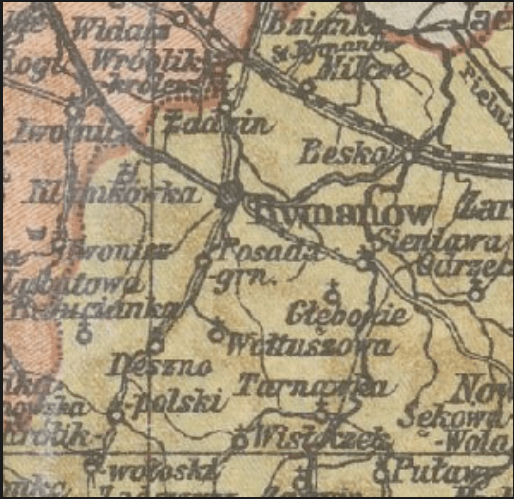
Rymanów
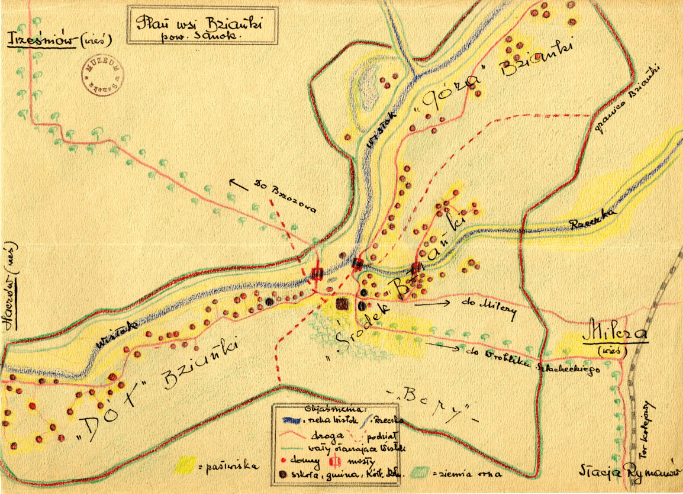
Bzianka
People believe that a dead person returns to earth after death and haunts.Everyone believes that they come to haunt. Around 12 o’clock at night they come to their home and appear to the person closest to them.For a long time, there has been a belief here in sorcery and superstitions, especially in witches, who “cast spells on” milk, bewitch with “charms”, and bring about crop failures.Witches go about on certain days of the year. –And so in spring on St. Adalbert’s Day, and before winter for St. Lucy’s Day. They tear out thatch from the roof of a chosen house (from above the stable), or they take straw from the dung heap, and by doing so, they carry away the abundance from the cowshed, stealing the milk from the dairy cows. During these days, one must be careful not to lend anything from agricultural or household equipment to any suspicious woman, as she might bewitch you using that object and “tie up” the milk. People are also afraid to pick up any rags or “tatters” (as they call them) from the ground, because a disease might be “tied up” within them. They are also afraid of the kołtun. This is a tangled wad of someone’s hair—”planted” maliciously—because picking these hairs up from the ground brings imminent death. — There are still plenty of minor sorceries and superstitions that are blindly believed in and always observed…
…There are few legends and fairy tales among the local people in the village. There is a legend about the local “pinewoods” that once there were great forests here, and then a large city that long ago sank underground. The elders say that sometimes at night, when they graze horses in the forest, you can even hear the tolling of bells from underground. When the forests were still there – the Mother of God was passing through and cast it down – therefore, the forest had to wither away, because the Mother of God did not give it her blessing.
Others tell stories about a house haunted by a devil. It is some kind of mischievous spirit, who causes a “penitence” (meaning deliberate mischief) in that house. Once, for example, when all the household members were already asleep, it tossed a threshing machine around the barnyard, which several people heard; another time, it “shredded” their garments inside a chest, as if with scissors. And so this “something” keeps doing things to spite them—like a stubborn devil.
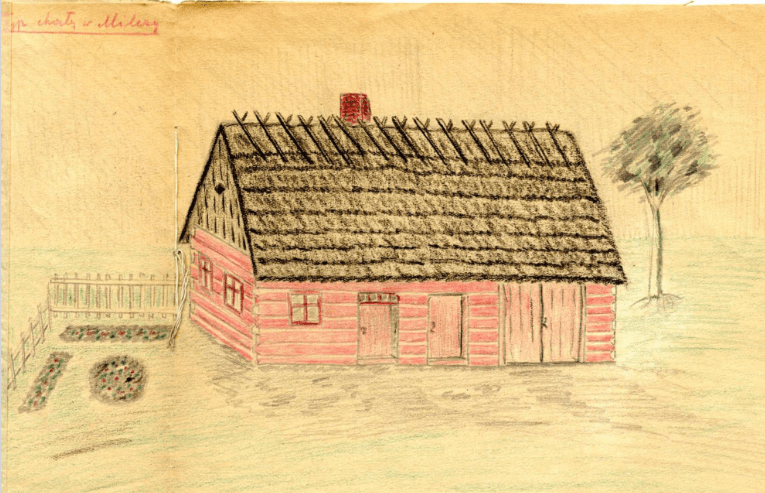
Milcza
The local people believe in ghosts and spirits connected to the deceased person. They believe that the spirits of the dead come to Earth at night between 12 and 1 o’clock. They embody themselves in animals and scare people in the field and at home. On All Saints’ Day, all spirits of deceased people gather in the church and in the cemetery. There are also omens and superstitions: A misfortune will happen if a cat or a hare runs across the road. One should not turn back from the path to church, because one will die a sudden death. There are people who are able to cast evil eyes and charm away illnesses. Some women, however, are witches and can steal milk from cows. After sunset, one should not lend or sell anything,because good fortune passes to the borrower or the buyer. Girls should not be beaten with a broom because they will behave immorally…
Rymanów
They believe in ghosts. Some maintain that a soul does penance in the house and appears in various forms, e.g., a cat or a dog. Allegedly, one boy turned into a cat after death and constantly came to his books and notebooks. When asked why he did this, he replied that he was doing penance. They believe in charms and bewitching a cow in order to steal its milk.
Various superstitions have also survived to this day, e.g., when a cat crosses a person’s path, they will have no luck and will not achieve their intended goal. The same applies to a person who turns back home while on a journey.
When the left palm itches, they foretell receiving money; when the right, that one will greet someone. A magpie chattering near the house foretells guests, and similarly a cat when it cleans itself. When someone is the first to enter a newly built house, death awaits them shortly, which is why they let a cat in first…
…A tale about cholera persists among the population. According to the stories of older people, during the outbreak of this disease here several decades ago, cholera walked between houses in wooden shoes at night. Knocking on windows was heard at the houses, along with the question: “Are you sleeping?” If they replied: “We are sleeping,” they fell asleep forever. Those who replied, “We are not sleeping, but we praise God” remained alive.
Sienawa
People believe that on the first day after death, the soul of the deceased comes to the cottage and makes knocking sounds or opens doors. They believe that a witch can spoil or steal milk, and they will even name a specific woman who takes milk away from cows, i.e., reduces the milk output. They even boil pins against the witch, because she is supposed to feel sharp pains for as many pins as there are…
…The sick apply various traditional remedies and local practices when medical help is unavailable. Non-standard medical interventions are noted to be occurring within the village, involving local practitioners who are sought out by individuals from various localities; these practices often result in severe health complications or legal consequences. Recently, one such instance involving a young woman from Odrzechowa resulted in a fatality, leading to the practitioner being taken into custody.
Głębokie
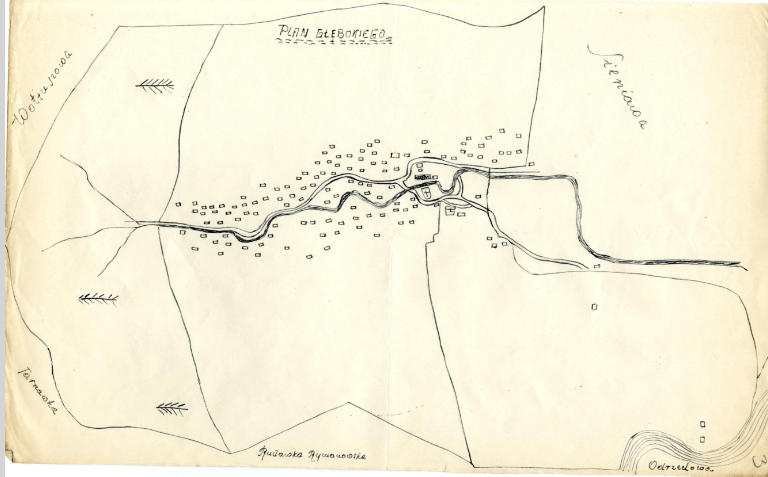
Local people are pious (women are more pious). The favorite prayers of the local people are prayers to the Mother of God, to Lord Jesus, the Hail Mary, the Apostles’ Creed, and the rosary. The sick seek advice from a doctor. They care little for the cemetery; the graves are neglected, and they visit them only at the time of burying the dead and on All Saints’ Day. On the graves they place small-sized wooden crosses. There are two newly-built tombs here, because in earlier times the dead were buried in the cemetery in Rymanów.
Puławy
There is a belief that the deceased may appear shortly after death and cause harm. They hide their daydreams and superstitions so that one cannot obtain information about them.
Tarnawka
In general, the Lemkos are not superstitious, and it is impossible to determine what exactly they believe in (besides God), because some believe in spirits, others in unknown fears in the form of phantoms, and there are even those among them who do not believe in God at all.
The population is pious, but not so much in actions, only inside the church, because they make no effort at all to apply the principles of faith to daily life. Sometimes, one can boldly apply to them the ironic proverb: “He prays before the shrine… [but has the devil under his skin].”
Deszno
The local population—and the Ruthenian people in particular—live in fear of the spirits of the dead and can name the specific villages where these spirits manifest. They most frequently assume the form of a goose or a cat, wreaking havoc both inside the house and in the farm buildings; they torment sleepers, overturn household vessels, knock pictures off the walls, and mix together different types of grain…
There was a widespread belief in witches—women who, out of spite, could “take” the milk from a farmer’s cows. When milk was lost in this way, folk healers would “restore” it, for which they were paid handsomely…
For a woman to possess magical powers, she must refrain from washing herself or reciting prayers for 12 days, then before every holiday, she must do something bad to her neighbor.
It is customary to throw a rooster through the window of newlyweds…
…In case of illness people seek treatment from folk healers and witches, using doctors only as a last resort.
Bałucianka
People believe that a dead person walks around the village for a few days and frightens them. No one walks near the cemetery or through the fields for some time. Rumors circulate that the deceased appears at the cemetery. – The elders of the deceased’s kin leave for the field. The living get drunk in the presence of the deceased. Diverse people, commoners, onlookers, and children gather there. They sit by the covered, wooden, fasting coffin and entertain themselves in various ways. A man eats and drinks all night long, while the commoners fight or amuse themselves freely and even behave indecently. After the funeral, the family of the deceased arranges a wake – a feast for the funeral participants. When the last person dies of an infectious disease, they do not ring the bells in the cerkiew, because the sound of the bell spreads the plague throughout the entire village. – On Holy Saturday, after the blessing of the paska, every housewife returns home as quickly as possible, walks around the cottage three times with the blessed food, goes up to the attic, and only then brings the blessed food into the cabin. They believe that in this way they expel the evil spirit from the homestead…
…They hire witches, who out of malice or jealousy can spoil, reduce, or completely stop the cows’ milk. A cow will not give milk for as long as it takes until that same woman enters the cottage and brings something with her for the household members, even if she is forced to. After that, the cow gives normally.
Królik Polski i Królik Wołoski
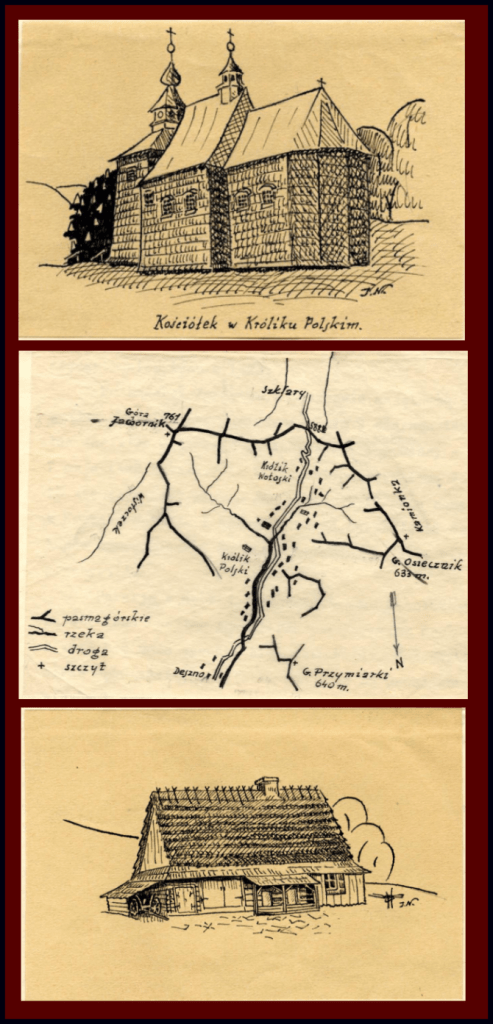
They do not have many superstitions; they believe, for example, that when someone is about to die in the village, Death appears as an old woman; it is bad to start field work on a Friday, preferably on a Tuesday or Wednesday. But even on those days, one should not plow and sow on the same day. Broad beans and peas planted during a new moon are tough when cooked. When driving cattle out of the barn for the first time in spring, an Easter palm branch is placed under the threshold, and the cattle are herded with the palm so they do not go wild (fret). When starting plowing in the spring, the plow, horse, and field are sprinkled with holy water, after which bread and an egg are placed under the first furrow.
The cause of many diseases are “evil eyes” (called ‘zuroki’). They subside under the influence of warding them off, during which special prayers are said, and the head is squeezed. It is difficult to learn this ‘undoing’ of charms, because the person who teaches it loses this miraculous ability. Peasants who undo charms are highly popular and simply torn apart with demand, all the more so because for such an undoing, one is not allowed to give or pay anything, and it is not even allowed to say ‘God bless you,’ because then it will not help.
Wisłoczek
The population of the local village is generally very pious and very frequently attends services in Tarnawka. The favorite prayers among the local people are the “Our Father”, the Apostles’ Creed (“I believe in God, the Father”), and Psalm 150. The population believes in ghosts and spirits associated with deceased persons…
…The Łemko is very stingy, and when his wife falls ill, at the beginning of the illness he treats her himself, e.g., with centaury, linden tea, honey, and blueberries. He rubs her body with rubbing alcohol, applies cupping glasses, uses leeches to let blood from her arms, legs, and neck. When all this does not help, he then turns to quacks and folk healers. However, he very rarely goes to a doctor due to a lack of trust. If the sick woman does not get better, he goes to fortune-tellers. If a fortune-teller prophesies to him that the illness is fatal, he stops treating her altogether, and the neighbors will suggest a second, wealthy wife to him, even though the current one is still alive. It even happens that when the sick wife finds out from others about her husband’s intentions, she gets up perfectly healthy for a few days, and upon the first meeting with that other woman, they immediately argue and even fight in the street.
Questionnaires without monsters
Kamionka, Klimkówka, Ladzin, Posada Górna, Zawoje
Iwonicz-Zdrój
Questionnaires without monsters
Lubatowa
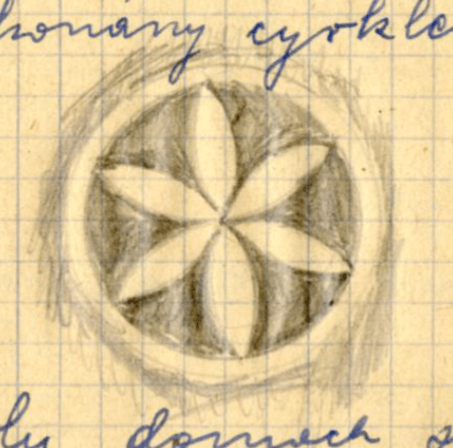
“Carpathian Rosette” from a house in Lubatowa. This document does not appear to be a questionnaire but rather field notes of Aleksander Rybicki, founder of the Sanok Skansen.
Dukla
Questionnaires without monsters
Zawadka Rymanowska i Kamionka
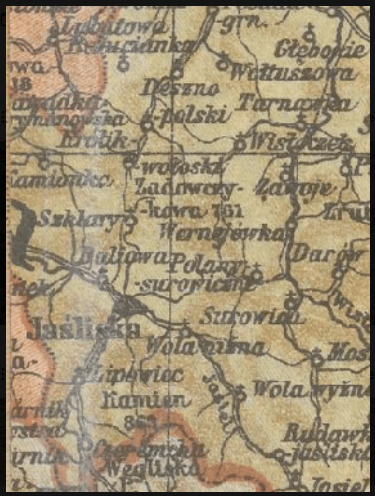
Jasliska
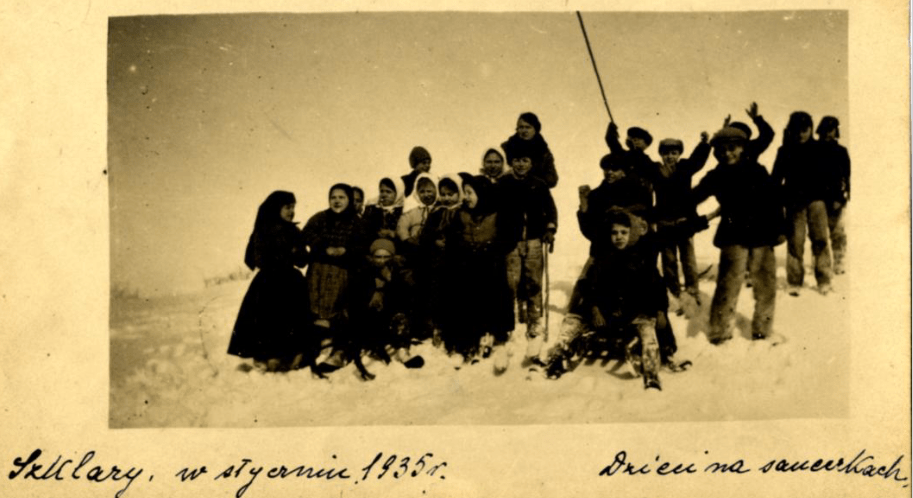
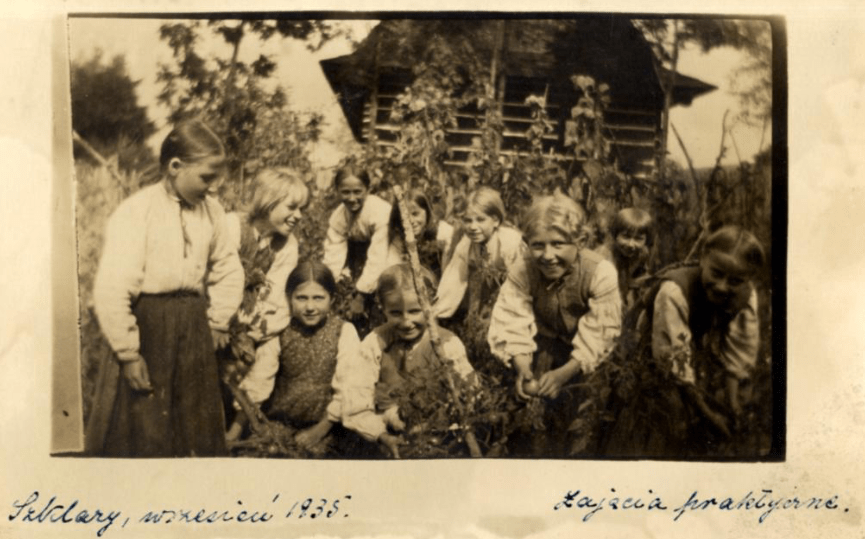
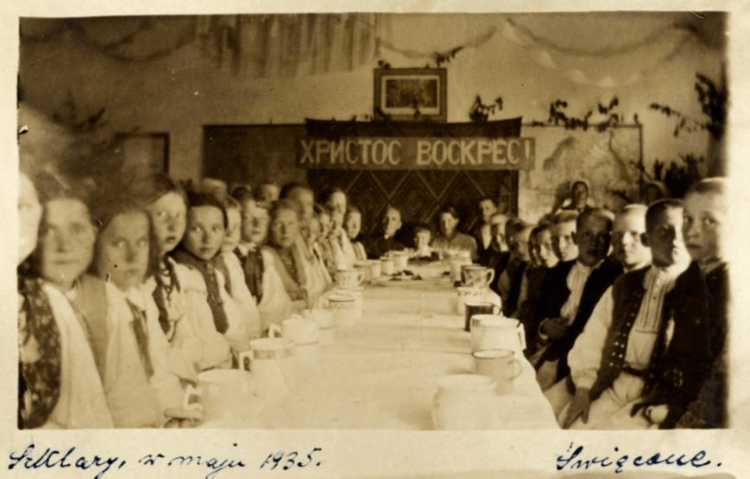
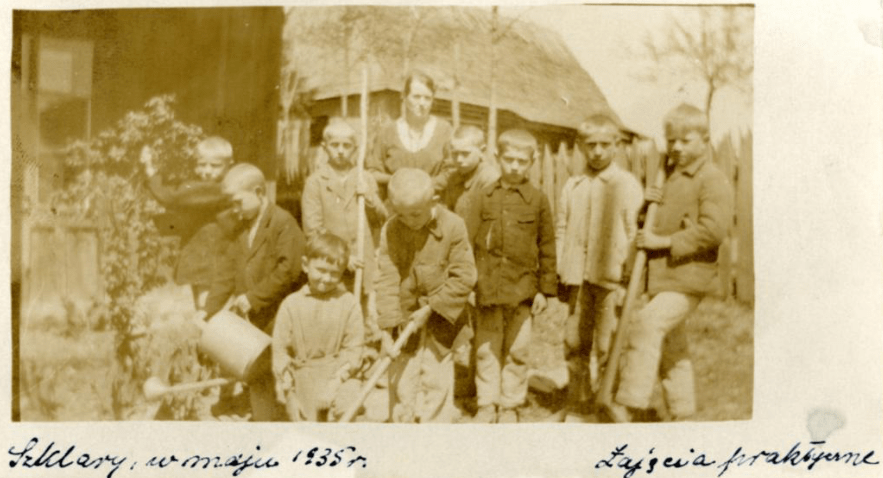
Szklary
Death walks under the windows where someone is about to die. A phantom can be seen in the form of a sheep, a dog, or a cat. None of these animals can be caught, and when chased, they flee into the forest or into a field. A hanged man haunts the forest—a cracking sound can be heard, and he can also be seen in the form of some animal.
An arsonist can be seen amidst the flames on a rafter cut from a sweet apple tree. The flames of the burning house turn toward the direction in which the arsonist fled.
On St. Andrew’s Day, if a man is the first to enter the cottage, it is a good omen for the whole year. One should not wear a sheepskin coat on this day, because „czeraki” (boils) will break out on the wearer.
On Christmas Eve, they gather the chickens into a hoop, where they scatter grain, so that they lay eggs well and do not lose them.
Extracted teeth are brought to the cerkiew and placed into the cracks of the walls, so that after death one does not have to walk around looking for them and gathering them.
On Candlemas, long icicles foretell tall flax. One should not break off the icicles, because in the summer one will bruise and injure their fingers in the same way. Whatever the first two days of Great Lent are like, so will be the seasons. If a sailor comes to the village early in the spring, the geese will not thrive and will die, and the women curse him. Before spring sowing, they will not give grain to beggars, because otherwise the crops will not grow.
Czeremcha
Folk beliefs regarding the deceased hold that the death of a family member halts any ongoing fieldwork; for instance, it is said that a certain farmer’s child died while he was sowing crops, and nothing sprouted—a belief that persists to this day.
When a household member dies, on the first evening a plate of water and a towel are placed on the table so the deceased’s soul may wash itself. For three consecutive evenings, young women and men gather at the home for the so-called świecenia involving various antics—so rowdy, in fact, that the deceased might even be knocked off the table onto the floor several times.
Questionnaires without monsters
Daliowa, Darów, Lipowiec, Wola Niżna, Wola Wyżna
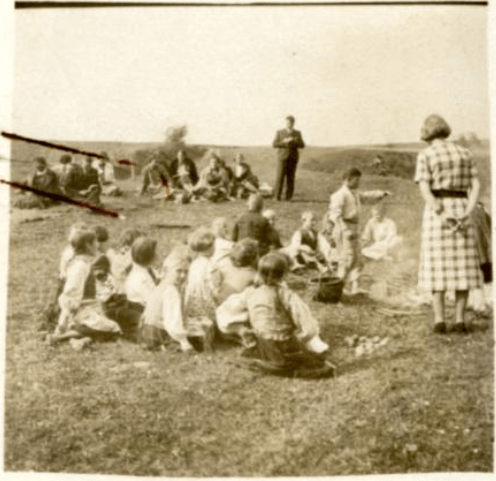
Darów–Lemko children
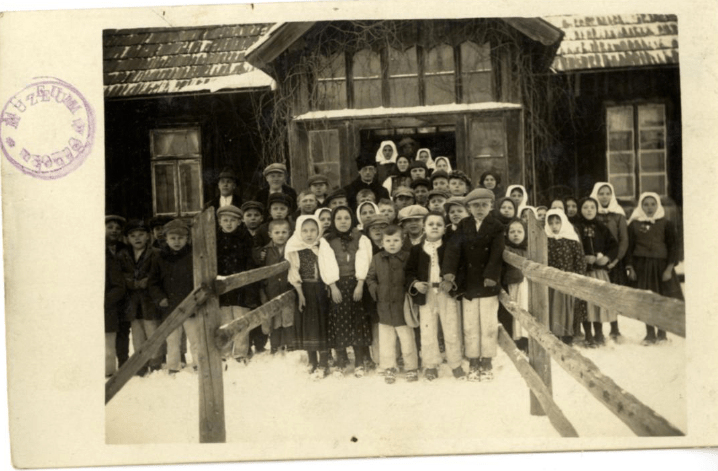
Lipowiec–children in front of the school
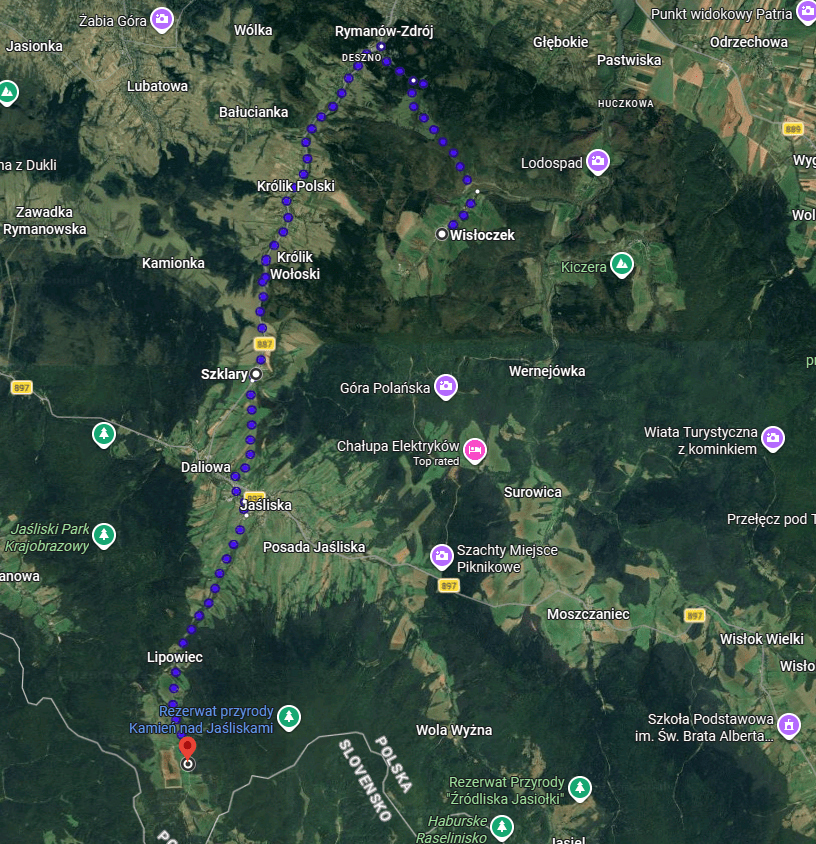
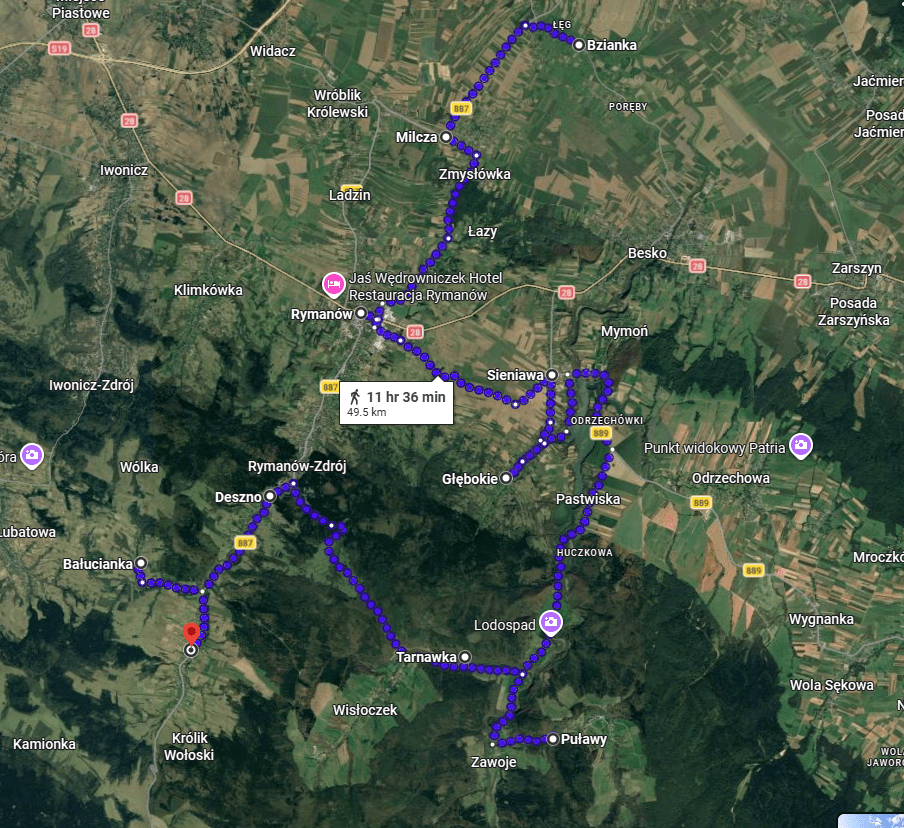
Images are found within the questionnaires, themselves, and are in the public domain. Please credit the Sanok Digital Library, not this site. Route maps from Google, vintage Galicia map from polona.pl, translations by Google.
<– Previous: Introduction
Sanok County: Next –>

