The Mystery of the Treasure from Bukowsko

The following is a translated excerpt from an article in the upcoming edition of Ziemia Sanocka, the annual publication of the Historical Museum in Sanok. In 2022, 156 silver coins were discovered buried in Bukowsko. In the longer Polish text, Piotr’s co-authors will describe the discovery and the coins. This excerpt concerns the history of the property and the people who lived there.

By Piotr Zelny, Historical Museum in Sanok

Copyright 2026, Piotr Zelny

The property at Henryka Sienkiewicza Street no. 2 (building plot no. 2204) in Bukowsko — on which the Volunteer Fire Department station now stands — was occupied by several buildings, including outbuildings, before World War II. A residential and commercial building stood at the site where the treasure of coins was hidden. The property was owned, at least from the mid-19th century until January 1943, by the Jewish, merchant family of Pinter, who may have been related to the Bukowsko family of famous rabbis bearing the same surname.

Due to military operations and fighting against the UPA (Ukrainian Insurgent Army) during World War II and immediately afterward, a significant portion of the records — including historical ones — from the offices operating in Bukowsko were destroyed. Consequently, the history of the treasure’s hiding place and the people who lived there, as reconstructed in this article, is incomplete. Basic information was provided by land registers (unfortunately, the supporting documents are missing) and the records of the municipal court in Bukowsko; maps and cadastral surveys were equally helpful. The notarial records of notaries operating in Bukowsko were used only to a limited extent. Although the house belonged to a Jewish family, valuable information was provided by the church registers and the vital books of the Bukowsko parish. Unfortunately, the records of the Jewish registry office in Bukowsko — which were very important for this research — have been virtually completely destroyed. For the entire district, we are aware of only 239 surviving copies of birth, marriage, and banns records.1 This fact makes it impossible to fully reconstruct the family connections of the property owners, and many important events in the family’s life have also been lost.   

The first documented owner of the property where the treasure was found was Fejwel Pinter, who was likely born between the first and third decades of the 19th century. At that time, the property consisted of a wooden house, no. 72 (building plot no. 152) and a small garden located directly behind it and adjacent to the Sanoczek stream, then known as Stawki (ground plot no. 2943). It was one of many houses densely surrounding the main market square in Bukowsko, situated on its southeastern frontage. The house was occupied by a Christian couple, Jan Antoniewicz (b. 1813) with his wife Wiktoria (b. 1813) and their son Józef (b. 1840).2 Fejwel, on the other hand, lived in his second wooden house, no. 110, with a garden located almost exactly on the opposite side of the market square (building plot no. 178). He owned one more small plot of land, but it was encumbered by an easement and served as an access road. He did not own any farmland, meadows, or pastures, so he certainly did not make his living from farming. Perhaps he was a merchant, like his grandson later on. At least three other Pinter families (the families of Abraham Pinter, Mortka Pinter, and Peretz Pinter) also lived in the town, residing in houses near the market square.3 

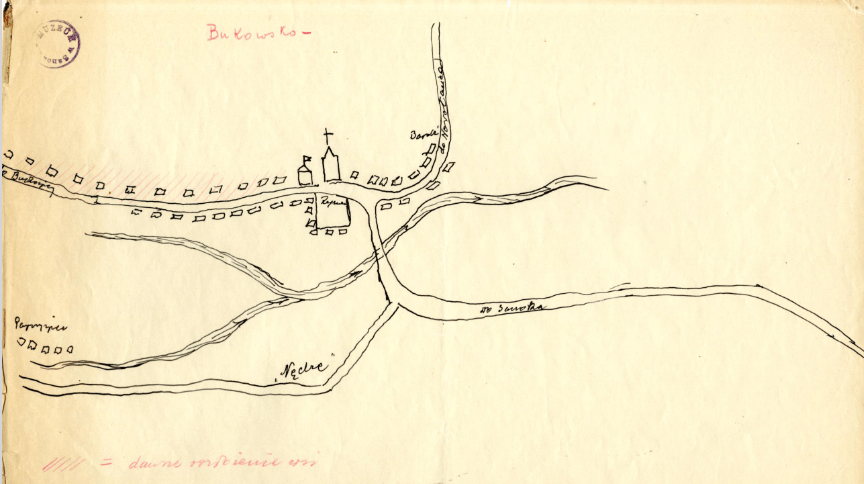
Between 1853 and 1878, Fejwel converted the garden behind his house from a ground plot  into a building plot (no. 347) and sold a slightly larger portion of it (93.5 m², 12.1 m long × 7.75 m wide), which bordered the stream. The new, rather poor owners built a small house on it, literally squeezed between the stream, the street, and the small backyard of the Pinters’ house. In this unaltered form, the Pinters’ property — consisting of a spacious house with an area of 114.5 m² (length 15.9 m × width 7.2 m)  and a tiny backyard measuring 60.5 m² (7.8 m long × 7.75 m wide), survived until World War II.4
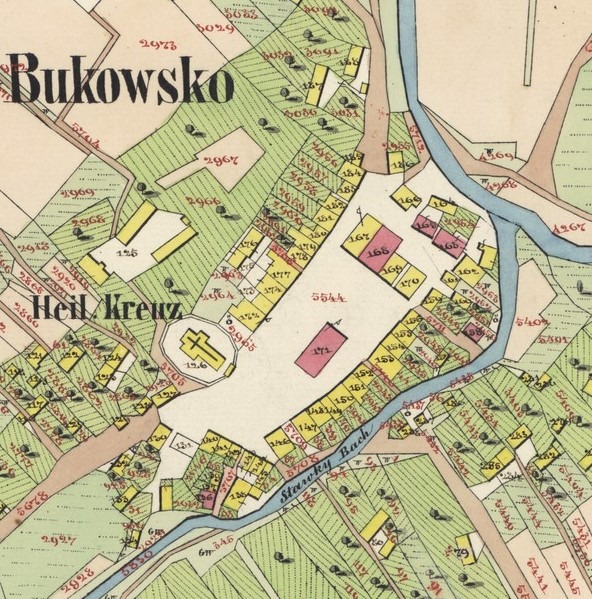
Cadastral Map of Bukowska, 1852, State Archives in Przemyśl.

After Fejwel, the house was inherited by Dawid (before 1894), presumably his son, who died in 1909. He and his wife Sara had at least four children: a daughter, Mariem, married to a man named Leiblank (first name unknown); Pesla, married to Beck; Chaya; and a son, Awigdor, also known as Wigdor (in some documents occurs the Polonized form Wiktor). Tenants also lived in the house: the Jewish Mendel family and, from around 1904 to around 1943, the Catholic Pieszczoch family, about whom we write below. We do not know exactly what Dawid did for a living; perhaps he was a merchant, as his son would later be. In January 1894, Dawid borrowed 157 zlotys and 32 cents from Lazar Regenbogen of Sanok, using the house as collateral. He did not redeem the promissory notes until December 1904. A year before his death, in July 1908, he again borrowed money from Lazar against a mortgage. This time, it was a very substantial sum of 986 crowns and 88 halers (equivalent to the former 1,973 Rhine zlotys and 76 cents). The debt passed to the children along with the benefit of inventory and then on to the grandchildren, and it was never fully repaid. Dawid left no will, so on December 30, 1909, the court, based on a decree of inheritance, awarded each sibling one-fourth of the estate and granted the widow a life interest in one-seventh. Over the next four years, a series of purchase and sale agreements were concluded, resulting in changes to the ownership structure among the siblings. In September 1910, the siblings bought out their mother’s life estate, and Benjamin Pinter (relationship unknown) purchased half of the shares due to Chaja and Mariem, respectively. Mariem then sold the remainder of her share to Simon Leiblank. In September 1913, Awigdor Pinter and Pesla Beck of the Pinter family purchased Simon Leiblank’s share and divided it equally between themselves. As a result, the property had four co-owners: Awigdor and Pesla each owned 1/3, and Chaja and Benjamin each owned 1/6 of the property. This arrangement remained in place until the death of one of them, Awigdor, in 1938, when further divisions of the estate took place.5

The head of the household remained Avigdor Pinter, born in 1881. His wife, Chaya Presser — five years his junior — whom he married in 1909. Together, they raised six children: David (born out of wedlock in Gorlice in 1909), Dima (born Sept. 12, 1912), Pinkas Meilech (born October 22, 1914), Mojżesz (born June 26, 1917), Abraham Hersch (born January 6, 1922), and Cypra (born October 9, 1925). Avigdor was a merchant and ran a fabric store on the ground floor of the house.6 He also dealt in money; particularly from the early 1930s onward, he was both a borrower and, less frequently, a lender. These included both ordinary cash loans and mortgages, denominated in both zlotys and dollars, at interest rates ranging from 6% to 10%. His son, Pinkas Meilech, helped him run the business; Pinkas later moved to Kraków.7 Avigdor died on April 29, 1938, at the age of 57. His widow and children (except for Dawid) became his heirs. According to an inventory drawn up in July 1938, his estate was in debt to the tune of 3,160 zł (assets totaling 603 zł), of which nearly half — 1,500 zł — was a mortgage debt inherited from his father, Dawid. The total value of the house, described as old and measuring 114.5 m², was appraised at 900 zł, while the land on which it stood in the town center, measuring 175 m², was valued at 600 zł. The widow Chaja Pinter, née Presser, became the lady of the house; the youngest children, Abraham Hersch and Cypra, remained under her care and financial guardianship. Mojżesz was already of legal age and lived in Bukowsko, though we do not know if he lived in the family home; Dima had left for an unknown destination and could not be contacted; and Pinkas Meilech settled in Kraków. Their aunt Pesla Beck, née Pinter, and Benjamin Pinter (relationship unknown) remained co-owners of the house, but we do not know whether they lived there.8 
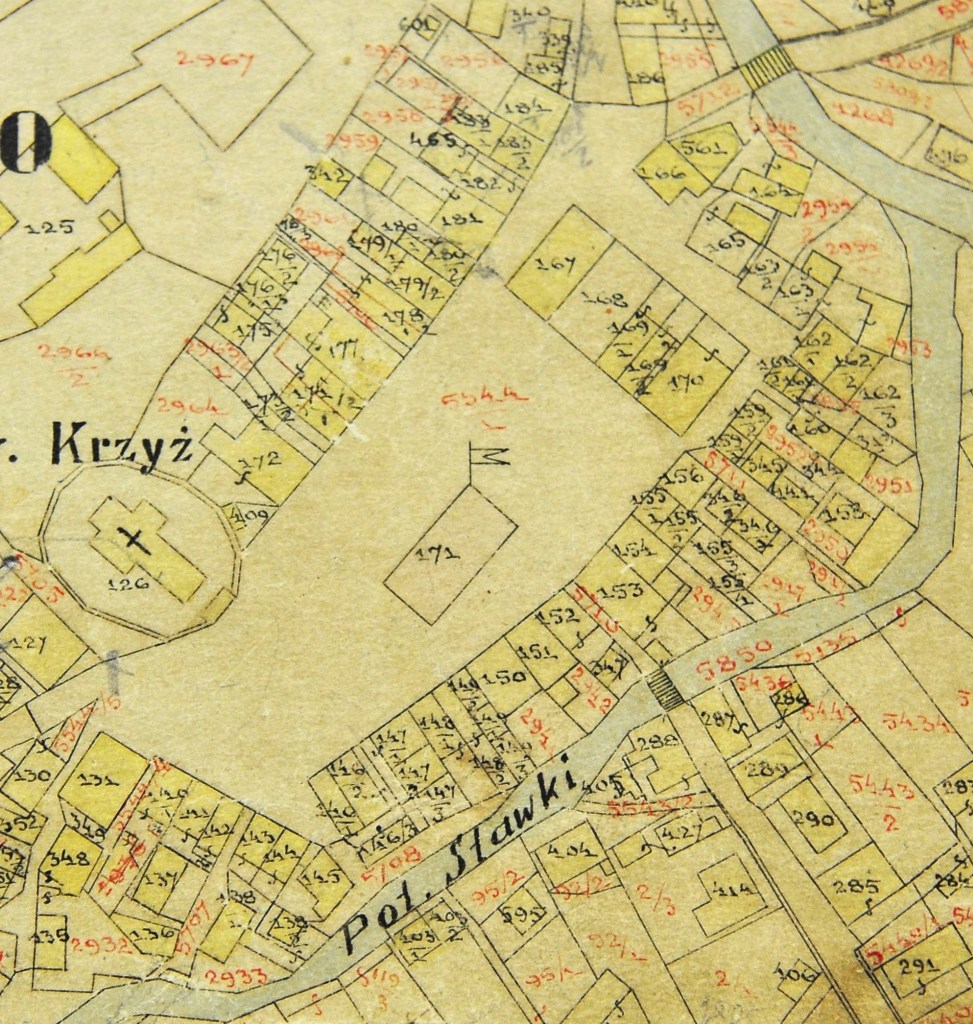
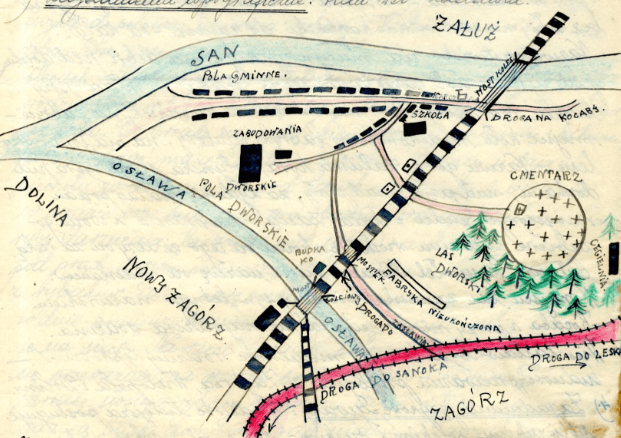
Cadastral Map of Bukowska, 1896, State Archives in Rzeszów, the branch in Sanok.

We do not know what became of the family during the Nazi occupation. The last mention of them dates from April 14, 1942; it is a resolution by the municipal court in Bukowsko regarding the registration of property rights in the land registry. They were likely killed or deported along with other Jews that same year or the next, perhaps to the Nazi German forced-labor and extermination camp in Zasław, to Bełżec, or to other camps.9 Between December 14, 1942 (the Sanok County Administrator’s resolution to seize ownerless property) and January 20, 1943 (registration in the land register), their house, as ownerless property, was seized by the German administration. The house was likely destroyed or demolished along with the remaining wooden structures on Market Square as a result of subsequent fighting with UPA units. By a decree of the Sanok District Court dated February 10, 1958, the vacant plot was transferred to the State Treasury, and as a result of land consolidation carried out in June 1995, it was merged with two other parcels.10 

Although the Pinters were the sole owners of the property, for most of the time they rented out part of the house to outside tenants — or, as they were called at the time, “chamber-dwellers” (Polish komornik). As we have already mentioned, in the second half of the 19th century, these were the Antoniewicz family, who were Christian. At the turn of the 19th and 20th centuries, the tenants were the Jewish Fisch Mendel family. Unfortunately, we cannot say anything more about them. We also do not know how long they lived as lodgers with the Pinters. They were listed in the Bukowsko parish census only by the first and last name of the head of the family as residents of the house. Around 1904, another family, this time Catholic, became the tenants. The Pieszczochs were “Americans” — that’s how economic emigrants returning from the United States to Poland were referred to. Jan Pieszczoch was born in Bukowsko in 1867; his wife, Maria née Pleśniarska, born in 1870, was also from Bukowsko. It is not known exactly when they left for the United States; they do not appear on the arrival lists of the main immigration offices at Castle Garden (Clinton) and Ellis Island in New York.11 The vast majority of emigrants from Galicia went through immigration clearance at this very port, but that does not rule out the possibility that they may have arrived at a different port. They were married in the United States in 1897, so they certainly emigrated before that date. They settled in “Ferfield,” which may refer to Fairfield, Connecticut, in New England. There, their four children were born: Edward in 1898, Helena in 1900, Henryk in 1901, and Julia, the last to be born in the United States, on June 16, 1903. Julia died shortly thereafter on March 8, 1905, but this time in Bukowsko. These two dates thus mark the time of the Pieszczochs’ return to Poland and the beginning of their stay with the Pinters. In the following years, more children were born: Emilia Wiktoria in 1908, Franciszka Katarzyna in 1909, Jadwiga in 1914, and finally Janina Maria in 1917. Jan Pieszczoch’s wife, Maria, died in February 1934, and as early as September of that same year, the newly widowed Jan married the widow Wiktoria Pietrzycka. Jan died on July 27, 1938, and on April 11, 1941, his two-month-old granddaughter — the daughter of his eldest son, Edward — also died. The Pieszczoch family likely remained with the Pinters until the very end, that is, until the house was seized by the Third Reich in January 1943.12

The history of the family and the house alone, of course, will not provide us with a direct and definitive answer to the questions of who, when, and why the treasure was hidden. However, if we place it in the proper historical and archaeological context and incorporate technical aspects — such as the composition of the coins, their purchasing power in specific years, and the metal content — we will be able to obtain fairly reliable answers to the questions that puzzle us.

The youngest Austro-Hungarian crowns and Russian rubles in the hoard date from 1915 – 1916, so we assume that the hoard’s owners had been saving money in the cup up until that time. The later American 5 and 10-cent coins from 1919 were used as jewelry. However, they are very important to the find itself because, as the most recent artifacts, they determine the age of the hoard. This means that whoever hid the hoard must have done so no earlier than 1919. At that time — shortly after the end of World War I — ethnic and religious conflicts that had been simmering for years erupted, fueled by the catastrophic economic situation. In November 1918, fighting broke out between Poles and Ukrainians. That same month, some Jewish homes in Bukowsko were attacked and looted. Another looting incident occurred in 1922 following a major fire that destroyed 17 Jewish homes and one Christian home.13 Thus, there was no shortage of threats, and everyone likely tried to protect their belongings in one way or another. 

Our treasure was likely also secured by its owners at the time. However, that was not when it was buried and eventually forgotten. If that had been the case, some very tragic events would have had to occur that would have prevented the owner from returning to claim his property — such as death, expulsion, or flight. However, nothing of the sort happened to either the Pinters or the Pieszczochs at that time; no one died, no one fled, no one was expelled — the owners were alive and running their business, the tenants continued to live there, and the house was neither burned down nor demolished (in the 1938 probate case following Awigdor’s death, the house is described as old). After the end of World War I, one of the main problems facing both Poland and all the former partitioning powers was rampant hyperinflation. In 1919, the annual inflation rate in Poland was 1,123.6% (by comparison, inflation in March 2026 was 3%), and the dollar exchange rate rose nearly 14-fold between November 1918 and December 1919. However, hyperinflation was only just gaining momentum, reaching 35,714.6% in 1923.14 In a situation of such extreme hyperinflation (by comparison, the memorable hyperinflation of February 1990 stood at 1,183%), hoarding cash made absolutely no sense. All the cash that the owners of the hoard had at their disposal in early 1919 — and which they had not managed to use to purchase any goods in the following months — became worthless in terms of purchasing power. Fortunately, the coins of that time were based on the silver standard, so the owners of the treasure kept the coins for the value of the silver itself, which had a total weight of ………… and a value of ………….. That silver was their treasure, a safety net for a rainy day in the event of another bout of hyperinflation, a crisis, a war, or other difficult situations. The cup containing the silver coins remained in the house throughout the entire interwar period and was hidden only when such a situation arose once again — namely, World War II.  

There is no way to determine unequivocally and with absolute certainty which of the house’s residents hid the treasure; in this regard, we have only circumstantial evidence and speculation. However, it is highly probable that the treasure belonged to the Pinter family. They were the owners of the house and its primary residents; they ran a store, handled and managed cash, and everything indicates that they could simply afford to keep such a large amount of silver for so long — for example, as a safeguard for their business.15 The Pieszczoch family, on the other hand, spent quite a long time in the United States (before 1897 — until around 1904). It seems, however, that upon their return, they would not have kept the old Rhine zloty coins (a dozen or so), which by then had long since been out of circulation, even though they had the value of silver bullion. From them, we would rather expect dollars or crowns themselves, which, upon their return to their homeland, had already been the new and sole means of payment for 12 years. As chamber-dwellers (tenants), they were certainly much poorer than the Pinters, the owners of the house; that was usually the case under the circumstances of the time. 

As for the person who hid the treasure, most evidence points to Chaya Pinter of the Presser family, who became the lady of the house and head of the family after the death of her husband, Avigdor. Perhaps one day between April 14, 1942 (the last mention) and January 20, 1943 (when the Third Reich seized the abandoned house), she hid the treasure behind the back wall of the house, finally tossing in her old bracelet strung with American cent coins from 1919, which she had previously worn on her wrist. We do not know what became of her afterward; perhaps she perished along with many others in the Holocaust, and the treasure remained buried for the next eighty years until a fortunate water main break in April 2022. 

  1. State Archives in Przemyśl, Jewish Religious Communities — a collection of fragments of collections, courtesy of Deborah Greenlee. ↩︎
  2.  Parish Office in Bukowsko, “Status animarum”, vol. I, house no. 72, courtesy of Deborah Greenlee. ↩︎
  3. State Archives in Przemyśl, Geodetic Archives, Series 127, ref. no. 1, 2, 3, 5, 9, and 0190M; State Archives in Rzeszów, the branch in Sanok, Cadastral Office in Sanok, ref. no. 397; The building plot number 152 remained unchanged until 1995, while the house number changed several times. In 1852, it was number 72, then 61 until around 1932, and finally 364, presumably until 1943–1946. ↩︎
  4.  The mortgage book of the Pinter’s estate (lwh 413) contains no mention of these transactions, as the mortgage book was established between 1874 and 1894 — that is, after they had already taken place. For this reason, the findings were based on cadastral maps from 1852 and 1896, land registers (see note 3), and the inventory of Awigdor Pinter’s estate, see State Archives in Rzeszów, the branch in Sanok, Municipal Court in Bukowsko, ref. no. 391. This information is essential for a reliable and certain determination of land ownership at the site where the treasure was hidden. 
    ↩︎
  5. State Archives in Rzeszów, the branch in Sanok, Land and Oil Registers of the Courts in Bukowsko, ref. no. 2, pp. 169–176; Parish Office in Bukowsko, “Status animarum”, vol. II, p. 113, courtesy of Deborah Greenlee.  ↩︎
  6. The 1929 Polish Business Directory Project, Księga Adresowa Polski, 1929, pp. 634 – 635, www.jri-poland.org, [access: April 17, 2026].  ↩︎
  7. State Archives in Rzeszów, the branch in Sanok, The records of Notary Leon Jaworski in Bukowsko, ref. no. 3, file no. 210/37. ↩︎
  8. State Archives in Rzeszów, the branch in Sanok, Land and Oil Registers…, ref. no. 2, pp. 169 – 176; Ibid., ref. no. 1, pp. 317 – 323; State Archives in Rzeszów, the branch in Sanok, Municipal Court in Bukowsko, ref. no. 391.   ↩︎
  9. An unidentified Abraham Pinter died in the Bukowsko ghetto. Another Pinter, whose first name is unknown, was captured and shot by the bridge over the Sanoczek stream or at the Jewish cemetery located in a nearby grove called “Parszywiec” or “ Tarniaczek,” along with about a hundred other Jewish people — mainly escapees from the Bukowsko ghetto — by military police and Gestapo officers from Sanok in June 1943, IPN (Institute of National Remembrance), Casualty Database, www.straty.pl [accessed: April 20, 2026].  ↩︎
  10. State Archives in Rzeszów, the branch in Sanok, Land and Oil Registers…, ref. no. 2, pp. 169 – 171. ↩︎
  11. Statue of Liberty Ellis Island Foundation, Arrival Records Collection, www.statueofliberty.org, [accessed: April 18, 2026]; Passenger lists of vessels arriving at New York: New York City, www.familysearch.org [accessed: April 20, 2026]. ↩︎
  12. Parish Office in Bukowsko, *Status animarum*, vol. II, p. 113, courtesy of Deborah Greenlee; State Archives in Rzeszów, the branch in Sanok, Civil Registry Records of the Roman Catholic Parish in Bukowsko, ref. no. 2, pp. 343, 376, 408, 498; Bukowsko Baptisms, Volume X, 1893–1940, www.semanchuk.com [accessed April 19, 2026]; Bukowsko Civil Death Records, Volume 7, 1889–1945, www.semanchuk.com [accessed: April 19, 2026]; The Pieszczoch family grave, where Jan, Maria (née Pleśniarska), Helena, and Emilia Wiktoria are buried, is located at the Bukowsko Cemetery, Bukowsko Cemetery Transcription (Sanok County, Poland), www.semanchuk.com [accessed: April 21, 2026].  ↩︎
  13. Encyclopaedia of Jewish Communities, Poland, Western Galicia, Silesia, Vol. III, Yad Vashem, Jerusalem 1984,  s. 69 – 70. ↩︎
  14. T. Skrzyński, Walka z inflacją w Polsce w latach 1918 – 1927. Rola Władysława Grabskiego, Zeszyty Naukowe nr. 733, Akademia Ekonomiczna w Krakowie 2007, s. 217 – 228. ↩︎
  15. A visual inspection of the vessel in which the treasure was found did not reveal that it was a ritual Netilat Yadim cup (Hebrew for “hand washing”), which is used in Jewish culture for ritual hand washing. ↩︎
(Part 5) Bieszczady County: Vampires, Witches, and other Terrifying Creatures in the School Inspectorate Questionnaires 

This is the fifth and final part of our project translating information on pre-WWII beliefs in vampires, witches, monsters, demons, death rituals and superstitions in specific villages. This post focuses on modern-day Bieszczady County. The information was provided by local school officials to the Sanok School Inspectorate in the late 1930s. The original documents and metadata are available online from the Sanok Historical Museum through the Sanok Digital Library.

To learn more about the scope and purpose of this project, see Introduction: Vampires, Witches, and other Terrifying Creatures in the Sanok School Inspectorate Questionnaires 

Part 1: Krosno County

Part 2: Sanok County (minus Komańcza)

Part 3: Komańcza Gmina

Part 4: Lesko County

Part: 5 Bieszczady County


Lutowiska

Procisne

Belief in ghosts and spirits

a) They believe a dog emerges from a deceased person, which crosses people’s paths at night and always disappears over a bridge in the water. The soul of the deceased wanders the world for as long as the dog cannot find the bridge.

b) When a person whose soul is sinful dies, storms arise after their death.

c) A person who talked a lot about ghosts, or summoned them during their lifetime, will wander late through the night after death and haunt until a harrow tooth is driven into their head.

d) When a child dies, two dogs—one white and one black—always fight at the cemetery, battling for the child’s soul. The white dog is a good spirit, and the black one is an evil one. 

e) When a child dies without baptism, it wanders from house to house and asks for baptism until someone sprinkles it with holy water.

f) They put money in the coffin for the deceased, so the soul can quickly pay its way and get to heaven.

Superstitions: If someone refuses alms to a traveler or a beggar, they take milk from the cows and sow mice in the field to destroy the crops. When someone lends or gifts some of their harvest to another, they cast a spell to protect those things so that the receiver does not take away their happiness and prosperity on the farm. When a housewife wants to find out who has stolen her milk, she buys a new pot, a sieve, and pins. She sticks the pins into the sieve, submerges the sieve in the new pot, and boils it. The boiling pins prick the witch, causing her to come to the cottage to undo the spell. 

Questionnaires without monsters

Dwernik, Krywe, Krywka, Skorodne, Stuposiany, Żurawin

Czarna Gora

Serednie Małe 

They believe in the afterlife; some dead people haunt. At a child’s baptism, if the godparents do not recite prayers out loud, after the priest, various faults will cling to this child; among other things, it may become a sleepwalker. They go to a fortune teller in secret, in the event of some accident: fire, theft. Every woman believes in a witch who takes milk from cows, and men do too, only they say it does not happen in their own village…

…Witches are most active on the eve of St. George, and on the feasts of the Mother of God. Cautious people then place an axe under the stable doors, lock the doors with padlocks, and hang linen above the doors. The present generation does not know any legends or fairy tales, but they used to exist.

Rosochate

The following beliefs are connected to a deceased person:

1) When they carry the dead person out of the house, they place bread under the cart so that the wheel rolls over the bread, ensuring that the deceased does not mourn or regret leaving their household.

2) On the first night after the funeral, they place a plate with clean water and a small piece of purchased white linen on the table—believing that the deceased will come back to wash their hands. In the morning, they look for traces of water droplets on the linen—if there are any, the deceased has visited; if not, they will still come. On Monday, they will not lend or give anything to anyone, because then they would be forced to give things away for the entire week…

…If one walks around the house three times on Christmas Eve and looks through the window, they will see the coffin of whoever is going to die that year…

They believe in the evil eye and cast these charms with a word. They believe in witchcraft, (e.g., a woman can bewitch milk), so another woman boils 300 pins in the bewitched milk, and this witch will feel a pricking sensation–later they find out who did it. There are incidents of beatings of women suspected of witchcraft. When a cow calves, and someone comes at that time to borrow something, they will not give it, because the milk would keep spoiling after that. Before an annual feast, they will not give anything from the house, so as not to permit witchcraft. When there is a drought, and they want rain, then at the boundary of the fields, one must bury a crayfish and a frog. They say that a crayfish and a frog do not like each other, so they will therefore pray for so long until rain falls and washes them away. They must therefore be buried lightly, because otherwise the foul weather would last a long time. They believe in various local sorcerers who have the power to disperse lightning and hail clouds.

School in Rosochate; 24 May 1936

Żołobek

Regarding fears and ghosts, many beliefs and superstitions exist among the population, such as upiory, witches, and evil spirits; others believe in snake charming. The population—mostly women—is pious, while the men, especially returnee emigrants from foreign countries and World War participants, do not recognize religion.

Questionnaires without monsters

Chrewt, Czarna, Paniszczów, Polana, Sokołów Wola

Uztrzyki Dolne 

Bandrów Narodowy

The local people believe very strongly in ghosts and terrors. The population believes that after death, the soul of a good person returns to Earth. On the third night after death, it comes to say goodbye to the family and household, and then leaves forever into the afterlife. The soul of an evil person stays constantly on Earth and does penance where it sinned. Almost every old villager has seen a ghost, and almost every villager has been led astray by an evil spirit called “błąd”. By the road leading to Bandrow Narodowy, on the so-called border, stands an old willow tree, where passing residents are continuously frightened at night. Under this willow tree, a woman once buried (the exact date cannot be established) her strangled illegitimate child. On the pasture called “Łazy”, a villager driving pigs home from the fair in the evening was possessed by the “błąd”, and as a result, he was only found in the morning sitting by the stream in a daze. The population believes that scares walk from house to house.  A frightening incident recently occurred at the farm of a man named Gełyczak. During the evening, something started throwing stones at the servants. The frightened residents of the house all ran out onto the road screaming. They spent the night at a neighbor’s house, and the next day they brought a priest. The residents of this local village believe that an evil spirit resides in every cat. Therefore, there are very few domestic cats. There was even such an incident where a peasant called “Jekawy”, being convinced that an evil spirit was in his cat, caught the cat, gouged out its eyes, skinned it alive, and threw the cat into the fire. Since then, this farmer received the nickname “Kołołab” in addition to “Jekawy”. The population believes that some women are witches. When a calf is born and a woman comes to borrow something, she is definitely a witch who came to steal the milk. Monday is considered a difficult day by the inhabitants, therefore one should not travel anywhere; it is best to stay at home and chat. If a housewife sells milk and that milk has to cross water—meaning that the buyer must walk or cross over a river—then the housewife must [perform a protective ritual over] the milk after herself. Local women know how to charm away illnesses and remove the evil eye by taking burnt coal into a bowl of water, reciting incantations, and sprinkling the sick person’s face. On ‘Good Friday’, no housewife would lend anything for all the world…

…The local people strongly believe that witches possess special small stones, with which they go out into the dew. There, a stone moistened in the dew only needs to be rubbed against a cow’s udder to steal its milk. Last year, a similar incident occurred, where women chased an imagined witch with sticks, because she was walking with something through the dew.

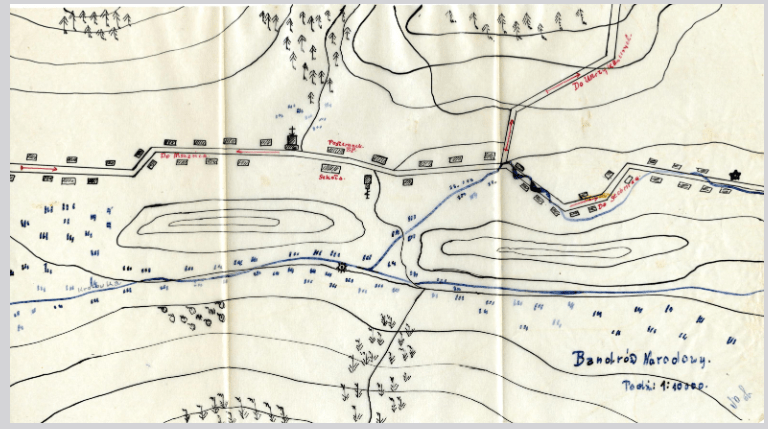
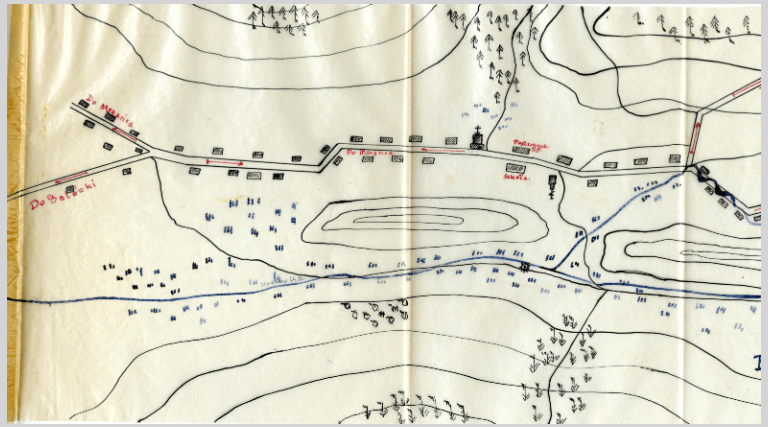
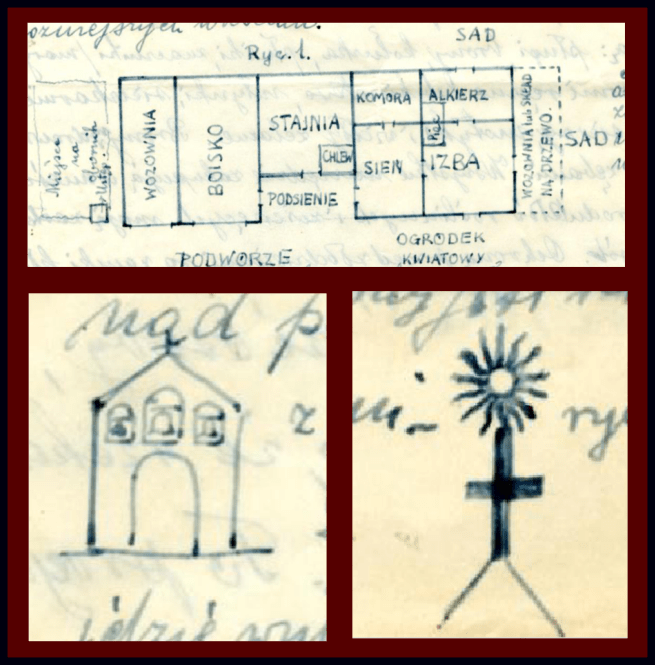
Imagery from Bandrów Narodowy questionnaire

Hoszowczyk

When it comes to the beliefs of the local people, along with various rituals, one cannot complain about a lack of them. For example, regarding a deceased person and a funeral, according to their beliefs, while the person is still alive but sick, milk should not be given from another house to the sick person’s house. This is because in the event of their death, the cow from which the milk came will lose its milk. If, however, milk was given and death occurred, then the housewife (the owner of the cow) runs to the water and blesses/crosses it with her hands, so that the cow does not lose its milk. The same applies to a house where a sick person dies: no milk must be taken out, otherwise the cows will lose it. Immediately after the death of the sick person, the members of the household stir/mix everything equally found in the house, so that the deceased does not take away the harvest. 

If there were two priests at the funeral, work after the funeral proceeds as normal; however, if there was only one priest, then for two weeks following the funeral, it is forbidden to wash clothes, grind grain, thresh, etc. on the ground, because the soul of the deceased is bound to wander around the farmstead buildings for another two weeks and its peace must not be disturbed (because one priest leads out the body, and the second, the soul).

When the deceased is being carried out of the house, they strike the coffin three times against the threshold, which is meant to signify that the deceased is bowing to the household members.

Once the coffin is placed on the cart, one of the household members places a loaf of bread on it. Then, as the coffin passes the border of the estate where the deceased lived, one of the household members quickly removes the bread so that the deceased does not take the harvest’s fertility with them. Upon returning from the funeral, the household members consume this bread…

Serednica

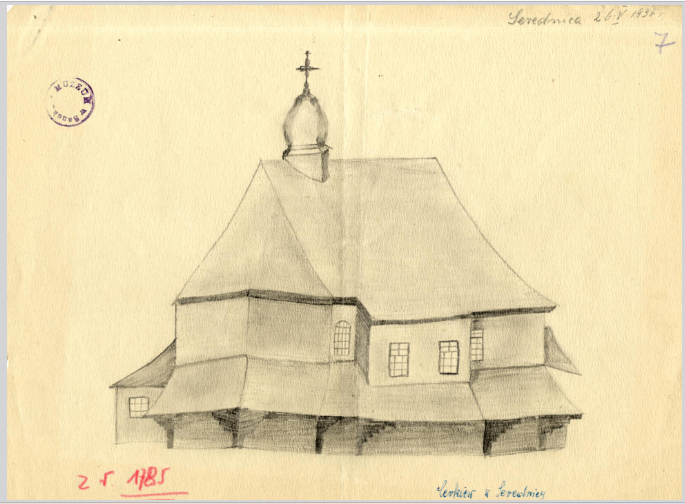
The interesting, mysterious world of spirits, upiórs, superstitions, witches, and devils has many followers and believers in the countryside. There is such an immense power–a vast number of superstitions–that I will not manage to write them all down in today’s questionnaire; I will choose only the most interesting ones. When the head of the family dies, the sons walk for three days with their heads uncovered, and the girls with their braids unbraided, because otherwise the spirit of the deceased would haunt them for not paying him proper respect. From the house at that time, it is forbidden to lend or give anything away. When they carry the coffin out of the house, they strike it three times against the threshold of the cottage as a sign of the deceased’s farewell to the home, and so that he would never return under any guise after death and would not haunt after death. They also believe in upiórs, i.e., people who have two hearts, and after death, they transform into upiórs that roam around the cemetery and terrify residents.

In addition to spirits, they believe in various superstitions. On Mondays, no business should be started, because it will not succeed. On Fridays, one must not start doing laundry, because the linen will tear. In the evening, it is forbidden to sell dairy products, because a witch will take away the cow’s milk…

Questionnaires without monsters

Berehy Dolne and Górne, Brelików, Dźwiniacz Dolny, Jałowe, Jasień, Leszowate, Łobozew, Łodyna, Moczary, Równia, Stankowa, Teleśnica Sanna, Ustianowa


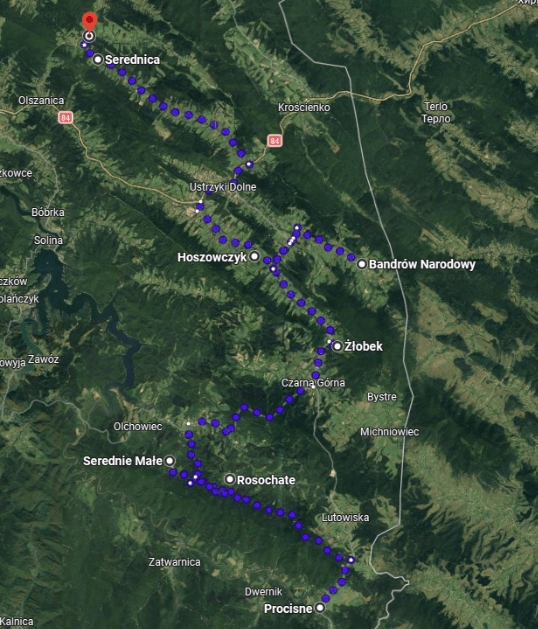
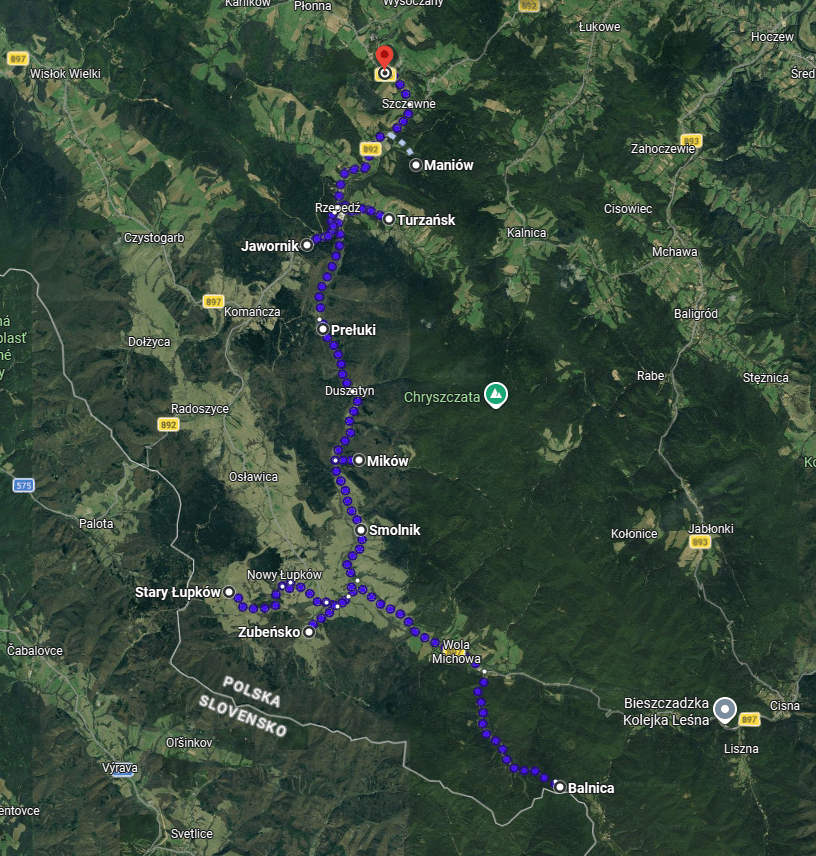
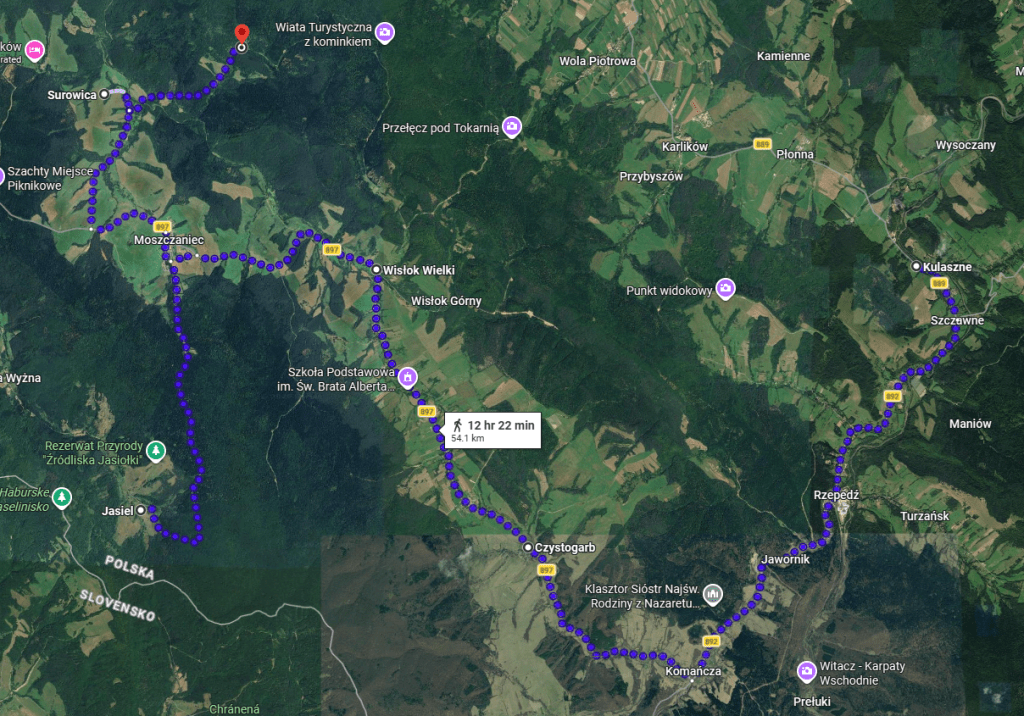
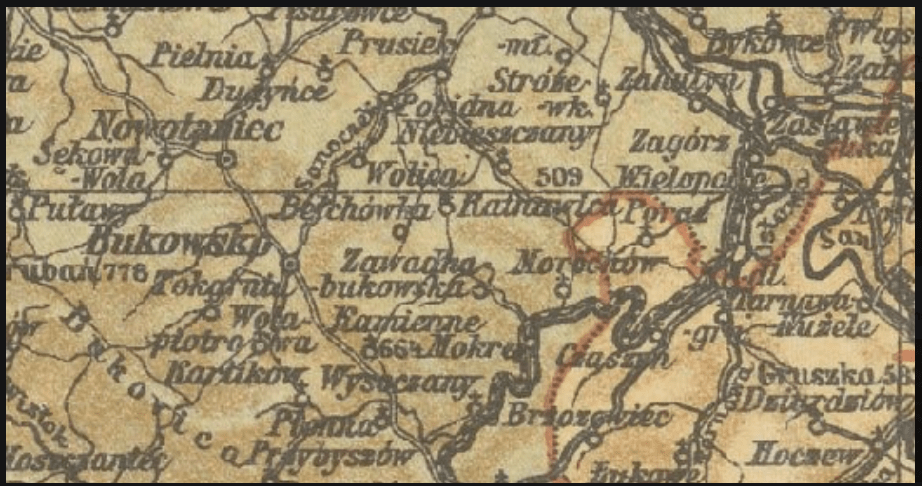
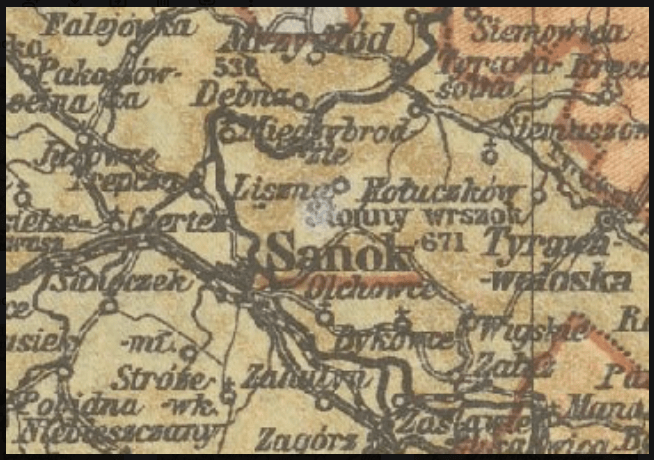
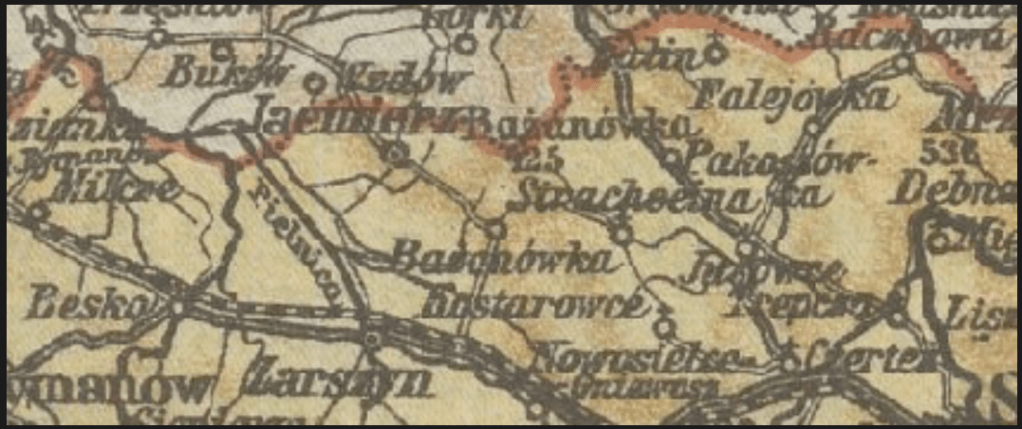
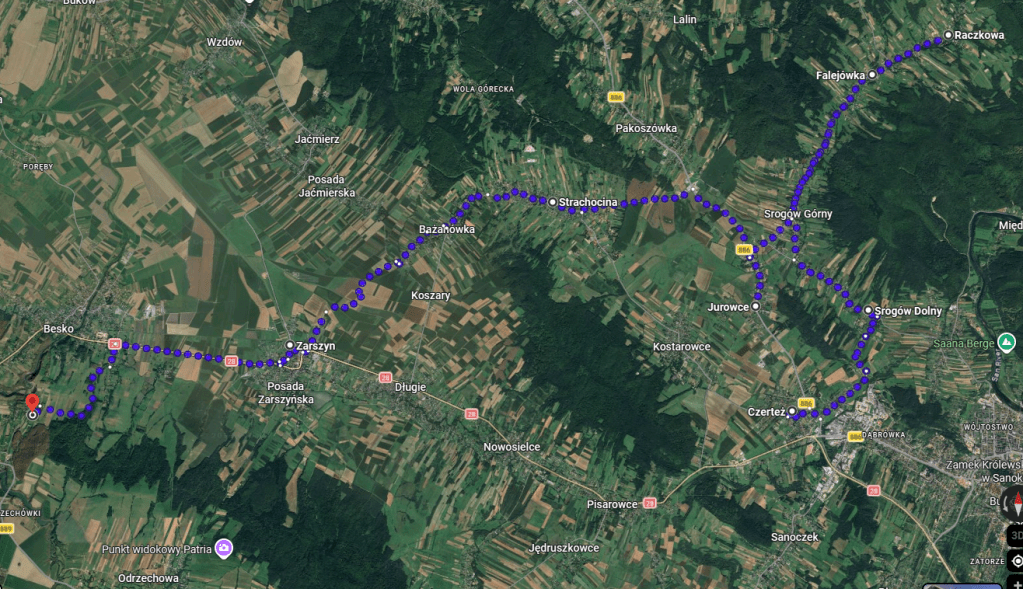
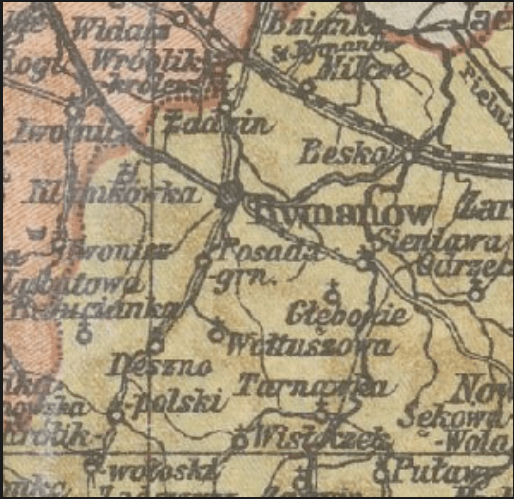
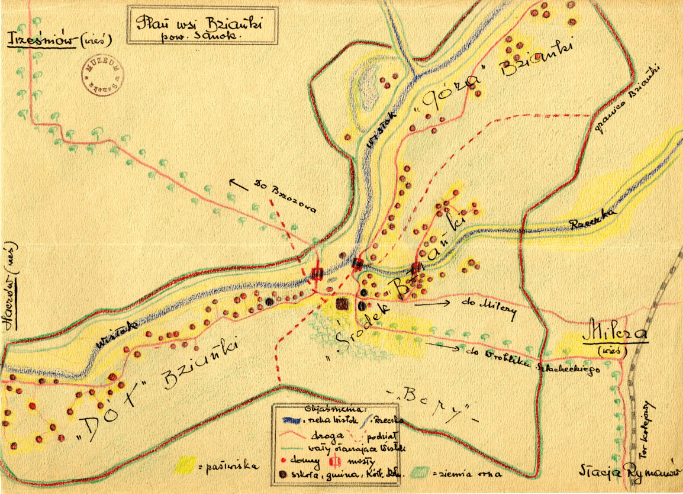
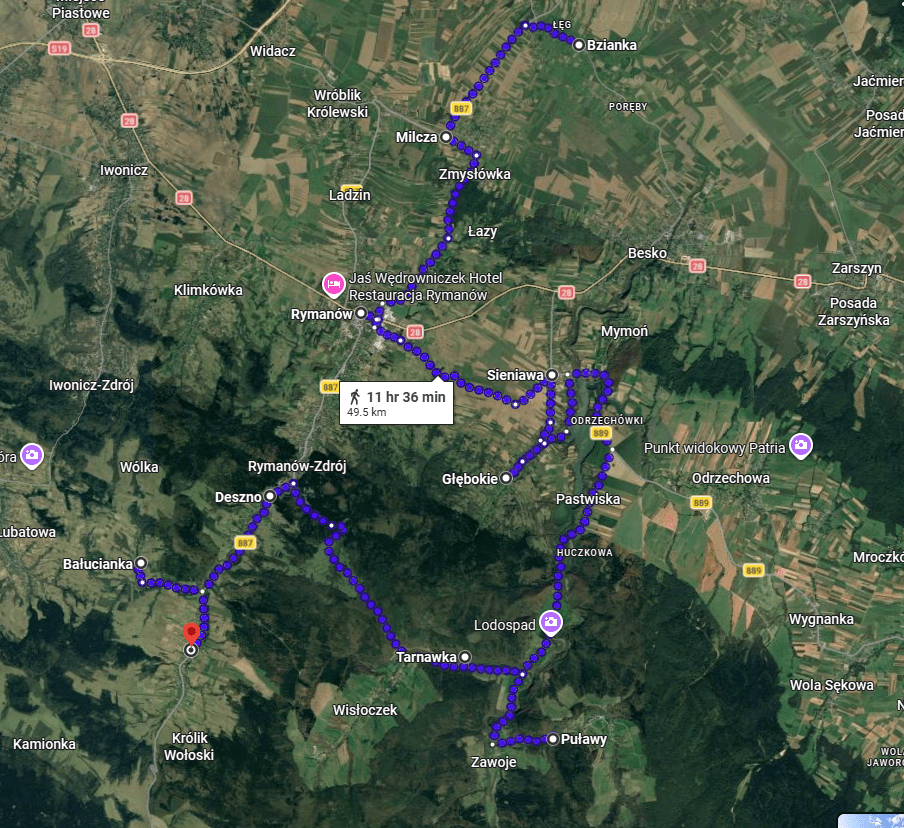
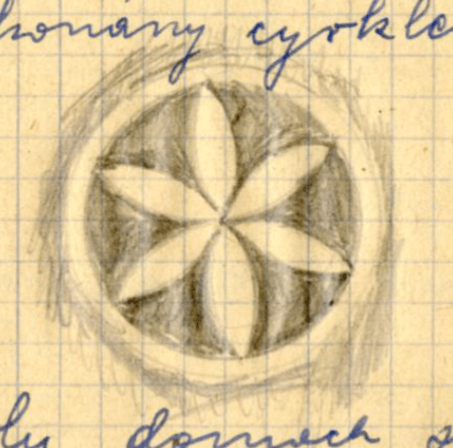
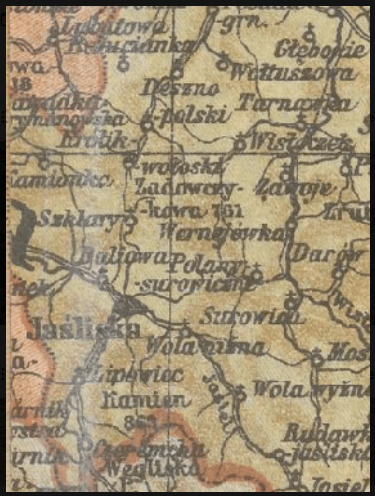
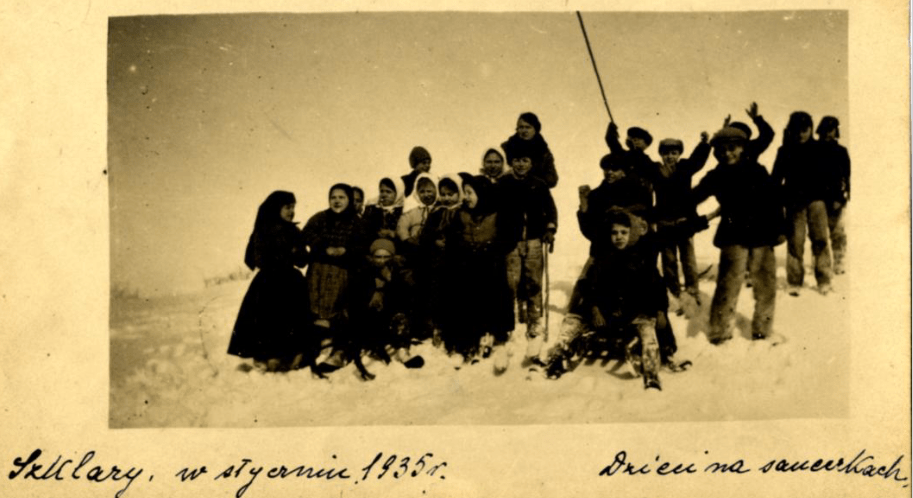
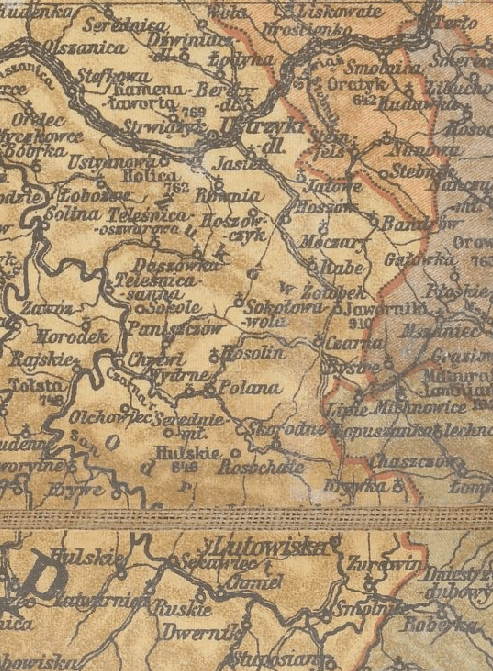
Images are found within the questionnaires, themselves, and are in the public domain. Please credit the Sanok Digital Library, not this site. Route maps from Google, vintage Galicia map from polona.pl, translations by Google.

<– Previous: Lesko County

(Part 3) Komańcza Gmina: Vampires, Witches, and other Terrifying Creatures in the School Inspectorate Questionnaires 

This is the third of five parts in our project translating information on pre-WWII beliefs in vampires, witches, monsters, demons, death rituals and superstitions in specific villages. This post focuses on modern-day Komańcza Gmina. This information was provided by local school officials to the Sanok School Inspectorate in the late 1930s. The original documents and metadata are available online from the Sanok Historical Museum through the Sanok Digital Library.

To learn more about the scope and purpose of this project, see Introduction: Vampires, Witches, and other Terrifying Creatures in the Sanok School Inspectorate Questionnaires 

Part 1: Krosno County

Part 2: Sanok County (minus Komańcza)

Part 3: Komańcza Gmina

Part 4: Lesko County

Part: 5 Bieszczady County


Komańcza

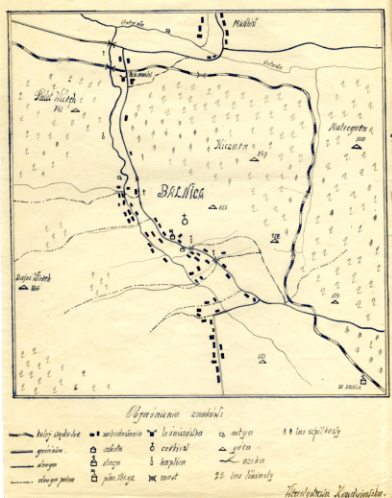
Balnica

They place a dying man on a bench and spread straw for him, so that it will be easier for him to die. When he dies and is already lying on the table, they take care that a cat or a dog does not pass under him –because then he will not become stiff. For they believe that a person who does not become stiff, if a cat or a dog passed under him, is an upiór. They perform protective rituals such as pouring poppy seeds into the mouth of such a person to prevent them from returning to their village or harming the household and cattle. They carry the coffin through the door in such a way that they strike the doorway three times, and its handle against the door latch. Along the way, they scatter poppy seeds behind him, and into the grave they throw money for every deceased person.

They believe in the evil eye. They throw a knot into the water. If the knot sinks and falls to the bottom, it means the sick person was afflicted by the evil eye…

…On Maundy Thursday, after the evening service, people leaving the church do not look back, because whoever looks back will die this year.

Zubeńsko

They believe that human souls, whose bodies do not rot after death, turn into upiory that torment the household members. To avoid this, immediately after the funeral, they scatter poppy seeds all around the grave, which the deceased must gather; this takes so much time that they will not manage to finish before dawn. On the other hand, so that a child does not walk after death, a piece of skin must be cut from the ear, or a nail must be driven into the forehead. They also believe in places haunted by the devil, who deceives man by taking the form of some animal, most often a goat or as will-o’-the-wisps. In connection with these places, the most diverse stories circulate, more or less sinister depending on the degree of fantasy or imagination of the storyteller. The day of terrors is Thursday.

They believe in witches who take milk away from cows and can cause an illness in a person, through the evil eye, manifested by severe shivering and nausea “nud pade ne szołowiska”. To get rid of it, one needs to throw a burning ember into water, preferably holy water, then drink it, and for good measure, wash the face and wipe oneself with the shirt one is wearing. To make the whole procedure more effective, fumigate oneself with burned herbs blessed on the Feast of Our Lady of the Herbs…

Łupków

Belief in upiórs – the still warm body of the deceased is considered the dwelling place of the upiór. They would drive a nail into a child’s head; for an adult they would bury and sprinkle the grave with poppy seeds, believing that before the spirit can gather all the poppy seeds, the rooster will crow.

Smolnik ad Baligród

Belief in upiory. We know that an upiór can reside in an unbaptized body. They drive a nail into a child’s head, bury others, and sprinkle poppy seeds over the grave, so that before the spirit can gather the poppy seeds, the rooster will crow. Belief in casting spells, taking milk away from cows.

Mików

There are kinds of fears and ghosts that the local people connect with a deceased person; what other beliefs and superstitions exist are in connection with the days of the week, month, and year…

…There is a custom known as “koły”—youth gatherings featuring drumming, kissing, and various forms of mischief and revelry. Despite the clergy’s efforts, this pagan custom cannot be eradicated. The people are very fond of attending religious festivals (odpusty), though often more to visit family than for religious reasons. During these festivals, people’s behavior in the churches is often inappropriate; they chat and walk out during the service. They are particularly fond of the blessing of water at these events. The population is superstitious, frequently seeking the advice of fortune-tellers—whether regarding the construction of a new home, a trip to America, marriage, or a theft. Such a fortune-teller can be found in almost every village. There are also “healers” whose consciences bear the burden of ruined health and lost lives. Poverty and low levels of culture foster this situation. Pagan customs such as Kupala (bonfire festivities) for St. John’s Day and Rusala (the Friday evening before Pentecost) have also survived.

Prełuki

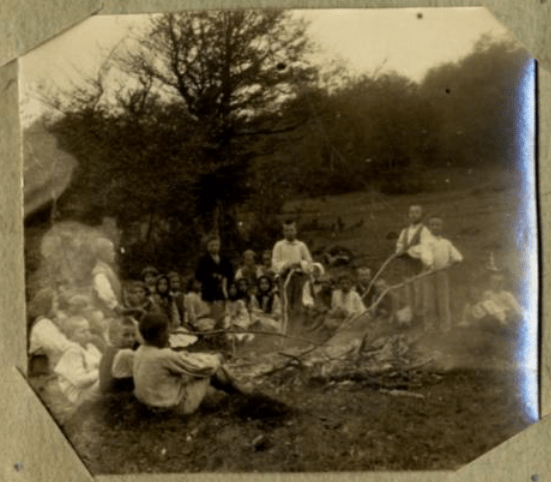
Crosses and shrines were erected either for a specific intention or in places where, as people say, ghosts used to appear.When someone dies, in the evening relatives, older neighbors, youth, and children gather for a so-called “kola” [circle]. They pray, sing pious hymns, read psalms, and also arrange various games, such as “shoeing the girls”, hitting, or “roasting the rooster”. The deceased is laid on boards supported by two stools on straw covered with homemade linen. On the first night after the funeral, they place a lit candle, bread, salt, water with a bowl, and a towel on the table, because they believe that the soul needs all of this. On the first evening after the funeral, they walk with a veiled candle around the corners to see if death is anywhere. When they place the deceased into the coffin, they give him some blessed herbs, a piece of a bread roll, garlic, and money. On top, some people sprinkle him with poppy seeds, so that he twists and troubles himself for as long as it takes to gather that poppy seeds, so that he does not walk after death. Grain is scattered behind him, so that he does not take the harvest to the other world and so that crops will grow. From the linen fabric given to the deceased, they pull out threads, so that flax and hemp will grow. When they carry the deceased out of the cottage, they knock the coffin three times against the threshold as a sign of gratitude for everything, because they believe that until this time, the deceased still knows and feels everything. Things of the deceased are burned or given to the poor. The straw on which he lay is carried to the river bank and burned, watching the rising smoke, inferring where this soul will return whether to heaven or to hell. The population seems generally pious, likes to go to Sunday services, devotions, and indulgences, but they strongly believe in witchcraft, superstitions, quack doctors, etc…

…On Christmas Eve, besides hay, straw, and a large loaf of bread, they bring a piece of a plow—a coulter—and an axe into the cottage to place under the table, and they encircle all the table legs with a chain, upon which they keep their feet during dinner so that they might be strong and healthy like iron. On the first day of Christmas, a woman is not allowed to enter the cottage first because they believe in the so-called “połazyk” or “łazik,” and if a woman enters the house, it is a bad omen for the whole year, and if any misfortune occurs, it would be blamed on that person. The local people also believe in so-called “bisiurkinie,” who bewitch milk and take milk away from cows, and this happens mostly before St. George’s Day. To prevent such a witch from entering the cottage, they often place a harrow, a plow, and an axe before the door, and they also encircle the entire homestead with poppy seeds.

Jawornik

The local population is not pious. Inside the church, during the service, talking and sleeping are constantly seen. When the priest delivers a learned sermon that is not interspersed with interesting stories, they leave the church. On the other hand, they love weddings and music so much that they bring infants with them, and even if uninvited, the whole village turns out. They believe in fortune-tellers and folk healers and spend money on them. When a cow falls ill, they immediately fumigate it with a burnt swallow’s nest and smear its eyes with water colored with scrapings from someone else’s stable. On Good Friday and every day before St. George’s Day, women run around the stables naked (before sunrise) and scrape the thresholds of neighboring stables where the cows are. They also cut the tails of other people’s cows and fumigate their own stables and cows with the burnt hair. When someone is bitten by a viper, they take a brand-new small knife and give it to a folk healer, so that he may cast a spell over the bite

They do not have favorite songs. At weddings and music gatherings, the youth sing Polish and Ruthenian military songs. At a funeral, one of the deceased’s family members walks, crying out with a weeping voice, recalling the good deeds of the deceased. When the deceased lies on the bench, the living gather for the so-called ‘koły’ (circles/rounds). In these circles, one person portrays the deceased and performs a public confession, and then penance. Instead, there is laughter, shouting, and fighting. They do not act as if they came to pray. After the funeral, they stand around, eating and drinking just like at a wedding. 

Turzańsk

Some older people believe that the dead walk, so when someone in the village dies, they gather for the so-called “koły,” during which they tell each other various adventures and organize games. There used to be a customary game during which people hit each other, which is now disappearing.

Maniów

A dying person is placed on a bench, and straw is spread beneath them so that they may die more easily. After death, when they are laid out on the benches, they make sure that no dog or cat passes under him, because then the deceased will not stiffen. If, despite this, he does not stiffen, they consider such a person to be an upiór, who after death returns to strangle cattle. Unless someone prevents this using secret practices, the upiór causes death to people.

An Upiór-Man is buried differently. They cut off his head and place it between his legs, and they nail the coffin shut with three nails, driving them into the head, heart, and legs. Then he will never leave the coffin. They carry the coffin out in such a way that they lock the door with the handle, but take it off its hinges and leave through there. They scatter poppy seeds along the entire path, and they also put poppy seeds into the deceased’s mouth. They also scatter poppy seeds into the grave so that if he does get out, he will spend all his time gathering those seeds…

…When a child is born generally calm, but suddenly at some point starts screaming and crying, people do not understand what happened and say it caught “from church” (the name of an illness). Then, a woman goes to the cemetery with an old pot (at whatever time the child started screaming). She takes soil from the most recent grave into the pot and water from a stream. She mixes this mud and rubs it on the child moving away from herself, using the back of her hand. Afterward, she returns the soil and the pot to the cemetery.

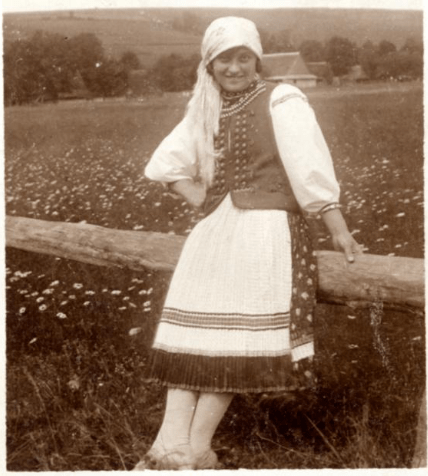
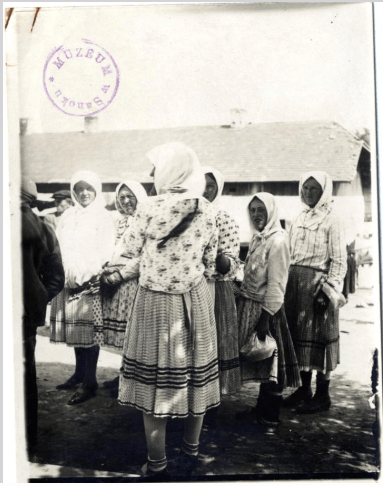
Maniów–Lemko woman

Kulaszne

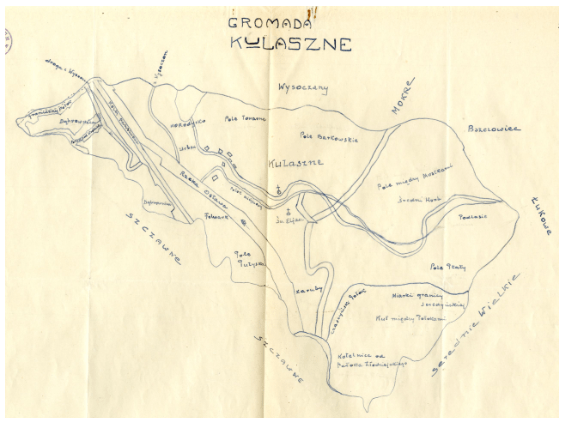
The population devoutly believes in all kinds of ghosts, and is superstitious. A dead child is placed with a wax ring on its finger, and two coins in its hands, so that it might ‘buy its way in’ at the gates of heaven. The old deceased often walk the earth, shrieking, and there are incidents where they cause great harm to their siblings or children. Here is what a farmer told me about his deceased father:

“We buried our father properly, and he had a nice funeral, and we dressed him well; it was apparent, however, that he was not entirely satisfied, for every third night after the funeral, he would come to the barn and bring bundles of grain and scatter it around, disturbing the cattle. There was no helping it, and this went on for quite a long time. During this time we suffered a lot. We went with our affliction to a peasant in [Usijaw], who, having arrived at our estate, confirmed the presence of an upiór. He ordered us to dig the “gates” from under the house. Finally, when all that did not help, we went to the cemetery, dug father up from the grave, and drove a nail into his head so he would not come back anymore. This measure proved to be truly effective, because since then we have been living in our former peace.”

Another farmer has a similar story.

Kulaszne–Forest Festival


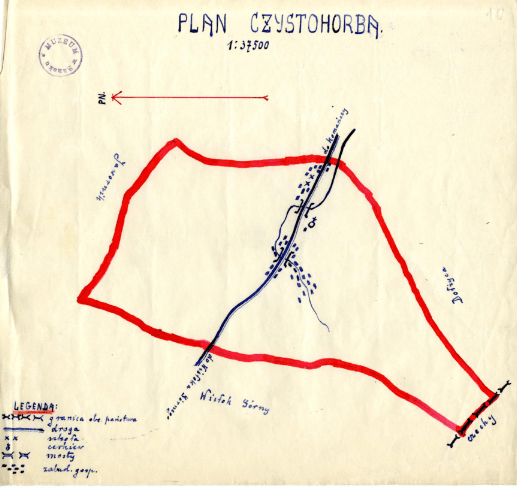
Czystohorb

The local people believe in specters and spirits. When a family member dies, a Holy Mass is offered so that the deceased’s spirit does not haunt the living. There are many such superstitions; for instance, if someone in the village dies, no work may be started on that day.

On St. Andrew’s Eve, girls smear their hands with honey and flour, then offer their hand to a dog; the direction in which the dog licks it indicates the direction from which a future husband will come.

On the night of Maundy Thursday, farmers keep watch in the stable, fearing that witches might transform into various creatures or cast spells to steal the livestock’s milk.

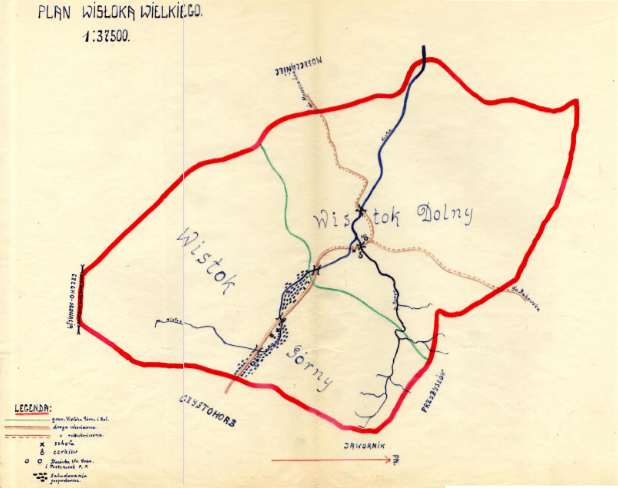
Wisłok Dolny

When someone dies, people go to the so-called “świecenie.” The elders sing then, while the youth play pranks and mischief; no one is allowed to sleep in that house. After the funeral, they host a feast, mostly inviting the priest. When the deceased is remembered, one must give an offering. Once the sun sets, it is forbidden to take out the trash, otherwise someone will die. The house where the deceased lies is swept by someone from a different house. When trash is burned and the smoke blows toward a certain cottage, they claim someone will die there. They forbid crying, because if one cries, the deceased will be wet in the afterlife. They put holy water in the coffin so that the body does not decay. After the funeral, they place a bowl of water and a towel in the spot where the deceased lay, so that the soul can wash itself. Deceased husbands visit their wives and consort with them; if a wife wants to free herself from him, she must turn the deceased’s wedding clothes inside out.

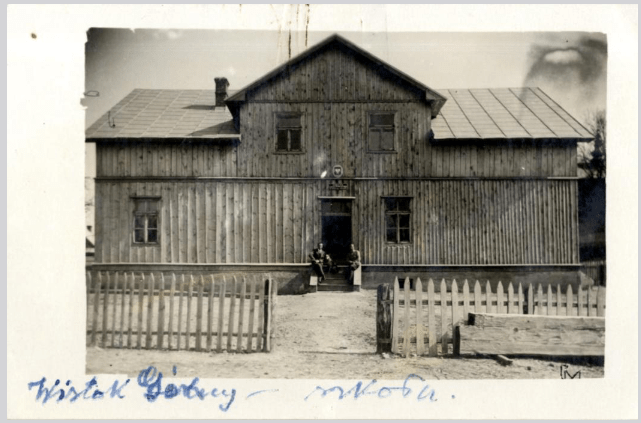
Wisłok Górny

The local population believes in ghosts and spirits associated with the deceased person. They believe that the spirit of the deceased returns after death and takes revenge on those who troubled him during his lifetime. For example, the locals tell of such an event. A few years ago, a peasant died whose spirit returned and took revenge in a terrible way on people and animals—and this lasted for a year. Divine services and prayers did not help. So they brought in a Czech sorcerer, who allegedly drove that spirit back into the grave—then everyone went to the cemetery, dug up the grave, and cut off the deceased’s head, from which blood allegedly poured. From that moment on, the haunting in the village stopped.

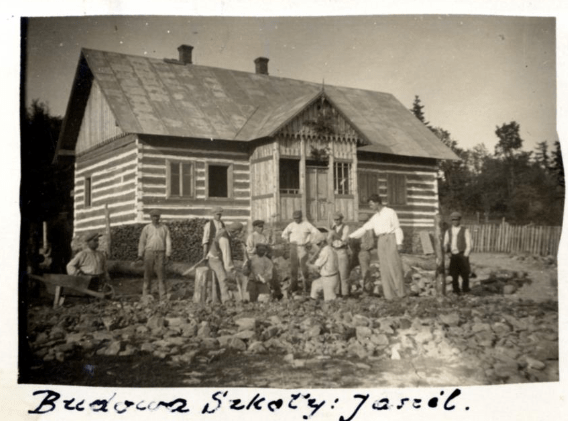
Jasiel

When a corpse is lying in the house, they do not sweep the cottage; only after the corpse is carried out do they sweep the room and burn the sweepings so that the spirit does not return for anything. While carrying the corpse out of the cottage, they move the seed and manure—so that they do not “die” (spoil/lose their vitality). On the Feast of the Annunciation of the Blessed Virgin Mary (March 25th), they lean harrows against the stable doors, and in the morning they check if the doors and harrow are undisturbed; if they were moved, it means a “prasorka” (i.e. a witch) visited, bewitched the cows, and there will be no milk. 

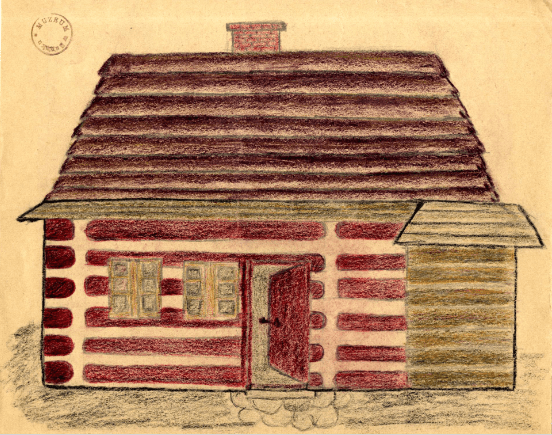
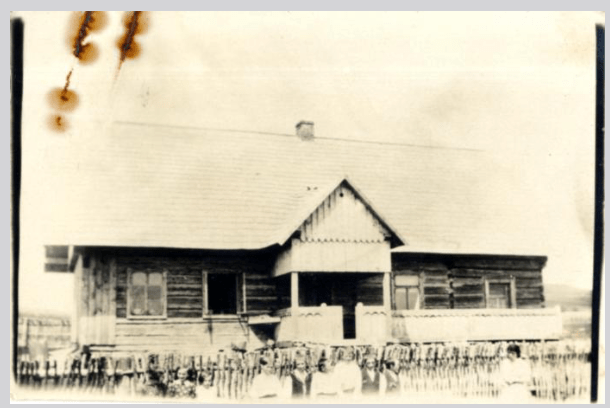
School Construction:  Jasiel

Jasiel–Lemko type

Surowica, Darów, Moszczaniec

The local population treats the deceased person very naturally. Candles burn near the deceased, and in the evenings people gather, mostly youth of both sexes, for the so-called “swityło.” After singing a few songs, the attention of everyone gathered turns to various games and pranks, in which the deceased is often used; when moved subtly, it causes general panic and escapes from the house, only for everyone to return moments later and continue doing the same. The deceased is usually buried the day after death. After a burial, a wake is never held without alcohol (denatured), which must not be forgotten. Generally, the deceased person does not cause any fear among the population. The people believe that the soul of the deceased sometimes walks after death, so rumors often circulate that it has appeared to this or that person. For instance, a father who left behind a widow and eight children is said to have walked after his death. He visited those farmers who had wronged his family after he passed away. Whichever doors were locked against him, he would break them open, and after entering the home, he would smash pots and bowls. Anyone he touched died. He only stopped his visits after a Holy Mass was offered for his soul.  More various stories circulate about death, which appears in different forms.

People here believe in ghosts that are said to appear around midnight near roadside chapels and unblessed crosses, or those erected with improper intentions. Near a chapel next to which an old woman allegedly hanged herself on a tree, people passing by at night often see ghosts in the form of goats, cats, horses, humans, and others, and these disappear after the beholder crosses themselves.

The local population holds a great many superstitions; a crow cawing overhead, an owl hooting, a cuckoo calling, a cat or a hare running across the road, or an old woman crossing one’s path—especially in front of them with empty buckets—is believed according to their superstitions to bring bad luck. Therefore, various curse words are hurled after them (“may it burst”), and sometimes rocks or whatever else is at hand are thrown…There exists among the people a belief in the so-called “incantation” curing of diseases, e.g., after a bite of a human or an animal by a viper, the bitten one should be saved only through an incantation. The words spoken during this are a secret of the charmer. Only some possess the power of incantation…

…They treat their cattle entirely by themselves, among which they only practice “incantations,” always believing that the animal’s disease is caused by some witchcraft cast by malicious people to cause grief to the owner…

Not many tales, legends, or stories circulate here, and even those sometimes lack any deeper meaning. Among others, there is a story about death: To a lonely housewife, one autumn evening, comes a tall female figure, dressed in white. She asks the housewife to let her warm herself a bit by the fire, as she is old and, moreover, tired. Then she asked for warm water to wash herself after a full day’s work. When the housewife granted her request, the newcomer arrived and undressed, and furthermore asked the helpful hostess to wash her back. Wishing to fulfill her wish, the hostess approaches and, seeing only a skeleton, realizes whom she is dealing with. Somewhat frightened, she asks why the lady has such dry, bony shoulders? She quickly receives an answer that it is from very hard work and from human tears shed everywhere after each of her appearances. She complains that Lord God assigned her such an unfortunate profession. After the ceremony is finished, the newcomer goes out into the field and returns after a moment with a long, sharp scythe, which she left against the wall. She turns to the housewife and, ready to strike, says that out of gratitude for the kindness the housewife showed her, she will shorten her torments and valley of tears, and take her to the other world, where it is very good. The latter, not wanting to die, does not trust the flattering words of Death, and, terrified, begins to beg her to allow her to eat a few more apples. They go out together into the orchard and begin eating apples. Suddenly, the clever housewife, seeing a hole in an apple that a caterpillar had already left, tells Death to get the caterpillar out of the apple. Death puts in first one finger, then her whole hand, and, finding nothing, turns to the housewife saying that there is nothing left inside. The housewife, however, firmly maintains that she sees a caterpillar there, and again commands Death to crawl inside the tiny hole. Meanwhile, she prepares a small peg and, when Death has completely hidden inside the apple, she tightly plugs the hole with the peg. Then she takes the apple and buries it in the ground in the cellar. A year passed, the housewife forgot about the apple, and Death remained trapped inside it. While preparing the cellar for potatoes before winter, she digs up the half-rotten apple with the peg inside it. The small peg driven into the side makes her wonder, so she gives it a tug and pulls it out. Before the hostess could realize what was happening, the very same figure of the woman she had washed a year before jumped out of the hole. Death, however, did not tarry with her, but ran as fast as possible to the dwelling, where she came upon her scythe, which the hostess had hung on the wall. Angered that she would face a harsh scolding for her extreme laziness, and wanting to make up for lost time, she mowed down half the village at once, and finally returned to the familiar housewife and, without asking anything, cut off her head. Since that time, she rarely submits to anyone, but works according to her divine instructions.

In Darów, a tale circulates that a few hundred years ago, a wealthy lord named Syrniak lived here. Once, the cellars of the manor, filled with barrels of wine, collapsed. To this day, the cellars are said to be located under the meadow, which received the name “Syrniżanka” from this event. Not far from the manor was a large pond, which was drained after the lord’s death. Its grass-overgrown bottom is a pasture today and bears the name “Staw” [Pond]. Beyond it, further away, is a marshy meadow known as “Luczysko.” There is one spot on this meadow where no one dares to stand, because whoever stands there is overcome by sleep; if they do not resist it, they fall asleep and die. If they are immediately woken up by someone, they fall gravely ill and die within a week.

Among the population of Moszczanica, a legend is preserved that a long time ago, the village, along with its small cerkiew, sank into the ground due to a curse, right on Easter. Supposedly, to this day, the sounds of bells rise from beneath the earth, but only once a year at midnight, just before Easter Sunday.

Surowica

Moszczaniec

Moszczaniec School

Questionnaires without monsters

Komańcza, Osławica, Polany Surowiczne, Rzepedź, Sczczawne, Wola Michowa, Wysoczany

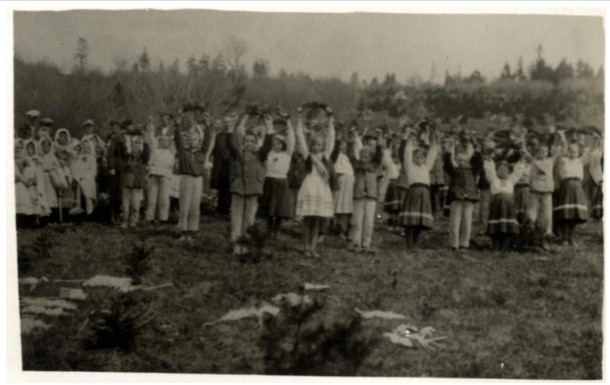
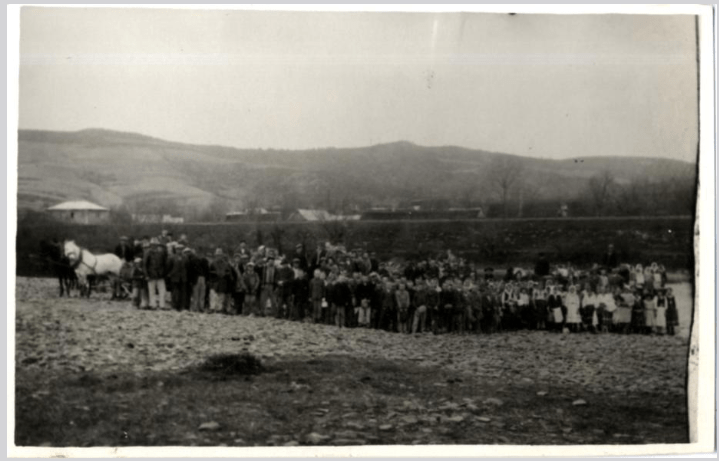
Rzepedź Forest Festival


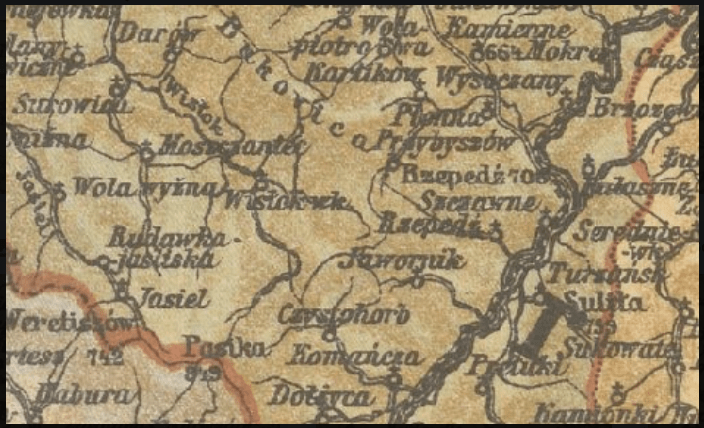
Images are found within the questionnaires, themselves, and are in the public domain. Please credit the Sanok Digital Library, not this site. Route maps from Google, vintage Galicia map from polona.pl, translations by Google.

<– Previous: Sanok County

Lesko County: Next –>

(Part 2) Sanok County: Vampires, Witches, and other Terrifying Creatures in the School Inspectorate Questionnaires

This is the second of five parts in our project translating information on pre-WWII beliefs in vampires, witches, monsters, demons, death rituals and superstitions in specific villages. This post focuses on Sanok County, excluding Komańcza Gmina, which will have its own post. This information was provided by local school officials to the Sanok School Inspectorate in the late 1930s. The original documents and metadata are available online from the Sanok Historical Museum through the Sanok Digital Library.

To learn more about the scope and purpose of this project, see Introduction: Vampires, Witches, and other Terrifying Creatures in the Sanok School Inspectorate Questionnaires 

Part 1: Krosno County

Part 2: Sanok County (minus Komańcza)

Part 3: Komańcza Gmina

Part 4: Lesko County

Part: 5 Bieszczady County


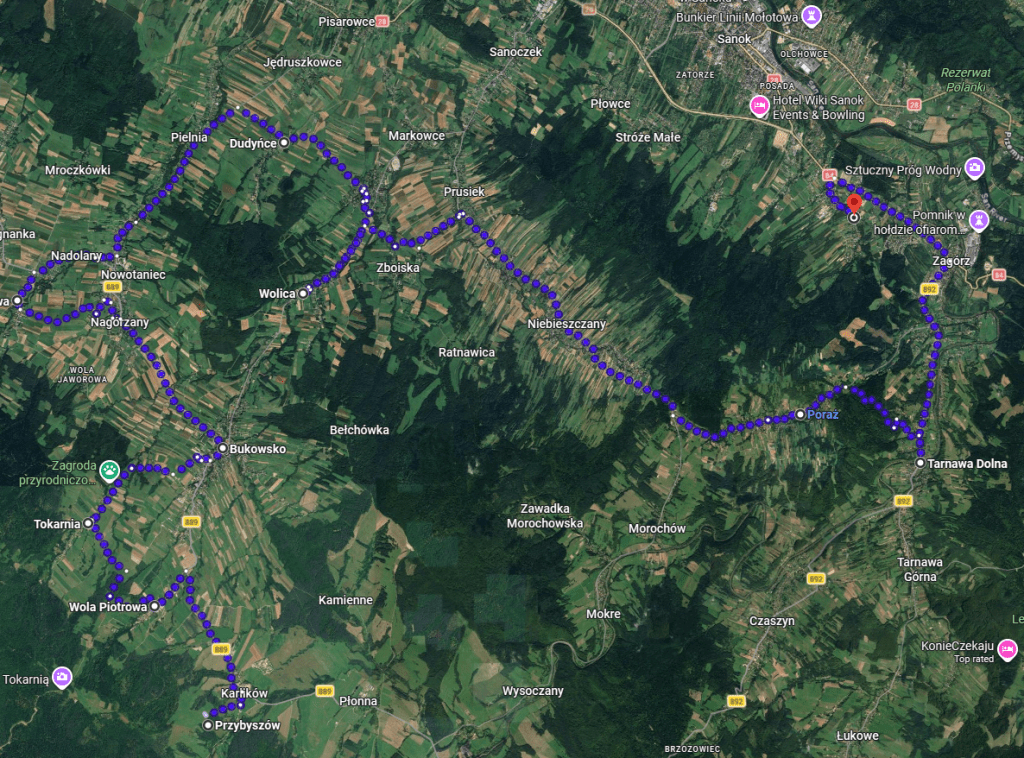
Bukowsko

Przybyszów

The population is convinced that the spirits of certain deceased individuals walk the earth at night. They willingly give to Romani because they fear that a Romani person might cast spells, for example, witches stealing milk from cows. They also believe every person has their own star. If it shines brightly, they are fortunate. If it is dim, they will experience misfortune.

Wola Piotrowa

The population believes in spirits (they roam the world at night until 12 o’clock).They believe in witchcraft (e.g., a witch stealing milk from cows).Girls go to fortune-tellers for help in love, etc. They attend the cerkiew and offer prayers – they make pilgrimages to indulgence sites, such as Kalwaria, Kalnica, and Sanok. The population says prayers in the church and at home, morning and evening.

Tokarnia

The population is under the impression that the spirits of some of the dead walk the earth at night. Romani people are willingly supported, because they fear that a Romani person might cast a spell, e.g., a witch taking away milk from cows. Every person has their own star—if it shines brightly, they are happy/fortunate; if it is dim, things will go badly for them.

Bukowsko

The local people do not really believe in fears related to water, but various superstitions and beliefs prevail here, e.g., if a cat (worse if black) crosses someone’s path, misfortune will happen to them – It is bad to meet a woman first thing in the morning, or a person carrying empty buckets. After sunset, they will not sell milk here, because the cow will lose its milk – On Christmas Eve, they will not sell anything to anyone, they will not give, nor will they lend anything – Generally – there is a great abundance of superstitions and beliefs here.

Bukowsko Fair

Wola Sękowa

Spiritual culture is very poor. People believe in witchcraft, evil spirits, and so-called zamawiacy who are capable of casting spells; for example, they can take away or spoil a cow’s milk, bring misfortune to a household, or illness to a person. In case of illness, they usually turn to witch doctors.

Dudyńce

The population is quite superstitious, mostly the elders; the youth no longer believe in various haunts.

1). The people believe that a person who, when in life, talks to themselves while walking, will continue to walk for another year after death. They believe that such a person has two souls—that one goes to its predestined place, while the other walks around the village.

2). When someone from the family dies, no one dares to touch the quern-stones (hand-mill for grinding grain) for a whole week, because the soul is doing penance there.

3) When they carry the deceased out of the cottage, the family throws grain, they stand so that the soul goes with the deceased, and doesn’t stay behind. Before putting the deceased into the coffin, every family member grabs the deceased by the big toe, so that they will not be afraid of him in the future. 

The old folk believe in “boginki,” that if, for example, a mother leaves her child alone in a cradle, the “boginka” will come and swap the child. They even say that such an event actually took place. They believe that on Christmas Eve (or the Feast of Jordan), every housewife must pour holy water into the cooked food, otherwise, this “boginka” will poison the meal. No one will lend anything to anyone after sunset, especially nothing related to milk. – On the Feast of the Annunciation, no one will lend anything to anyone either.

Wolica

The population believes in the afterlife. They believe that the dead walk the earth and talk to the living. Old people repeat certain words spoken by the deceased, claiming to have heard them themselves. Superstitions and folk beliefs exist among the people. Once a year, on the feast of the Protection of the Mother of God on October 14th, they do not milk cows for the entire day, because they say and believe that the Mother of God takes this milk for baby Jesus. After sunset, they will not sell dairy products, because otherwise, the cows will milk poorly and the hens will not lay eggs well.

Questionnaires without monsters

Bełchówka, Karlików, Nowotaniec, Płonna, Zboiska


Zagórz

Poraż

Beliefs in ghosts and superstitions are not known to the local population. Generally, the inhabitants do not display excessive piety. 

Tarnawa Dolna

The local people believe in ghosts and spirits of the deceased – they believe that after death, the soul stays around the hut for some time and makes its presence known through knocking, rustling, tiptoeing, etc. For example, they believe that the spirit of a mother comes to the hut at night and takes care of her orphaned infant, feeding and putting it to sleep. They say that after death, a young child has a bruised back because it is being whipped by angels for the sins of the mother.

On the first night after the funeral, the spirit of the deceased comes to the cottage, where they place a full glass of water, bread, and salt on the table. When water is found spilled around the glass on the table, they believe that the soul came to visit.

Old people tell a story that over thirty years ago, the wife of a local Greek-Catholic priest, a Polish woman, died here. After her death, on moonlit nights, a female figure was often seen walking from the parish house to the church and back. She would enter the parish house and demand from her husband the rosary that he had promised to place in her coffin but failed to do so. This continued for a long time, until a missionary was brought in. He prayed fervently for her soul and hung a rosary on the cross upon her grave—and the spirit never appeared to anyone again.

Wielopole

The majority of the people are superstitious, for example, they believe that a deceased person hears everything until the first clod of earth falls onto the coffin. Or that on St. John’s Day, sorcerers roam around stealing milk. They consider Monday to be a heavy (unlucky) day, so they do not undertake any major work. And they believe in good yields when sowing during a full moon.

Zasław

The population is quite pious, participating in all neighboring indulgence feasts together with their children. They are superstitious and talk about terrors that appear at midnight over the river in the form of a flickering light. Under the bridge at midnight on Good Friday, a rushing sound can be heard, and a bright shadow, three meters long, flies back and forth. In the collapsed buildings of the unfinished factory, unusual things occur even during the day—smoke appears, and floorboards move by themselves. They also talk about a certain “black lady” wandering at night near the manor house. Others say that on the night of Good Friday, one cannot pass under the railway bridge because various animals block the way.

Zahutyń

The local population believes that after a person’s death, the human soul does penance at the site of its misdeed, sometimes appearing to people and asking for help…

…Few fairy tales and legends have been preserved: Wodniki or drowned men, and water nymphs appearing at night over streams, over the San River, as well as in swamps and marshes.

Questionnaires without monsters

Choceń, Czaszyn, Dolina, Kamionki, Łukowe, Mokre, Morochów, Olchowa, Serednie Wielkie, Tarnawa Górna


Tyrawa Woloska

Hołuczków

The inhabitants of Hołuczków—just like rural people in general—are superstitious. They believe in hexes, charms—above all, they believe in witches who steal milk from cows or make it unfit for use. There are even a few old women in the village whom the people consider to be witches.

If any housewife happens to churn more butter than her neighbor, or if she can afford to sell milk and cheese—she is a witch, a witch for certain. And immediately the gossips prove it because “Why don’t I have any, while she does—after all, I give food to the cows at milking time just like she does!”

Interestingly, they can get to work spying on a housewife suspected of witchcraft right away—day and night. And immediately, gossip spreads. A group of women gathers and starts making a fuss: “You know, yesterday she was smoking her cattle with something. And why was she planting some herbs the day before yesterday?” And that little herb does not grow long in the “witch’s” garden, because a few days later the “witch” complains, “Someone maliciously pulled the herbs out of my garden!” People fear such a witch and hate her. Out of fear of their spells, they invite witches to christenings, weddings, and other family rituals, so that they would not seek revenge on them later. 

If they were not afraid of bearing responsibility for their actions, many of them would have long ago said goodbye to this world. Not being able to kill a human, however, they take revenge on poor animals, into which these abominable witches allegedly transform from time to time. 

No more than three years ago, a forester, having seen a large toad on top of a manure pile in the evening, grabbed an axe to whack into the toad. The toad jumped away, but he claimed that he had cut off a piece of its leg. As chance would have it, on the second day one of those village ‘witches’ had a bandage on her hand.  Of course, it was because at night the forester had hurt her — while she was transformed into a frog. Clear as day.

This is how much the local population believes in witches. They are also afraid of spirits, which, having left human bodies, wander the world and terrify people due to some wrongdoings they committed. A spirit can also transform into a giant dog that startles horses grazing peacefully.This belief is also fueled by the downright incredible imagination of women. Not only do they believe what others say, but they are also capable of seeing and believing in what does not exist.

Bad luck is foretold by a cat that crosses the road, or an empty bucket carried by a girl hurrying to get water. No important work should be started on a Monday, nor should a brooding hen be set on eggs on the day someone died in the village. It is forbidden to give fire or butter to a female neighbor in the evening (witchcraft).

This conservatism of the people is interesting when it comes to their beliefs and superstitions. — A farmer or housewife will convince themselves a hundred times that these superstitions are only superstitions, that they have and can have no influence on their lives, and yet they do not stop believing in them. — It looks as if they could not do without what their grandfathers and great-grandfathers believed in, as if — they simply could not live without them.

Deep is the people’s belief in the afterlife. In connection with this, and also to honor for the last time the mortal remains, they wash the corpse very carefully, dress it, and lay it on boards, on plentiful straw,in the main room.  During the day, neighbors visit the deceased, recite prayers, and at night they gather, sing all night long, or tell each other tales. In the event of the death of a father or mother, the sons walk with their heads uncovered for three days.

They believe that if the deceased was honest, the soul goes to heaven, a sinner’s to hell, and sometimes it returns home at night around midnight and haunts. To protect themselves from this during the removal of the corpse from the room, they strike every threshold with the coffin three times.

If a girl dies, they put a small bottle of holy water and a small vessel filled with wheat into her coffin (why—they don’t know themselves).

After the death of a faithful one, it is forbidden to grind on hand-mills (querns) in the house for 14 days.

In the first year after the death of a family member, an unwhitewashed corner is left in the room, because according to their beliefs, the soul does penance in that place.

Questionnaires without monsters

Rakowa, Siemuszowa, Tyrawa Wołoska, Wola Krecowa

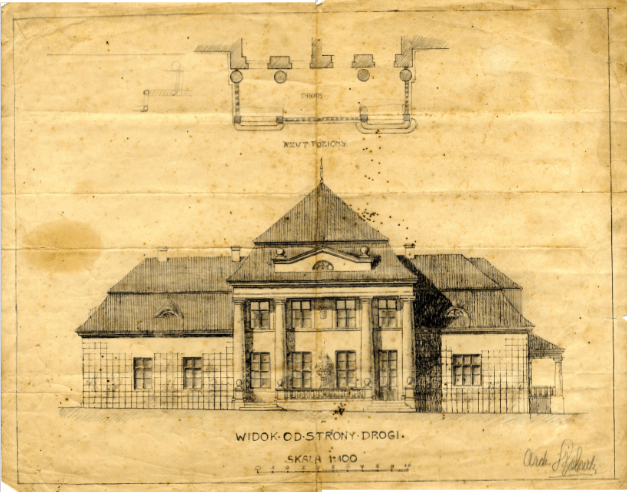
Blueprint for school in Tyrawa Wołoska


Sanok Gmina

Tyrawa Solna

Various superstitions are almost eradicated. Older people still sometimes believe in witches who spoil cows, or that it brings bad luck if an old woman crosses the road with empty buckets.

On the feast of “Widime” on December 4th, a neighbor will absolutely not visit another neighbor, because such a person would be yelled at right on the doorstep and not allowed inside.

Międzybrodźie

They believe that the spirits of the deceased return to haunt the living. By the corpse, they tell folk tales, chat merrily, or sing. They believe in the “gniećka” [the presser], a nightmare demon that tangles horses’ manes and suffocates people. They believe in the evil eye, in the power of incantations and sorcery, and they try to do everything to prevent spells. In this regard, women usually have the upper hand.

Liszna

The local people believe that some of the deceased walk after death, and there are even those who claim to have seen them. They say that the soul does penance in this world for certain sins. Until recently, it was said that one of the forest ravines was haunted. It was supposed to be the soul of an illegitimate child whose mother killed it and buried the body in that ravine.

Out of superstition, some housewives will not give milk and butter out of the house after sunset, saying that this negatively affects the milk yield of the cows. Some also believe in witches who steal milk from cows. They say that one of the farmhands saw such a witch who, before sunrise, while dragging a wooden milk pail through the dew, was saying: “I’ll take my share, but not everything.” Some time later, this farmhand, having led the horses out to the pasture, used the same spell, dragging the horse’s tether through the dew, and when he returned and hung this tether in the stable, milk began to drip from it. Formerly, “bohynki” (their name for boginki indicating a Rusyn origin) were also said to reside in the streams in the ravines, washing clothes and kidnapping small children. Nowadays, belief in superstitions and spooks is becoming less and less.

Bykowce

They believe that on St. George’s Day, witches can spirit away an infant left unattended. After death, a soul must do penance if it requires prayers for its salvation.

Załuż

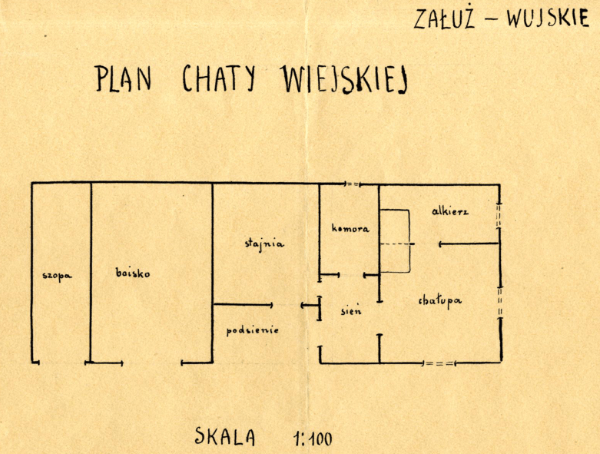
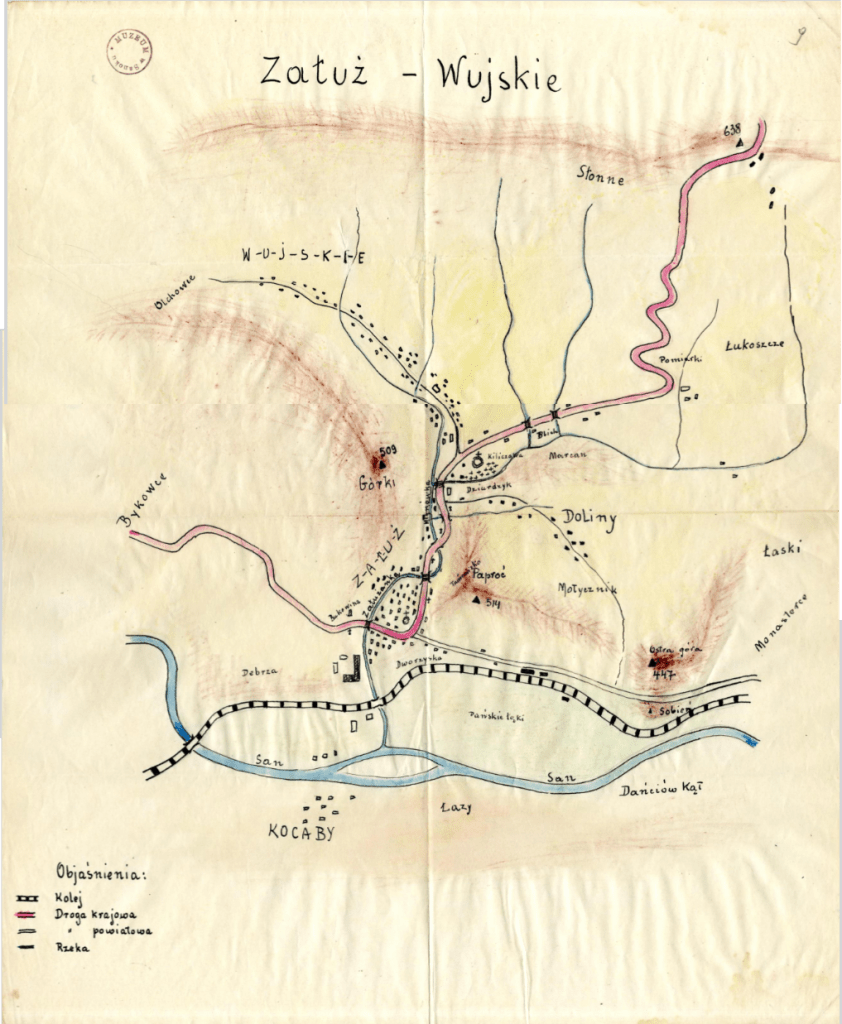
Recently, I was told that before the World War, witches used to live here. There was an incident where one of them cast a spell on a neighbor’s cows. So, the neighbor “lay in wait” for her. Standing by the gates, he saw a large toad crawling toward his stable. He threw an axe at the toad, cutting the toes off its foot. Investigating the matter further, the neighbor found out that from then on until her death, the witch was missing five toes on one of her feet.

Traditional folklore also includes beliefs about specific locations that were considered unlucky or inhabited by spirits. According to these local legends, certain areas within a landscape or even a home were thought to be better avoided. Narratives from this period often describe spirits appearing in various animal forms, which were believed to cause distress to those they encountered.

People believed there were remedies for such misfortunes. Historical accounts mention that if a person believed to be a witch was physically confronted, it was thought she would stop interfering with the livestock. To confront her, certain rituals were performed to draw her to a specific location. One documented folklore method involved boiling specific items—such as wire pins, juniper needles sourced from a cemetery—during a High Mass while reciting specific incantations. These practices were believed to force the witch to appear, allowing for further confrontation.

In 1925, I myself witnessed how a local dyak, who was also the commune secretary, accused one of the housewives of witchcraft. When carrying a deceased person out of the house, every threshold must be touched with the coffin as a farewell, and the seed grain and hatching eggs must be moved, otherwise the life within them will die. The same must be done in houses past which the deceased is being carried or transported. On the anniversary of the death, one must make an offering for a parastas. Until recently, food was brought to the deceased’s grave on this day. Relatives, friends, and acquaintances sit by the body of the deceased without interruption, and from time to time they are given vodka there. The youth tell each other various jokes, most often about ghosts. After the funeral, a funeral wake takes place in a tavern or in a booth next to the cerkiew, or for some in their home. They serve vodka, bread, and cheese…

…Most often, they take a person to the doctor only when they are already dying. Hence, there are many cases of death during the journey. Such a death outside the village borders also brings further unpleasantness; namely, it is not considered a good thing when a deceased person is brought back from “abroad” or outside the village… 

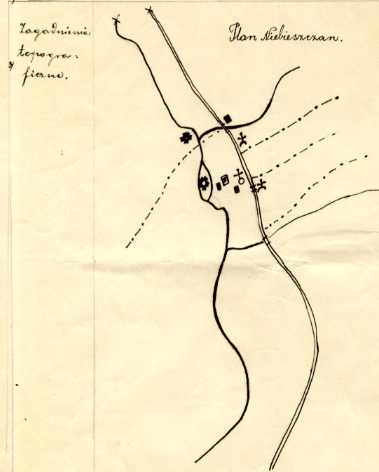
Niebieszczany

The population of this locality is pious. Some, especially the elderly, still hold superstitions, e.g., after sunset they do not give away or sell milk, or dairy products in general. They believe in the evil eye, which means that when someone has a headache, they throw a few glowing embers into a glass filled with water, and then, when these embers sink to the bottom, they wash themselves with this water 3 times, spitting 3 times while doing so…

…On the eve of Saint John’s Day, they burn “sobótki,” which means bonfires.

Prusiek

People believe souls wander around the village visiting their loved ones. They believe that from beyond the grave, the spirits look after their closest family members, helping them with advice and deeds. For example, a widow finds a beautifully plowed field in the morning, saying that her husband remembered her. Similarly, mothers visit and rock their children to sleep. They also say that spirits play wicked tricks on neighbors with whom there was no harmony during their lifetime. 

Stróże Wielkie

The local people believe that the soul of the deceased remains on earth for some time after death and appears to their loved ones.Mondays are considered to be hard days and not particularly lucky; Friday, on the other hand, is regarded as the luckiest day. On Saturdays, as well as on days preceding holidays, local superstition forbids women from spinning. Farmers also believe that if someone sows wheat on the Jewish Judgment Day (Yom Kippur), they will reap rich harvests. After sunset, nothing should be given out from the house, and the same applies to the day when a farmer’s cow has calved.

Stróże Małe

Superstitious population. They believe in evil spirits that take various forms and appear at night in certain places, so they also try to avoid these places. They believe in witchcraft. For example, a bad female neighbor can take away a cow’s milk, can spoil things, can cast a spell (witchcraft) and many others.

Dąbrówka Ruska

The people do not believe in ghosts and spirits, and while the elders speak of them, the youth laugh, resulting in the elders losing their faith in spirits and refusing to speak about it.

Of beliefs and superstitions, the following have survived: “after sunset they give nothing away; after a cow calves, they borrow nothing and give nothing away; borrowed items are returned and taken back on the day before Christmas Eve so that everything is one’s own; when a cat crosses the path, they throw a stone and then pass.

Czerteż

They believe they recognize shadows after a person’s death. When the heirs do not act for the spirit of the deceased, their soul haunts the house and smashes objects. Dreams come true, a fable deludes, they gossip, plums mean illness. A bad female neighbor casts the evil eye, causing headaches and vomiting. Three needles brought to a deep plate and arranged appropriately indicate whether the sick person is truly suffering from curses. It is absolutely necessary to wash oneself three times (face and head) in a stream, spit three times each time, and fumigate the head with wild thyme.

Sometimes a witch neighbor steals milk from a neighbor. Her cow then gives better milk in the exact amount lost by the harmed neighbor. Her milk is fatty and yields greater profits, such a sorcerer. Bewitched cows lose weight, moo, lose milk, and become restless…

…When Czerteż belonged to the Jurowce estate, it was covered by several morgs of land. Where “Złota Górka” (Golden Hill) stands today, it used to be among the least fertile areas and had difficult access. Even today, only very poor grass grows on it. The estate manager of Jurowce would assign this plot of land to whichever peasant he liked the least, or usually to some incompetent person.It so happened that this very plot was given to a hardworking and pious man who observed fasts. He once pointed out to the manager that he was making those doing serfdom labor work even on holidays without urgent need. For this boldness, he received a whipping, and as punishment, his good land was taken away. Instead, he was given the poor land, specifically including the aforementioned hill. As a rent payment, he was required to deliver each year to the manor 5 geese, 10 hens, 1 kopa of eggs, and 2 kopy of grain, and every 4 years, 1 fattened ox standing 3 cubits high. Furthermore, he was to work on the manor’s estate for 3 days a year, but within a single week. The peasant accepted this gratefully and set to work. Year after year he fulfilled his obligation; however, when the fourth year came for him to deliver the ox, he could not do so, because that very year his cattle died of a plague. The pious peasant prayed fervently to God for help, as this was the only recourse left in the trouble of the distressed peasant. For a whole week, the peasant prayed and fasted. As the day for paying the rent approached, instead of going to the manor, the peasant went up a hill to say goodbye to his plot of land, where he had worked for 4 years without even earning enough for the rent, but which he had nevertheless come to love. Exhausted, he fell asleep. In a dream, the estate manager appeared to him—the one who had been persecuting him—and ordered him to dig a pit, right in the spot where he was sleeping. The depth of the pit was to match the height of the ox, i.e., 3 cubits. When the peasant woke up, he understood the dream as a divine command—he brought a spade and dug. When he had dug a pit 3 cubits deep, he came across a pot filled with gold coins. The honest peasant brought the money back to the manor, and the landlord gave him ownership of a dozen or so morgens of land along with the hill, which the local population from that time on called “Złota Górka.”

Srogów Dolny

They have various superstitions that they believe in, for example: After sunset, they do not carry dairy products out of the house, so that the cows do not lose their milk. They believe that a witch can steal the milk and that the evil eye can cause harm; according to their superstitions, nothing may be gathered on St. Mary’s Day.

Falejówka

Before St. John’s Day, no one bathes in open water because the water is not blessed. Before the Feast of Our Lady of the Berries (Visitation of the Blessed Virgin Mary), mothers who have deceased children do not eat berries, because due to their greed, Lord Jesus would not give berries to their children. After sunset, they will give nothing out of the house, because happiness would leave the home. On Christmas Eve, as a rule, they will give nothing—likewise no glowing embers to kindle a fire in another cottage—because this brings about a fire.

Raczkowa

Among the population, a belief in the afterlife is deeply developed; they believe that the souls of the deceased can return to Earth, visit their homes, and sometimes even appear to people in various forms. According to folk songs, the deceased also returns if they do not receive complete clothing for themselves.

Near the deceased, they sing religious songs and pray the rosary. While escorting the body of the deceased to the resting place, they sing the Rosary and “Jesus in the Garden of Olives” (Jezu w ogrojcu). After the funeral, they invite their closest relatives and neighbors to a funeral wake (stypa) to honor the memory of the deceased…

…They also believe that a witch can steal milk from cows, and that this witch can be lured to oneself in such a way that for 15 days before Christmas Eve, one lays aside one log of firewood and one pin every day, and on Christmas Eve, one must light a fire with that wood and drive the pins into a cloth intended for straining milk, boil all of this. By the power of spells, these pins will prick the witch, who will certainly come to beg for mercy. They also believe in the power of “evil eye” and ward it off. If they drive or walk to town, and a cat or a woman with empty buckets crosses their path, they wait until someone else passes first, otherwise they will not settle their affairs successfully. 

Jurowce

They believe in the afterlife and that the spirits of the dead can return to earth, visit their homes, and sometimes appear to people in various forms. They sit by the deceased all night and sing religious hymns. According to beliefs, if the deceased is not given full clothing, they will walk after death. Everyone who attends the funeral must throw a lump of earth into the grave, contributing to the raising of the burial mound; otherwise, the deceased will come to claim that lump. After the funeral, those who carried the body, the cross, and the banners, as well as close neighbors, are invited to a gathering, or ‘funeral wake’, to honor the memory of the deceased. On Monday, they do not start any major work because it will not succeed.

On Christmas Day, they wish for a boy to come first in the morning as a “połaznik” (first guest), because a girl brings bad luck. All misfortune that occurs during the holidays is blamed on the “połaznik”. After the Christmas Eve supper, they bring a bundle of straw, which they spread on the floor, and the host takes a handful of straw and throws it under the ceiling beams; as many stalks stick to the ceiling, that many sheaves of grain there will be. There must be an even number of participants at the supper, because otherwise, one of the participants will die within the year. On the Epiphany (Jordan), they sprinkle the houses with holy water, and whoever runs home first will drive the evil spirit into others.  

On the Feast of the Annunciation, they do not touch any grain, because the winter crops would dry up. On Easter, they hang the shells of blessed eggs on fruit trees so that the fruit grows large and fine. During solemn holidays, neighbors do not borrow anything from one another, because they immediately suspect each other of witchcraft. A farmer will not sell seed until he has sown or planted it himself, out of fear that another might steal his good fortune. If milk is given to a neighbor as a gift, they salt the milk, dip their pinky finger in it, and tuck it behind their belt. They do this so that the cow does not lose her milk. They believe that a witch can take away a cow’s milk and that she can be tracked down by setting aside one log of firewood and one pin every day for 15 days before Christmas Eve. On Christmas Eve, they light a fire with that wood, stick the pins into the ‘powarka’ (a cloth used for straining milk), and boil it. By the power of magic, these pins will prick the witch so much that she will come begging for mercy, and the cow will regain her milk. They believe in the power of “evil eyes” and they “cleanse” them.

Strachocina

Some still believe in witches who steal milk from cows. They believe that after sunset, milk cannot be taken out of the house, otherwise, the cow will lose its milk. They seek advice from fortune-tellers and folk healers. At the beginning of an illness, the sick person treats themselves with various herbs; when this does not help, they seek advice from babas, and when the illness is already fatal and help is often too late, they seek advice from a doctor. The sick are usually left to themselves without any care at home. The healthy go to work in the fields. 

Questionnaires without monsters

Dobra Szlachecka, Jędruszkowce, Kostarowce, Lalin, Łódźina, Olchowce, Pakoszówka, Pisarowce, Płowce, Sanoczek


Zarszyn

Zarszyn

The local population believes in specters or spirits. However, this belief is not as simple or superstitious as is often the case in less cultured districts. Beliefs regarding specters or spirits are most strongly linked to the deceased. The younger generation takes less interest in such tales, whereas the older folk enjoy recounting experiences involving encounters with the uncanny. In these stories, the fear is portrayed as something elusive and undefined—perhaps something walking about the room or shifting the furniture—yet no one can say exactly what it was. Tales of specters or spirits usually center on the room where the deceased lay, the church, or, most frequently, the cemetery. At the cemetery, people might see a woman dressed in white moving from the graves, crossing the grounds, and vanishing at the entrance gate. Interestingly, these stories are passed down from generation to generation. Young people do not fully adopt these beliefs, as they view the world more realistically; consequently, one can observe a gradual fading of these traditions.

…A creature—often a toad—is believed to dwell in the stable and act as the “master of the house”; harming it brings bad luck. If a cow’s milk is stolen, it is often blamed on a witch—sometimes a neighbor—simply because her own cows are producing more milk. A woman might imagine her neighbor is a witch in league with evil spirits; she does not say this directly but seeks advice from other neighbors, and the rumor spreads throughout the village. Remedies include keeping a male goat in the stable or nailing a horseshoe above the entrance to restore the milk supply. People also believe in the “evil eye.” Anyone can cast a spell with an envious glance…

Questionnaires without monsters

Długie, Jaćmierz, Nowosielce, Odrzechowa


Besko

Mymoń

There is no belief in ghosts or spirits. Some go to fortune-tellers and believe in the superstition of milk spoiling through witchcraft. They have a superstition that during the waning moon (before the new moon), and on the new moon, one should not sow or plant, because it will not yield a harvest. The arrival of a woman as first visitor on Christmas Eve morning is considered an omen of bad luck (“dziurawa podeszewka “). If a female beggar or a Romani woman comes to Christmas Eve dinner, illness awaits the members of the household that year.

Questionnaires without monsters

Besko


Images are found within the questionnaires, themselves, and are in the public domain. Please credit the Sanok Digital Library, not this site. Route maps from Google, vintage Galicia map from polona.pl, translations by Google.

<– Previous: Krosno County

Komancza Gmina: Next –>

(Part 1) Krosno County: Vampires, Witches, and other Terrifying Creatures in the School Inspectorate Questionnaires

This is the first of five parts in our project translating information on pre-WWII beliefs in vampires, witches, monsters, demons, death rituals and superstitions in specific villages. This post focuses on modern-day Krosno County. The information was provided by local school officials to the Sanok School Inspectorate in the late 1930s. The original documents and metadata are available online from the Sanok Historical Museum through the Sanok Digital Library.

To learn more about the scope and purpose of this project, see Introduction: Vampires, Witches, and other Terrifying Creatures in the Sanok School Inspectorate Questionnaires 

Part 1: Krosno County

Part 2: Sanok County (minus Komańcza)

Part 3: Komańcza Gmina

Part 4: Lesko County

Part: 5 Bieszczady County


Rymanów

Bzianka

People believe that a dead person returns to earth after death and haunts.Everyone believes that they come to haunt. Around 12 o’clock at night they come to their home and appear to the person closest to them.For a long time, there has been a belief here in sorcery and superstitions, especially in witches, who “cast spells on” milk, bewitch with “charms”, and bring about crop failures.Witches go about on certain days of the year. –And so in spring on St. Adalbert’s Day, and before winter for St. Lucy’s Day. They tear out thatch from the roof of a chosen house (from above the stable), or they take straw from the dung heap, and by doing so, they carry away the abundance from the cowshed, stealing the milk from the dairy cows. During these days, one must be careful not to lend anything from agricultural or household equipment to any suspicious woman, as she might bewitch you using that object and “tie up” the milk. People are also afraid to pick up any rags or “tatters” (as they call them) from the ground, because a disease might be “tied up” within them. They are also afraid of the kołtun. This is a tangled wad of someone’s hair—”planted” maliciously—because picking these hairs up from the ground brings imminent death. — There are still plenty of minor sorceries and superstitions that are blindly believed in and always observed…

…There are few legends and fairy tales among the local people in the village. There is a legend about the local “pinewoods” that once there were great forests here, and then a large city that long ago sank underground. The elders say that sometimes at night, when they graze horses in the forest, you can even hear the tolling of bells from underground. When the forests were still there – the Mother of God was passing through and cast it down – therefore, the forest had to wither away, because the Mother of God did not give it her blessing.

Others tell stories about a house haunted by a devil. It is some kind of mischievous spirit, who causes a “penitence”  (meaning deliberate mischief) in that house. Once, for example, when all the household members were already asleep, it tossed a threshing machine around the barnyard, which several people heard; another time, it “shredded” their garments inside a chest, as if with scissors. And so this “something” keeps doing things to spite them—like a stubborn devil.

Milcza

The local people believe in ghosts and spirits connected to the deceased person. They believe that the spirits of the dead come to Earth at night between 12 and 1 o’clock. They embody themselves in animals and scare people in the field and at home. On All Saints’ Day, all spirits of deceased people gather in the church and in the cemetery. There are also omens and superstitions: A misfortune will happen if a cat or a hare runs across the road. One should not turn back from the path to church, because one will die a sudden death. There are people who are able to cast evil eyes and charm away illnesses. Some women, however, are witches and can steal milk from cows. After sunset, one should not lend or sell anything,because good fortune passes to the borrower or the buyer. Girls should not be beaten with a broom because they will behave immorally…

Rymanów

They believe in ghosts. Some maintain that a soul does penance in the house and appears in various forms, e.g., a cat or a dog. Allegedly, one boy turned into a cat after death and constantly came to his books and notebooks. When asked why he did this, he replied that he was doing penance. They believe in charms and bewitching a cow in order to steal its milk.

Various superstitions have also survived to this day, e.g., when a cat crosses a person’s path, they will have no luck and will not achieve their intended goal. The same applies to a person who turns back home while on a journey.

When the left palm itches, they foretell receiving money; when the right, that one will greet someone. A magpie chattering near the house foretells guests, and similarly a cat when it cleans itself. When someone is the first to enter a newly built house, death awaits them shortly, which is why they let a cat in first…

…A tale about cholera persists among the population. According to the stories of older people, during the outbreak of this disease here several decades ago, cholera walked between houses in wooden shoes at night. Knocking on windows was heard at the houses, along with the question: “Are you sleeping?” If they replied: “We are sleeping,” they fell asleep forever. Those who replied, “We are not sleeping, but we praise God” remained alive. 

Sienawa

People believe that on the first day after death, the soul of the deceased comes to the cottage and makes knocking sounds or opens doors. They believe that a witch can spoil or steal milk, and they will even name a specific woman who takes milk away from cows, i.e., reduces the milk output. They even boil pins against the witch, because she is supposed to feel sharp pains for as many pins as there are…

…The sick apply various traditional remedies and local practices when medical help is unavailable. Non-standard medical interventions are noted to be occurring within the village, involving local practitioners who are sought out by individuals from various localities; these practices often result in severe health complications or legal consequences. Recently, one such instance involving a young woman from Odrzechowa resulted in a fatality, leading to the practitioner being taken into custody. 

Głębokie

Local people are pious (women are more pious). The favorite prayers of the local people are prayers to the Mother of God, to Lord Jesus, the Hail Mary, the Apostles’ Creed, and the rosary. The sick seek advice from a doctor. They care little for the cemetery; the graves are neglected, and they visit them only at the time of burying the dead and on All Saints’ Day. On the graves they place small-sized wooden crosses. There are two newly-built tombs here, because in earlier times the dead were buried in the cemetery in Rymanów. 

Puławy

There is a belief that the deceased may appear shortly after death and cause harm. They hide their daydreams and superstitions so that one cannot obtain information about them.

Tarnawka

In general, the Lemkos are not superstitious, and it is impossible to determine what exactly they believe in (besides God), because some believe in spirits, others in unknown fears in the form of phantoms, and there are even those among them who do not believe in God at all.

The population is pious, but not so much in actions, only inside the church, because they make no effort at all to apply the principles of faith to daily life. Sometimes, one can boldly apply to them the ironic proverb: “He prays before the shrine… [but has the devil under his skin].”

Deszno

The local population—and the Ruthenian people in particular—live in fear of the spirits of the dead and can name the specific villages where these spirits manifest. They most frequently assume the form of a goose or a cat, wreaking havoc both inside the house and in the farm buildings; they torment sleepers, overturn household vessels, knock pictures off the walls, and mix together different types of grain…

There was a widespread belief in witches—women who, out of spite, could “take” the milk from a farmer’s cows. When milk was lost in this way, folk healers would “restore” it, for which they were paid handsomely… 

For a woman to possess magical powers, she must refrain from washing herself or reciting prayers for 12 days, then before every holiday, she must do something bad to her neighbor.

It is customary to throw a rooster through the window of newlyweds…

…In case of illness people seek treatment from folk healers and witches, using doctors only as a last resort.

Bałucianka

People believe that a dead person walks around the village for a few days and frightens them. No one walks near the cemetery or through the fields for some time. Rumors circulate that the deceased appears at the cemetery. – The elders of the deceased’s kin leave for the field. The living get drunk in the presence of the deceased. Diverse people, commoners, onlookers, and children gather there. They sit by the covered, wooden, fasting coffin and entertain themselves in various ways. A man eats and drinks all night long, while the commoners fight or amuse themselves freely and even behave indecently. After the funeral, the family of the deceased arranges a wake – a feast for the funeral participants. When the last person dies of an infectious disease, they do not ring the bells in the cerkiew, because the sound of the bell spreads the plague throughout the entire village. – On Holy Saturday, after the blessing of the paska, every housewife returns home as quickly as possible, walks around the cottage three times with the blessed food, goes up to the attic, and only then brings the blessed food into the cabin. They believe that in this way they expel the evil spirit from the homestead…

…They hire witches, who out of malice or jealousy can spoil, reduce, or completely stop the cows’ milk. A cow will not give milk for as long as it takes until that same woman enters the cottage and brings something with her for the household members, even if she is forced to.  After that, the cow gives normally.

Królik Polski i Królik Wołoski

They do not have many superstitions; they believe, for example, that when someone is about to die in the village, Death appears as an old woman; it is bad to start field work on a Friday, preferably on a Tuesday or Wednesday. But even on those days, one should not plow and sow on the same day. Broad beans and peas planted during a new moon are tough when cooked. When driving cattle out of the barn for the first time in spring, an Easter palm branch is placed under the threshold, and the cattle are herded with the palm so they do not go wild (fret). When starting plowing in the spring, the plow, horse, and field are sprinkled with holy water, after which bread and an egg are placed under the first furrow.

The cause of many diseases are “evil eyes” (called ‘zuroki’). They subside under the influence of warding them off, during which special prayers are said, and the head is squeezed. It is difficult to learn this ‘undoing’ of charms, because the person who teaches it loses this miraculous ability. Peasants who undo charms are highly popular and simply torn apart with demand, all the more so because for such an undoing, one is not allowed to give or pay anything, and it is not even allowed to say ‘God bless you,’ because then it will not help.

Wisłoczek

The population of the local village is generally very pious and very frequently attends services in Tarnawka. The favorite prayers among the local people are the “Our Father”, the Apostles’ Creed (“I believe in God, the Father”), and Psalm 150. The population believes in ghosts and spirits associated with deceased persons…

…The Łemko is very stingy, and when his wife falls ill, at the beginning of the illness he treats her himself, e.g., with centaury, linden tea, honey, and blueberries. He rubs her body with rubbing alcohol, applies cupping glasses, uses leeches to let blood from her arms, legs, and neck. When all this does not help, he then turns to quacks and folk healers. However, he very rarely goes to a doctor due to a lack of trust. If the sick woman does not get better, he goes to fortune-tellers. If a fortune-teller prophesies to him that the illness is fatal, he stops treating her altogether, and the neighbors will suggest a second, wealthy wife to him, even though the current one is still alive. It even happens that when the sick wife finds out from others about her husband’s intentions, she gets up perfectly healthy for a few days, and upon the first meeting with that other woman, they immediately argue and even fight in the street.

Questionnaires without monsters

Kamionka, Klimkówka, Ladzin, Posada Górna, Zawoje


Iwonicz-Zdrój 

Questionnaires without monsters

Lubatowa

“Carpathian Rosette” from a house in Lubatowa.  This document does not appear to be a questionnaire but rather field notes of Aleksander Rybicki, founder of the Sanok Skansen.


Dukla

Questionnaires without monsters

Zawadka Rymanowska i Kamionka


Jasliska

Szklary

Death walks under the windows where someone is about to die. A phantom can be seen in the form of a sheep, a dog, or a cat. None of these animals can be caught, and when chased, they flee into the forest or into a field. A hanged man haunts the forest—a cracking sound can be heard, and he can also be seen in the form of some animal.

An arsonist can be seen amidst the flames on a rafter cut from a sweet apple tree. The flames of the burning house turn toward the direction in which the arsonist fled.

On St. Andrew’s Day, if a man is the first to enter the cottage, it is a good omen for the whole year. One should not wear a sheepskin coat on this day, because „czeraki” (boils) will break out on the wearer.

On Christmas Eve, they gather the chickens into a hoop, where they scatter grain, so that they lay eggs well and do not lose them.

Extracted teeth are brought to the cerkiew and placed into the cracks of the walls, so that after death one does not have to walk around looking for them and gathering them.

On Candlemas, long icicles foretell tall flax. One should not break off the icicles, because in the summer one will bruise and injure their fingers in the same way. Whatever the first two days of Great Lent are like, so will be the seasons. If a sailor comes to the village early in the spring, the geese will not thrive and will die, and the women curse him. Before spring sowing, they will not give grain to beggars, because otherwise the crops will not grow. 

Czeremcha

Folk beliefs regarding the deceased hold that the death of a family member halts any ongoing fieldwork; for instance, it is said that a certain farmer’s child died while he was sowing crops, and nothing sprouted—a belief that persists to this day.

When a household member dies, on the first evening a plate of water and a towel are placed on the table so the deceased’s soul may wash itself. For three consecutive evenings, young women and men gather at the home for the so-called świecenia involving various antics—so rowdy, in fact, that the deceased might even be knocked off the table onto the floor several times.

Questionnaires without monsters

Daliowa, Darów, Lipowiec, Wola Niżna, Wola Wyżna

Darów–Lemko children

Lipowiec–children in front of the school


Images are found within the questionnaires, themselves, and are in the public domain. Please credit the Sanok Digital Library, not this site. Route maps from Google, vintage Galicia map from polona.pl, translations by Google.

<– Previous: Introduction

Sanok County: Next –>