By Leo Filipczak
On my last trip to Poland, Piotr took me to the parish church in Mrzygłód to look through the baptism, marriage, and death records for Roman Catholics from Liszna, my ancestral village. Until the 1930s, when a church was built in Liszna, Roman Catholic villagers crossed the river to Mrzygłód for mass.
Many genealogists will recognize these vital records as the type indexed (and sometimes scanned) on Geneteka. With these indexes, a lot of us have been able to push our family trees back into the late 18th century. However, the following story illustrates why it is still worth a visit to Poland (if you can) to go through the books yourself and/or enlist the help of a professional like Piotr.
Paging through the Book of Deaths, I spotted this curious-looking document:
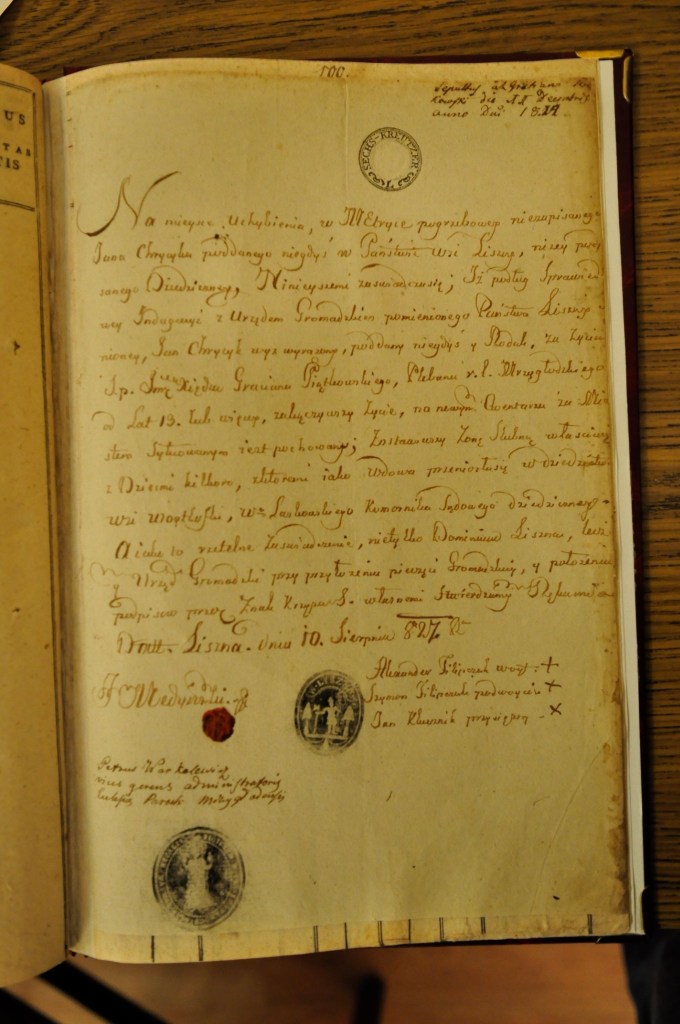
It is an explanation for a missing death record for a peasant named Jan Chrycyk (Rycyk) from the beginning of the 19th century.
~~~~~~~~~~~~~~~~~~~~~~~~~~~~~~~~~~~~~~~~~~~~~~~~~~~~~~~~~~~~~~
Regarding the omission in the burial register concerning Jan Chrycyk—formerly a serf within the estate of the village of Liszna (the domain of the undersigned proprietor)—the following is hereby formally recorded: In accordance with a judicial inquiry conducted jointly by the Village Council of the aforementioned Liszna Estate, it is established that Jan Chrycyk—formerly a serf and countryman—departed this life more than thirteen years ago, during the tenure of the Reverend Father Piątkowski, Parish Priest of Mrzygłód. Having lived out his days, he was laid to rest in the new cemetery situated beyond the town limits. He is survived by his lawful wife and several children. The widow, together with her offspring, has since moved to the estate of the village of Wojtkówka, a hereditary property of the honorable Laskowski, a court bailiff. This formal attestation is hereby confirmed not only by the Liszna Estate Administration but also by the Village Council—affixed with the official Village Seal and the personal signatures of the Council members—at the Liszna Estate, on the 10th day of August, 1827.
Alexander Filipczak wojt X
Szymon Filipczak vice-wojt X
Jan Klucznik juror X
[signed] S. Medynski
Petrus Warkolewicz gerens administrator ecclesia Paroch: Mrzygłódensis
~~~~~~~~~~~~~~~~~~~~~~~~~~~~~~~~~~~~~~~~~~~~~~~~~~~~~~~~~~~~~~
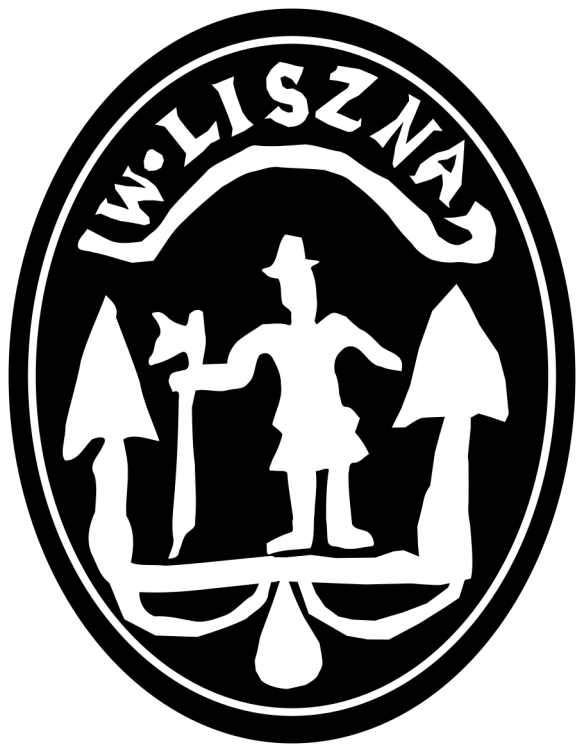
Two things caught my eye right away. One was the logo (seal) of the Village Council. It shows a lumberjack standing between two trees. I had the opportunity to show it to the current village head (sołtys) of Liszna. He hadn’t seen it before and also thought it was pretty cool.
The other exciting item was the signature (X or Holy Cross) of my great-great-great grandfather, Szymon Filipczak. Piotr explained that Szymon was apparently the podwojciu (vice-mayor) of Liszna.
I had known that Szymon and Alexander Filipczak, the wójt (mayor), were prominent members of the village from another document, A History of the Village of Lishna, Sanok County (1928), by Ivan Fylypchak (Iwan Filipczak).
The History is written in Ukrainian, a language I cannot read. I can’t read Polish either, but at least I recognize most of the letters. Still, when you hit a wall like this, you have to plow through. Luckily, it’s easier than ever to read documents in other languages.
If you have the Chrome browser, you can use Google Lens and Google Translate:
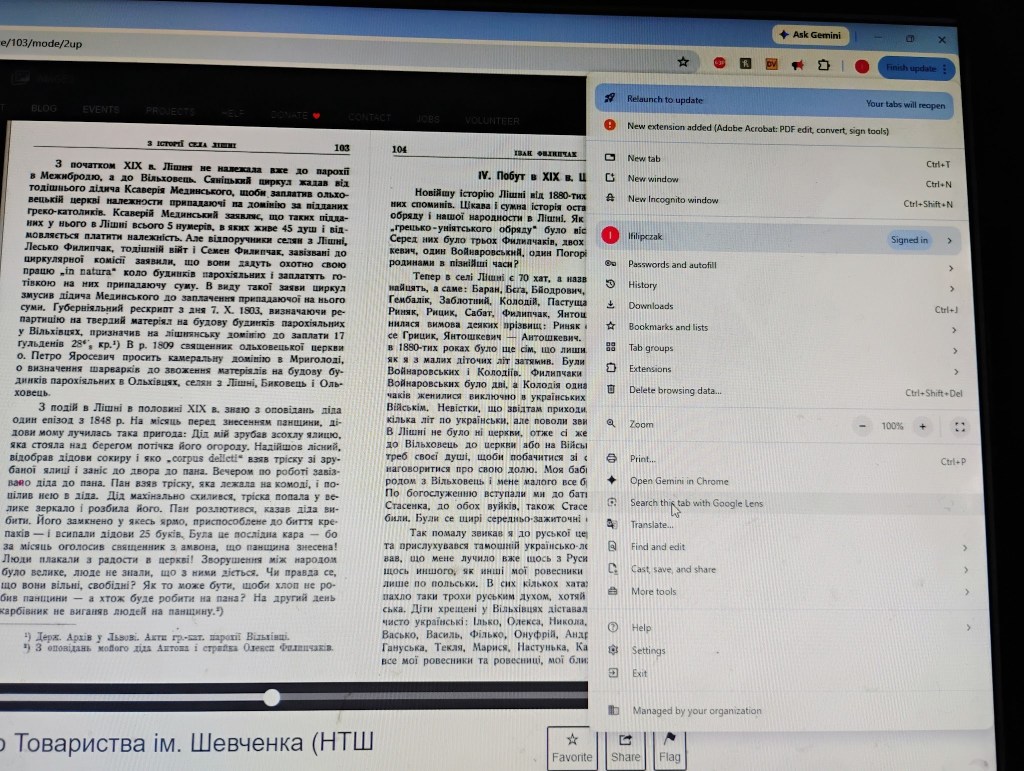
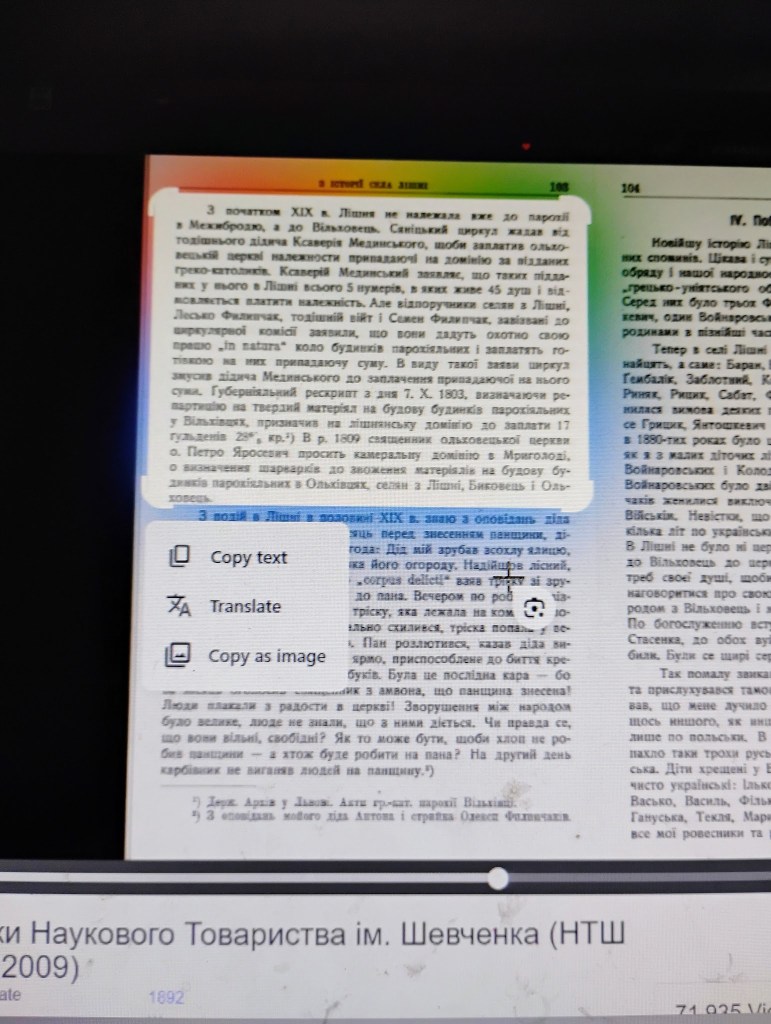
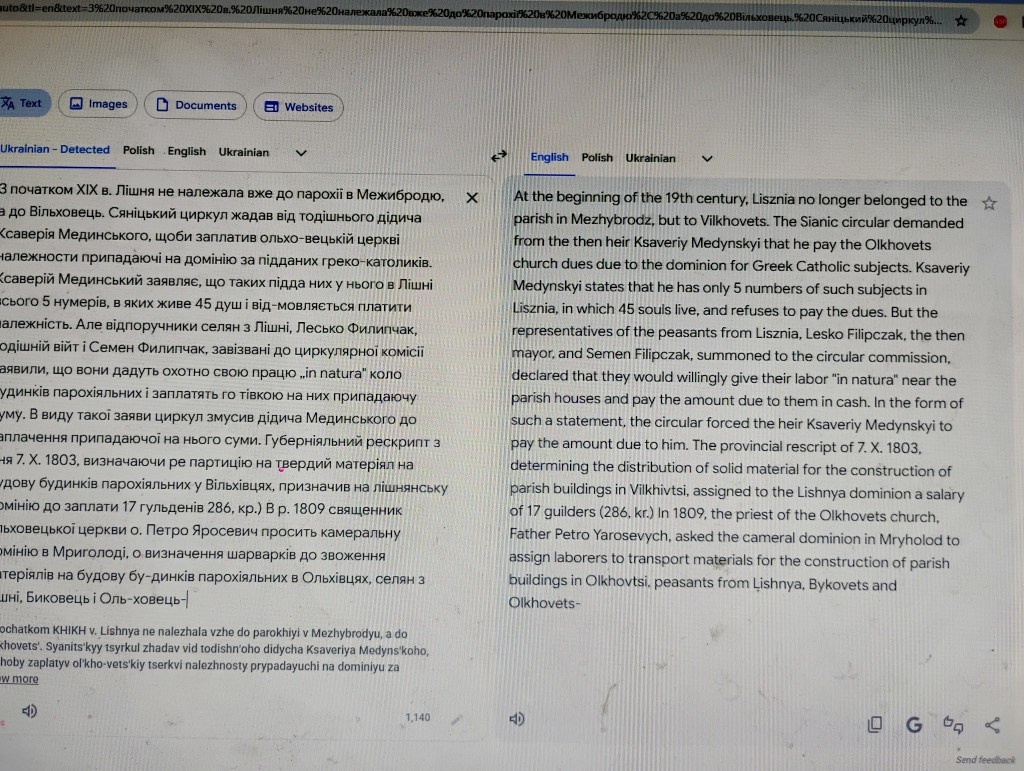
Now, internet translation is never 100% perfect and will never be as good as trained, professional translators. However, most of us do not have the money or time to work with professional translators. Internet translation combined with the occasional double-check from a bilingual person can get us pretty far these days–a lot farther than it could twenty years ago.
Anyway, it seems Ivan Fylypchak dug up another early 19th-century document with my great-great-great grandfather’s name on it. In this one, Szymon teams up with the wójt, Lesko Filipczak, to challenge the village lord’s refusal to support the Greek Catholic Church in neighboring Olchowce. “Lesko” is one of the many nicknames for Alexander, and Semyen and Szymon are the respective Ukrainian and Polish versions of Simon. Therefore, these are likely the same two men in the letter to the Roman Catholic parish regarding the death of Jan Chrycyk.
The lord, Ksawery Medyński (likely the father of the Stanisław Medyński in the letter above), ultimately had to pay. Most of the village, including Szymon, had “polonized” (i.e. gone from the Greek to the Roman rite) by that point, but interestingly, the leadership still felt a duty to the Greek Church.
Ivan Fylypchak also wrote about the name of Liszna, one of two villages by that name in the historic Sanok County. My ancestral Liszna remains in today’s Sanok County while the other is in modern Lesko County.
~~~~~~~~~~~~~~~~~~~~~~~~~~~~~~~~~~~~~~~~~~~~~~~~~~~~~~~~~~~~~~~~~~~~
The name of the village remains disputed. Local residents (now Polish), as well as villagers from neighboring villages, pronounce the name “Lishnia” or Lishna. Only foreign intellectuals distort it to “Lyshnya”. In legal documents from the 15th century, the name is spelled Leszna, Leschna, and Lyeschna, less often Leschnia and Lesznya. It seems that the second, less frequently used name, only appeared when the scribe in Sanok wrote incorrectly–when it was written Lesznya or Leschnia, and not Lisznya. We have an analogy to this in the name of the city of Liska, which was then written Lesko. It is noteworthy that the adjective derived from the name of the village, found in the surnames of the 15th century lords, is always Leschczinski or Lyesczensky. We cannot explain what the name Lishna means, or from what origin it was derived. A similar (but not exactly the same) name is found also in the village of Lyshnya in the Lishna Mountains near Tisnaya [Cisna] in the Lisko district. In Drohobych, in the Montenegro Range there is a suburb of Lishniv. There is also Lishni in the Kholm region, Podlasie and Volhynia. There must be some old meaning that is now unclear.
~~~~~~~~~~~~~~~~~~~~~~~~~~~~~~~~~~~~~~~~~~~~~~~~~~~~~~~~~~~~~~~~~~~~
Ivan suggests the meaning is lost to the ages. We Filipczaks always want to turn the more fanciful and romantic gears in our imaginations. Piotr is more practical and thinks there’s an easy explanation for all the Lisznas. The name probably just means “forest settlement,” a simple derivation of the Slavic word for “wooded”: leśny in Polish, lisovy in Ukrainian.
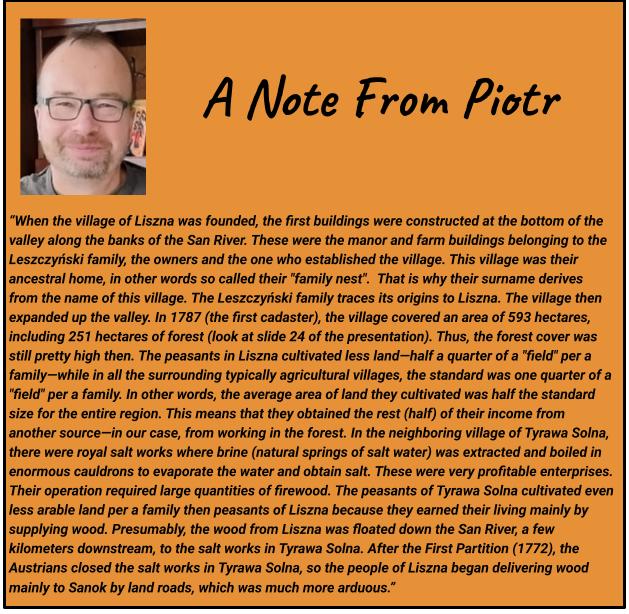
This might explain why the village seal shows a lumberjack and not a farmer. A Monograph of the Polonized Village of Lishna, Syanok County (1926) by Ivan Fylypchak, goes into more depth on this topic. Unlike its companion History of Lishna, this document was never published. The kind folks at the Rylsky Ethnographic Archive in Kyiv sent it to me, but neither I, nor Google Lens, could make much sense of the Ukrainian handwriting. Luckily, Natalia, a volunteer on Facebook was excited enough about the contents to produce a transcript.
In the document, Ivan emphasizes certain words and phrases that represent the village dialect, and footnotes them to a glossary. Because of that, Natalia and I have preserved them in the transcript. Hopefully, it is still readable.
~~~~~~~~~~~~~~~~~~~~~~~~~~~~~~~~~~~~~~~~~~~~~~~~~~~~~~~~~~~~~~~~~~~~
| Lishnians say they are grain farmers, but they are not able to survive on grain farming. Out of 70 houses, only 10 do not buy bread, they “have adapted to the new”–the rest of the poorer families buy to survive. Six householders are included among the rich, the rest earn money in the forests, or are engaged in small-scale home crafts, prykhovkom khudoby, drobu, sometimes selling Nabil: butter, cheese, or baby chicks, but they do not sell milk. The whole village helps itself most in the following way. In winter they take logs to the Novak family tartak. Some bring whole beeches and firs in from the forests of their Didich. Novak cuts them into boards, and when they are free from farming activities, they carry them in waves to their homes, ukladaty v syahy, and when they dry out, they take them by truck to Sanok, where they sell them for profit. With that money, they buy oil, candles, salt, and necessary zalizya in the city, then drink some in the inns and taverns of Sanok. This is how it has been done since ancient times, and this is still the institution today. | Prykhovkom khudoby – Protect livestock, hide for the winter, protect from predators or thieves. Prykhovkom drobu – storage or protection of grain (grain or other food) Nabil – an old Ukrainian term meaning dairy products. Tartak is a large mechanical device that was used for sawing wood in manors and estates. Usually, such tartaks were part of a complex of economic buildings, which included mills, forges and other production premises. The main function of the yard sawmill was to saw logs into boards and beams for construction and other needs. They played an important role in providing wood for various economic needs of the estate. Didich is the owner of an estate or a large plot of land, usually in a rural area, who received his property as an inheritance from his ancestors. The grandfathers, as a rule, had a significant influence on the development of agriculture, the economy, and the social life of their estates. They were responsible for managing their lands, providing jobs for local residents, and maintaining the well-being of their territories. Didychi often played a key role in local administration and political life. “Ukladaty v syahy” means to form logs or boards into special stacks called fathoms. This method is used for convenient storage of wood so that it is ventilated and does not spoil. Logs are usually formed in the form of uniform stacks, where each row is located in such a way as to ensure proper ventilation of the wood. This prevents the formation of mold and rot, preserving the quality of the wood for a longer period. Zalizya “irons” is a dialect word used in some regions of Ukraine to denote metal products. It can be anything made of iron or other metals, such as tools, machine parts, household items, etc. |
~~~~~~~~~~~~~~~~~~~~~~~~~~~~~~~~~~~~~~~~~~~~~~~~~~~~~~~~~~~~~~~~~~~~~
Ivan Fylypchak mentions elsewhere in his writings how the peasants of Liszna saw it as shameful to have to “Buy Bread,”–in other words, to earn cash rather than support one’s family by subsistence farming. This seemed puzzling to me. What’s the big difference?
I’m paraphrasing Piotr here, but his explanation was something like, “A fish swims. A bird flies. A peasant farms. What kind of peasant is he, if he can’t feed his children from his farm?”
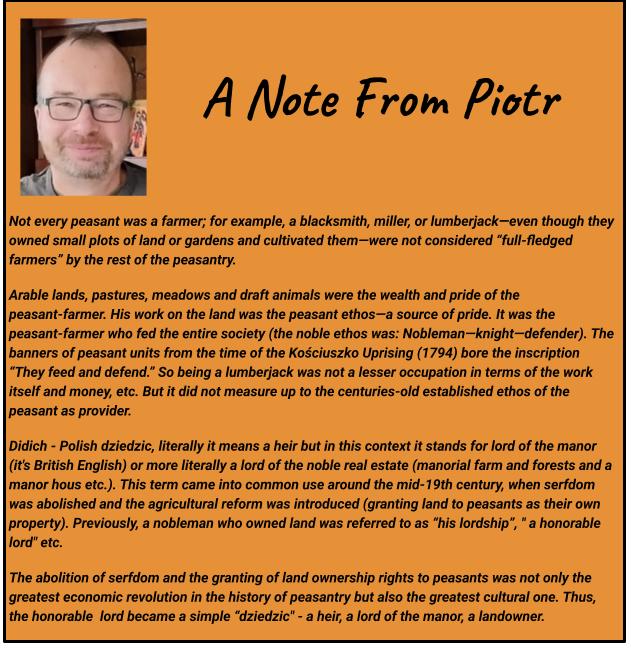
I live in northern Wisconsin, where logging is a popular profession and not particularly stigmatized relative to farming, so that was a new one for me. The loggers in my hometown (many of Carpathian descent) still like to stop in to wet their whistles after a day’s work. According to Ivan, it was much the same in Liszna:
~~~~~~~~~~~~~~~~~~~~~~~~~~~~~~~~~~~~~~~~~~~~~~~~~~~~~~~~~~~~~~~~~~~~~~
| There are two taverns in the village, one at the lower end of the village, the other at the upper end. The first is run by Lemko, the second by Shulim. These are old, respectable (honest) Jews, who have settled here since the time of their grandfathers and great-grandfathers. They split their time between farming and tavern keeping. In the morning, the Lishnyans go in groups to the syagi in the forest. There they chop or cut firewood from the firs in various vertepakh and yaruhakh, and around noon they rest for a short rest near Shulim’s mountain inn. Here the people and horses have a snack before they carry the firewood 9 km. to Sanok. They stay there for a couple of hours until they sell their goods, then they do some shopping, and in the evening they return home and rest again at Shulim’s. Often several dozen lumberjacks will eat there. The horses have another snack, the owners warm themselves by the fire with Shulim or Haidza and weave various stories, telling each other what they heard in the city, and so often their time goes until 12 o’clock at night or even after midnight. It has happened more than once that the horses would get tired of waiting for their masters’ amusement, and start pulling the carts back toward the houses, cart following after cart. More than once the drunken householders of Lishna have had to fly out the door after them. | Phrase “go to the forest po syagi” means a trip to the forest to collect wood. Syagi are special stacks or feet of logs or boards used for storing and drying wood. Yizdyty po syahy – this means going to the forest to collect wood for harvest, further processing and use. Vertepakh – these are dark remote places, often associated with difficulties and danger. Yaruhakh are steep or deep ditches or ravines that are difficult to access. |
~~~~~~~~~~~~~~~~~~~~~~~~~~~~~~~~~~~~~~~~~~~~~~~~~~~~~~~~~~~~~~~~~~~~~~
I was curious if this practice of hauling logs to Sanok has really been going on since “ancient times.” Were my 18th-century ancestors farmers who cut trees for extra cash, or were they actually lumberjacks who just dabbled in farming?
We can get a clue from the 1773 fasja, a land tax inventory taken after Red Ruthenia was taken by the Austrian Empire in the First Partition of Poland. These surveys are valuable to genealogists of the Sanok Lands as they are often the oldest documents on which we can find our surnames. Indeed, the survey of Liszna, includes two Filipczaks, one being my direct ancestor Mihal (Michał, Myhailo).
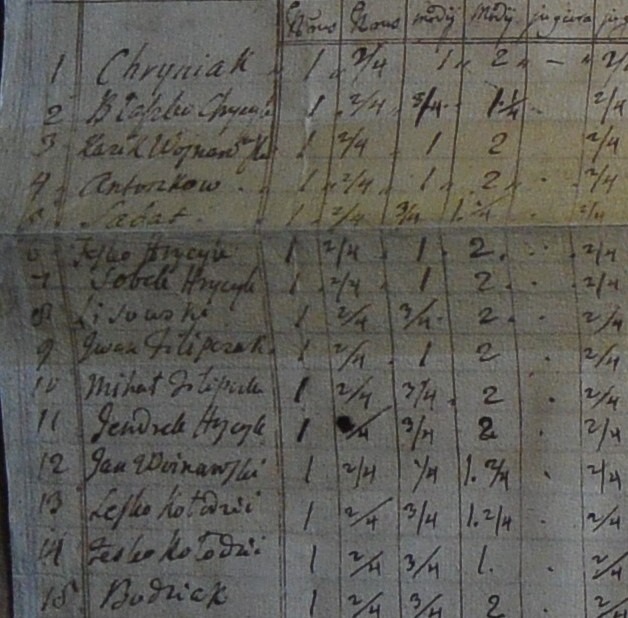
The documents are large charts that don’t reproduce well in a blog post, but they contain data on how much farmland, woodland, and livestock was allotted to each household. They also state how much each household owed in serfdom or pańszczyzna obligations. Every year, each serf household owed the landlords a certain amount of days labor on the manor farms and a certain amount of cash. People often compare serfdom to slavery, but in the American context, it would be more akin to sharecropping or indentured servitude.
The relative amount of labor versus cash obligations was negotiated between the owner and the peasant. The owner of Liszna at that time was Marcin Pakosz who also owned the village of Jurowce across the San on flatter, more-fertile land. In Liszna, relative to Jurowce, peasants paid more in cash and less in farm labor, confirming that Liszna was a place where you work a lot in the woods and might have to occasionally “buy bread.”
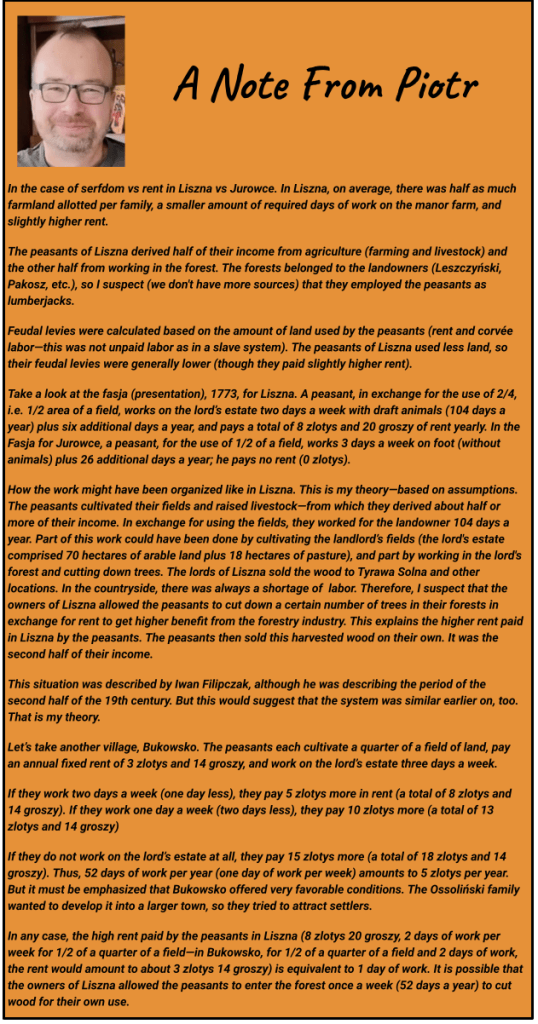
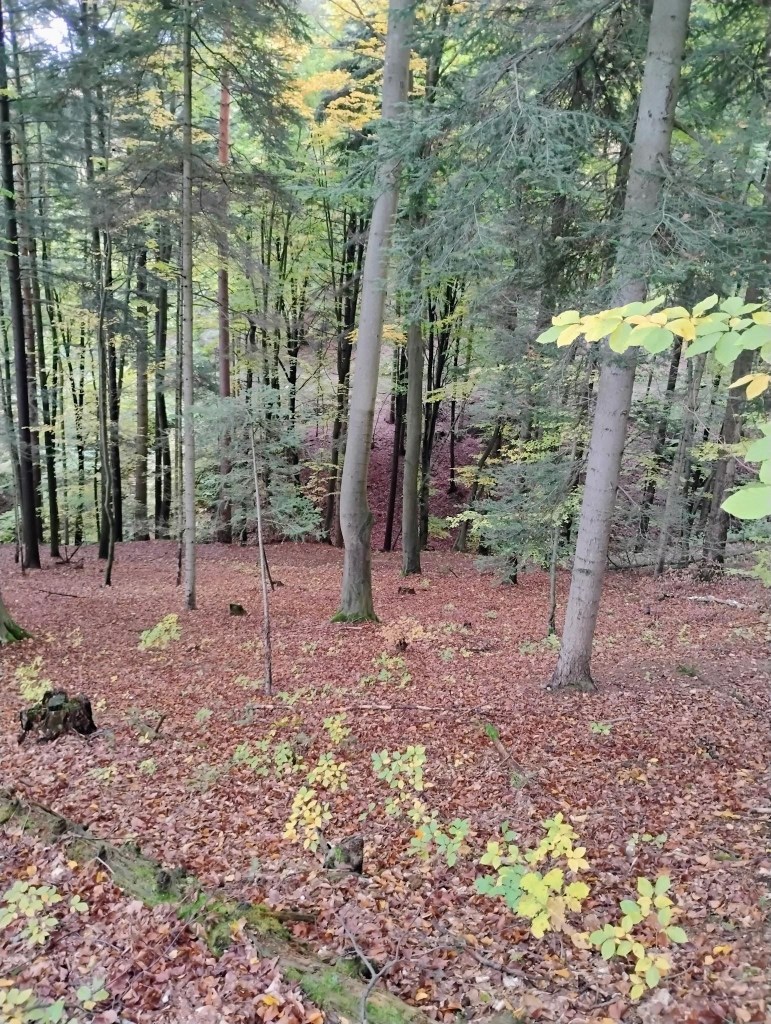
Factoids like this add a richness to the story of my ancestors that I wouldn’t have gotten from only knowing they were peasants and the dates of their baptisms, marriages, and deaths. It also makes visiting Liszna more interesting as I had the opportunity to walk through these forests. The logs are now hauled out with modern skidders rather than disobedient horses, but you still see the stacks of drying timber along the sides of the road.
Lisznians have apparently been hauling logs to Sanok for centuries, which probably contributed to the gradual polonization of a village that was ethnically Ukrainian 500 years ago, but had become almost entirely Polish by the dawn of the 20th century. Polonization determined the village’s experience of the atrocities of the Second World War. Several Lisznians deported by the Soviets at the beginning of the war were murdered, as Poles, during the Volhynian Massacres. However, being Polish meant Liszna was not removed during Akcja Wisła as neighboring Ukrainian villages were.
While on this darker note, it should be mentioned that today Russia deliberately attacks historical and cultural sites in its disgusting attempt to subjugate and erase the Ukrainian people. While this may not rank up there with bombing apartment blocks and buses, kidnapping children, or torturing POWs, it is still a war crime.
The 1773 fasja tables mentioned above are held in the Bernadine Monastery in Lviv, a UNESCO World Heritage Site. On March 24th, 2026 Russia attacked the site with Shahed drones. Thankfully, the section with the archives was not damaged.
The fasja, with their mix of Latin, Polish, and German abbreviations and arcane feudal terms are beyond the ability of me and my Google Translate, so I relied on Piotr to order them from Lviv and interpret them for me. However, I have been able to get other records from Ukraine, including Ivan Fylypchak’s memoirs and the Monograph cited above. When I visited Sambir in October, I asked if it was selfish to bother archivists with trivial genealogical inquiries during wartime. The universal response I got was that it is more important now than ever to support these cultural institutions. In Ukraine, preserving history is an act of defiance.
~~~~~~~~~~~~~~~~~~~~~~~~~~~~~~~~~~~~~~~~~~~~~~~~~~~~~~~~~~~~~~~~~~~
If you want your family tree to include more than names and dates, but also stories like this, check out our Tips for Next-Level Genealogy. For more on how to obtain records like these, consider Hiring a Researcher.
For more on the story of Liszna and the life of Ivan Fylypchak, check out Beyond the San, now available from Prixto Press.
 SANOK STORIES